








Mobile VHP Sterilizer Buying Checklist: Mobility, Power, Sensors and Data Export
A mobile VHP sterilizer is bought to be moved: from room to room, between floors, sometimes between buildings. Two units with the same rated volume can be very different to live with once they leave the factory. This checklist covers the practical points that datasheets often leave out: how the unit moves, what power it needs, what it measures, how it is run from outside the room and what records it produces.
For how many units you need and how large a room one unit can treat, see sizing a mobile VHP generator for room decontamination. For the choice between a mobile unit and a fixed system, see portable vs integrated VHP generators.
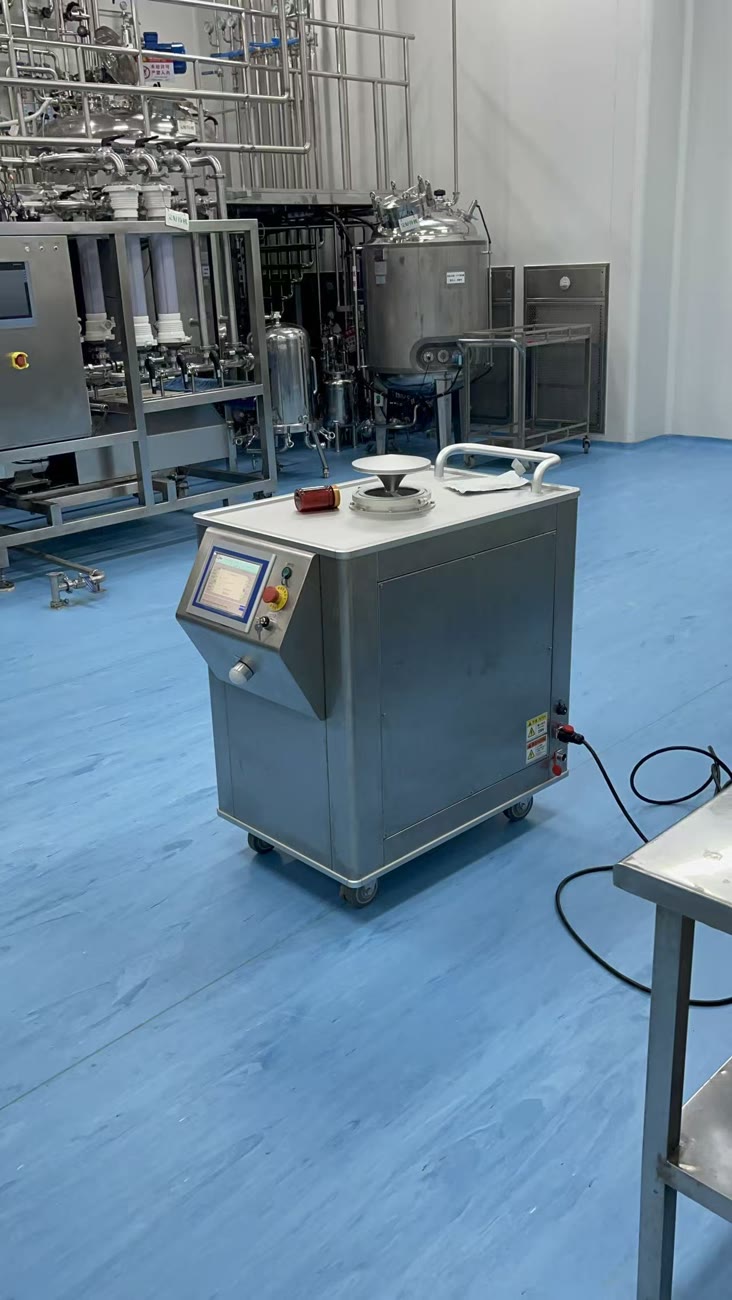
1. Mobility: will it reach every room?
Walk the route before you buy. Most problems are found at doors, thresholds and lifts, not in the room itself.
- Dimensions and weight. Compare the width, depth and height with the narrowest door, airlock and lift on the route, including door frames and handles that reduce the clear opening.
- Castors and brakes. Castors should roll over floor joints and door thresholds without tipping the unit, and lock firmly once it is in position. Check that the castor material does not mark resin or vinyl floors.
- Handles. One person should be able to push and steer the unit safely. Ask whether there are handles on both ends.
- Cleanability. The unit enters cleanrooms, so its outside surfaces will be wiped down. Stainless steel panels, few exposed fasteners and no unsealed gaps make this easier.
- Hoses and cables. If the unit uses hoses or a remote sensor, check where they are stored during transport, so they are not dragged along the floor.
- Sterilant during transport. Ask whether the unit can be moved with sterilant in its tank or bottle, and how spills are contained.
2. Power: what each room must provide
A mobile unit is only as mobile as the power sockets it can use.
- Voltage and phase. A single-phase unit can plug into a normal socket in most rooms. A three-phase unit needs a dedicated outlet in every room it serves. The FG-VHP-M500, for example, runs on 220 V AC, 50 Hz single phase and draws 2,000 W.
- Socket and plug type. Confirm the plug for your country and whether a site-standard plug can be fitted.
- Circuit capacity. Check that the circuit in each room can carry the unit together with any fans used during the cycle. Avoid long extension leads, which also pass under doors and break the room seal.
- Power failure. Ask what the unit does if power is lost during injection or aeration, how it restarts and how the event is recorded. The room must not be opened until the hydrogen peroxide level is confirmed safe.
3. Vaporization and distribution
These figures decide how fast the room reaches its working concentration and how evenly vapor is spread:
- Injection rate, usually in grams of sterilant per minute. The M500 injects 1–40 g/min.
- Vaporization method and temperature. Flash vaporization on a heated surface turns each drop fully into vapor. The M500 vaporizes at up to 120 °C.
- Airflow of the unit’s own blower, and whether extra fans are recommended for larger or irregular rooms.
- Sterilant. Which concentration the unit is designed for (for example 35% hydrogen peroxide), how bottles are connected and whether the level is monitored, so a cycle cannot start with too little sterilant.
For what each datasheet figure means, see VHP generator specifications explained.
4. Sensors: what does the unit actually measure?
A cycle is only as well controlled as the measurements behind it. Ask for a list of every sensor, its range and where it is located.
| Measurement | Why it matters | What to ask |
|---|---|---|
| H2O2 concentration during the cycle | Shows that the target concentration was reached and held. | Range, accuracy, and whether it is measured in the room or only inside the unit. |
| Low-range H2O2 for release | Decides when the room is safe to enter after aeration. | Lowest reading, and whether a separate handheld or fixed detector is needed. |
| Relative humidity | Humidity and peroxide together decide the condensation point. | Whether the unit dehumidifies first, and to what level. The M500 target is ≤ 50% RH. |
| Temperature | Cold surfaces cause condensation at lower concentrations. | Sensor location and whether it is recorded in the cycle report. |
| Sterilant level or weight | Confirms how much sterilant was injected. | Whether consumption is recorded per cycle. |
Sensors drift with use, and hydrogen peroxide sensors in particular need regular calibration. Ask how often each sensor must be calibrated or replaced, whether this can be done on site and what it costs. For the link between concentration, humidity and condensation, see VHP concentration, humidity and condensation.
5. Controls and remote operation
Nobody should be in the room during a cycle, so the operator needs a way to start, watch and stop it from outside.
- Control system. An industrial PLC and touchscreen are easier to support over the unit’s life. The M500 uses a Siemens PLC and Siemens touchscreen.
- Remote start and stop. Check whether the cycle can be started with a delay, started remotely, or scheduled. The M500 supports remote start and stop, timed start and scheduled cycles, with an optional iPad remote-control system.
- Recipes. Validated cycles should be stored as recipes that operators can select but not change. Ask how recipes are created, approved and locked.
- Alarms. Which conditions stop the cycle, which only warn, and how alarms are shown to someone outside the room.
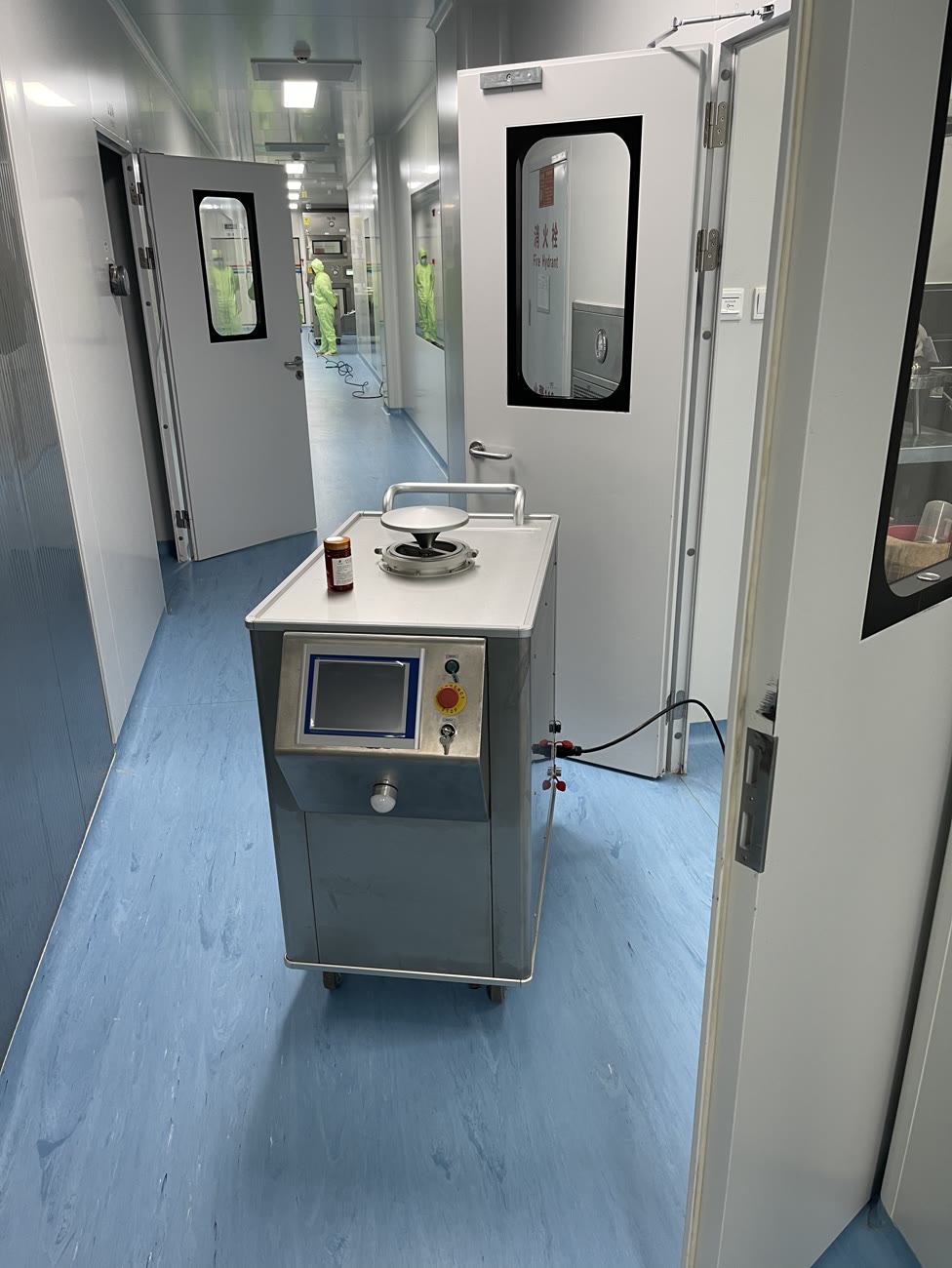
6. Data export and records
In a GMP facility the cycle is not finished until the record is reviewed. Ask to see a real cycle report before you buy.
- Contents of the report. Date, time, recipe, operator, the duration of each phase, sensor readings over time, sterilant used, and every alarm.
- Export. How data leaves the unit: USB, network, printer or a PDF report. The format should be agreed with your quality team before purchase.
- User levels and audit trail. Separate log-ins for operators, supervisors and administrators, and a record of who changed what and when.
- Electronic records. If the records are used for GMP decisions, ask how the system supports 21 CFR Part 11 and EU GMP Annex 11: secure storage, time stamps, backup and protection against deletion.
- Clock and storage. How many cycles are stored on the unit, what happens when the memory is full, and how the clock is set and protected.
Write these points into your requirements before you request quotations. See how to write a URS for a VHP system.
7. Safety around the room
- Room sealing. Doors, HVAC vents and penetrations must be sealed before the cycle. Ask the supplier which sealing materials are recommended.
- Leak monitoring. A hydrogen peroxide detector outside the room, at the door, shows whether vapor is escaping into occupied areas. The US OSHA limit for workplace exposure is 1 ppm as an 8-hour average.
- Signage and access control. Warning signs on every door and a procedure that prevents anyone from entering until release.
- Emergency stop on the unit and, if available, on the remote control.
8. Service, spare parts and documents
- Recommended spare parts list, especially sensors, pumps, seals and filters.
- Maintenance schedule and which tasks the site’s own engineers can do.
- Training for operators and maintenance staff.
- Operating and maintenance manuals, electrical drawings and calibration certificates.
- FAT and SAT protocols. See VHP generator FAT and SAT.
The checklist on one page
| Area | Confirm before ordering |
|---|---|
| Mobility | Size and weight against every door and lift; castors, brakes, handles; cleanable surfaces. |
| Power | Voltage, phase, plug, circuit capacity; behavior after a power failure. |
| Vaporization | Injection rate, vaporization method, airflow, sterilant concentration and level monitoring. |
| Sensors | Full sensor list with ranges and locations; low-range sensor for release; calibration interval and cost. |
| Controls | PLC and HMI; remote, delayed or scheduled start; locked recipes; alarms visible from outside. |
| Data | Sample cycle report; export method; user levels and audit trail; Part 11 and Annex 11 support. |
| Safety | Room sealing, leak detection at the door, signage, emergency stop. |
| Support | Spare parts, maintenance, training, manuals, FAT and SAT. |
For questions about the supplier itself, see the 12 questions to ask a VHP supplier.
Fenggu mobile VHP room sterilizer
The FG-VHP-M500 mobile VHP room sterilizer is a wheeled unit for spaces up to 300 m³. It runs on 220 V single-phase power, injects 1–40 g/min of 35% hydrogen peroxide, delivers at least 500 m³/h of airflow and dehumidifies to 50% RH or below before gassing. It is controlled by a Siemens PLC and touchscreen, with remote start and stop, timed and scheduled cycles, and an optional iPad remote control. Sporicidal efficacy is specified as a 6-log reduction of G. stearothermophilus, subject to validation. Fenggu provides on-site commissioning and operator training for the equipment it supplies.
FAQ
Is a single-phase mobile VHP unit powerful enough?
For many rooms, yes. What matters is whether the injection rate and airflow can reach and hold the target concentration in your room. Check the rated volume and the conditions it assumes.
Do I need a separate hydrogen peroxide detector?
Usually yes. A sensor that controls the cycle is often built for high concentrations. Release and leak checks need a sensor that reads accurately at low ppm levels.
Can one mobile unit serve rooms on different floors?
Yes, if it fits the lift and the route, and if each room has a validated cycle. Moving the unit does not change the cycle, but each room is validated separately.
What should a cycle report contain?
At minimum: date and time, recipe, operator, phase durations, sensor readings over time, sterilant used and all alarms. Agree the format with your quality team.
How often do the sensors need calibration?
It depends on the sensor type and how often the unit is used. Ask the supplier for the recommended interval and include it in your maintenance plan.
References
- EU GMP Annex 1: Manufacture of Sterile Medicinal Products (2022)
- EU GMP Annex 11: Computerised Systems (2011)
- US FDA 21 CFR Part 11: Electronic Records; Electronic Signatures
- US OSHA 29 CFR 1910.1000, Table Z-1: hydrogen peroxide permissible exposure limit
- EN 17272:2020, Chemical disinfectants and antiseptics — Methods of airborne room disinfection by automated process
Related Products
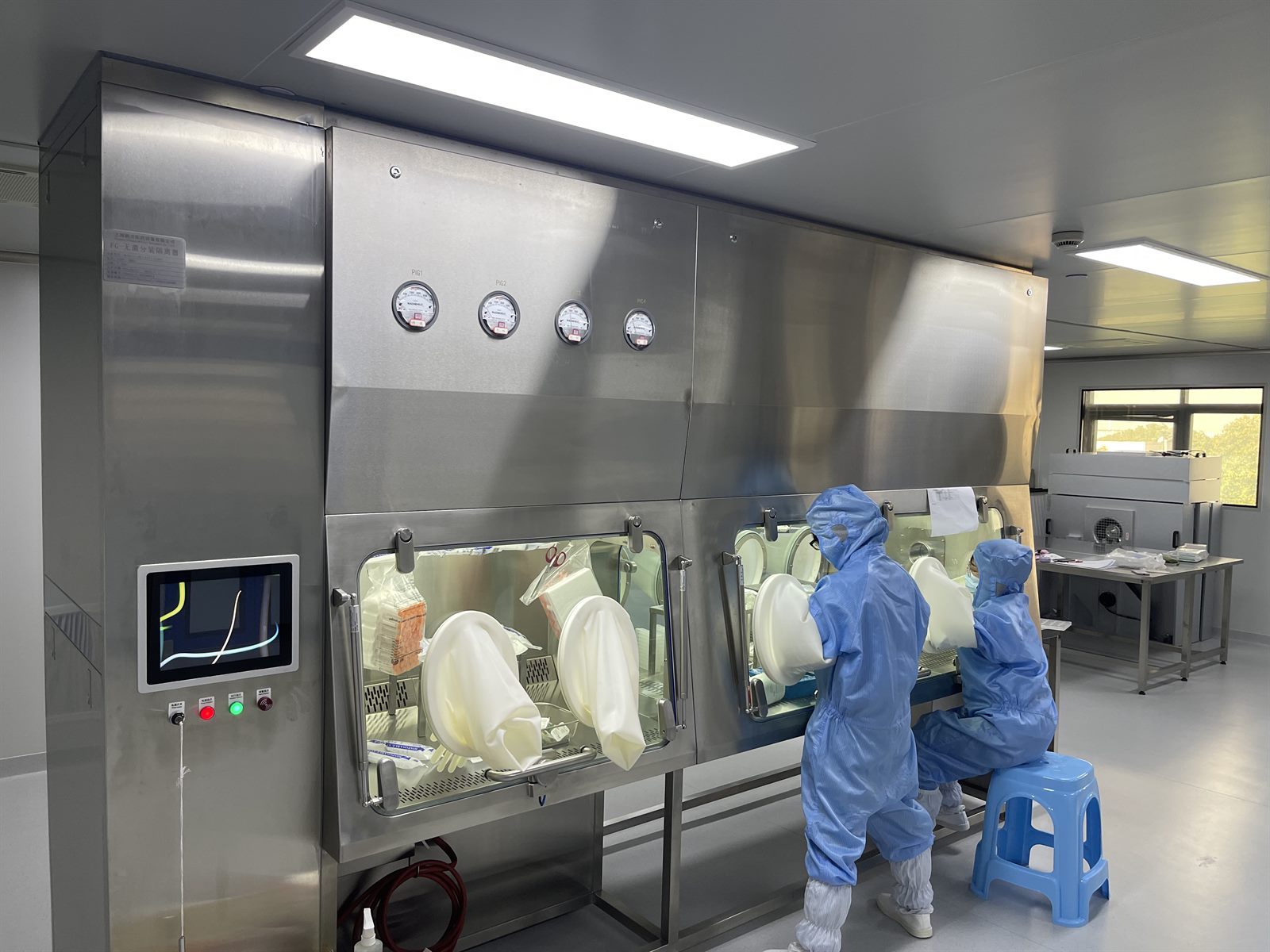 Aseptic Filling IsolatorGrade A (ISO 5) barrier for sterile filling, stoppering and capping.Isolators & Barrier
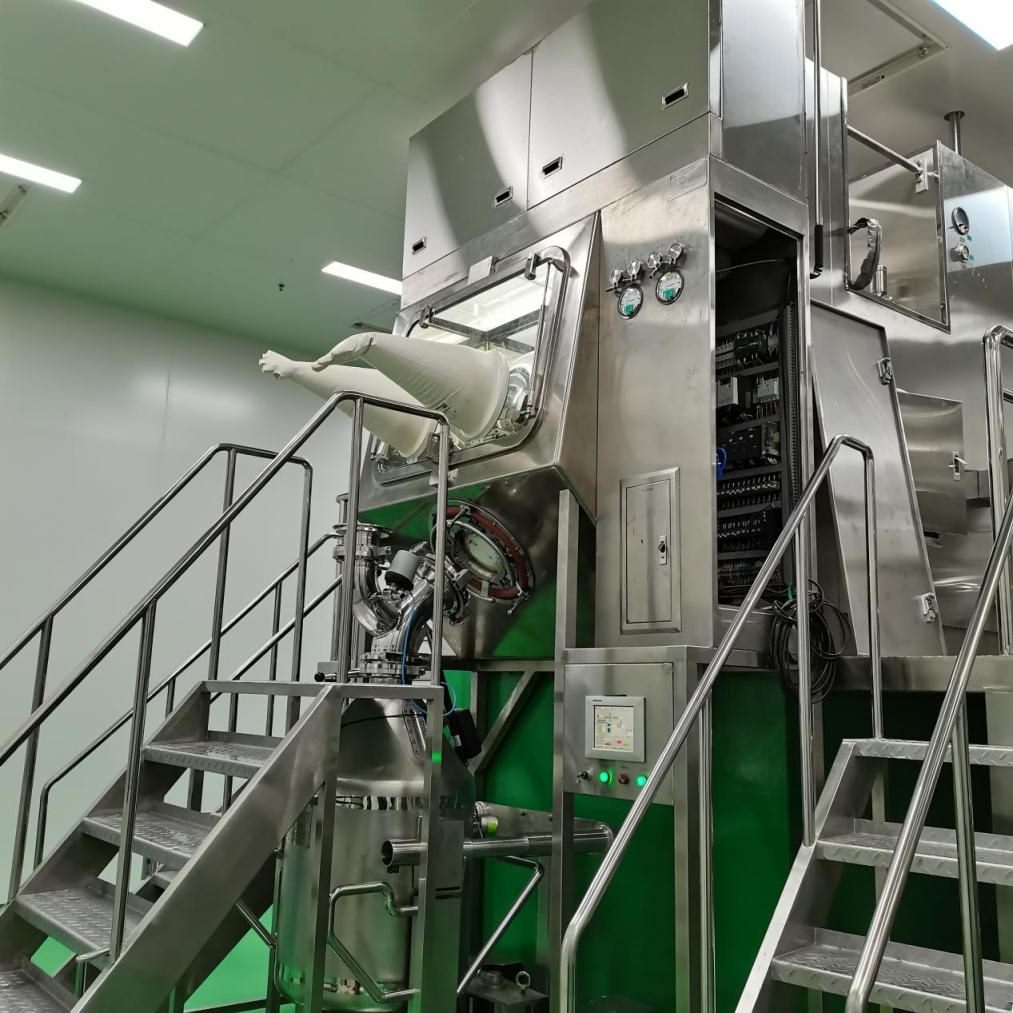 Dispensing & Containment Isolator (OEB5)Negative-pressure barrier for weighing, charging and sampling HPAPI.Isolators & Barrier
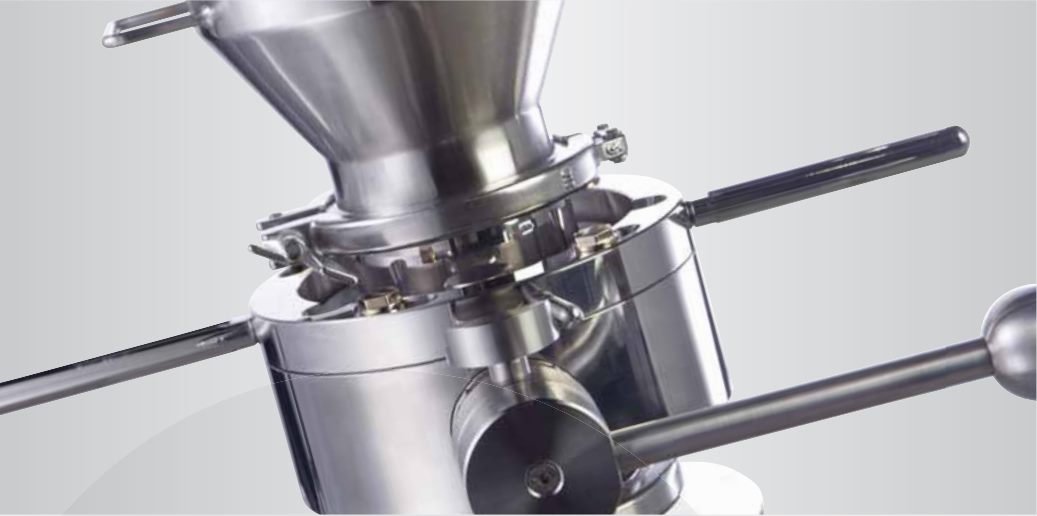 Alpha-Beta Split Butterfly ValveSplit butterfly valve for contained, dust-free transfer of potent powders.Transfer & Containment
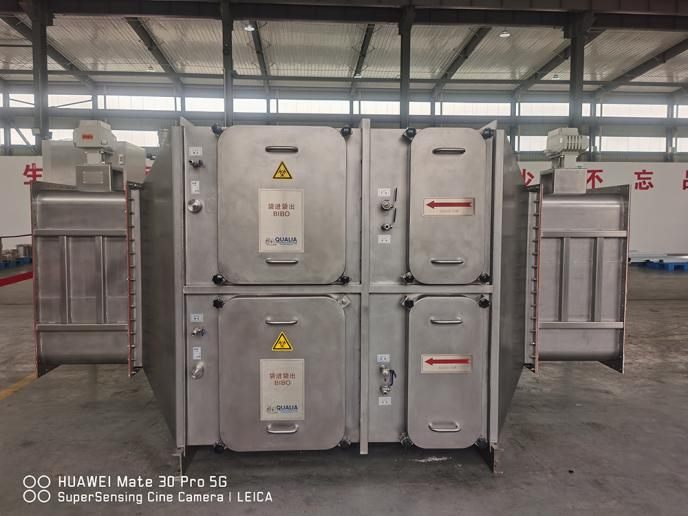 BIBO Filter HousingBag-in/bag-out HEPA housing for safe filter change in P3/P4 labs.Air Handling
Planning to buy a mobile VHP sterilizer?
Send us your room list, door sizes and power supply. Our engineers will check the fit and answer your questions on sensors and records.