








BIBO (Bag-In-Bag-Out) Filter Housing
Change HEPA filters serving chemical- and biological-containment areas without ever exposing the used filter to open air — every install, change and test happens inside a protective bag.

Overview
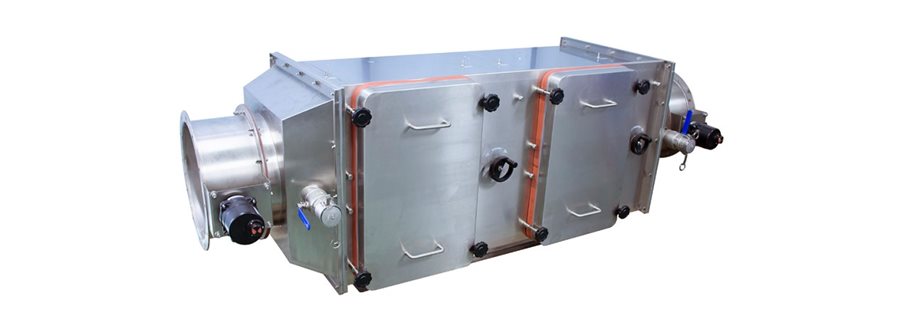
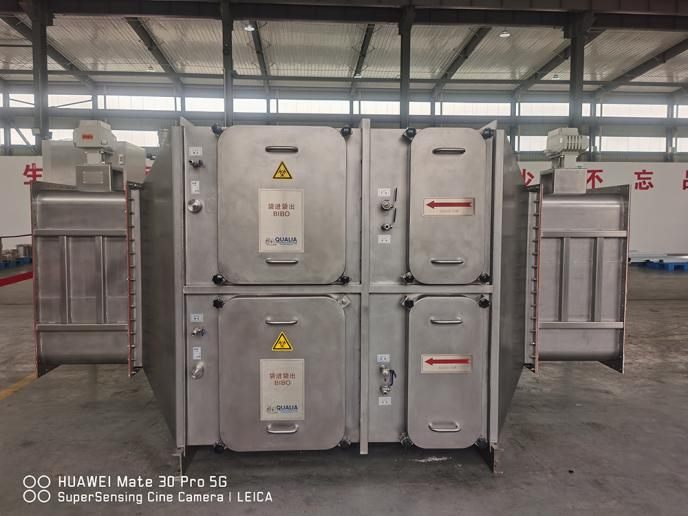
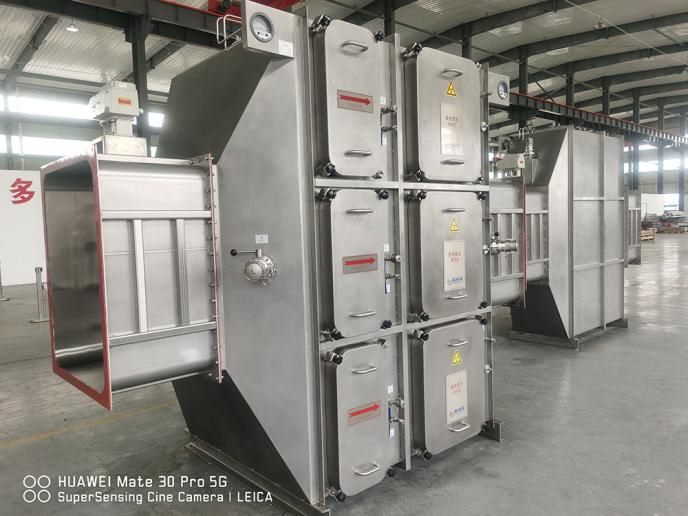
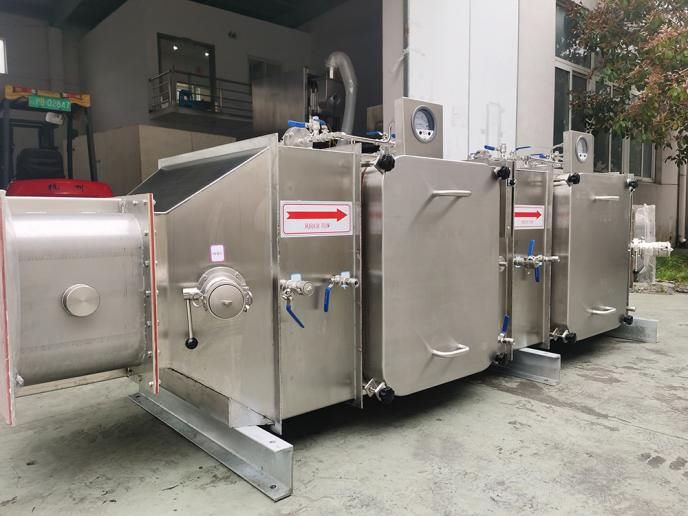
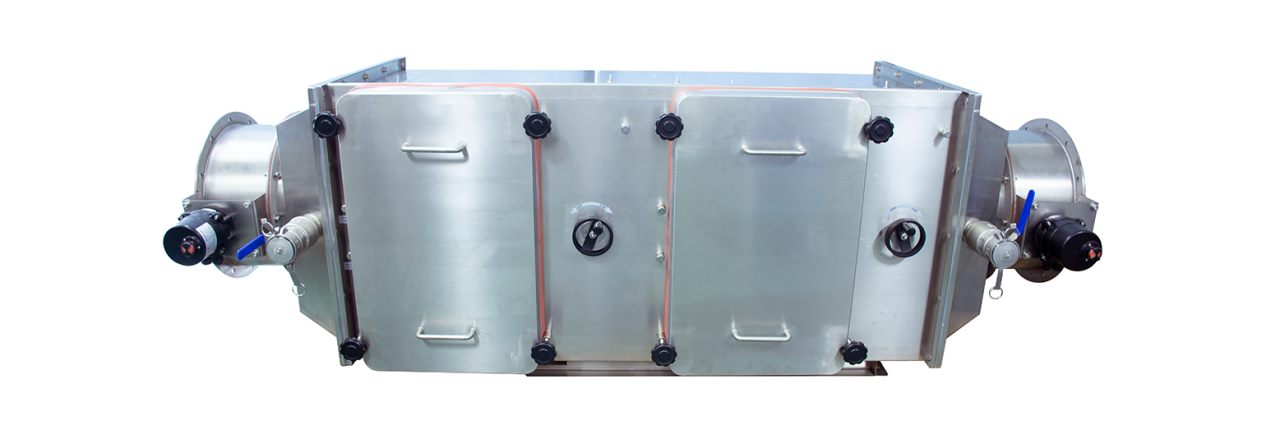
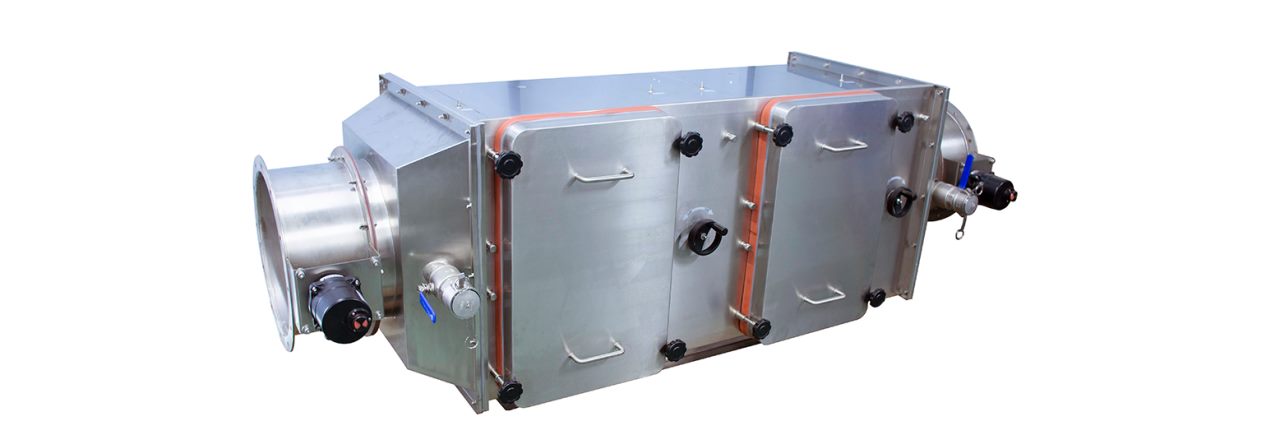
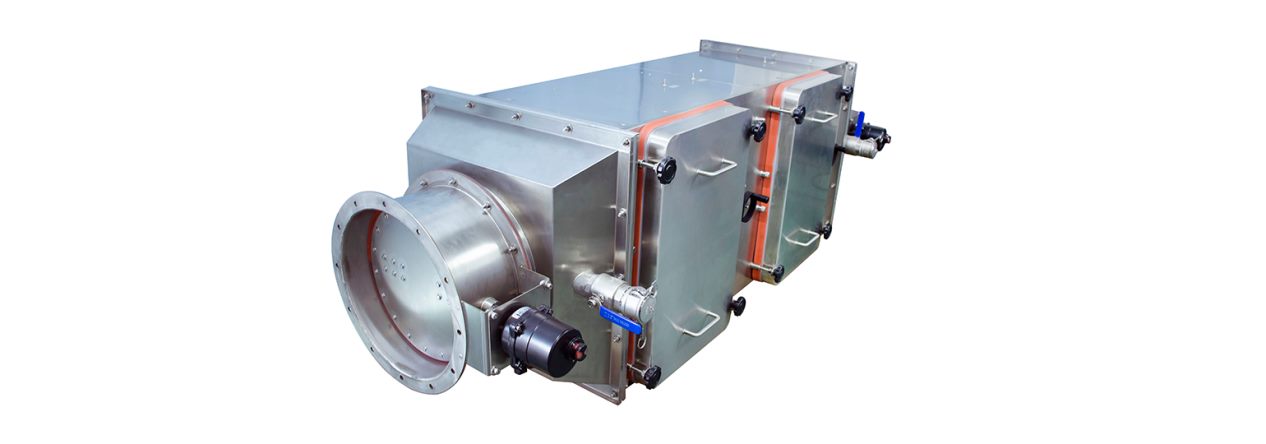
The Fenggu BIBO (Bag-In-Bag-Out) Filter Housing allows HEPA filters serving chemical- and biological-containment areas — P3/P4 laboratories and pharmaceutical exhaust — to be changed without ever exposing the used filter to open air. Every install, change and test happens inside a protective PVC (or high-temperature) bag, so the filter unit stays isolated from the room and personnel and environment stay protected. Every unit is pressure-tested for airtightness before dispatch.
The modular, fully-welded stainless housing can be stacked or arranged in parallel, holds single-HEPA or HEPA-plus-pre-filter configurations, and works in both vertical and horizontal airflow. A frame-mounted clamping mechanism, EPDM sealing and an in-line scanning section (linear or point-scan) support in-situ leak testing; optional sampling rings, differential-pressure sensors and electric airtight dampers extend it further.
Key Features
- Bag-in/bag-out safe-change design — used filter never exposed to open air
- Fully-welded stainless housing, stackable or parallel, vertical or horizontal airflow
- Single-HEPA or HEPA + pre-filter configurations
- Integrated in-line scanning section (linear or point-scan) for in-situ leak testing
- Frame-mounted clamping mechanism with high-density EPDM sealing
- Optional sampling rings, differential-pressure sensors and electric airtight dampers
Technical Parameters
| Filtration | H13 / H14 HEPA | Rated airflow | To be confirmed for the selected configuration |
|---|---|---|---|
| Airtightness | ≤ 0.1% net-volume minute-leak @ ±2000 Pa | Structural | No deformation at ±5000 Pa |
| Seal | High-density EPDM, fully welded | Working temp. | −30 to +60 °C |
Performance Test Results
| Metric | Fenggu FG-AIR-BIBO |
|---|---|
| Minute leak @ ±2000 Pa | ≤ 0.1% net volume |
| Structural integrity | No deformation @ ±5000 Pa |
| Leak testing | Integrated in-line scan section (in-situ) |
Applications
What Is a BIBO Filter?
“BIBO filter” is the short name for a HEPA filter installed in a bag-in/bag-out housing. The filter itself is a standard H13 or H14 HEPA filter. What makes it a BIBO filter is the housing: the filter is installed and removed through a PVC bag sealed to the access door, so the contaminated filter never comes into contact with the technician or the room air. The same housing is also called a safe-change filter housing or containment filter housing.
For a step-by-step description of the bag-out procedure, see how bag-in/bag-out filter change works.
When Do You Need a BIBO Filter Housing?
A BIBO housing is needed when the used filter holds something that must not be released when it is changed:
- Exhaust from biosafety laboratories (BSL-3 and BSL-4), where the filter may hold live pathogens
- Exhaust from potent compound handling, such as negative pressure isolators and dispensing rooms
- Cytotoxic and other hazardous drug manufacturing
- Radiopharmaceutical and other processes with radioactive contamination
The required protection should follow the hazard assessment, for example the OEB band of the compound. See OEB and OEL containment levels.
BIBO Housing vs Standard HEPA Housing
| BIBO housing | Standard HEPA housing | |
|---|---|---|
| Filter change | Through a sealed PVC bag; the used filter is never exposed | Housing is opened to the room; the filter is handled directly |
| Operator protection | Built into the design | Depends on PPE and procedures |
| Housing airtightness | Pressure-tested; welded construction | Usually not specified |
| In-place leak testing | Scanning section and test ports built in | Often requires opening the housing |
| Typical use | Biosafety, potent, cytotoxic and radioactive exhaust | General cleanroom supply and exhaust |
Two Tests: Housing Airtightness and Filter Integrity
A BIBO installation is checked in two different ways, and both are needed:
- Housing airtightness: the housing is pressurized and its leak rate measured. This shows that contaminated air cannot escape through the housing walls, doors or seals. Each Fenggu housing is pressure-tested before dispatch, with a leak rate of no more than 0.1% of net volume per minute at ±2000 Pa.
- Filter integrity: an aerosol is introduced upstream and the downstream side of the installed filter is scanned with a photometer or particle counter, to find leaks in the filter media or its seal. The in-line scanning section allows this to be done in place, after installation and after every filter change, without opening the housing.
For the difference between filter grades, see HEPA H13 vs H14.
Decontaminating the Filter Before a Change
In the highest-hazard applications, such as BSL-3 and BSL-4 exhaust, the filter is usually decontaminated before it is bagged out. The housing is closed off with airtight dampers upstream and downstream, and hydrogen peroxide vapor is circulated through it. Electric airtight dampers are available as an option on this housing, and the VHP BIBO sterilizer is designed for this decontamination step. The decontamination cycle is confirmed by validation for each installation.
What to Tell Us When You Request a Quote
- Airflow per housing, and the number of filters
- Filter grade (H13 or H14) and whether a pre-filter is needed
- Vertical or horizontal airflow, and stacked or parallel arrangement
- Duct connection sizes and the space available for bag changes
- The hazard in the exhaust and whether in-place decontamination is required
- Leak test method (linear or point scan) and any sampling rings, differential-pressure sensors or dampers needed
Request a datasheet or quotation
Tell us your airflow, filter grade and containment level, and our engineers will prepare a configuration and quotation.
Contact Our Team