








Adding VHP to an Existing AHU: Retrofit Checklist for HVAC-Integrated Systems
Many facilities that started with mobile VHP units later want to decontaminate whole cleanroom suites through their air-handling system. An HVAC-integrated VHP system can often be connected to an existing air handling unit (AHU) without rebuilding it, but the AHU, ductwork, rooms and controls all have to be checked first. This checklist covers what to survey, what usually needs to change, and how to plan the work so the suite returns to production on schedule.
For how VHP is carried by the HVAC airflow and the difference between supply-duct and return-duct injection, see how a VHP generator integrates with cleanroom HVAC.
Is your AHU a good candidate?
A quick first screen before a detailed survey:
- A defined zone. The AHU serves a group of rooms that can be closed off together, without sharing return air with areas that stay in production.
- Recirculation is possible. Fresh air and exhaust can be closed or reduced during the cycle, so the vapor is not simply blown outside.
- Humidity can be controlled. The cycle needs a low starting humidity. Check what the AHU and any dehumidifier can achieve in the season with the worst conditions.
- The controls can be changed. The AHU’s control system can accept new operating modes and signals from the VHP system.
- There is space. The plant room or ceiling space can take the VHP unit, its piping and the sterilant supply, with access for maintenance.
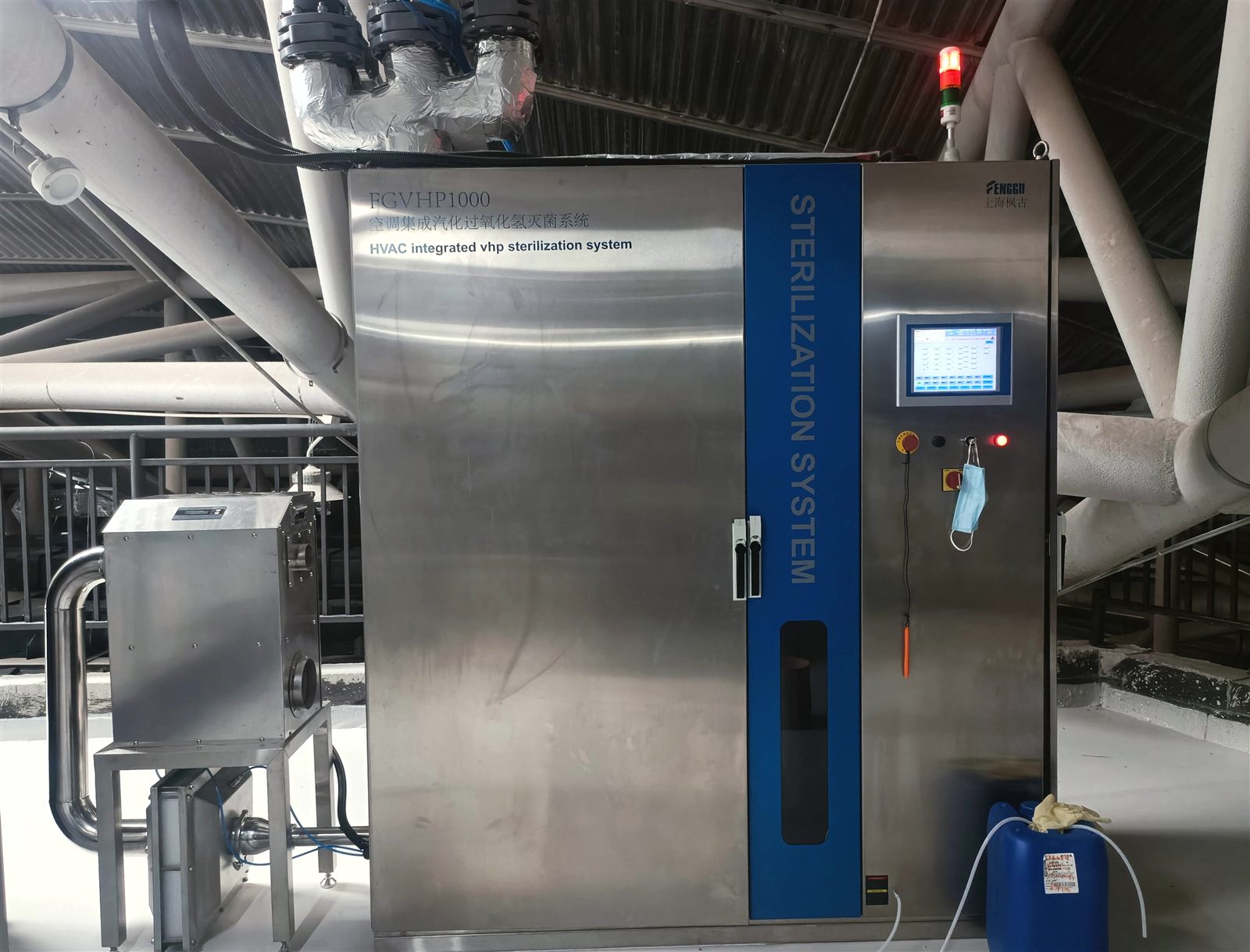
The retrofit checklist
| Area | What to check |
|---|---|
| 1. Zone and volume | List every room, its volume and its supply and return paths. Add the volume of the ductwork. This sets the size of the VHP system. |
| 2. Air path in VHP mode | Which dampers close the fresh air and exhaust, and whether they seal well enough. Whether isolation dampers are needed at the zone boundary. |
| 3. Injection and return points | Where the vapor enters the ductwork and where it is drawn back. Route of the VHP piping, its supports and insulation to prevent condensation. |
| 4. Coils, humidifiers and drains | Cooling coils and humidifiers can condense or add water during the cycle. Condensate drains and traps can let vapor escape. Decide how each is controlled or sealed. |
| 5. Filters | Filter media absorb hydrogen peroxide and slow down aeration. Check filter and gasket compatibility with the filter supplier, and whether terminal filter housings seal. |
| 6. Materials | Duct material, coil fins, gaskets, sealants, wall and ceiling panels, light fittings and any electronics in the zone. Ask for a compatibility review of anything unusual. |
| 7. Room envelope | Leaks around doors, ceiling penetrations and service ducts. How the pressure cascade with neighbouring areas is kept during the cycle. |
| 8. Sensors | Hydrogen peroxide, humidity and temperature sensors in representative rooms, a low-range sensor for release after aeration, and gas detection in neighbouring areas and the plant room. |
| 9. Controls and interlocks | New HVAC modes for conditioning, VHP, aeration and recovery. Signals to the BMS, door locking, alarms, and what happens on a fire alarm or power loss. |
| 10. Aeration route | Whether the vapor is removed through the exhaust, broken down by a catalyst, or both, and the residual level at which rooms can be released. |
| 11. Space and utilities | Footprint of the VHP unit, power supply, sterilant storage and handling, and access for maintenance. |
| 12. Requalification | Which HVAC tests must be repeated after the changes: airflow, pressure differentials, recovery and particle counts. |
Supply-duct or return-duct injection?
Injecting into the supply duct carries the vapor to every room the AHU serves and is used for whole-suite cycles. Injecting into the return duct treats the returned air and the ductwork first, and suits smaller zones. In a retrofit, the choice is often decided by where piping can be routed and where there is space to install the connection. Mixing and distribution are then confirmed during cycle development.
Safety: keep the vapor where it belongs
Hydrogen peroxide vapor is an irritant. The US OSHA permissible exposure limit is 1 ppm as an 8-hour time-weighted average. A retrofit must therefore make sure that:
- no vapor reaches occupied areas through shared returns, leaky dampers or drains;
- doors to the zone stay locked from the start of the cycle until the rooms are released;
- gas detectors in neighbouring areas and the plant room alarm before exposure limits are reached;
- the release level after aeration is measured with a sensor suited to low concentrations.
How a retrofit project usually runs
- Survey. Drawings, HVAC data, a site walk-down and the list of rooms to be treated.
- Design review and URS. Agree the scope, interfaces and acceptance criteria. See how to write a URS for a VHP decontamination system.
- Factory acceptance test of the VHP unit, with the interface signals simulated. See VHP generator FAT and SAT.
- Installation during a planned shutdown: dampers, piping, sensors and control changes.
- Site acceptance test with the real HVAC modes, followed by HVAC requalification.
- Cycle development and PQ with biological indicators in every room. See VHP cycle development and qualification.
Most of the shutdown time is taken by mechanical work and HVAC requalification, so plan both with the HVAC contractor early.

Common mistakes
- Forgetting the ductwork volume when sizing the system.
- Leaving shared returns open, so vapor is carried to areas outside the zone.
- Not controlling coils and humidifiers, which adds moisture and causes condensation.
- Treating aeration as an afterthought. Filters and absorbent materials often decide how long it takes.
- Changing the AHU without planning requalification, which delays the return to production.
Fenggu HVAC-integrated VHP systems
Fenggu’s HVAC-integrated VHP system connects to existing air handling units through a closed loop of CPVC piping. Standard models cover 1,000 m³ (FG-VHP-C1000) and 2,000 m³ (FG-VHP-C2000); larger capacities are configured per project. The system has PLC closed-loop control of concentration and residual level, and audit trails designed for FDA 21 CFR Part 11. Efficacy is specified as a 6-log reduction, subject to cycle validation. For an example of a system integrated with a facility’s existing HVAC, see the CSPC mRNA vaccine facility case study.
FAQ
Can VHP be added to any existing AHU?
Not always. The AHU must serve a zone that can be closed off, allow recirculation during the cycle and reach a low enough humidity. A survey answers these questions before any design work starts.
Does the ductwork need to be replaced?
Usually not. Most retrofits add dampers, connection points, piping and sensors. Materials that are not compatible with hydrogen peroxide may need to be replaced or protected.
Will VHP damage the HEPA filters?
Filters are commonly exposed during HVAC-integrated cycles, but they absorb hydrogen peroxide and lengthen aeration. Confirm compatibility with the filter supplier.
How long does a retrofit take?
Survey, design and manufacture take most of the time. Installation and testing on site are planned within a shutdown, which depends on the size of the zone and how much HVAC work is needed.
Do we still need mobile VHP units?
Often yes, for equipment, airlocks and rooms outside the zone. Many sites use an integrated system for the main suite and a mobile unit for everything else.
References
- EU GMP Annex 1: Manufacture of Sterile Medicinal Products (2022)
- ISO 14644-4:2022, Cleanrooms and associated controlled environments — Part 4: Design, construction and start-up
- ISPE Baseline Guide Volume 3: Sterile Product Manufacturing Facilities (3rd edition, 2018)
- OSHA Occupational Chemical Database: Hydrogen Peroxide
Related Products
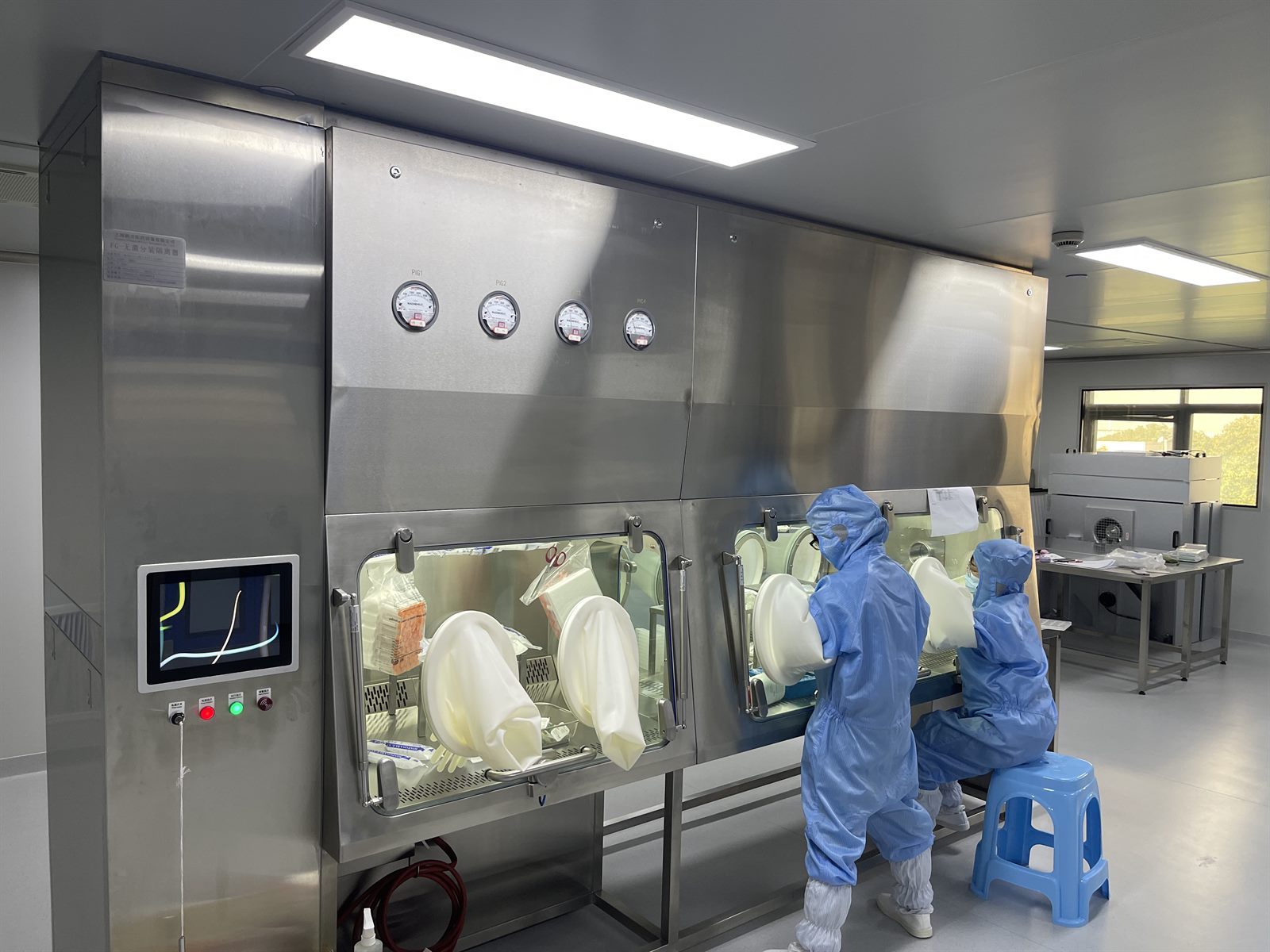 Aseptic Filling IsolatorGrade A (ISO 5) barrier for sterile filling, stoppering and capping.Isolators & Barrier
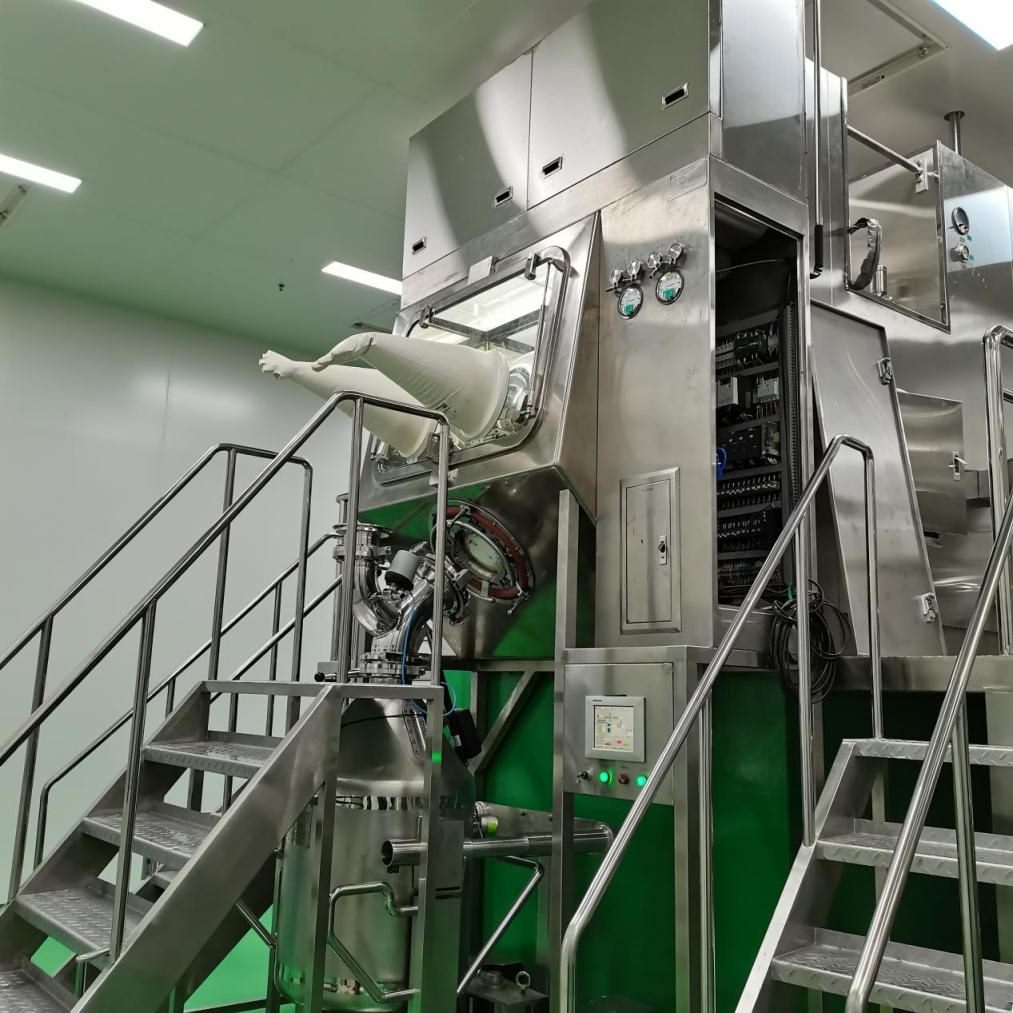 Dispensing & Containment Isolator (OEB5)Negative-pressure barrier for weighing, charging and sampling HPAPI.Isolators & Barrier
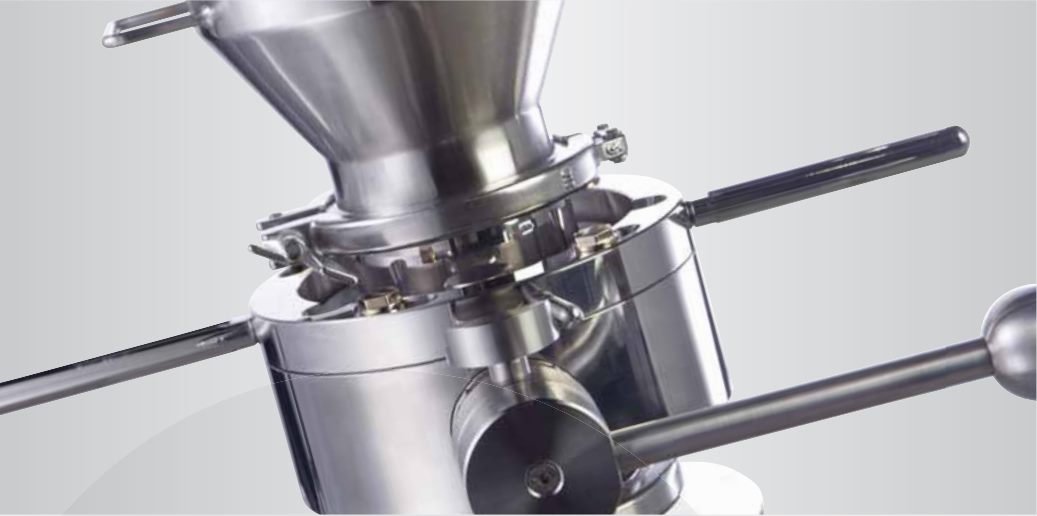 Alpha-Beta Split Butterfly ValveSplit butterfly valve for contained, dust-free transfer of potent powders.Transfer & Containment
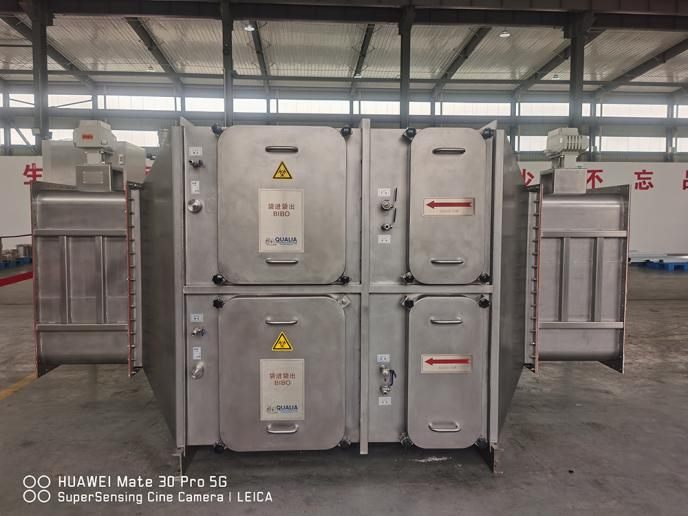 BIBO Filter HousingBag-in/bag-out HEPA housing for safe filter change in P3/P4 labs.Air Handling
Planning a VHP retrofit?
Send us your room list, AHU drawings and how often you need to decontaminate. Our engineers will review whether your AHU is a good candidate.