








Sizing a Mobile VHP Generator for Room Decontamination
A mobile VHP generator is rated for a maximum room volume, but volume alone does not decide whether one unit will do the job. Room layout, air circulation, starting humidity, temperature and the materials inside all change the answer. This guide walks through the inputs, a worked example and the point at which a fixed HVAC-integrated system becomes the better choice.
Key points
- Start from the net volume of every space the vapour must reach, then check layout: separate rooms usually need their own unit or forced mixing.
- The generator’s rated volume assumes a sealed, dehumidified space with good mixing; poor circulation or large absorbent loads reduce what one unit can treat.
- Peroxide concentration is capped by condensation, which depends on temperature and humidity — dehumidifying first raises the usable concentration.
- Aeration usually takes longer than gassing; it often decides turnaround more than injection rate does.
- For suites over about 1,000 m³ or frequent routine cycles, an HVAC-integrated system is usually more practical than several mobile units.
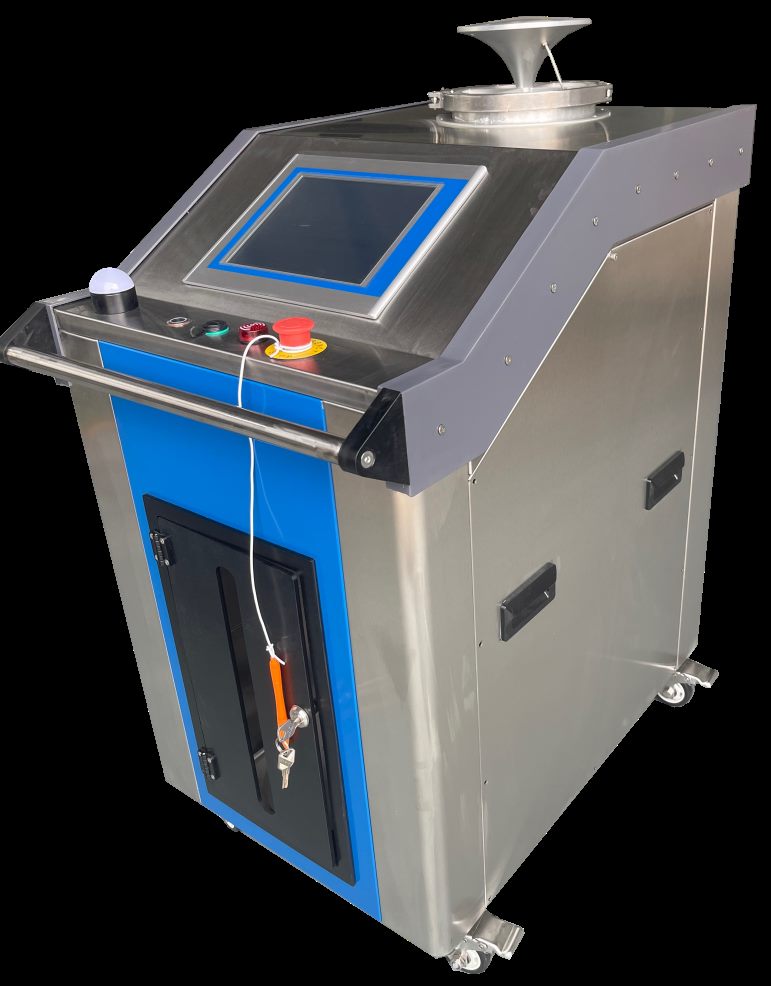
The inputs that matter
| Input | Why it matters |
|---|---|
| Net volume | Gross room volume minus large solid equipment. It sets how much peroxide must be held in the air. |
| Layout | One open room mixes well; an L-shaped room, connected rooms or a room with a corridor do not mix without help. |
| Air circulation | The generator’s own airflow plus any fans. Vapour has to reach corners, under benches and behind equipment. |
| Starting humidity | Water vapour and peroxide vapour compete for the same space before condensation. Drier air lets more peroxide stay as vapour. |
| Temperature | Colder rooms and cold surfaces reach their condensation point at lower concentration. |
| Materials load | Cardboard, paper, fabrics and some plastics absorb peroxide, increasing consumption and lengthening aeration. |
| Sealing | Leaks lose vapour, slow the build-up and expose people outside. |
Read the rating correctly
A mobile generator’s maximum treatment volume — 300 m³ for the FG-VHP-M500 — assumes a sealed space with HVAC isolated, starting humidity brought down by the dehumidification phase, normal room temperature and reasonable mixing. Other figures on the data sheet matter as much:
- Injection rate (1–40 g/min of sterilant on the M500) sets how fast the concentration rises and how much margin there is to compensate for decomposition and absorption.
- Airflow (≥ 500 m³/h on the M500) moves vapour away from the generator. In a 300 m³ room that is under two air changes per hour from the unit alone, so additional fans are normal in larger or irregular spaces.
- Dehumidification target (≤ 50% RH on the M500) sets the starting point for the gassing phase.
Treat the maximum as the limit for a good room, not a target for a difficult one.
How much peroxide is in the air
A rough calculation shows why injection rate and absorption matter. At 25 °C, 1 ppm of hydrogen peroxide vapour is about 1.39 mg/m³. Holding 300 ppm in 250 m³ needs about 300 × 1.39 × 250 ≈ 104 g of hydrogen peroxide in the air at any moment — roughly 300 g of 35% solution. In practice the generator injects considerably more over the cycle, because peroxide continuously decomposes on surfaces and is absorbed by materials. The actual dose is set during cycle development, not by calculation; the arithmetic is useful for spotting a generator that is plainly too small.
The upper limit on concentration is condensation. The warmer and drier the room, the more peroxide it can hold as vapour. This is why the dehumidification phase exists, and why cold rooms or cold external walls are worst-case locations — see VHP concentration, humidity and condensation.
A worked example
A small production suite has a 120 m³ processing room, a 90 m³ preparation room and a 60 m³ corridor, all connected by doors: 270 m³ net.
- Volume: 270 m³ is under the 300 m³ rating of one M500.
- Layout: three spaces connected by doorways. With doors open and two or three circulation fans placed to push vapour into the far room, one unit can be feasible; without fans the far room will lag.
- Margin: 270 m³ is 90% of the rating, leaving little margin for absorption or a cool corridor.
- Decision: one unit is feasible if feasibility cycles with indicators in the far corners of each room pass. Two units — one in the processing room, one in the preparation room — give margin and a shorter gassing phase. For a suite that is treated routinely, two units are usually the better choice.
Whichever is chosen, place biological and chemical indicators at the worst-case locations: the far corners of the furthest room, under benches, behind equipment and near cold surfaces.
Aeration often decides turnaround
Gassing is usually the shorter part of the cycle. Aeration — bringing peroxide down to the re-entry limit — depends on the room volume, how much peroxide the materials absorbed, and how it is removed: catalytic conversion inside the room, or restoring the HVAC to purge it. A generator with a larger injection rate does not shorten aeration; better sealing, removing absorbent materials and a planned purge route do. The factors are covered in VHP aeration.
When a mobile unit is the wrong answer
Mobile generators suit rooms up to a few hundred cubic metres, occasional cycles and sites with many separate rooms. Consider an HVAC-integrated system when:
- the area is a suite of 1,000 m³ or more;
- cycles are routine, so moving, connecting and sealing units becomes a recurring labour cost;
- the ductwork and the sections upstream of the HEPA filters also need treatment.
The trade-offs are compared in portable vs integrated VHP generators, and a working installation is described in the mRNA plant HVAC VHP case study.
Fenggu Equipment for This
- Mobile VHP room sterilizer (FG-VHP-M500) — wheeled unit for spaces up to 300 m³.
- HVAC-integrated VHP system (FG-VHP-C1000 / C2000) — treats whole suites through the existing AHU.
Free tool: VHP Equipment Selector — suggests suitable VHP equipment for a room, suite, isolator or enclosure, based on published capacities.
FAQ
How big a room can one mobile VHP generator treat?
It depends on the unit and the room. The Fenggu FG-VHP-M500 is rated for up to 300 m³, assuming a sealed, dehumidified room with good mixing. Irregular layouts, cold surfaces or large absorbent loads reduce what one unit can treat reliably.
Can one generator treat several connected rooms?
Sometimes, if the doors are open, the total volume is within the rating and fans push vapour into the far rooms. Feasibility cycles with indicators in each room decide; separate rooms often need one unit each.
Do I need fans with a mobile VHP generator?
In small open rooms the generator’s airflow is often enough. In larger, L-shaped or connected spaces, circulation fans are normal to move vapour into corners and behind equipment.
How much hydrogen peroxide does a room cycle use?
The amount held in the air is roughly 1.39 mg/m³ per ppm at 25 °C, but the generator injects considerably more over the cycle because peroxide decomposes and is absorbed. The dose is set during cycle development.
When should I choose an HVAC-integrated system instead?
For suites over about 1,000 m³, for routine cycles where moving and sealing mobile units becomes a recurring task, or when the ductwork and sections upstream of the HEPA filters must also be treated.
References
- EN 17272:2020, Methods of airborne room disinfection by automated process
- EU GMP Annex 1 (2022), Manufacture of Sterile Medicinal Products
- Fenggu FG-VHP-M500 technical data sheet
Related Products
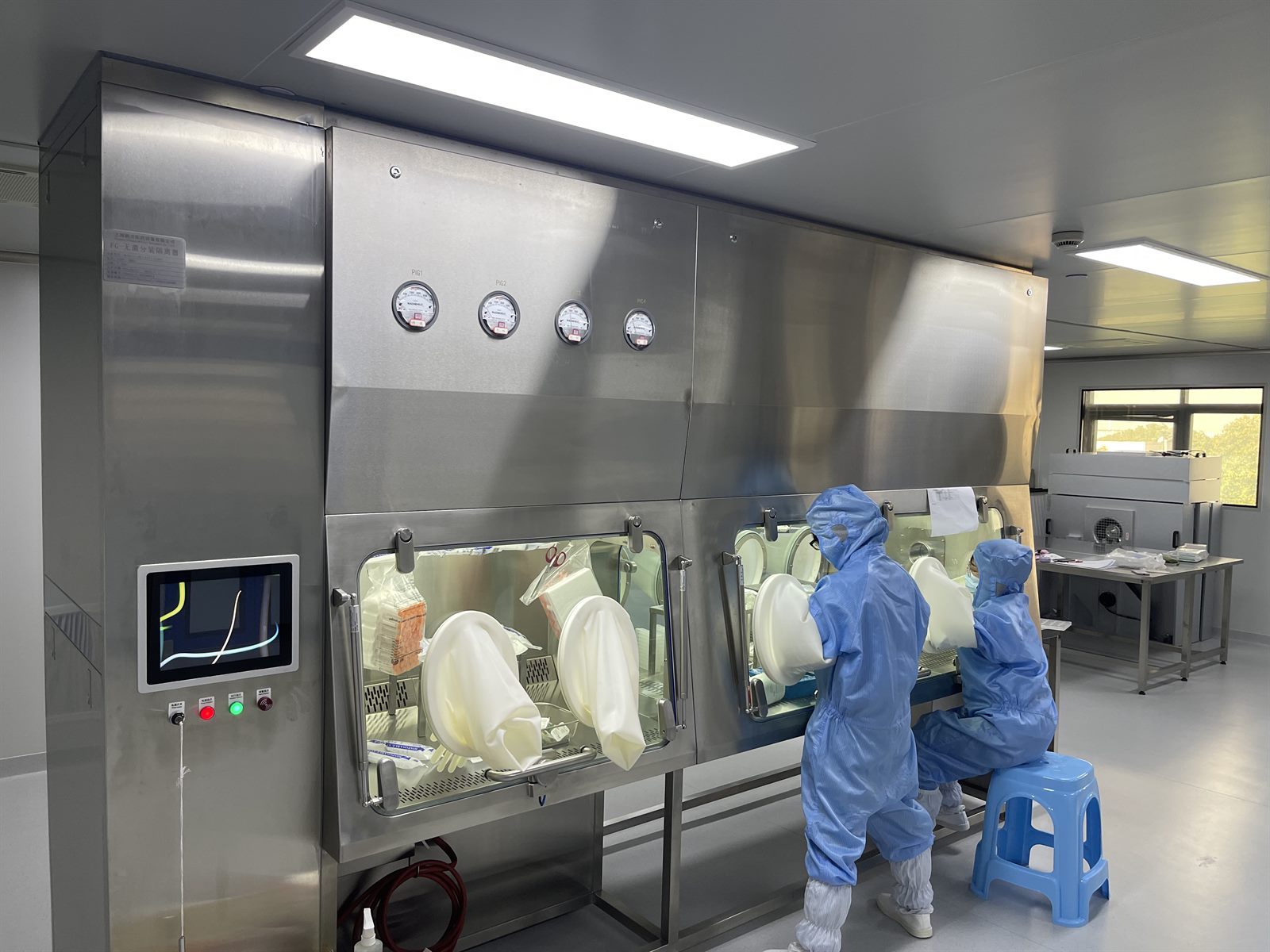 Aseptic Filling IsolatorGrade A (ISO 5) barrier for sterile filling, stoppering and capping.Isolators & Barrier
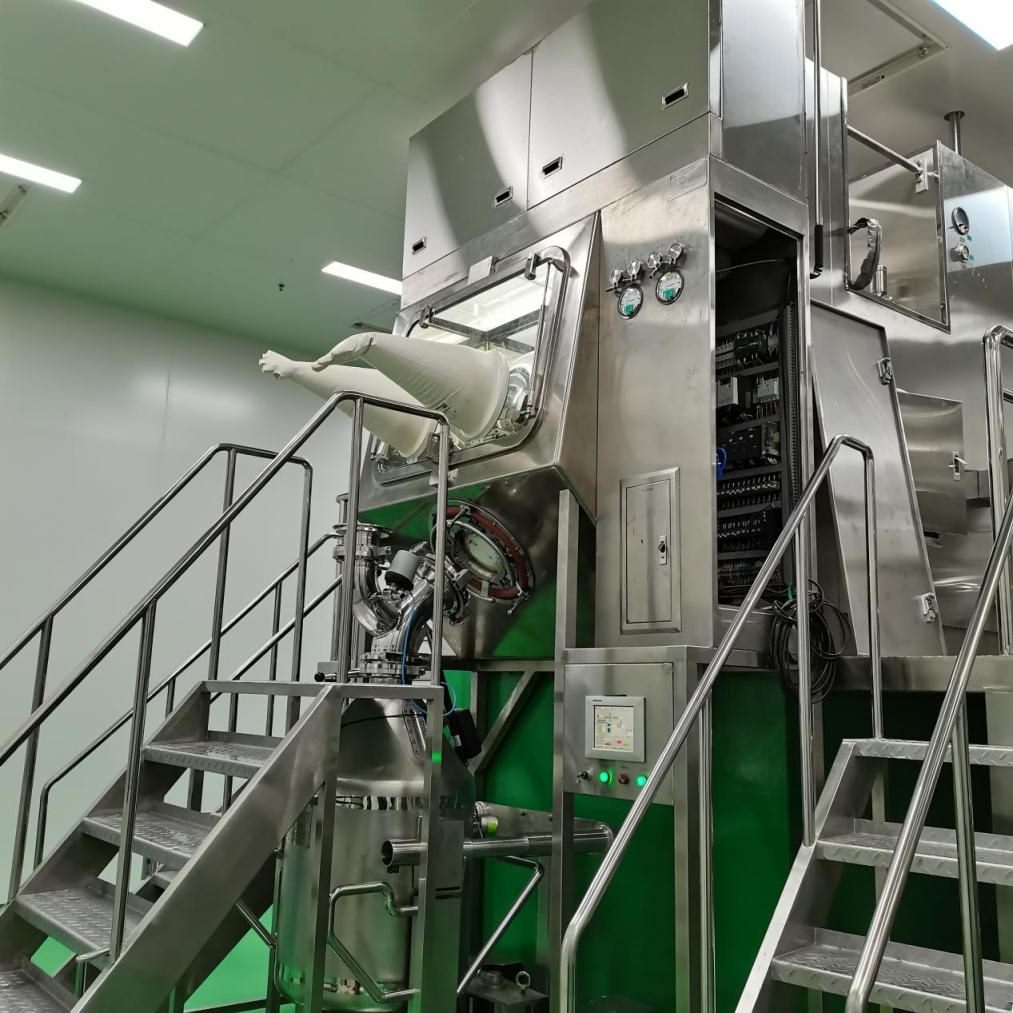 Dispensing & Containment Isolator (OEB5)Negative-pressure barrier for weighing, charging and sampling HPAPI.Isolators & Barrier
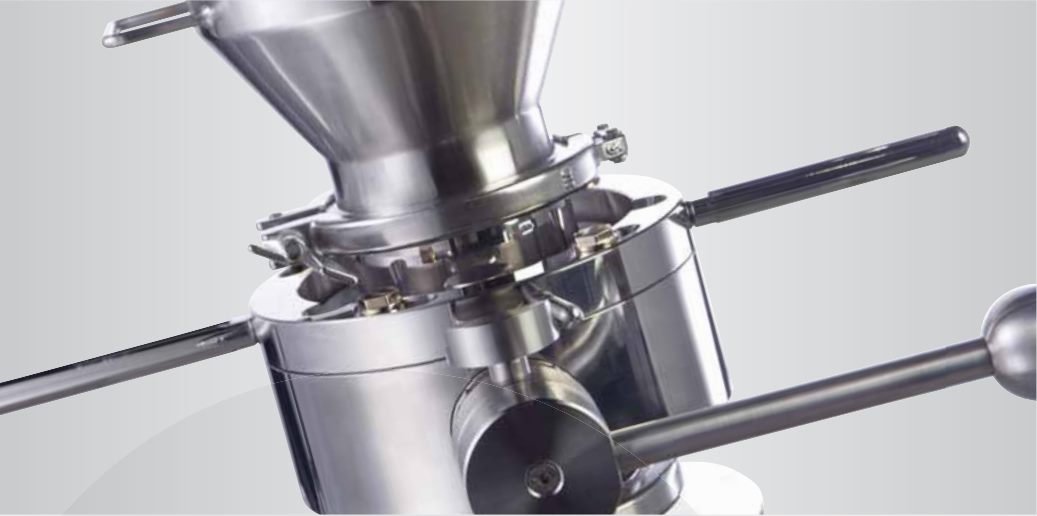 Alpha-Beta Split Butterfly ValveSplit butterfly valve for contained, dust-free transfer of potent powders.Transfer & Containment
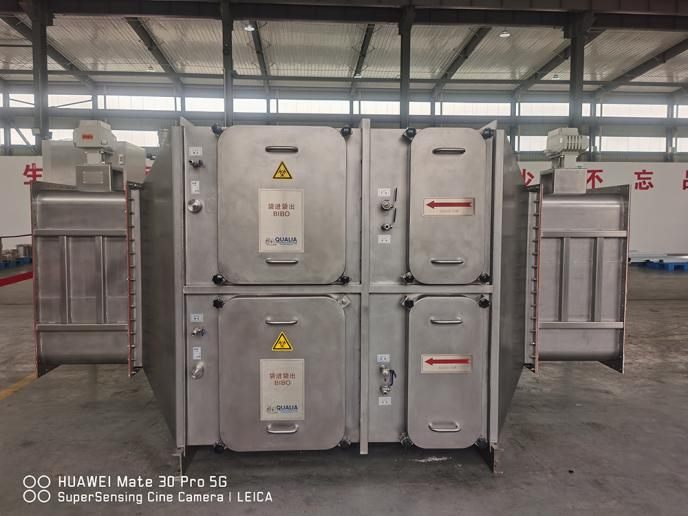 BIBO Filter HousingBag-in/bag-out HEPA housing for safe filter change in P3/P4 labs.Air Handling
Not Sure How Many Units You Need?
Send the room layout, volumes and HVAC arrangement. An engineer will reply with a sizing recommendation.