








What Equipment and Spaces Need VHP Sterilization? Freeze Dryers, Biosafety Cabinets, BIBO Housings & Sterile Rooms
Vaporized hydrogen peroxide (VHP) sterilization is used across pharma and biotech because it is low-temperature, residue-free, and able to reach into equipment cavities and every corner of a space — something steam and dry heat cannot do. But the target decides the form of VHP sterilization equipment you need: decontaminating the inside of a freeze dryer is a different machine from gassing a whole sterile room. This guide walks through the targets — freeze dryers, biosafety cabinets, bag-in/bag-out (BIBO) filter housings, and sterile rooms — and which hydrogen peroxide sterilizer fits each.
Why VHP covers so many targets
VHP sterilization is a “concentration × time” process: vaporized hydrogen peroxide is delivered to the target, brought to and held at concentration for a set contact time to achieve a validated kill of bacteria, spores and viruses (typically a ≥6-log reduction), then catalytically broken down into water and oxygen with no residue. Three properties let the same chemistry serve both equipment cavities and whole rooms:
- Low temperature. The whole cycle runs near ambient, so freeze dryers, biosafety cabinets, electronics and precision sensors are unharmed — the very reason heat-sensitive targets choose it.
- Penetration. The gas reaches ductwork, deep into HEPA media, and equipment dead-legs that steam and wiping cannot.
- No residue. The only breakdown products are water and oxygen — no chemical residue, no rinse.
The only difference is how the gas is delivered and held at concentration. For a sealed equipment cavity you circulate gas through it; for a whole room you fill the space with a mobile or HVAC-coupled system. For the underlying principle see What Is VHP Decontamination, and for how the gas is generated see How a VHP Generator Works.
1. Equipment cavities: freeze dryer & biosafety cabinet VHP sterilization
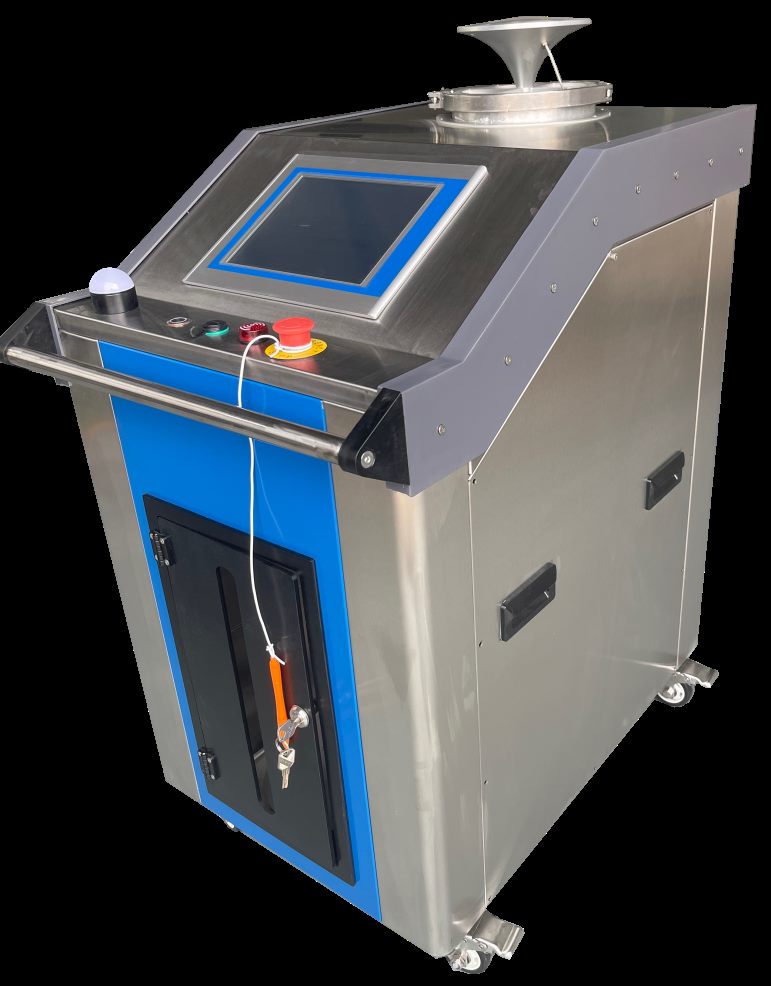
Freeze dryers, biosafety cabinets and fermenters have a sealed internal cavity, so the approach is to inject gas, circulate it inside, then extract and decompose — the job of a recirculating VHP generator.
Freeze dryer VHP sterilization
A freeze dryer (lyophilizer) has a large chamber, complex piping and shelf stacks whose internal surfaces cannot be wiped, and it usually connects straight to an aseptic filling line — the textbook VHP target. A freeze dryer VHP sterilizer (freeze dryer hydrogen peroxide sterilizer) pipes VHP into the chamber, circulates it through the chamber and lines, holds concentration for the contact time, and delivers a validated decontamination of the internal surfaces. The low temperature matters especially here — a freeze dryer is itself a low-temperature machine and cannot take steam.
Biosafety cabinet VHP sterilization
A biosafety cabinet VHP sterilizer (biosafety cabinet hydrogen peroxide decontamination) is used to gas out a whole cabinet before maintenance, filter change, or changing the research agent: VHP is filled and circulated inside, decontaminating the HEPA media along with the cabinet, so operators are safe. It is replacing traditional formaldehyde fumigation, which is slow, leaves residue and needs neutralizing — VHP is low-temperature, residue-free and faster.
Both rely on recirculating equipment; see the product page Recirculating VHP Generator, and for the difference from pulsed-vacuum units see How to Choose a VHP Generator: Portable vs Integrated.
2. Filter housings: BIBO bag-in/bag-out VHP sterilization
Exhaust that carries potent or biohazardous particulate is filtered through a BIBO (bag-in/bag-out) filter housing. Its HEPA filter has trapped the hazard, so the filter change is the highest-risk step on the line. Good practice is to decontaminate the housing with VHP before changing the filter — a bag-in/bag-out (BIBO) VHP sterilizer kills the contamination first, then the old filter is withdrawn safely in the bag. For the change principle see BIBO Filter Housing Explained, and for the dedicated unit see VHP BIBO Sterilizer.
3. Room spaces: sterile room / aseptic area VHP sterilizers
When the target is a whole room, the gas has to fill the space and hold concentration evenly — the problem a sterile room VHP sterilizer / aseptic area hydrogen peroxide sterilizer solves. There are three forms depending on the room:
- Mobile VHP space sterilization — wheeled in and self-contained, for existing rooms that cannot be modified: Mobile VHP Room Sterilizer.
- HVAC-integrated — VHP vaporization coupled into the existing air handling so the ductwork distributes gas through the whole clean area (and the ducts themselves), for large or multi-room suites: HVAC-Integrated VHP System.
- Airlock / pass-through integration — surface decontamination of materials in the airlock before they enter Grade A/B: Airlock VHP Sterilization.
Whichever form, holding concentration and controlling humidity and condensation make or break the cycle — see VHP Cycle Parameters.
Target → recommended VHP equipment at a glance
| Sterilization target | Also searched as | Recommended equipment form |
|---|---|---|
| Freeze dryer | freeze dryer / lyophilizer VHP sterilization | Recirculating VHP generator |
| Biosafety cabinet | biosafety cabinet VHP / hydrogen peroxide decon | Recirculating VHP generator |
| BIBO housing | bag-in/bag-out filter housing VHP | Dedicated BIBO VHP sterilizer |
| Sterile room (existing) | sterile room VHP sterilizer / VHP space sterilizer | Mobile VHP room sterilizer |
| Large / multi-room | pharma VHP sterilization equipment | HVAC-integrated VHP system |
| Materials into aseptic area | airlock VHP sterilization | Airlock / pass-through VHP |
How to choose, and what to look for in a manufacturer
Whether you need pharma VHP sterilization equipment or laboratory VHP sterilization equipment, start from the target: are you decontaminating a specific equipment cavity, or a space? Then check that the unit delivers a validatable cycle — a proper vaporized hydrogen peroxide sterilizer not only makes gas but controls concentration, humidity and contact time, and comes with a validation approach (biological indicators to a 6-log kill). When choosing a VHP sterilizer manufacturer, look for one that can develop and qualify the cycle for your equipment or room, not just hand over a standard box. See VHP Cycle Development & Qualification.
FAQ
Can a freeze dryer be steam-sterilized instead of VHP?
A freeze dryer is a low-temperature, precision machine with complex internal surfaces that are hard to reach; steam and dry heat are neither suitable nor able to cover the dead-legs. VHP is low-temperature, penetrating and residue-free — the mainstream method for freeze dryer cavity decontamination.
Can one VHP generator do both equipment and rooms?
The principle is the same, but delivery differs: equipment cavities use a recirculating unit, rooms use a mobile or HVAC-integrated system. Equipment is selected by target — usually not one machine for everything.
How soon can a room or machine be used after VHP?
The cycle ends with aeration and catalytic breakdown to a safe residual (commonly ≤1 ppm) before entry; the time depends on the volume and ventilation.
Related Products
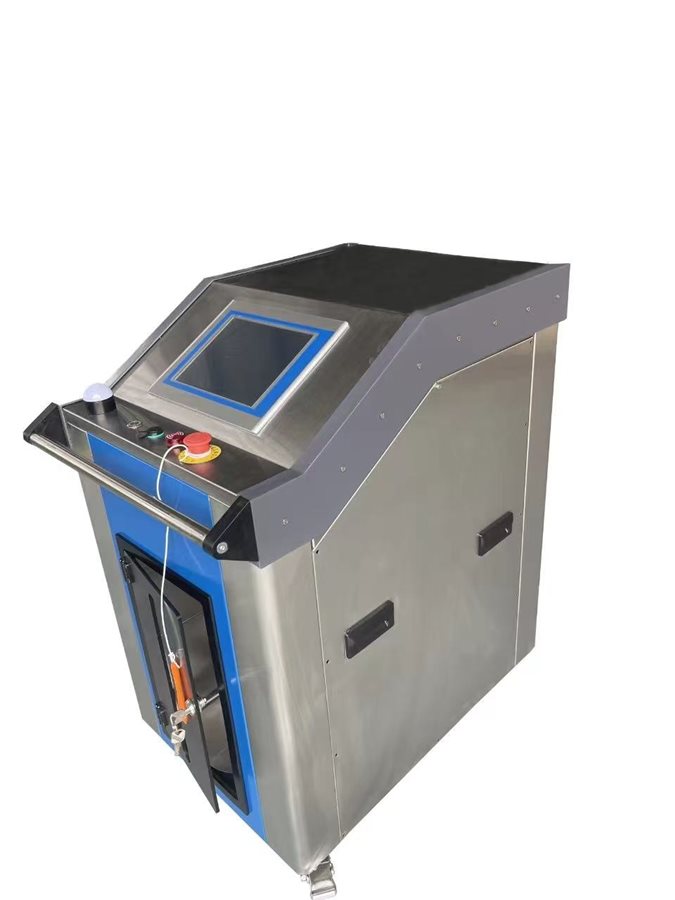 Recirculating VHP GeneratorRecirculating VHP for interior decon of BSCs, lyophilizers and fermenters.VHP Sterilization
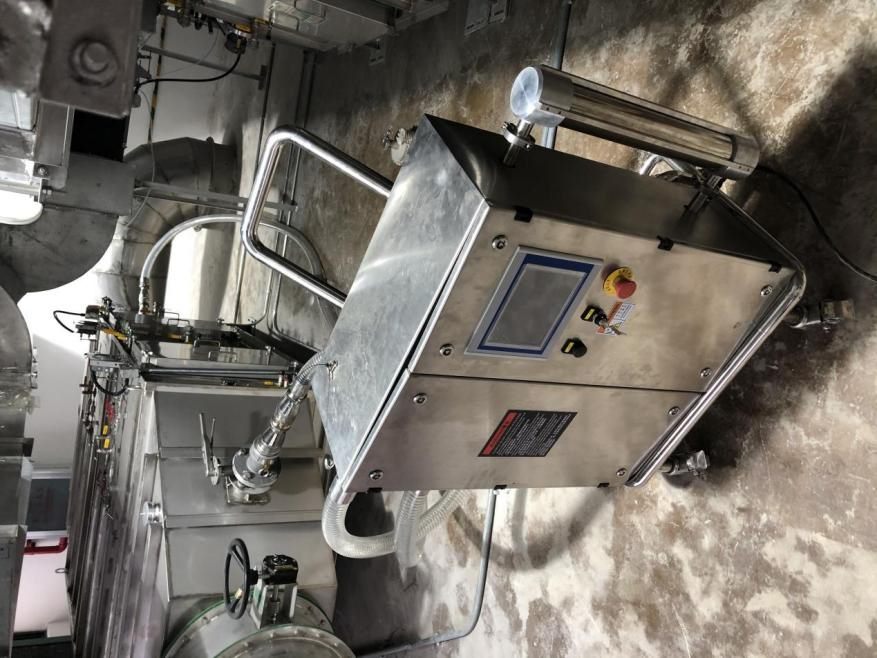 VHP BIBO SterilizerDedicated unit for decontaminating BIBO filter housings.VHP Sterilization
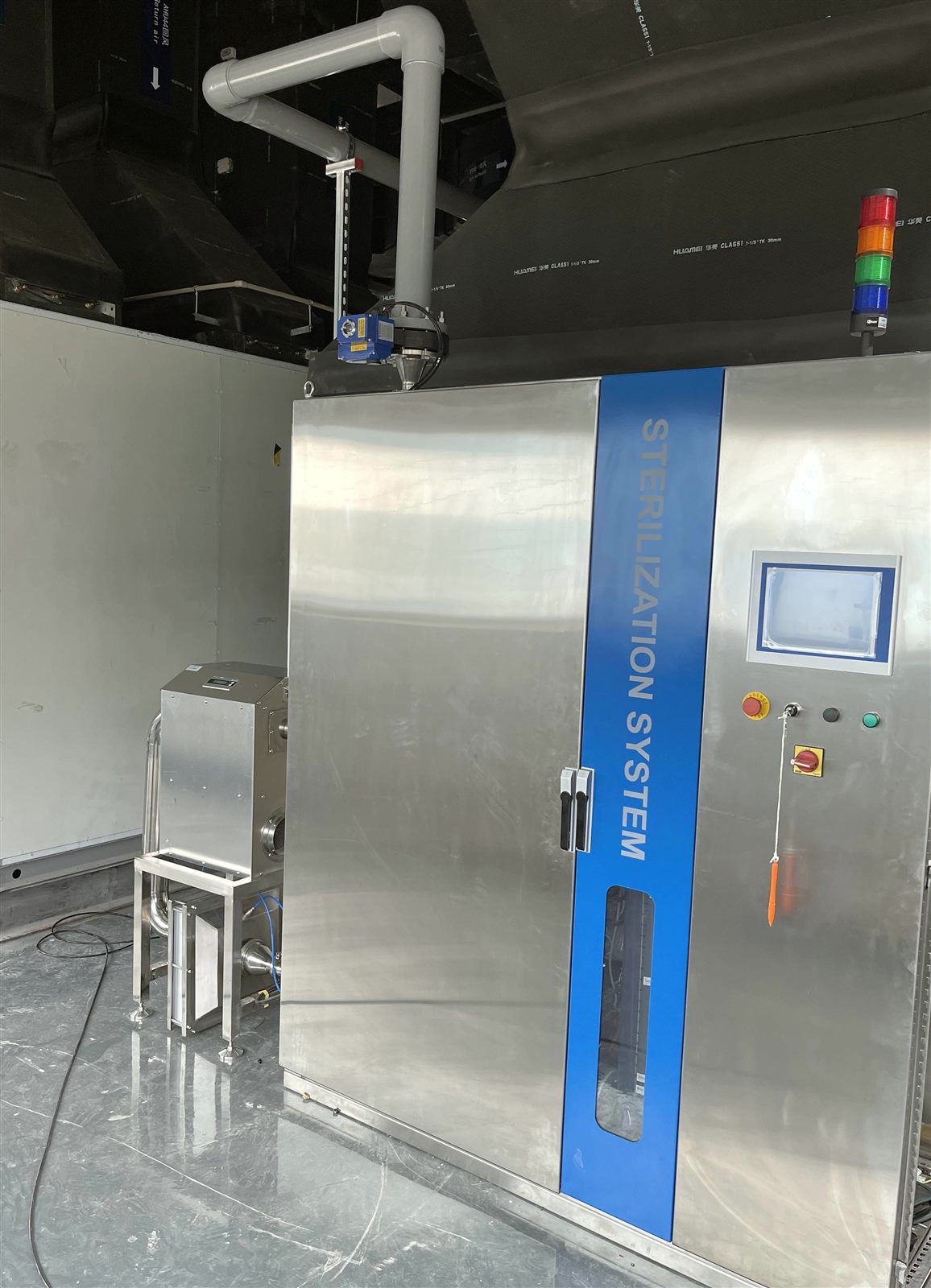 HVAC-Integrated VHP SystemCouples VHP to existing air handling to decontaminate suites and ductwork.VHP SterilizationMobile VHP Room SterilizerWheeled unit bio-decontaminating rooms up to 300 m³.VHP Sterilization
Have equipment or a room that needs VHP sterilization?
Tell us the target — freeze dryer, biosafety cabinet, BIBO housing, sterile room or full clean area — and the site conditions, and our engineers will match the right VHP sterilization equipment and a validatable cycle.