








Integrated vs External H2O2 Generator for Isolators: How to Choose
Most pharmaceutical isolators are decontaminated with vaporized hydrogen peroxide (VHP) before use. The hydrogen peroxide can come from a generator built into the isolator, or from a separate generator connected to it for each cycle. Both approaches can be validated, but they lead to different costs, cycle routines and validation work. This guide compares the two and explains which one suits which type of isolator.
Two ways to supply VHP to an isolator
- Integrated generator. The vaporizer, injection, sensors and aeration are part of the isolator. The cycle is started from the isolator’s own control panel and is recorded in the same batch data as the rest of the process.
- External generator. A separate, usually mobile, generator is connected to supply and return ports on the isolator with hoses. The isolator provides the ports, valves and an interface so that the two systems can work together during the cycle.
In both cases the isolator goes through the same steps: it is sealed from the room, conditioned, exposed to hydrogen peroxide vapor that is circulated inside the chamber, and then aerated until the residual concentration is low enough to open it. For how the isolator’s air handling changes between these steps, see isolator HVAC operating modes.
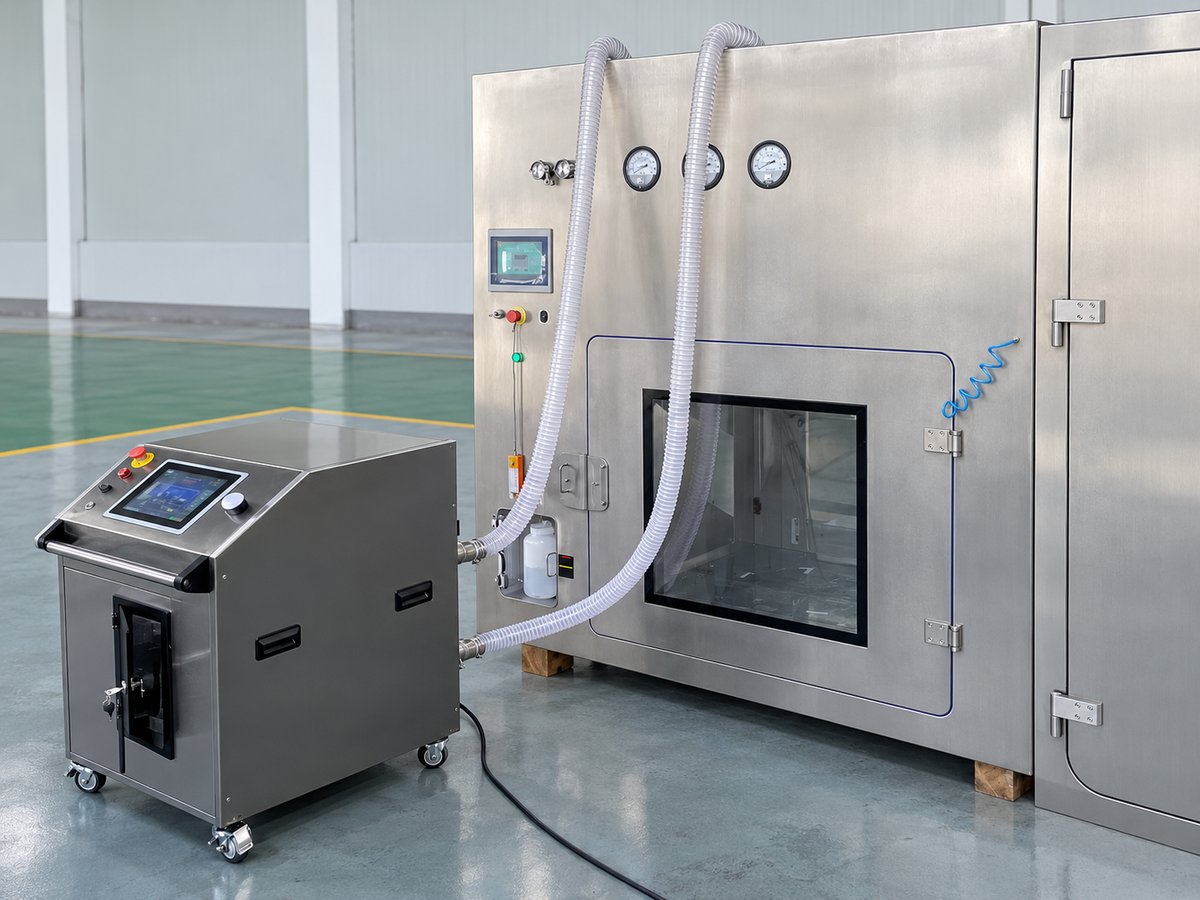
Integrated vs external: side-by-side comparison
| Factor | Integrated generator | External generator |
|---|---|---|
| Set-up before each cycle | None. The cycle runs from a stored recipe. | Hoses are connected, checked for leaks and disconnected after the cycle. |
| Control and data | One control system, one audit trail, one set of alarms. | Two control systems. Signals and records must be linked, or both records kept together. |
| Cycle reproducibility | Fixed pipework and sensor positions, the same every cycle. | Depends on hose routing, length and connection being done the same way every time. |
| Footprint | Takes space inside or next to the isolator. | Generator is stored elsewhere and brought in when needed. |
| Capital cost | One generator per isolator. | One generator can serve several isolators and other equipment. |
| Use for other equipment | No. | Yes: pass boxes, biosafety cabinets, lyophilizers and other enclosures with suitable ports. |
| If the generator fails | The isolator cannot be decontaminated until it is repaired. | Another qualified unit can be used, if one is available. |
| Validation | The cycle is developed and qualified for one isolator and one generator. | Each isolator–generator combination, and the connection procedure, must be covered. |
When an integrated generator makes sense
- Production isolators such as aseptic filling isolators, decontaminated before every campaign. A short, fully automatic cycle with no manual connection steps reduces downtime and the risk of operator error.
- Frequent cycles. If the isolator is decontaminated several times a week, the time spent connecting and disconnecting hoses adds up.
- Closed processes such as cell therapy, where the isolator is decontaminated between batches and the cycle has to be the same every time.
- Data integrity. One control system with one audit trail is easier to review and to defend during inspection.
EU GMP Annex 1 expects the decontamination of isolators to be validated and reproducible. An integrated system makes it easier to show that every cycle ran the same way, because there are fewer variables between cycles.
When an external generator makes sense
- Sterility test isolators in QC laboratories, where cycles are less frequent and the laboratory may have more than one isolator.
- Several isolators or enclosures used occasionally, for example in R&D, pilot plants or hospital pharmacies.
- Existing isolators without VHP, which can be fitted with ports and valves and then served by a mobile generator.
- Sites that also need to treat other equipment, such as biosafety cabinets, lyophilizers or pass boxes, with the same generator.
The main cost of this flexibility is procedure: hose routing, connection order, leak checks and the generator settings for each isolator all have to be written down, trained and followed every time.
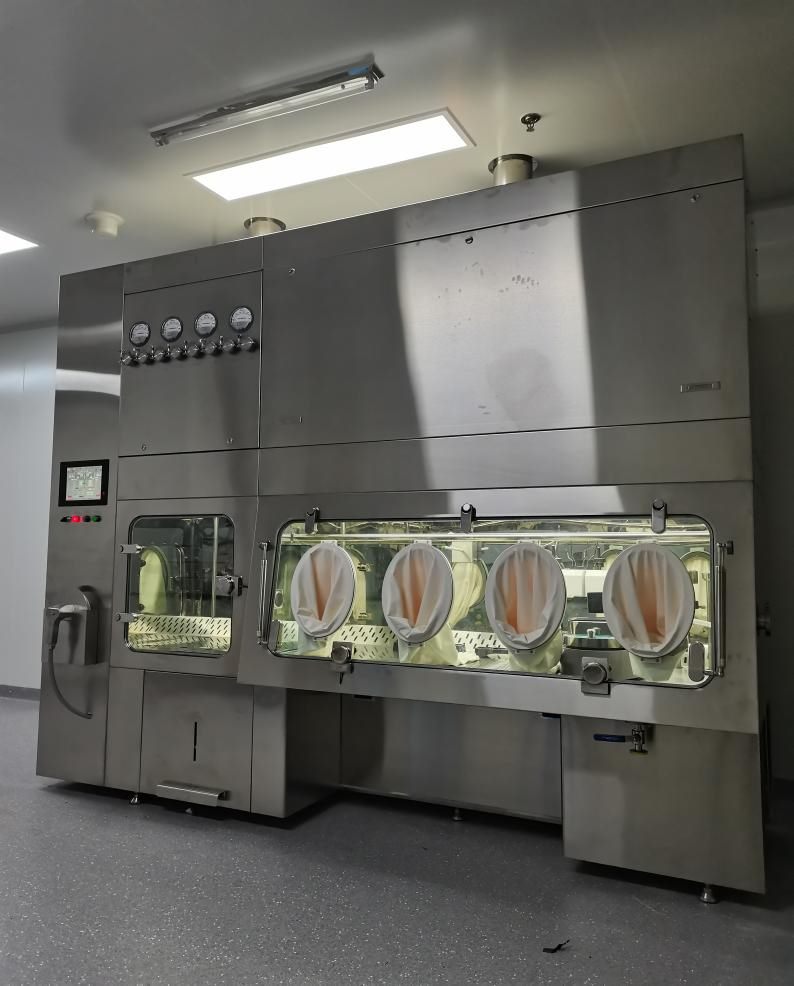
What to check on the isolator side
Whichever option you choose, the isolator itself decides much of the cycle’s performance:
- Leak tightness. The chamber should pass a leak test before each cycle. See isolator leak testing.
- Ports and valves. Supply and return connections must seal reliably and be made of materials compatible with hydrogen peroxide.
- Materials inside the chamber. Gloves, seals, windows and any equipment inside must tolerate repeated exposure. Absorbent materials slow down aeration.
- Circulation. Vapor must reach every exposed surface, including glove fingers, corners and areas behind equipment. Loading patterns should be fixed.
- Sensors. Hydrogen peroxide concentration, humidity and temperature should be measured inside the chamber, not only at the generator.
- Aeration route. Decide whether the vapor is broken down by a catalyst, removed through the exhaust, or both, and what residual level allows the isolator to be opened.
- Interlocks. Doors and transfer ports must stay locked during the cycle and until aeration is complete.
Cycle performance is confirmed during cycle development and qualification with biological indicators at worst-case locations. See how a VHP cycle is validated.
Questions to ask the supplier
- Is the generator integrated, external, or can the isolator be built for either?
- For an external generator: which ports, valves and signals does the isolator provide, and which generators have been used with it?
- Where are the hydrogen peroxide, humidity and temperature sensors located?
- How is the cycle recorded, and how are the generator and isolator records linked?
- What support is provided for cycle development and biological indicator validation?
For a broader checklist, see how to choose a pharmaceutical isolator and the 12 questions to ask a VHP supplier.
Fenggu isolators and generators
Fenggu builds both configurations. The aseptic filling isolator and the cell processing isolator have integrated VHP decontamination. The sterility test isolator has a reserved port for an external VHP generator, such as the recirculating VHP generator, which forms a closed loop with the connected enclosure. Efficacy is specified as a 6-log reduction, subject to cycle validation. To compare generator types for equipment interiors, see pulsed-vacuum vs recirculating VHP generators.
FAQ
Can one external generator serve several isolators?
Yes, if each isolator has suitable ports and each isolator–generator combination has a validated cycle and a written connection procedure.
Is an integrated generator required by GMP?
No. GMP requires the decontamination to be validated and reproducible. Both integrated and external generators can meet this; an integrated system usually makes it easier to show.
Can an existing isolator be converted to VHP decontamination?
Often, if the chamber is tight enough and its materials are compatible with hydrogen peroxide. It needs ports, valves, sensors and a control interface, followed by cycle development and qualification.
Which option has the shorter cycle?
It depends on the chamber volume, materials, load and aeration route more than on where the generator sits. Integrated systems save the connection and disconnection time.
Does an external generator need to be requalified if it is replaced?
The replacement should be shown to deliver the validated cycle on that isolator. How much testing is needed is decided by your change control.
References
- EU GMP Annex 1: Manufacture of Sterile Medicinal Products (2022)
- ISO 13408-6:2021, Aseptic processing of health care products — Part 6: Isolator systems
- PIC/S PI 014-3, Isolators Used for Aseptic Processing and Sterility Testing (2007)
- PDA Technical Report No. 34, Design and Validation of Isolator Systems for the Manufacturing and Testing of Health Care Products (2001)
Related Products
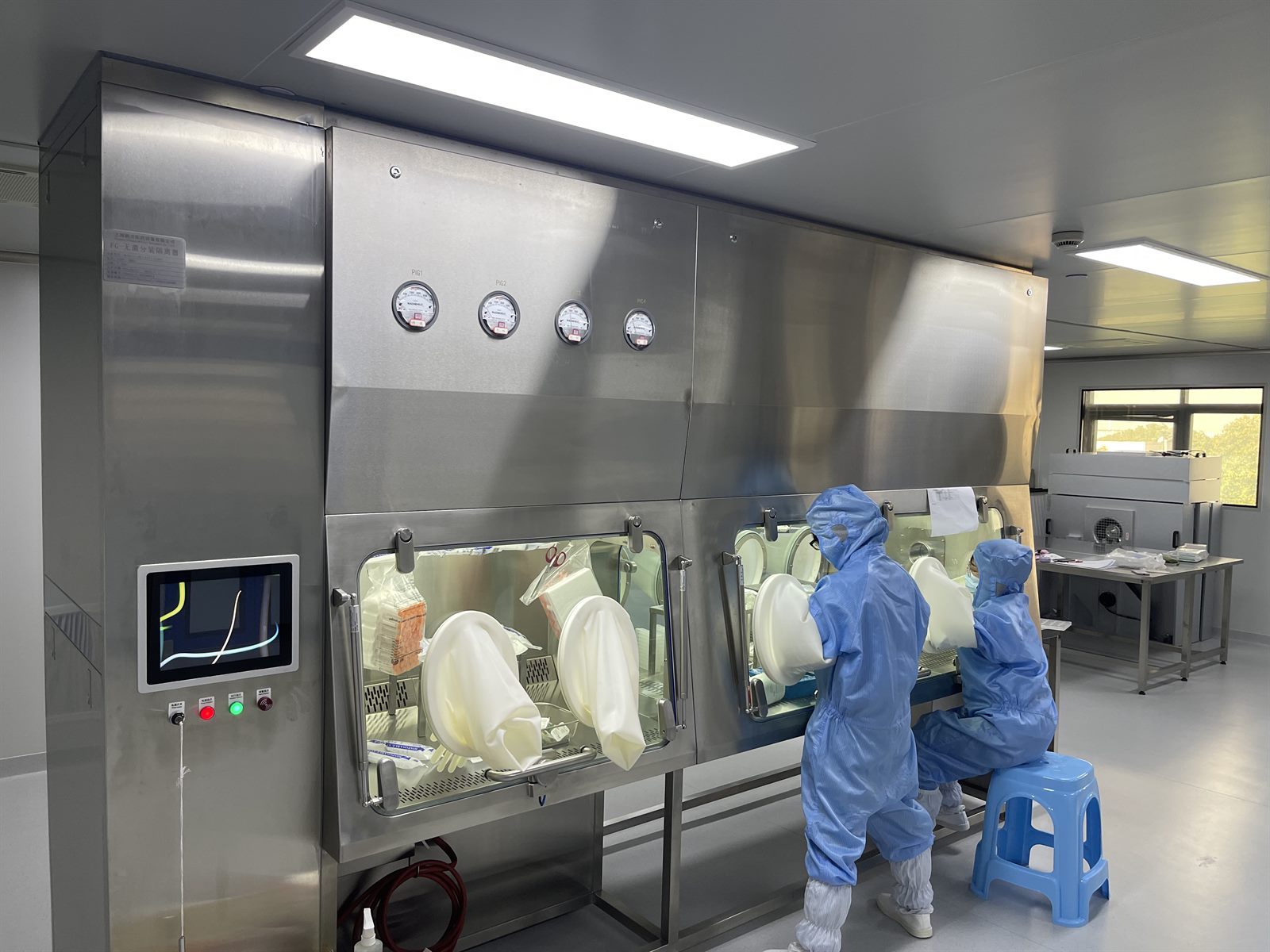 Aseptic Filling IsolatorGrade A (ISO 5) barrier for sterile filling, stoppering and capping.Isolators & Barrier
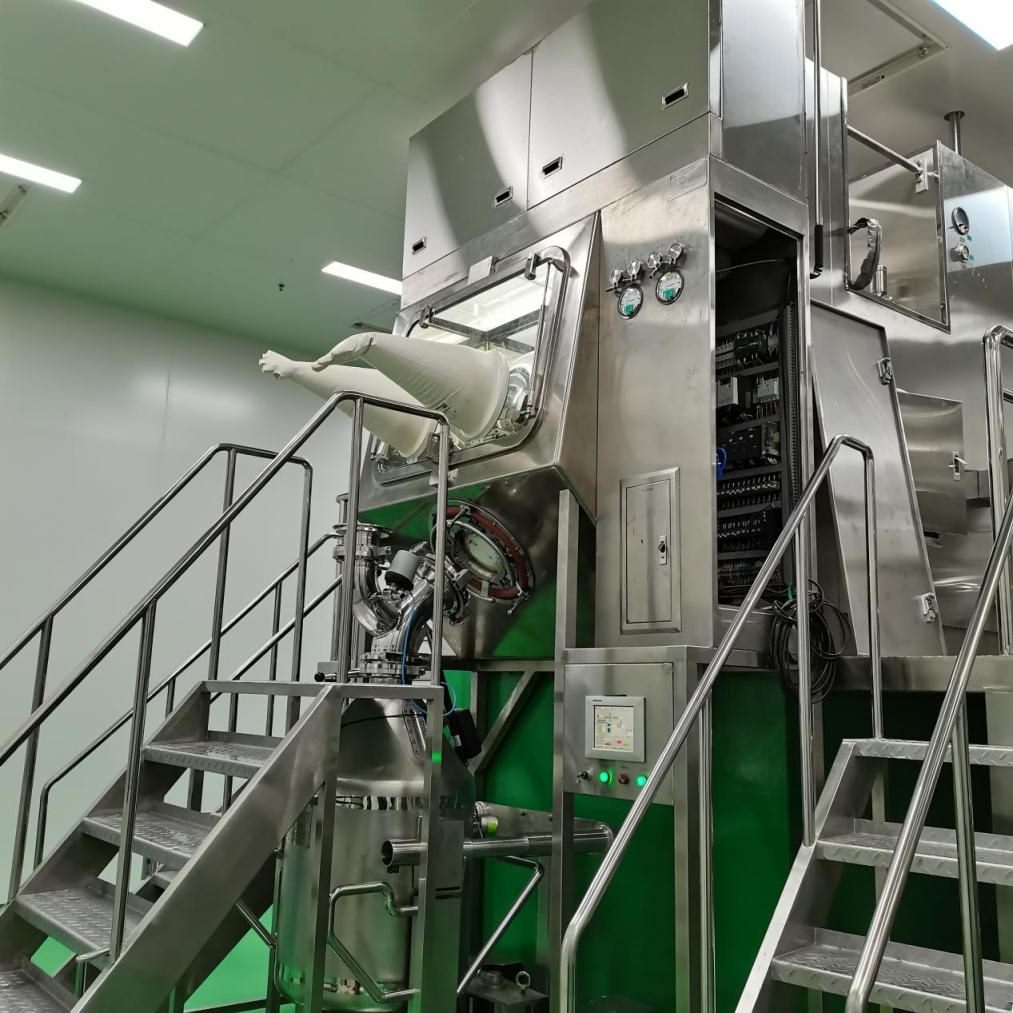 Dispensing & Containment Isolator (OEB5)Negative-pressure barrier for weighing, charging and sampling HPAPI.Isolators & Barrier
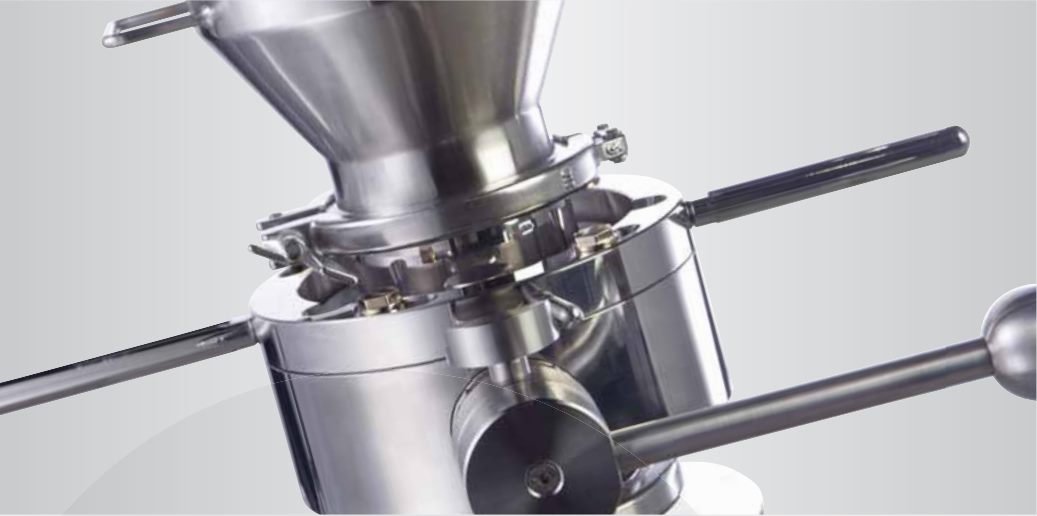 Alpha-Beta Split Butterfly ValveSplit butterfly valve for contained, dust-free transfer of potent powders.Transfer & Containment
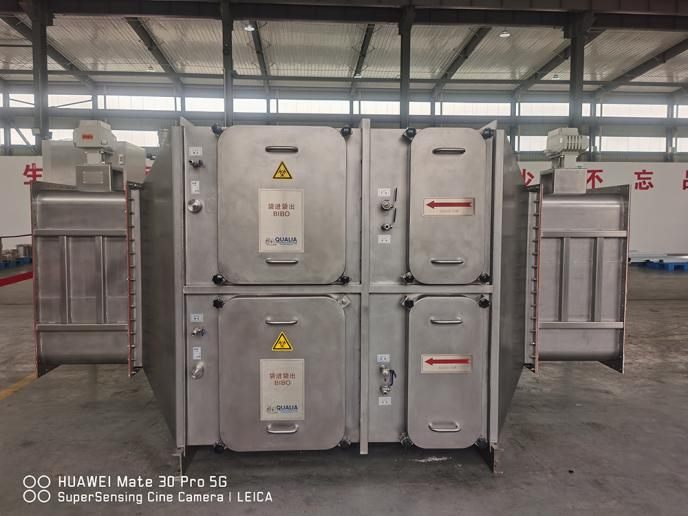 BIBO Filter HousingBag-in/bag-out HEPA housing for safe filter change in P3/P4 labs.Air Handling
Choosing VHP for an isolator?
Tell us about the isolator, how often it is decontaminated and what else needs treatment. Our engineers will help you compare the options.