








VHP Generator Specifications Explained: Injection Rate, Treatment Volume and Cycle Time
Two VHP generator datasheets can look almost identical and still describe machines built for very different jobs. One is designed to treat a 300 m³ cleanroom, another to recirculate vapor through a lyophilizer, a third to treat a BIBO filter housing of a few cubic metres. This guide explains what each line on a VHP generator datasheet means, how the numbers relate to each other, and which questions to ask before you compare quotations.
If you are new to the technology, start with how a VHP generator works. If you have not yet decided between a mobile and an HVAC-integrated system, read portable vs integrated VHP generators first. This article assumes you already know which type you need and want to read its specifications correctly.
1. Start with the application, not the numbers
Every specification on a VHP datasheet is tied to the type of enclosure the generator is designed for. Before comparing any values, place the generator in one of four groups:
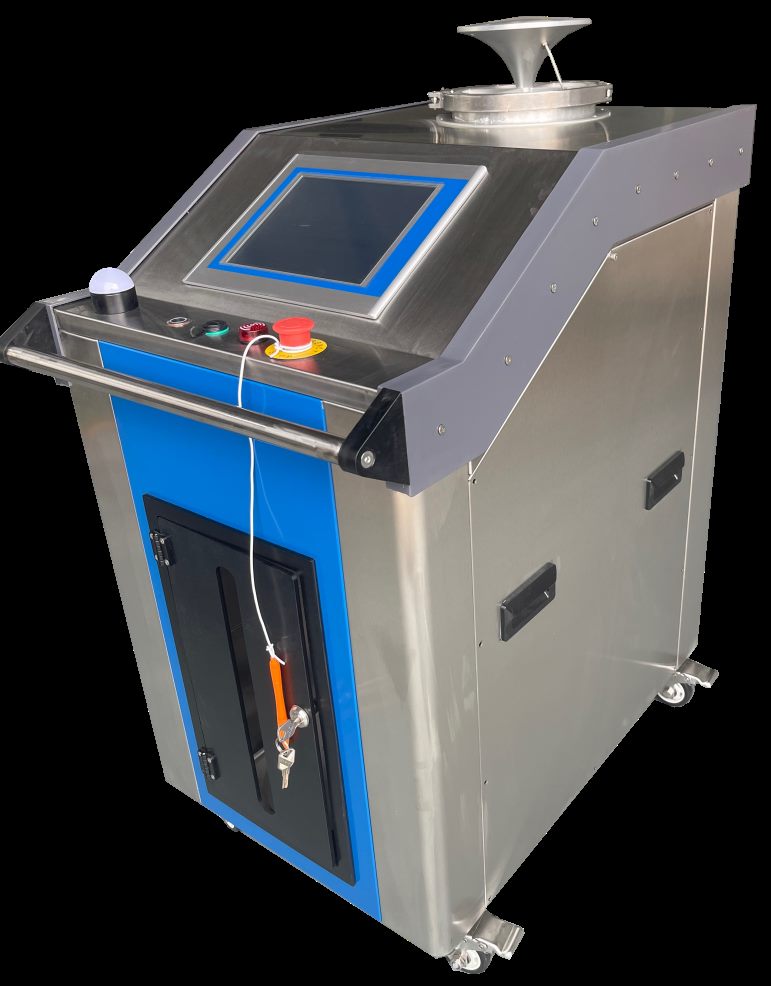
- Room and area generators — mobile units that release vapor into a sealed room through a built-in fan (for example the mobile VHP room sterilizer).
- HVAC-integrated systems — generators that inject vapor into the supply air and use the air-handling system to distribute it to several rooms and the ductwork (see the HVAC-integrated VHP system).
- Equipment generators — units connected by tubing to a closed piece of equipment such as a lyophilizer, biosafety cabinet, fermenter or isolator. They either recirculate vapor in a closed loop (recirculating VHP generator) or use repeated vacuum and repressurisation (pulsed-vacuum VHP generator).
- Dedicated chambers and filter units — airlocks, pass boxes and BIBO filter decontamination units, where the generator and the enclosure are designed together.
A generator’s concentration range, humidity target and cycle time only make sense inside its group. A room unit and an equipment unit should not be compared line by line.
2. Treatment volume
Treatment volume is the largest enclosure the generator is designed to treat in one cycle, usually stated in cubic metres. It is the first number most buyers look at, and the one most often misread.
- It is a design limit, not a guarantee. A unit rated for ≤300 m³ can reach the target conditions in an empty, well-sealed 300 m³ room. A room full of equipment, porous materials or cold surfaces may need longer cycles, more vapor or a second unit.
- Room geometry matters as much as volume. A single open 300 m³ room and a suite of six small rooms with doors and corridors are very different jobs. Mobile units distribute vapor with their own fan; when there are many rooms and doors, extra fans or several units may be needed, and supply and return ducts are hard to reach.
- Integrated systems scale differently. HVAC-integrated systems are rated per model (for example 1,000 m³ and 2,000 m³) because they use the building’s air handling to distribute vapor. Larger volumes are normally handled by configuring more vaporization units.
For a worked method to size a mobile unit to a room, see sizing a mobile VHP generator for room decontamination.
3. Injection rate and air flow
Injection rate is how fast the generator can vaporize hydrogen peroxide solution, usually in grams per minute (g/min). Air flow is how much carrier air the generator moves, in m³/h or L/min.
Together they decide how quickly the enclosure can be brought up to the target concentration and how well the vapor is mixed. A wide injection range, such as 1–40 g/min, lets the same unit run a high rate during conditioning and a low rate to hold concentration steady during the decontamination phase.
Two points to check:
- Maximum rate vs controllable rate. The useful question is not only the maximum, but how finely the rate can be controlled at the low end. Over-injection during the hold phase is a common cause of condensation.
- Vaporization temperature. Flash vaporization heats the solution on a hot surface (for example ≤120 °C). The vapor must leave the generator fully vaporized; droplets carried into the room or equipment behave like a fog, not a vapor.
4. VHP concentration (ppm)
Concentration is the amount of hydrogen peroxide vapor in the air, stated in parts per million (ppm). Datasheets give a range rather than a single value, and the ranges differ a lot between generator types:
- Room and HVAC systems typically work in the low hundreds of ppm across a large volume.
- Closed-loop equipment generators often run higher concentrations, because the enclosure is small and the loop is sealed.
- BIBO filter units may run much lower concentrations for a longer hold on a small volume.
A higher number is not automatically better. The concentration that matters is the one that is actually reached and held at the worst-case locations in your enclosure, without condensation. Ask the supplier where the concentration is measured (at the generator outlet, in the return air, or by a sensor in the room) and how the sensor is calibrated. For the relationship between concentration, humidity and saturation, see VHP cycle parameters: concentration, humidity and condensation.
5. Temperature and humidity targets
Most datasheets state a process temperature range (often around 25–35 °C) and a humidity limit, either for the enclosure before injection starts or during the cycle. These are not comfort settings. They define the conditions under which the cycle was developed.
- Humidity before injection. Water vapor and hydrogen peroxide vapor share the same air. The drier the enclosure at the start, the more hydrogen peroxide it can hold before it condenses. That is why room cycles begin with dehumidification and why datasheets give targets such as ≤50% RH or <30% RH.
- Who controls the humidity. In an HVAC-integrated system the air-handling unit dehumidifies the space. A mobile unit usually depends on the room’s HVAC to reach the target before the cycle starts. A BIBO unit may have its own desiccant dryer. Check which piece of equipment is responsible, because that changes your facility requirements.
- Cold surfaces. A room can be at the right average temperature and still have cold walls, windows or equipment where vapor condenses first. The datasheet temperature is for the air; your cycle development has to account for surfaces.
6. Cycle time and aeration time
This is where datasheets are easiest to misread. A VHP cycle has four phases: dehumidification, conditioning, decontamination (hold), and aeration. Ask exactly which phases a stated time covers.
- “Full cycle time” should cover the complete cycle, from start to release of the enclosure. Some suppliers quote only the decontamination phase.
- Aeration time is how long it takes to bring the concentration back down to a safe level before people re-enter or the equipment returns to production. It can be as long as, or longer than, the rest of the cycle. It depends on whether residual vapor is removed by a catalytic converter inside the generator, by fresh air from the HVAC system, or both.
- “Determined by validation” is an honest answer for room units. The real cycle time for a given room is set during cycle development, not by the generator alone.
7. Residual concentration after aeration
Most datasheets state a residual target of ≤1 ppm. This matches the common occupational exposure limit for hydrogen peroxide: OSHA’s permissible exposure limit is 1 ppm as an 8-hour time-weighted average. Check how residual concentration is confirmed. A low-range sensor in the room, separate from the process sensor, is the usual method.
8. Sterilant
VHP generators in pharmaceutical use normally run on 30–35% hydrogen peroxide solution. Check:
- the concentration and grade the generator is designed and validated for;
- whether the supplier requires its own branded sterilant, or allows any solution that meets the stated specification;
- typical consumption, often given in grams per cubic metre. This number, more than the purchase price, drives the running cost of a room or HVAC system.
Note that aerosolized (dry-fog) hydrogen peroxide machines are a different technology and often use a dedicated sporicidal solution. Their datasheets state droplet size rather than vapor concentration. See vaporized vs aerosolized hydrogen peroxide.
9. Sporicidal efficacy (“6-log”)
Datasheets often state “≥6-log reduction”. Read it as a target the cycle can be developed and validated to achieve, normally against Geobacillus stearothermophilus biological indicators placed at worst-case locations. It is not a property of the generator alone. The same generator can pass or fail depending on the enclosure, loading, temperature and humidity. A reputable datasheet adds wording such as “subject to validation”. For how this is demonstrated, see how a VHP cycle is validated.
10. Materials, noise, power and controls
| Specification | What to check |
|---|---|
| Materials | Exterior and wetted parts. SUS304 is common for housings; SUS316L is preferred for parts in contact with hydrogen peroxide. Non-metal parts (PVC, CPVC, silicone) should be compatible with hydrogen peroxide. |
| Noise | Matters if the unit runs inside an occupied area or a laboratory. Ask at what distance the dB(A) value was measured. |
| Power | Voltage, frequency and rated power. Many units are built for 220 V / 50 Hz; confirm your site supply before ordering for export. |
| Controls | PLC and HMI brand, recipe storage, user access levels, audit trail, and data export. For GMP use, ask whether data logging can be configured to support 21 CFR Part 11 and EU Annex 11. |
| Sensors | Which parameters are measured in real time (concentration, temperature, humidity, pressure), and their resolution and calibration interval. |
Example: specifications across one VHP product range
The table below shows how the same parameters change across Fenggu’s VHP product range. It shows why the numbers should only be compared within the same type of generator. Values are taken from Fenggu’s current product specifications; cycle performance for a specific project is confirmed by cycle development and validation.
| Model | Type | VHP concentration | Treatment volume | Full cycle time | Aeration time |
|---|---|---|---|---|---|
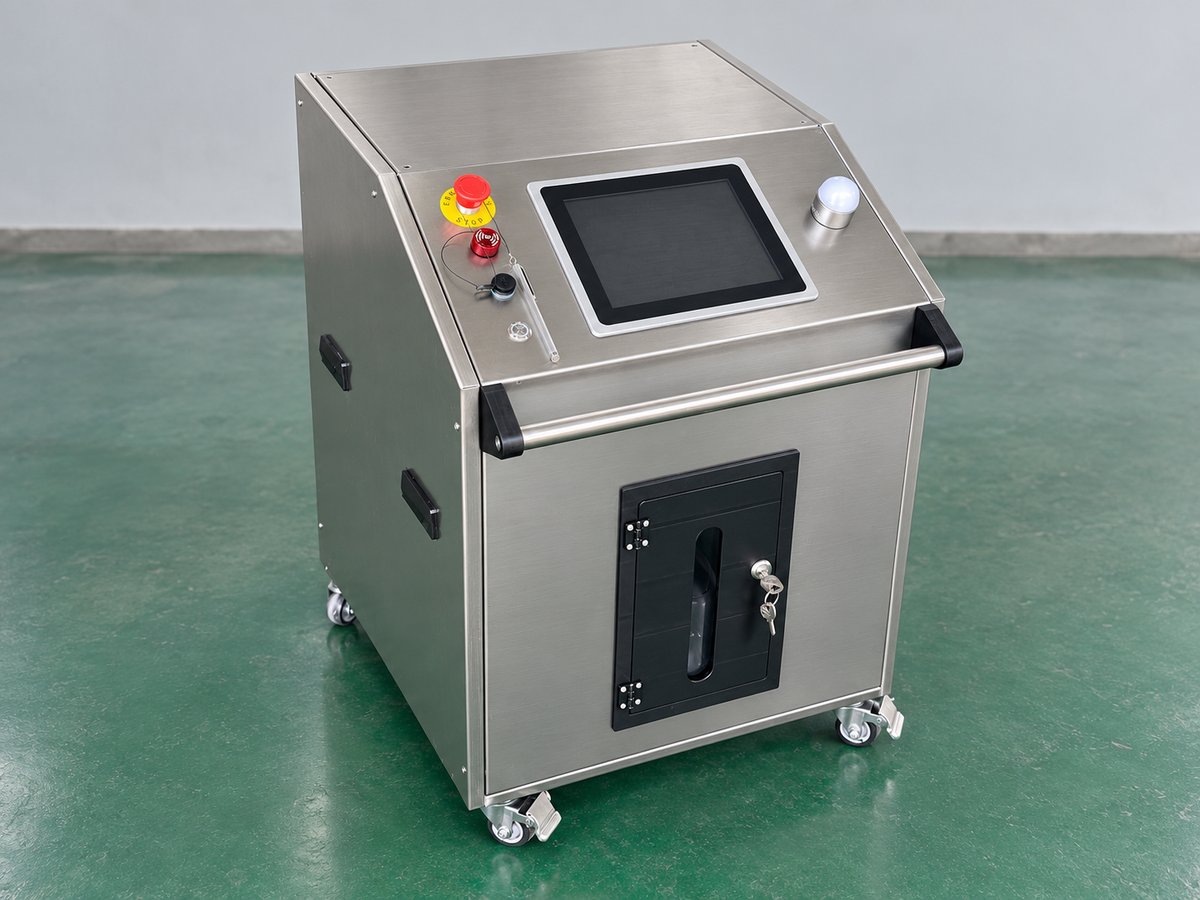
| FG-VHP-M500 | Mobile room sterilizer | — | ≤300 m³ | Determined by validation | — |
| FG-VHP-C1000 | HVAC-integrated | 150–800 ppm | 1,000 m³ | <180 min | ≤1 h |
| FG-VHP-C2000 | HVAC-integrated | 150–800 ppm | 2,000 m³ | <240 min | ≤1.5 h |
| FG-VHP-GL | Recirculating (equipment) | 300–700 ppm | Equipment interior | <180 min | ≤2.5 h |
| FG-VHP-G | Pulsed-vacuum (equipment) | 150–200 ppm | Equipment interior | <120 min | ≤2.5 h |
| FG-VHP-AL250 | Airlock chamber | 300–700 ppm | Airlock chamber | <60 min | ≤1 h |
| FG-VHP-BIBO | BIBO filter unit | ~30 ppm typical | ≤30 m³ | — | — |
All models above state a residual target of ≤1 ppm after aeration and a sporicidal target of ≥6-log, subject to validation. The mobile unit has an injection rate of 1–40 g/min and air flow of ≥500 m³/h. The recirculating and pulsed-vacuum units are designed for interior bio-decontamination of equipment such as lyophilizers, fermenters and biosafety cabinets, especially equipment without SIP capability.
Checklist: questions to ask before comparing quotations
- Which type of enclosure is this generator designed for, and what is the largest volume of that type it has been validated in?
- Where is concentration measured, with what sensor, and how often is it calibrated?
- Does the stated cycle time include dehumidification and aeration?
- Who controls humidity before the cycle: the generator, the room HVAC, or an integrated dryer?
- How is residual vapor removed, and how is release at ≤1 ppm confirmed?
- Which sterilant is required, and what is typical consumption for an enclosure like mine?
- Which materials are in contact with hydrogen peroxide?
- Can the control system provide user levels, audit trail and electronic records suitable for GMP?
- Which documents come with the equipment (manuals, drawings, calibration certificates, IQ/OQ protocols)?
All VHP equipment: VHP sterilizers and generators.
Free tool: VHP Equipment Selector — matches your treatment volume and application to a generator type.
FAQ
What is the most important specification on a VHP generator datasheet?
Treatment volume and generator type come first, because they decide whether the generator suits your enclosure at all. After that, injection rate, humidity requirements and full cycle time (including aeration) have the biggest effect on daily use.
Is a higher VHP concentration better?
No. The right concentration is the one that can be reached and held at the worst-case locations of your enclosure without condensation. Closed equipment loops often run higher concentrations than rooms, but this reflects the enclosure, not a better generator.
Why do suppliers say cycle time is “determined by validation”?
Because the real cycle time depends on the room or equipment: volume, layout, loading, surface temperatures, HVAC performance and leak tightness. The generator sets the limits; cycle development sets the actual time.
What does “≤1 ppm residual” mean?
It is the target concentration of hydrogen peroxide after aeration, before people re-enter or equipment returns to use. It matches the commonly used 8-hour occupational exposure limit of 1 ppm and should be confirmed with a low-range sensor.
Can one VHP generator treat both rooms and equipment?
Some generators can be adapted, but room units and equipment units are designed for different volumes, concentrations and connection methods. If you need both, check that each application has been validated, or plan separate units.
References
- EU GMP Annex 1: Manufacture of Sterile Medicinal Products (2022)
- ISO 11138-1:2017, Sterilization of health care products — Biological indicators — Part 1: General requirements
- ISO 14937:2009, Sterilization of health care products — General requirements for characterization of a sterilizing agent
- EN 17272:2020, Methods of airborne room disinfection by automated process
- OSHA 29 CFR 1910.1000, Table Z-1 — hydrogen peroxide PEL 1 ppm (8-hour TWA)
- FDA 21 CFR Part 11, Electronic Records; Electronic Signatures
Related Products
 Aseptic Filling IsolatorGrade A (ISO 5) barrier for sterile filling, stoppering and capping.Isolators & Barrier
 Dispensing & Containment Isolator (OEB5)Negative-pressure barrier for weighing, charging and sampling HPAPI.Isolators & Barrier
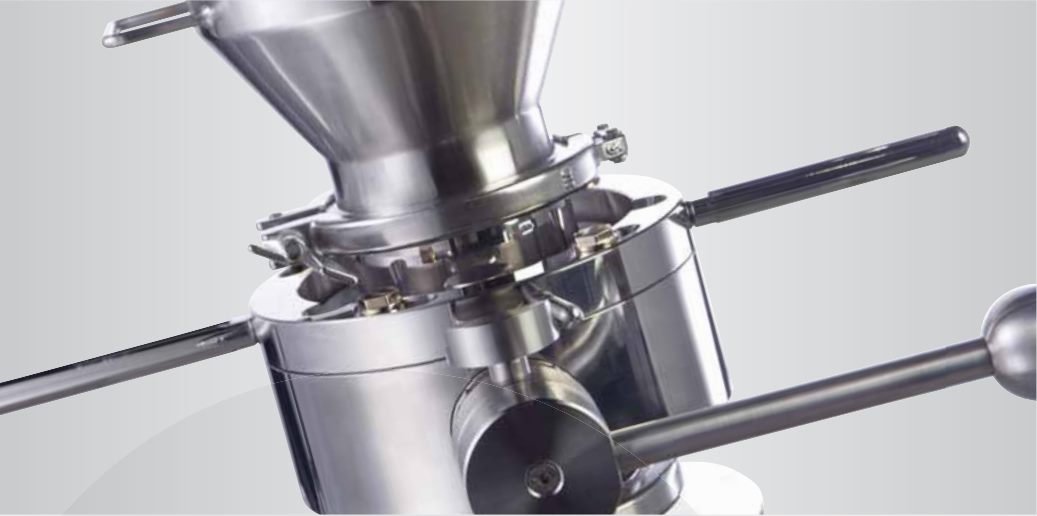 Alpha-Beta Split Butterfly ValveSplit butterfly valve for contained, dust-free transfer of potent powders.Transfer & Containment
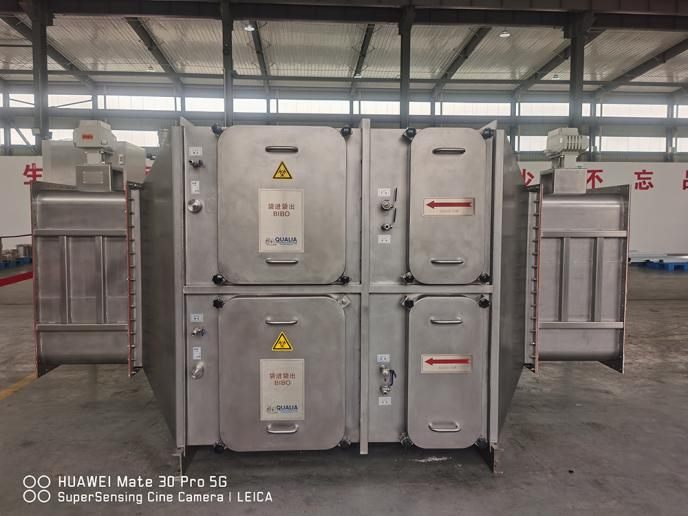 BIBO Filter HousingBag-in/bag-out HEPA housing for safe filter change in P3/P4 labs.Air Handling
Comparing VHP Generators?
Tell us what you need to treat (room size and layout, or equipment type and volume) and your site conditions. Our engineers will recommend a model and explain its specifications for your application.