








How to Choose a VHP Pass Box Manufacturer: 10 Things to Check Before You Buy
From the outside, most VHP pass boxes look alike: a stainless steel cabinet, two doors with windows, a control panel. The differences that decide whether the unit passes validation and keeps passing it are inside — how the chamber is dried, how the sterilant is delivered, how the doors seal and what the control system records. This checklist is for buyers, engineers and distributors comparing VHP pass box manufacturers and suppliers, including manufacturers in China. Each point says what to ask and what a good answer looks like.
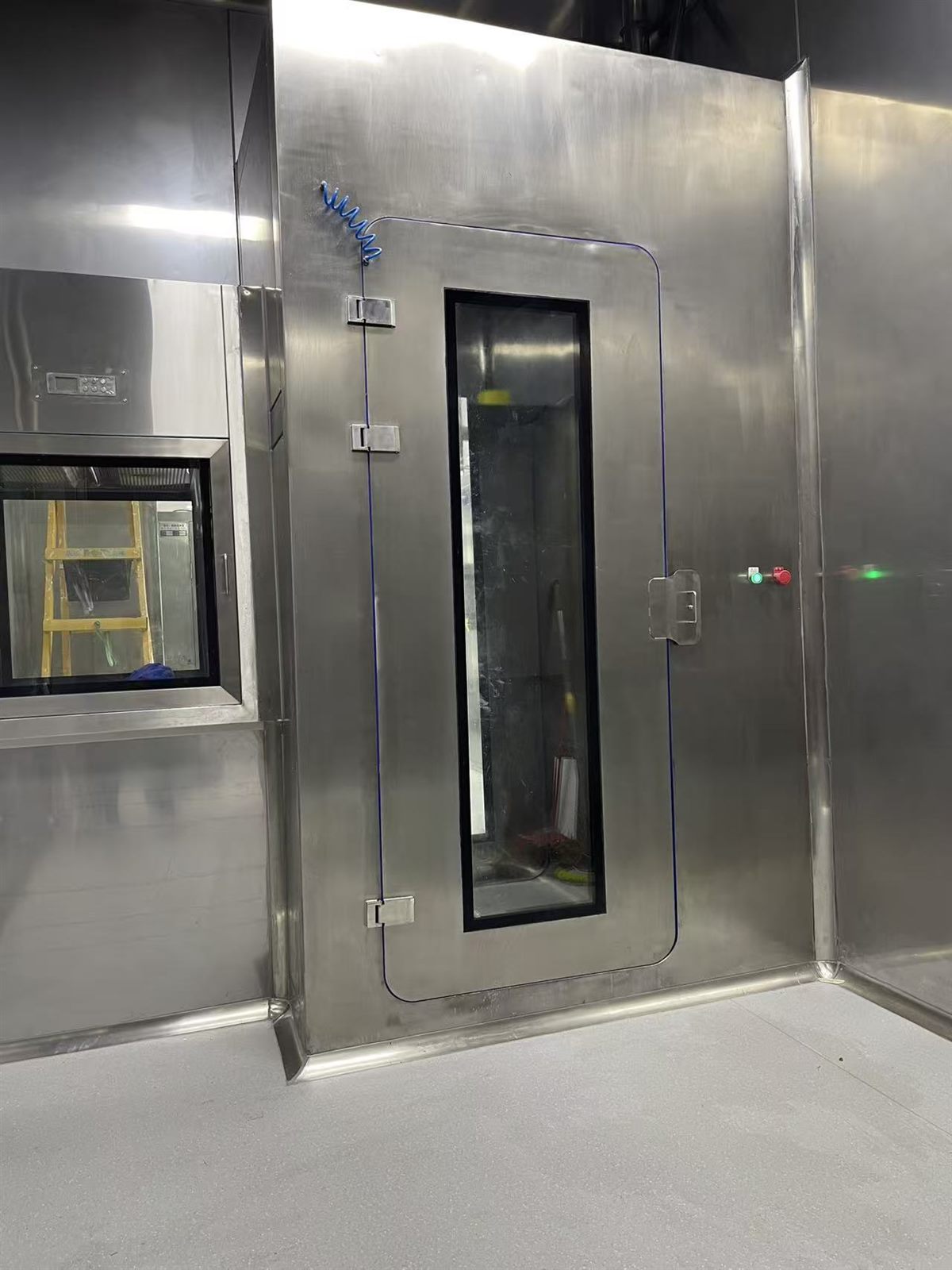
If you need the basics first — how the cycle works and single-door vs double-door designs — read VHP pass box: how it works and how to choose. If you are still deciding whether you need VHP at all, see VHP pass box vs dynamic pass box.
1. Is the VHP System Integrated or External?
Some pass boxes are a sealed chamber that needs a separate, portable VHP generator connected by hoses for each cycle. Others have the VHP system built in and run the whole cycle automatically. Ask which it is, who supplies the generator, and whether the pass box and generator share one control system. A built-in system with one PLC is simpler to validate and can run unattended once the parameters are set.
2. How Is the Chamber Dehumidified?
Before hydrogen peroxide is injected, the chamber must be dried and warmed so the vapour does not condense. This step decides cycle time, repeatability and how long aeration takes — and manufacturers do it in different ways:
| Method | How it works | What to watch |
|---|---|---|
| Rotary desiccant dehumidifier | A desiccant wheel delivers dry, temperature-controlled air, which also carries the vapour into the chamber. | Higher equipment cost. Fast drying (about 3–5 min to below 30% RH) and stable air conditions from cycle to cycle. |
| Compressed air | Dried plant compressed air is used to dry the chamber and drive the injection. | Plant air pressure varies with other users, which can make drying time and cycle results vary. Pressure inside the chamber must not interfere with door seals or valves. |
| Molecular sieve | A sieve bed adsorbs moisture from recirculated air. | Drying efficiency falls as the sieve ages; it needs replacement, and sieve dust must not reach the HEPA filters. |
Ask for the drying time to your humidity setpoint and how it is kept constant. Condensation during the cycle is the most common reason for long aeration and poor repeatability — see VHP concentration, humidity and condensation.
3. Door Seals and Interlocks
The two doors must never be open at the same time, and they must stay tight while the chamber is full of vapour. Ask whether the seals are inflatable or mechanical, what pressure the inflatable seals need, and what happens on power or air failure. Ask whether the door interlock is electrical, and whether automatic doors are available for high-frequency transfer.
4. Air Filtration
Air entering and leaving the chamber should pass HEPA filters, usually H14. Ask where the filters are, how they are changed, and whether they can be leak tested in place.
5. Sensors and Records
A pass box that cannot prove each cycle is hard to defend in an audit. Look for real-time measurement of chamber temperature, humidity, pressure and hydrogen peroxide concentration, a cycle record for every run (printed or stored), and a clear pass/fail decision before the inner door is released. If your site needs electronic records under FDA 21 CFR Part 11, ask for it in writing.
6. Cycle Performance — Stated and Proven
Ask for the full set of numbers, not just “6-log”: concentration during the hold, cycle time, aeration time and the residual level at which the door unlocks. Then ask how those numbers will be confirmed on your load with biological indicators — see VHP validation with biological indicators. A reliable supplier states performance as “6-log, confirmed by your validation”, not as an unconditional guarantee.
7. Materials and Cleanability
Check the stainless steel grade for the chamber, the internal pipework and any part in contact with hydrogen peroxide, plus the surface finish, corner radii and the window seal. Gaskets and seals must be compatible with repeated VHP exposure.
8. Validation Support
Ask what documents come with the unit and what tests are done before shipment: factory acceptance test (FAT) records, calibration certificates for sensors, drawings and manuals, and support for IQ/OQ and cycle development. The process is described in VHP cycle development and IQ/OQ/PQ.
9. Size, Layout and Customisation
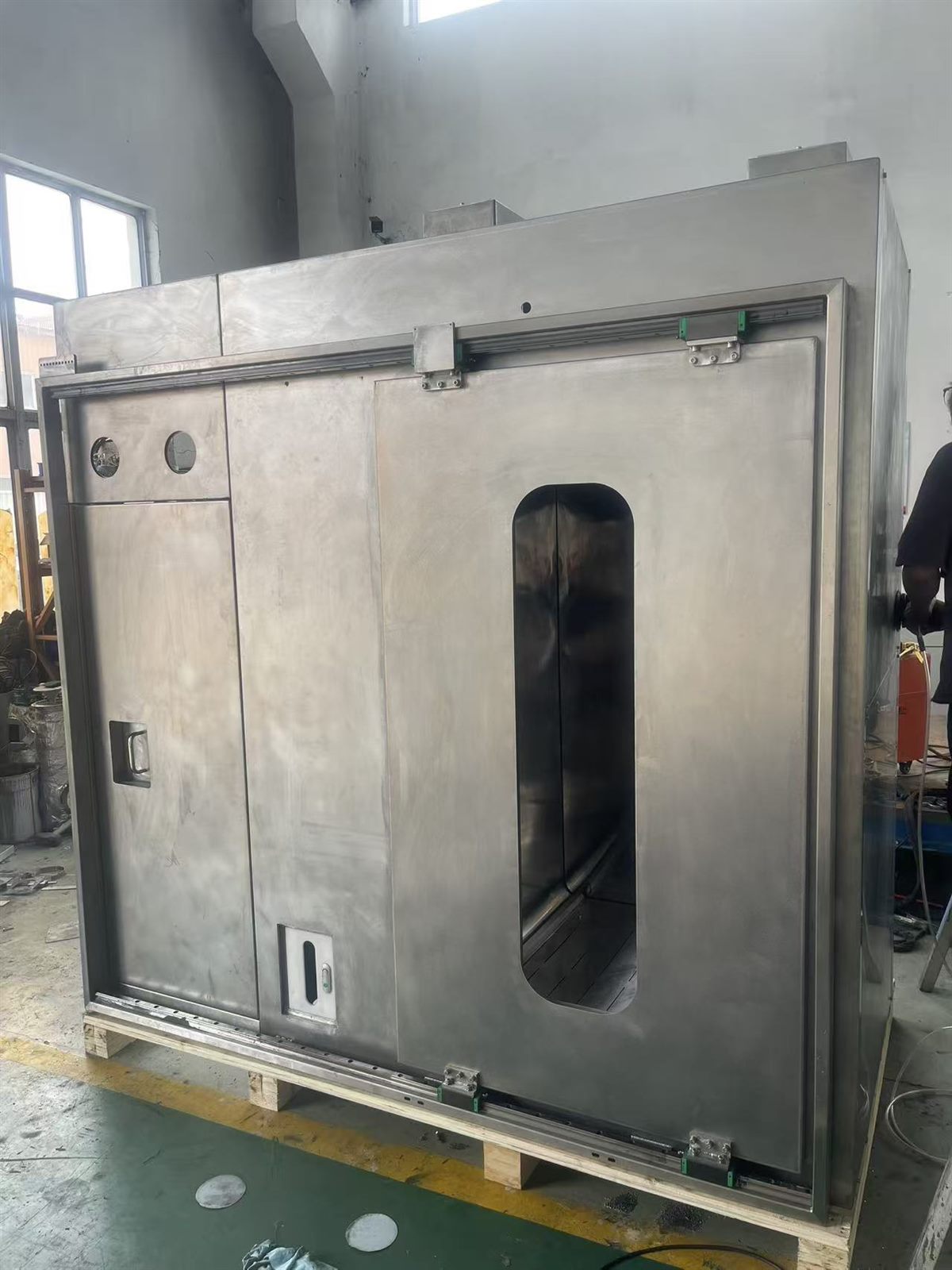
Wall thickness, door swing, chamber size, trolley access and the position of the panel all differ by project. A manufacturer that builds to your drawings avoids site rework. Ask for a dimensioned drawing before you order, and confirm floor-standing or large-chamber options if you move carts or large items.
10. Service, Spare Parts and Export Readiness
Ask which parts wear — door seals, HEPA filters, catalytic converter, sensors — how often they are replaced and how fast you can get them. For overseas projects, confirm voltage and frequency, English documentation, packing for sea freight, remote support and who will commission the unit on site.
Red Flags When Comparing Suppliers
- Performance claims with no cycle data, no residual limit and no mention of validation.
- No answer on how the chamber is dried, or a cycle that relies on long aeration to remove condensed peroxide.
- No records of each cycle, or records that can be edited.
- A supplier that cannot show units in its own workshop or installed on site.
- A quotation that does not list seals, filters and sensors as separate spare parts.
How Fenggu Answers These Questions
Fenggu designs and builds VHP pass boxes in its own factory. For the standard VHP pass box (FG-PB-VHP):
| Check | Fenggu FG-PB-VHP |
|---|---|
| VHP system | Integrated, linked with the pass box on a Siemens PLC; runs unattended once parameters are set |
| Dehumidification | Rotary desiccant dehumidifier: chamber dried and warmed to above 25 °C and below 30% RH before injection |
| Doors | Double doors with inflatable seals and interlock — the two doors cannot open together |
| Filtration | All air into and out of the chamber passes H14 HEPA filters |
| Monitoring | Real-time temperature, humidity, pressure and H2O2 concentration; status lights for each stage; real-time printing of process parameters |
| Cycle | 25–35 °C and 40–60% RH during sterilization; 300–500 ppm; sterilization cycle 30 min; aeration ≤1 h to ≤1 ppm residual; 6-log reduction |
| Materials | SUS304 exterior, SUS316L internal pipework |
| Size | Built to customer dimensions; floor-standing and automatic-door versions available |
FAQ
What should I ask a VHP pass box manufacturer first?
Whether the VHP system is built in, how the chamber is dehumidified, the cycle numbers (concentration, cycle time, aeration time, residual) and what cycle records the unit produces.
How much does a VHP pass box cost?
It depends mainly on chamber size, integrated vs external VHP, door type (manual or automatic, inflatable or mechanical seal) and the control and data package. Compare quotations on the same specification, not on price alone.
Are VHP pass boxes from China suitable for GMP projects?
They can be, if the supplier provides the cycle data, materials, records and validation support described above. Judge the supplier on evidence, not on country.
Why does the dehumidification method matter?
Wet or unstable chamber air makes hydrogen peroxide condense, which slows aeration and makes results vary from cycle to cycle.
Can a VHP pass box be built to my wall and room layout?
Yes. Chamber size, door type and wall interface are usually built to the project drawings.
Related Products
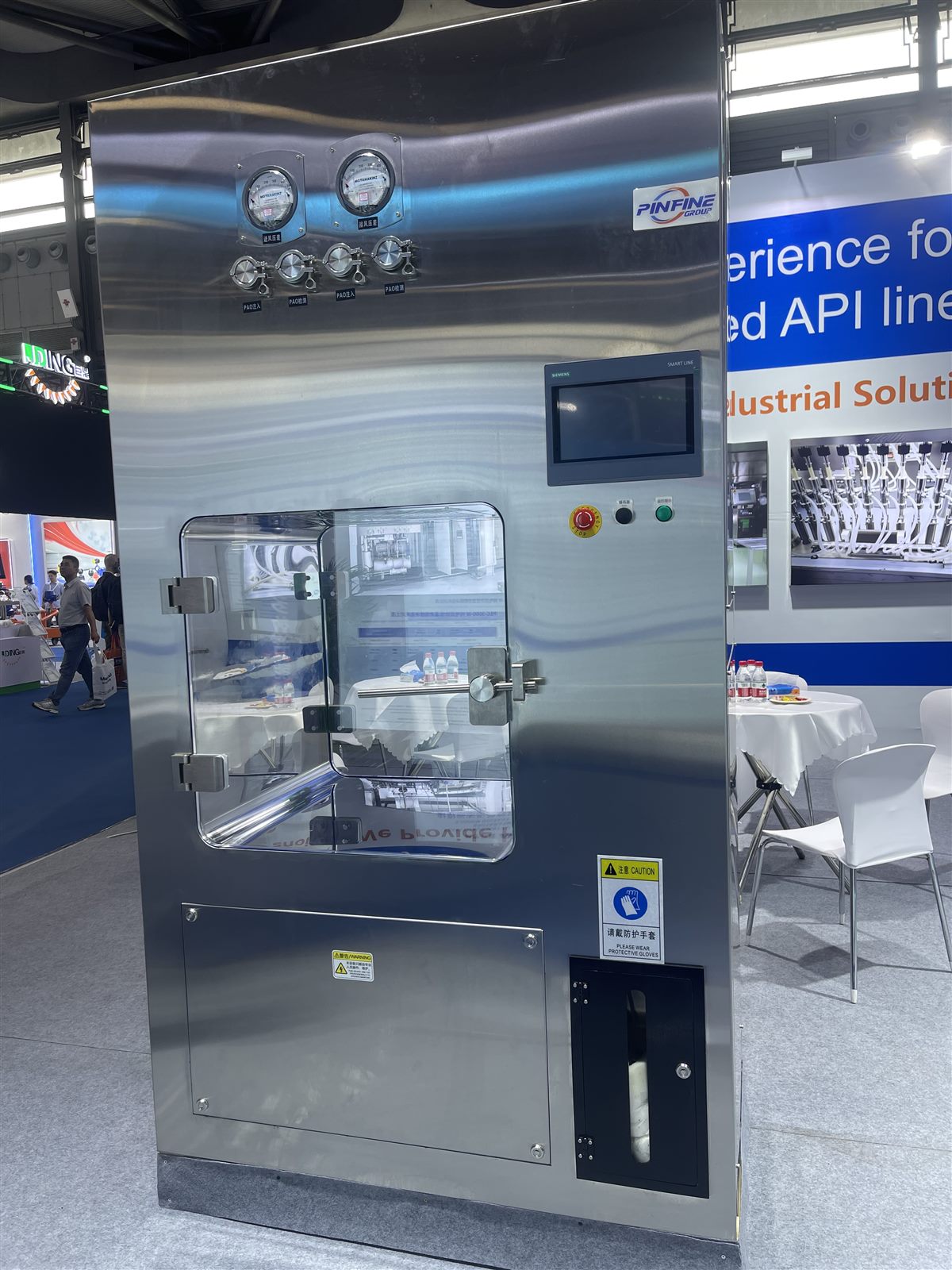 VHP Pass BoxWall-mounted transfer chamber with an integrated VHP cycle.Transfer & ContainmentFloor-Standing VHP Pass BoxHigh-capacity floor chamber for trolleys, drums and bulky loads.Transfer & ContainmentAutomatic-Door VHP Pass BoxMotorised interlocked doors for hands-free, contamination-safe transfer.Transfer & Containment
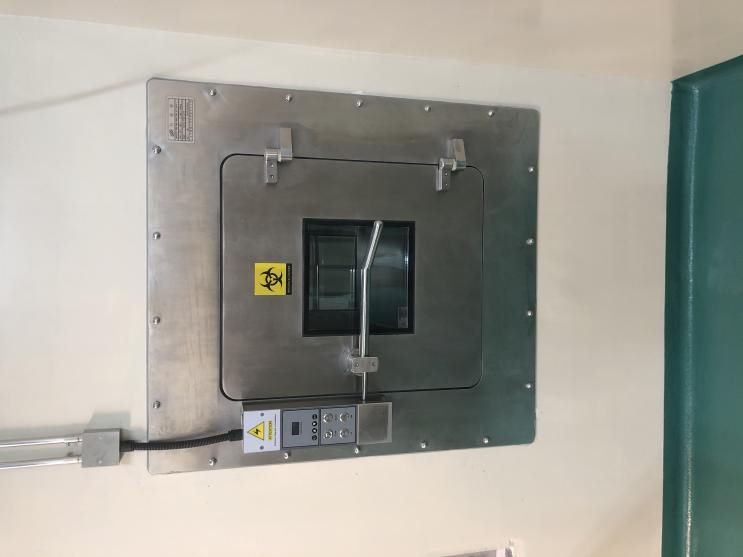 Biosafety Pass BoxMechanically sealed, gas-decontaminatable chamber for BSL-2/3/4.Transfer & Containment
Comparing VHP Pass Box Suppliers?
Send us your chamber size, the two room grades and how often you transfer. We will reply with a drawing proposal and the cycle data for your configuration.