








Sterility Test Isolators: Eliminating False Positives for Compendial Sterility Testing
Sterility testing has one dreaded failure mode: the false positive. Was the microorganism you recovered from the product, or from the testing environment? If you can’t tell, you face a batch investigation, retesting, a possible wrong rejection, and a delayed release. A sterility test isolator — also called a sterility testing isolator, QC sterility test isolator or aseptic testing isolator — uses a closed Grade A barrier to seal the test off from the outside world, driving environmental false positives close to zero. This guide explains what it is, why it eliminates false positives, how it’s configured, and how it beats an open cleanroom or laminar hood.
Where false positives come from — and why they hurt
A sterility test inoculates product into growth media and incubates it to see whether anything grows. The trouble: if the operating environment carries microorganisms, an environmental organism dropping into the media grows too — a false positive. Once it happens you can’t prove whether it came from the product or the room, and the consequences follow:
- Investigation and retest — time, cost, delayed release;
- Wrong-rejection risk — good product failed, or investigation resources wasted;
- Data-integrity doubt — your sterility assurance questioned at audit.
So the core requirement of sterility testing is simple: remove “environmental contamination” as a variable, so a positive can only come from the product itself.
Why a sterility test isolator eliminates false positives
Testing under an open cleanroom or laminar hood exposes operator and product to the same space — sterility rests on human technique, and risk rises with people and movement. A sterility test isolator takes a different route: a physical barrier encloses a closed Grade A (ISO 5) environment; operators work through glove ports and never enter the sterile space; and before each test the chamber is VHP-decontaminated to a validated 6-log kill, wiping out any residue from the last run. The environment is controlled systematically, and false positives drop sharply. For the VHP principle see What Is VHP Decontamination; for proving the 6-log kill see How a VHP Cycle Is Validated.
How a sterility test isolator is configured
| Element | Detail |
|---|---|
| Cleanliness | Closed Grade A (ISO 5) unidirectional flow, usually positive pressure to protect the test. Pressure trade-off: Positive vs Negative Pressure Isolator. |
| Decontamination | Integrated VHP generator for a validated 6-log biodecontamination before each test — low-temperature, residue-free. |
| Aseptic transfer | Samples, media and consumables enter through a VHP pass box or RTP without breaking the chamber. |
| Operation | Glove ports and an ergonomic layout for membrane filtration, inoculation and reading. |
| Monitoring | Differential pressure, airflow, viable/non-viable monitoring to support environmental monitoring (EM) records. |
| Also called | Sterility test isolator, sterility testing isolator, QC sterility test isolator, aseptic testing isolator. |
How it beats an open cleanroom or laminar hood
The three approaches differ in what sterility assurance rests on:
- Open cleanroom — relies on people + room grade; highest false-positive risk and highest running cost (clean area, gowning, monitoring).
- Laminar hood / RABS — local protection, better than open, but still has openings and depends on technique. See Isolator vs RABS.
- Sterility test isolator — fully closed + validated decontamination, lowest false positives, the preferred choice for sterility testing. Full open-vs-closed comparison: Aseptic Isolators: Open vs Closed (PDA TR34).
Compendial compliance & selection
Sterility testing must satisfy USP <71>, EP and ChP expectations for the testing environment; an isolator approach supports these with a lower false-positive rate and traceable decontamination validation. When choosing a sterility test isolator (or QC sterility test isolator), look at whether the chamber and transfers can be configured to your sample throughput and workflow, whether the VHP cycle can be developed and qualified (see How to Choose a Pharmaceutical Isolator), and how readily EM fits. For special aseptic processes like cell therapy, see Cell Therapy Isolators.
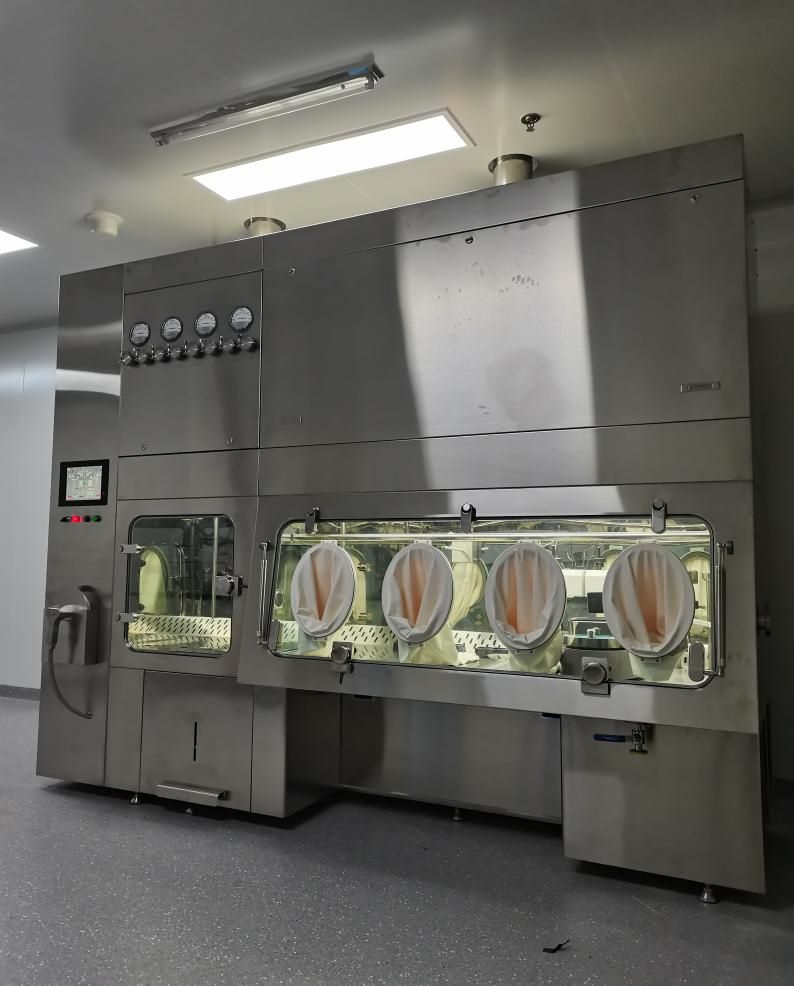
FAQ
Does a sterility test isolator fully eliminate false positives?
No system guarantees an absolute zero, but a closed Grade A chamber plus a pre-test VHP 6-log decontamination controls the environmental variable systematically, cutting false positives far below an open cleanroom or laminar hood.
Is it the same as an aseptic filling isolator?
The construction is similar (closed Grade A + VHP), but a sterility test isolator is configured for the QC testing workflow — membrane filtration, inoculation, media handling.
Positive or negative pressure?
Routine sterility testing uses positive pressure to protect the test; if the sample is biohazardous, negative or switchable pressure is needed.
Related Products
Sterility Test IsolatorGrade A barrier for pharmacopoeia sterility testing.Isolators & Barrier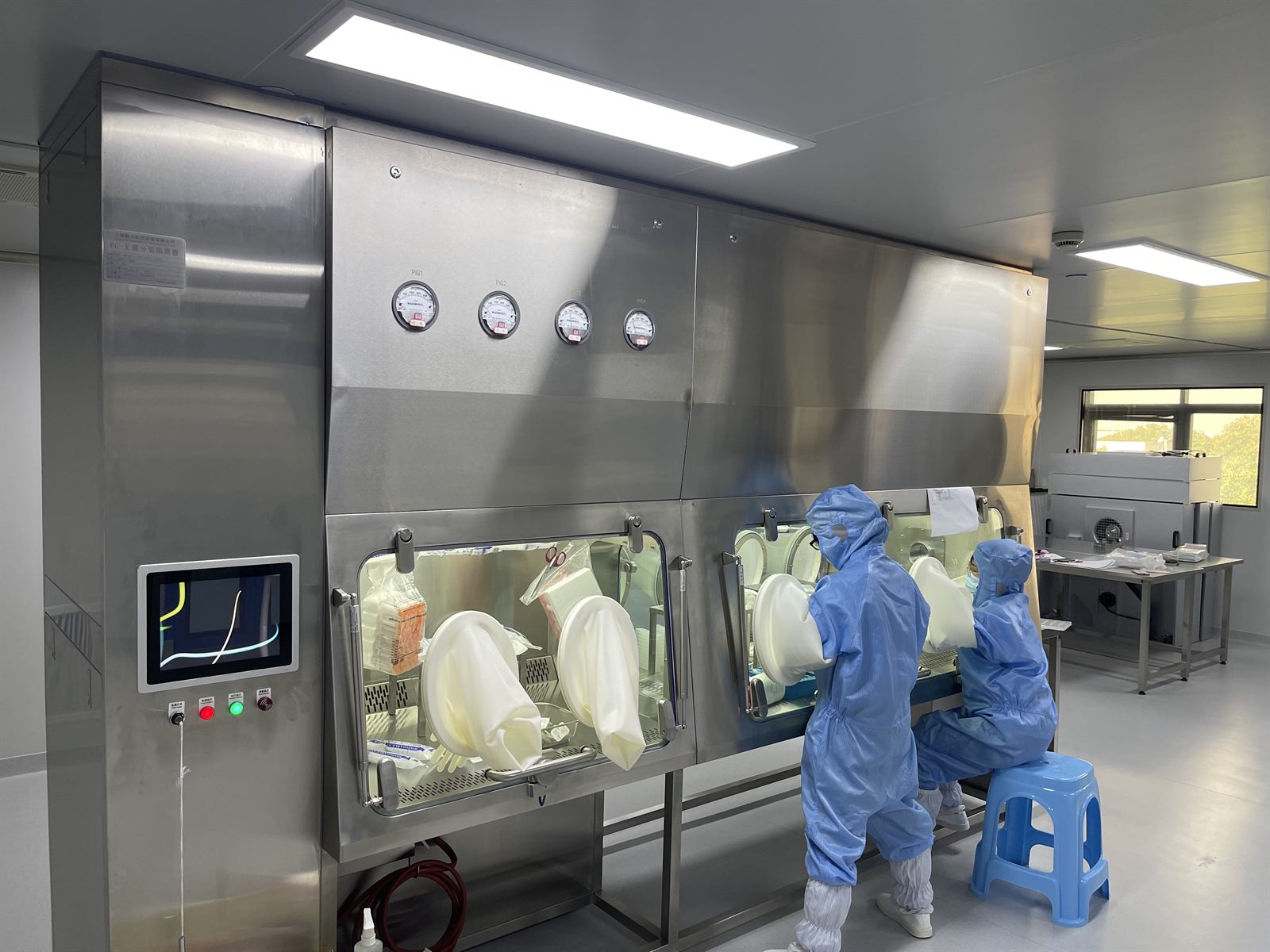 Aseptic Filling IsolatorGrade A (ISO 5) barrier for sterile filling, stoppering and capping.Isolators & Barrier
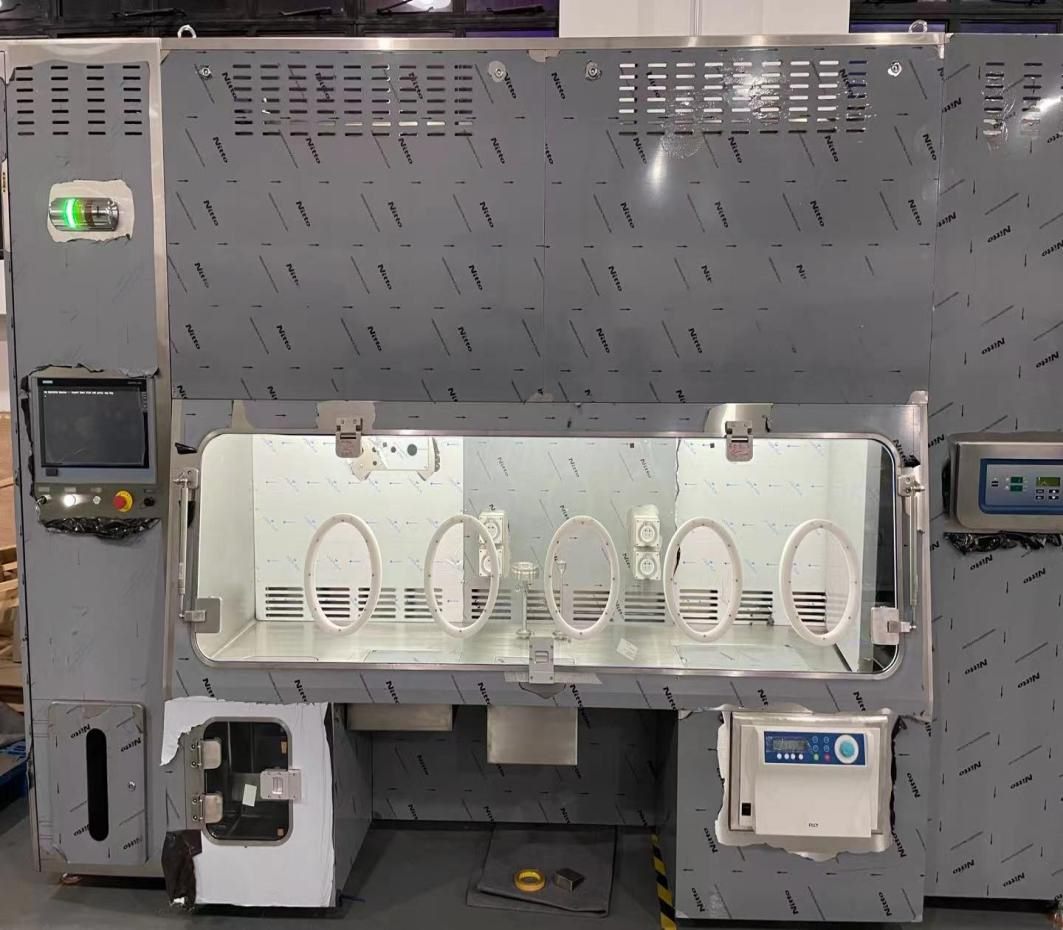 Cell Processing IsolatorClosed Grade A environment for cell-therapy processing.Isolators & Barrier
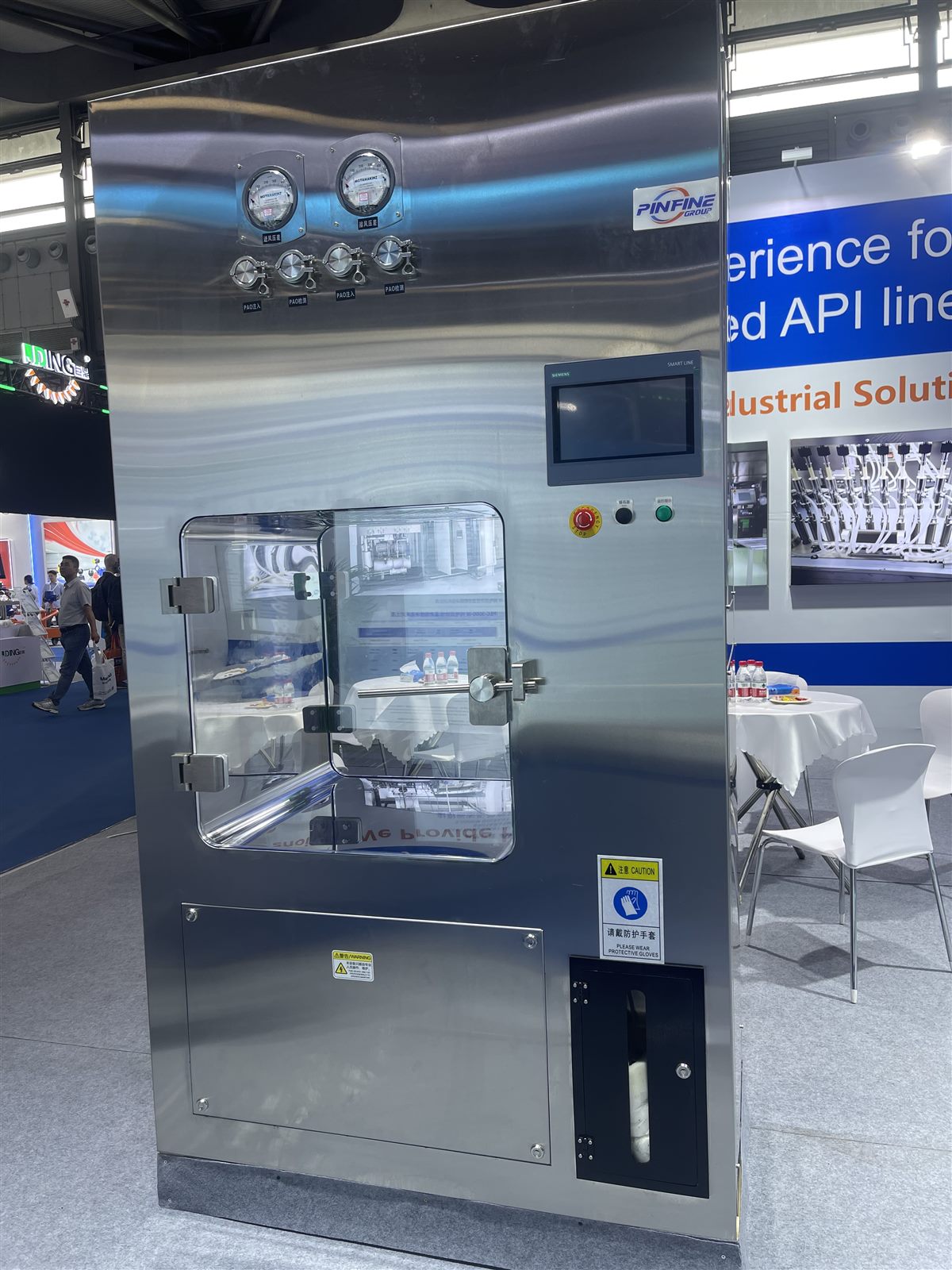 VHP Pass BoxWall-mounted transfer chamber with an integrated VHP cycle.Transfer & Containment
Want to eliminate false positives in sterility testing?
Tell us your sample types, throughput and compendial requirements, and Fenggu will configure a sterility test isolator — closed Grade A, VHP 6-log decontamination, aseptic transfer and EM designed as one.