








Garment & Hood Sterilization Chambers: VHP Decontamination for Positive-Pressure Suits & Hoods
In BSL-3/4 labs and sterile or containment operations, staff wear positive-pressure hoods, powered air suits and isolation gowns. These are reusable, and their surfaces pick up pathogens or potent material — so they must be decontaminated before reuse. But they carry blowers, HEPA filters and visors, so they cannot be steam-, heat- or wet-cleaned. A garment sterilization chamber — also called a hood sterilization chamber, VHP garment decontamination chamber or hydrogen peroxide fumigation chamber — uses vaporized hydrogen peroxide (VHP) to decontaminate the surfaces of hoods and suits at low temperature, residue-free and validatable. This guide explains what it is, why VHP fits, and how the chamber, pass box and cabinet forms compare.
Why positive-pressure hoods and gowns need dedicated decontamination
In high-containment labs and sealed aseptic work, the positive-pressure hoods, air suits and isolation gowns operators wear are directly exposed to environments carrying pathogens or potent dust. They are not disposable — each use, the outer surface may be contaminated, and reusing or handing them over without full decontamination passes the risk straight to the next person. Yet these are delicate: built-in blower, HEPA filter, clear visor, seams and zips mean no steam, no dry heat, no soaking. That calls for a low-temperature, dry, penetrating decontamination that leaves no residue.
Why VHP, not formaldehyde or spray
Vaporized hydrogen peroxide (VHP) fits garment and hood decontamination:
- Low-temperature and dry. Runs near ambient — no harm to the blower, filter or visor, and nothing gets soaked.
- Penetrating. The gas reaches zips, seams, filter media and folds — where wiping and spraying cannot.
- Residue-free and validatable. Breaks down to water and oxygen, no residue; a ≥6-log kill can be proven with biological indicators. See What Is VHP Decontamination.
By comparison, formaldehyde fumigation leaves residue, needs neutralizing and takes long; alcohol/disinfectant spray only acts on the surface, misses crevices and cannot be validated. So BSL labs and aseptic plants increasingly move to a VHP fumigation chamber for hoods and gowns.
How a garment sterilization chamber is configured
| Element | Detail |
|---|---|
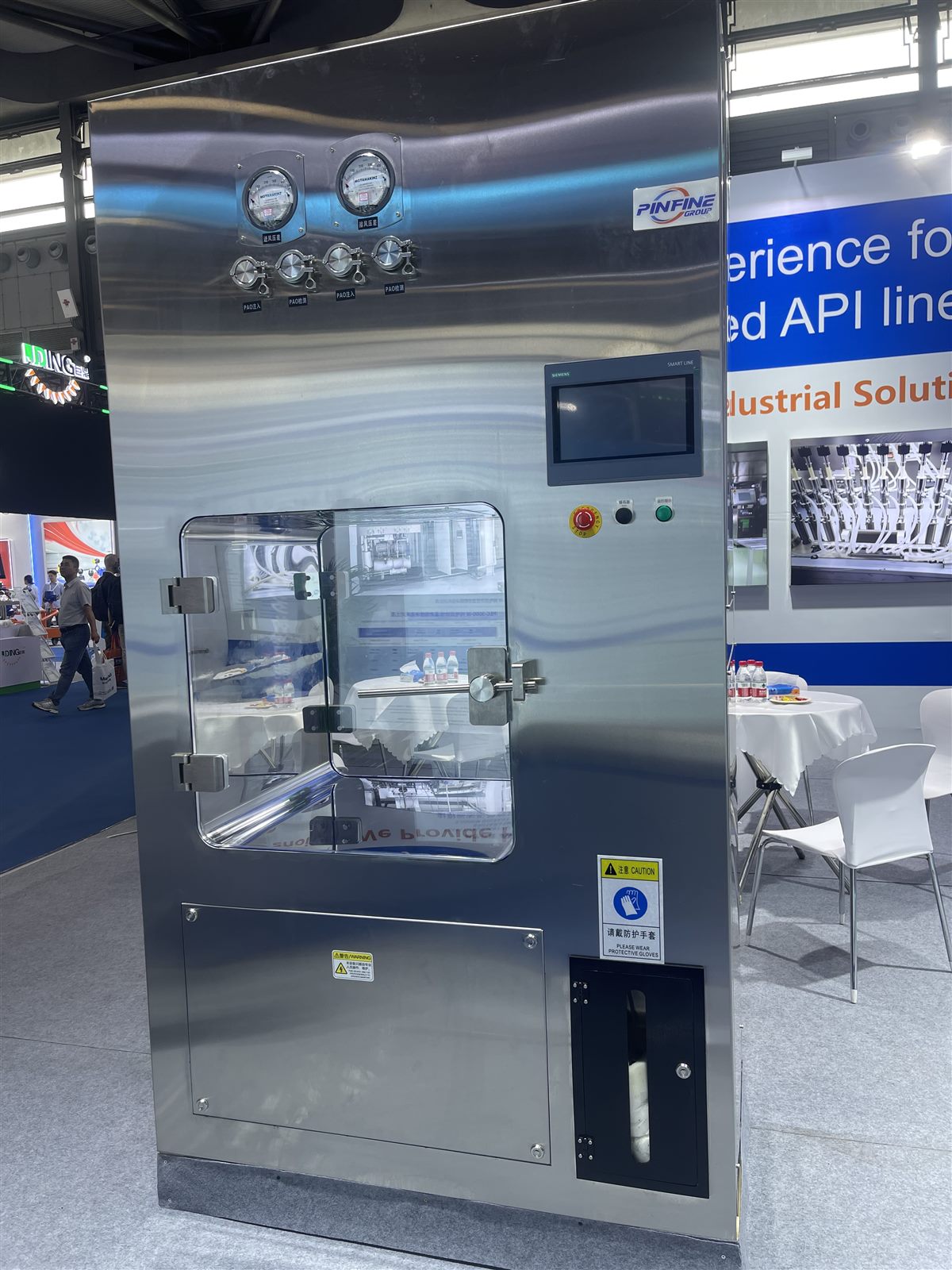
| Chamber | 316L / 304 stainless with internal hangers to suspend hoods and gowns so surfaces are fully exposed to the gas. |
| Sealed door | Inflatable or mechanical-compression door, gastight during the cycle; a two-door version is a garment decontamination pass box separating clean/dirty sides. |
| VHP generation | Integrated VHP generator: inject and circulate, hold concentration, then aerate and catalytically break down. |
| Safety | H₂O₂ concentration display and alarm, status lights, interlock; door opens only after residual aerates to a safe level (commonly ≤1 ppm). |
| Validation | Biological indicators mapped to prove a 6-log kill — see VHP Cycle Parameters. |
| Also called | Garment sterilization chamber, hood sterilization chamber, PPE VHP pass box, hydrogen peroxide garment fumigation chamber, gown decontamination cabinet. |
Chamber, pass box or cabinet: which form
The same “seal + VHP” logic, in the form that fits the use:
- Garment / hood sterilization chamber — single door, for batch decontamination of hoods and gowns, larger capacity.
- Garment decontamination pass box — two interlocked doors that both decontaminate and transfer across a wall: doffed one side, decontaminated, retrieved the other, for clean zoning. See VHP Pass Box vs Dynamic Pass Box.
- Hydrogen peroxide decontamination cabinet — cabinet form, also for small tools, visors and probes.
In a BSL-3/4 containment suite these units join the gastight doors and pass boxes that form the sealed boundary — see Biosafety Airtight Doors for BSL-3/BSL-4 Containment.
FAQ
Can a positive-pressure hood go through VHP repeatedly — will it damage the gear?
VHP is a low-temperature, dry decontamination compatible with stainless, visors and most suit materials, so it can be used repeatedly; follow the garment maker’s material-compatibility guidance for frequency.
How is this different from an ordinary pass box?
An ordinary pass box only transfers material; a garment sterilization chamber / pass box integrates VHP and is built to hang and decontaminate hoods and gowns to a validated kill.
How soon can items be used after a cycle?
The cycle ends with aeration and catalytic breakdown to a safe residual (commonly ≤1 ppm) before the door opens; the time depends on chamber size and ventilation.
Related Products
VHP Pass BoxWall-mounted transfer chamber with an integrated VHP cycle.Transfer & Containment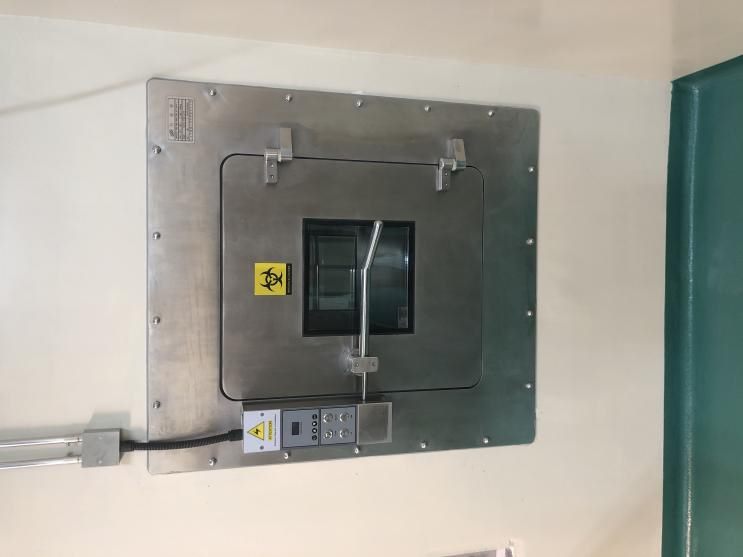 Biosafety Pass BoxMechanically sealed, gas-decontaminatable chamber for BSL-2/3/4.Transfer & Containment
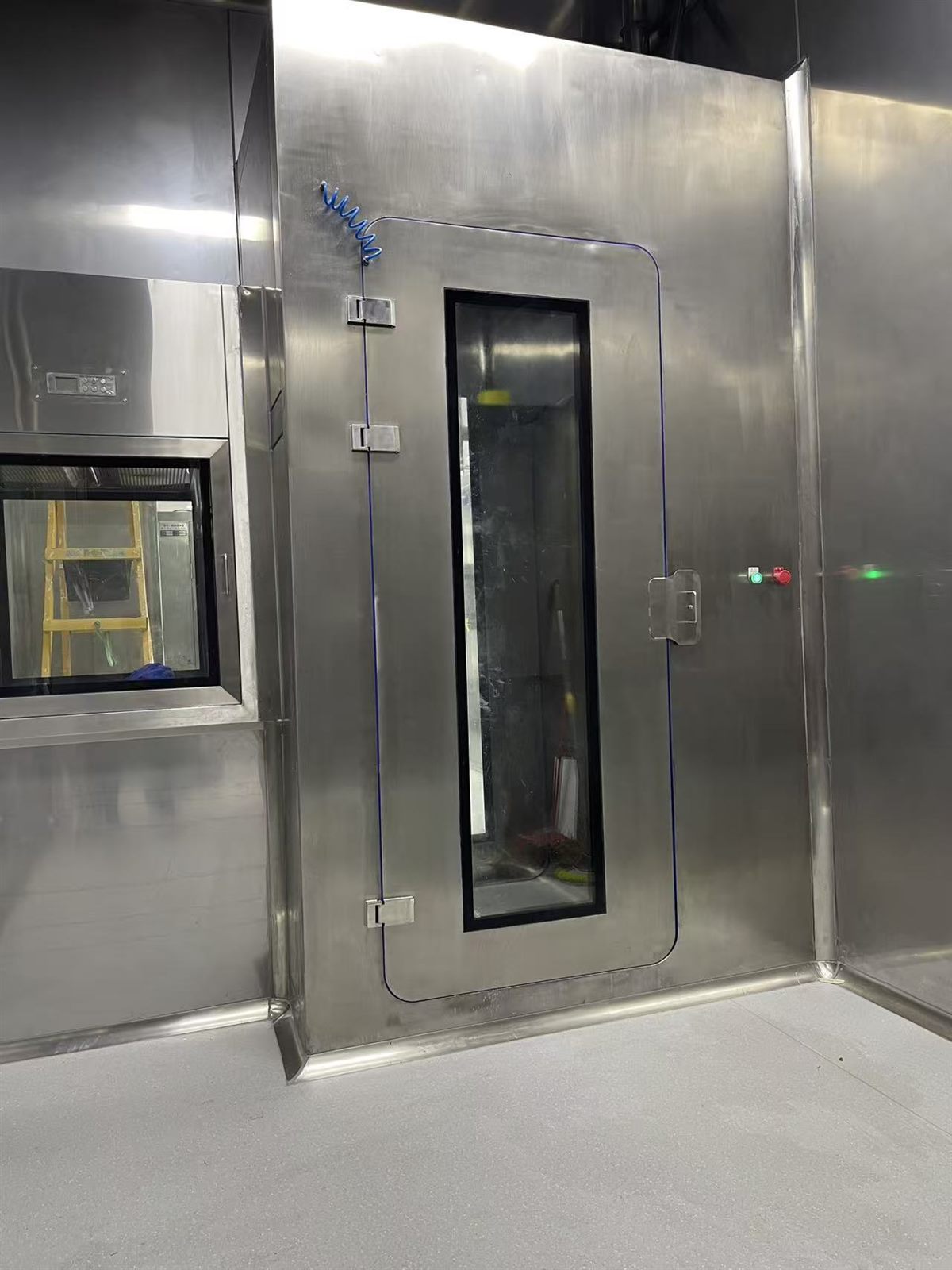 Floor-Standing VHP Pass BoxHigh-capacity floor chamber for trolleys, drums and bulky loads.Transfer & Containment
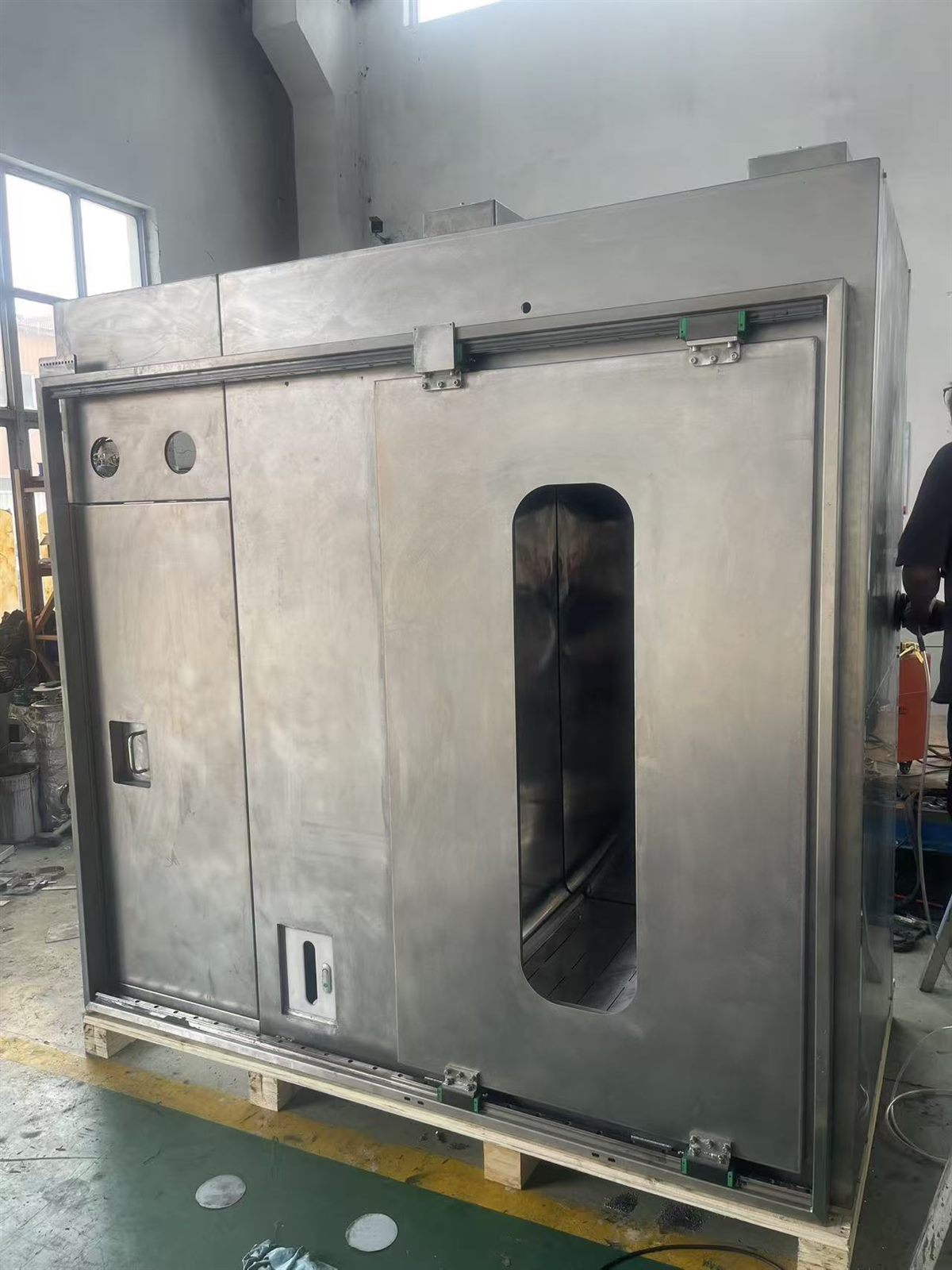 Automatic-Door VHP Pass BoxMotorised interlocked doors for hands-free, contamination-safe transfer.Transfer & Containment
Need validated decontamination for positive-pressure hoods or gowns?
Tell us your hood/gown type, throughput and whether you need cross-wall transfer, and Fenggu will configure a garment sterilization chamber or pass box — integrated VHP, sealed door, concentration alarm and validation as one.