








How Catalytic Converters Break Down H2O2 in VHP Generators
At the end of every VHP cycle, the hydrogen peroxide vapor that did the decontamination has to go. Until it does, nobody can open the isolator, unload the pass box or walk into the room. In many VHP generators and pass boxes, that job is done by a catalytic converter. This guide explains how the converter works, how it compares with purging by fresh air, what makes aeration slow, and what to ask a supplier about it.
What a catalytic converter does
A catalytic converter in VHP equipment is a bed of catalyst material through which the air is passed so that hydrogen peroxide breaks down into water vapor and oxygen far faster than it would on its own. The catalyst is not used up by the reaction. It provides surfaces where the decomposition happens easily.
2 H2O2 → 2 H2O + O2
Hydrogen peroxide decomposes slowly in clean air. On a catalyst surface the same reaction needs much less energy to start, so the vapor leaving the converter contains only a small fraction of what entered. The products, water vapor and oxygen, are already present in normal air.
Common catalyst materials
| Material | Typical form | Notes |
|---|---|---|
| Manganese dioxide based | Granules or coated honeycomb | Widely used, effective at room temperature. |
| Platinum or palladium | Thin coating on a ceramic or metal honeycomb | Low pressure drop; used where airflow is high. |
| Activated carbon | Granular beds | Also decomposes hydrogen peroxide; behavior depends on the grade. |
The form matters as much as the chemistry. A honeycomb gives a large surface area with low resistance to airflow; a packed granular bed gives long contact time but needs more fan power.
Where converters are used
- Recirculating generators. During aeration, the generator keeps circulating air through the enclosure and back through its converter until the concentration is low enough. See recirculating VHP generator.
- VHP pass boxes. The chamber air is drawn through a converter before it is discharged, so the exhaust does not carry peroxide into the room. See VHP pass box.
- Isolators. A catalytic aeration system reduces the peroxide inside the isolator to a safe level before production starts.
- Exhaust lines. A converter on an exhaust can treat vapor leaving an enclosure where direct discharge is not acceptable.
Catalytic aeration vs fresh-air purge
Room-scale systems often aerate by replacing the air instead. The HVAC-integrated VHP system, for example, closes the VHP line and opens the fresh air and exhaust dampers so that outside air flushes the vapor out.
| Catalytic aeration (closed loop) | Fresh-air purge (open loop) | |
|---|---|---|
| Where the peroxide goes | Converted to water and oxygen inside the equipment | Diluted and carried out with exhaust air |
| Typical use | Isolators, pass boxes, enclosures connected to a generator | Rooms, suites, airlocks with HVAC |
| Depends on | Catalyst capacity and airflow through it | Air change rate and exhaust capacity |
| Humidity after the cycle | Water vapor stays in the loop unless dried | Replaced with conditioned air |
| Exhaust discharge | No peroxide discharged | Exhaust must be routed safely |
Why aeration takes as long as it does
The first drop in concentration is fast. The last part, from tens of ppm down to 1 ppm, is usually the slowest. The reasons:
- Absorption by materials. Plastics, silicone seals, gloves, filter media and paper take up hydrogen peroxide during the cycle and release it slowly afterwards.
- Condensation. Liquid peroxide on cold surfaces evaporates much more slowly than vapor is removed. A cycle without condensation aerates faster.
- Airflow through the converter. Too little flow and the enclosure air is treated slowly; too much and the contact time in the catalyst is short.
- Temperature. Warmer surfaces release absorbed peroxide faster.
- Catalyst condition. A worn or contaminated catalyst converts less of the vapor that passes through it.
For how humidity and condensation affect the whole cycle, see VHP concentration, humidity and condensation.
Measuring the end point
Aeration ends when the measured concentration is below the agreed limit, not when a timer runs out. A common target is 1 ppm, which is also the US OSHA occupational limit as an 8-hour time-weighted average. For aseptic filling, a lower internal limit may be set to protect the product. This needs a sensor that is accurate at low concentrations; a sensor designed for the high range of the cycle may not read reliably near 1 ppm. See hydrogen peroxide sensors for VHP.
Catalyst life and maintenance
A catalyst is not consumed, but it can lose activity. Typical causes:
- Liquid water or peroxide reaching the catalyst, for example after condensation in the ducts.
- Dust and particles covering the active surface. A filter upstream helps.
- Contaminants from cleaning agents or other chemicals in the air that bind to the active sites.
- Mechanical damage or settling in granular beds, creating channels where air bypasses the catalyst.
The practical check is performance: if aeration to the same end point starts taking clearly longer with the same load, the catalyst may need inspection or replacement. Ask the supplier for the expected service life and the replacement procedure.
Questions to ask a supplier
| Question | Why it matters |
|---|---|
| Is aeration catalytic, fresh-air or both? | Decides utilities, exhaust routing and aeration time. |
| What residual concentration is the cycle designed to reach? | Defines the end point for release. |
| What is the typical aeration time, and for what load? | Absorbent loads aerate much more slowly than empty chambers. |
| What sensor confirms the end point, and what is its low range? | A reliable reading near 1 ppm is needed. |
| Is the converter protected by a filter, and what is its service life? | Running cost and maintenance planning. |
| Where does the treated air go? | Room safety and building exhaust design. |
Fenggu VHP equipment
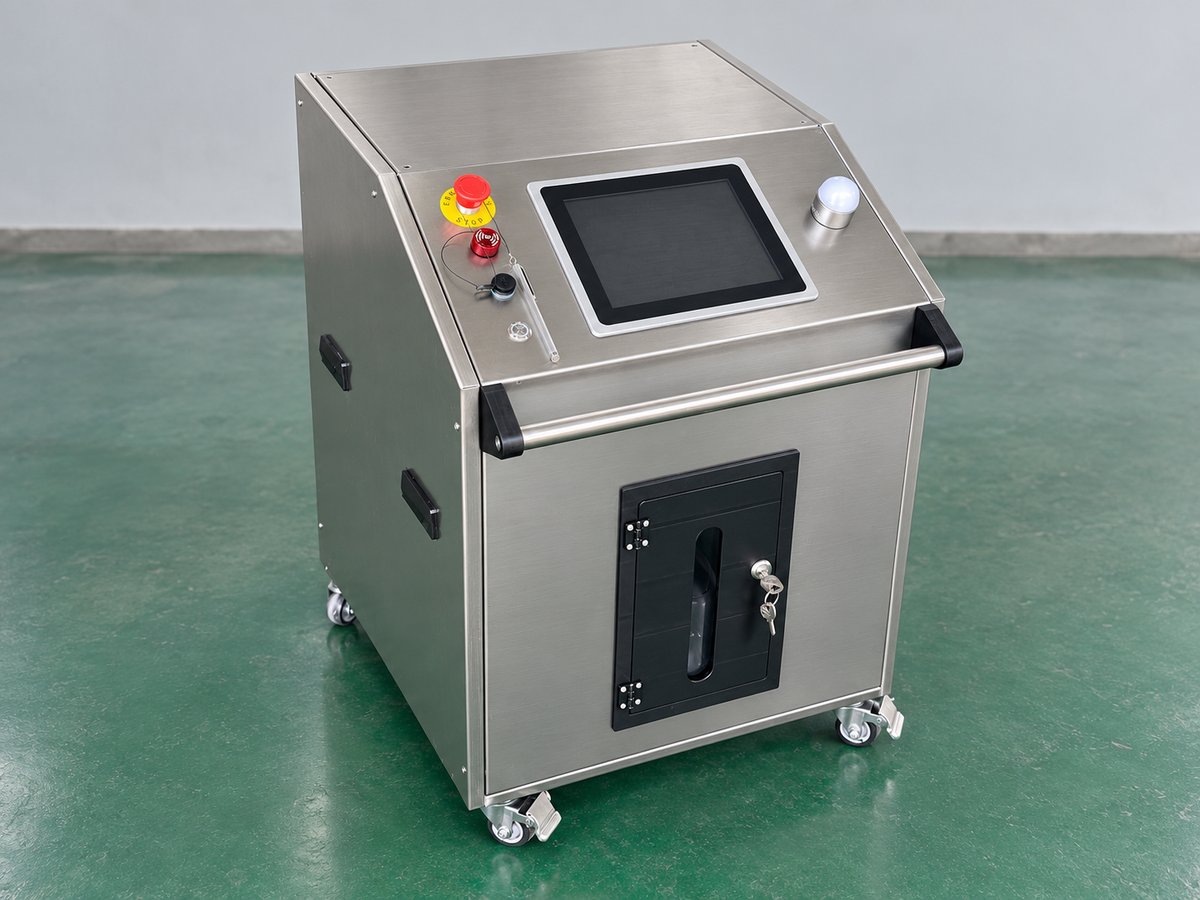
| Equipment | Aeration method | Residual after aeration | Aeration time |
|---|---|---|---|
| Recirculating VHP generator (FG-VHP-GL) | Built-in catalytic decomposer, recirculating | ≤1 ppm | ≤2.5 h |
| VHP pass boxes | Fresh air in, exhaust through catalytic converter; H14 HEPA filtration | ≤1 ppm | ≤1 h |
| Pulsed-vacuum VHP generator (FG-VHP-G) | Repeated vacuum and sterile-air repressurization | ≤1 ppm | Confirmed for each chamber |
| HVAC-integrated VHP system | Fresh air and exhaust through the HVAC | ≤1 ppm | ≤1 h or ≤1.5 h, by model |
Aeration times depend on the enclosure, the load and the site conditions, and are confirmed during commissioning. All VHP equipment: VHP sterilizers and generators.
FAQ
What does a VHP catalytic converter turn hydrogen peroxide into?
Water vapor and oxygen. Both are normal components of air.
Does the catalyst need to be replaced?
It is not consumed by the reaction, but it can lose activity through moisture, dust or contamination. Follow the supplier’s service interval and watch for longer aeration times.
Why is the last part of aeration so slow?
Materials such as plastics, seals and filters absorb hydrogen peroxide during the cycle and release it slowly. Condensation makes this worse.
Is a catalytic converter better than fresh-air purge?
Neither is better in general. Catalytic aeration suits closed enclosures and avoids discharging peroxide; fresh-air purge suits rooms with HVAC and adequate exhaust.
What residual level is safe?
A common target is 1 ppm, the US OSHA 8-hour time-weighted average limit. Some processes set lower internal limits.
References
- OSHA 29 CFR 1910.1000, Table Z-1: Limits for Air Contaminants (hydrogen peroxide)
- NIOSH Pocket Guide to Chemical Hazards: Hydrogen peroxide
- EU GMP Annex 1: Manufacture of Sterile Medicinal Products (2022)
- PDA Technical Report No. 51: Biological Indicators for Gas and Vapor-Phase Decontamination Processes
Related Products
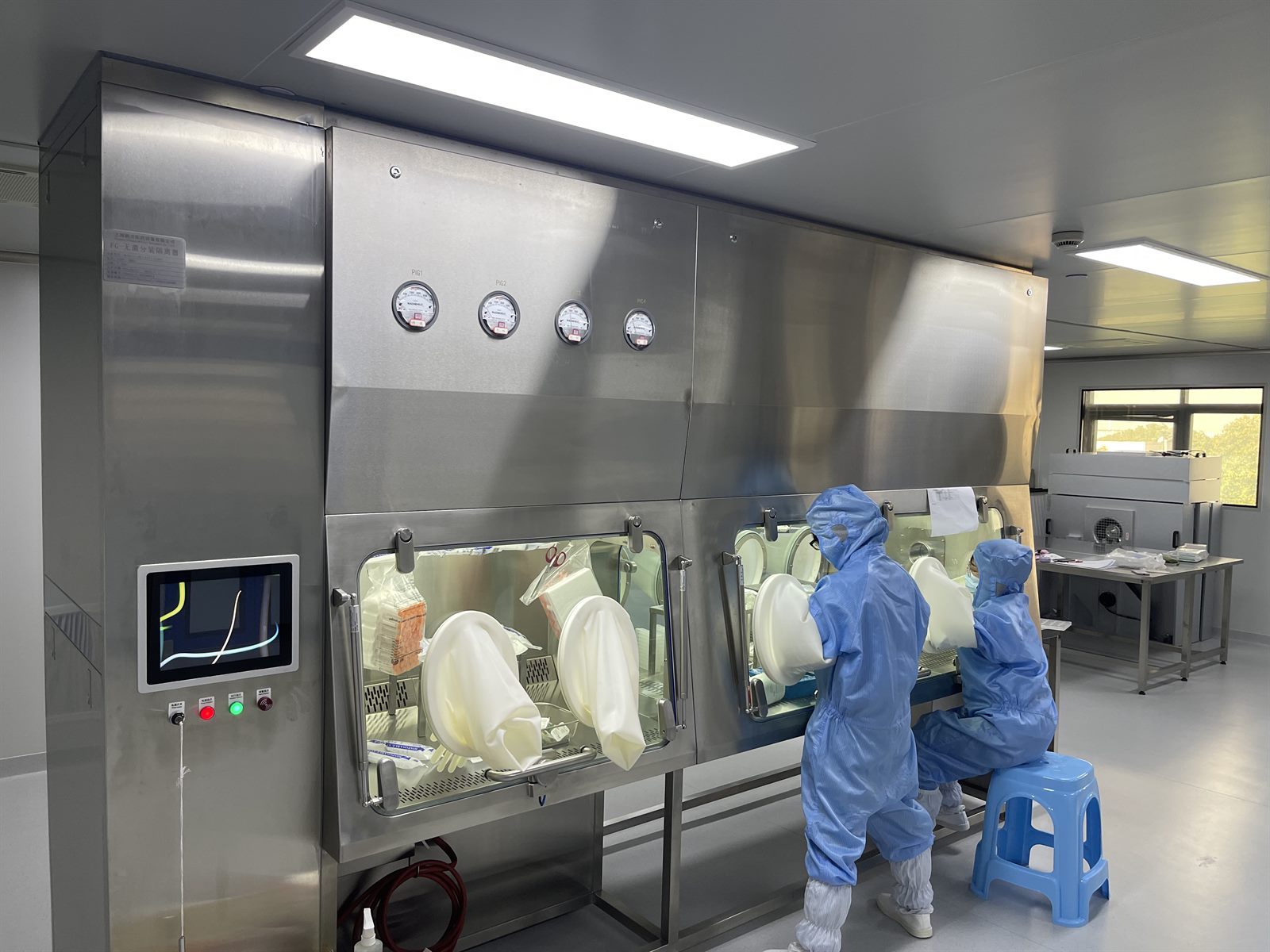 Aseptic Filling IsolatorGrade A (ISO 5) barrier for sterile filling, stoppering and capping.Isolators & Barrier
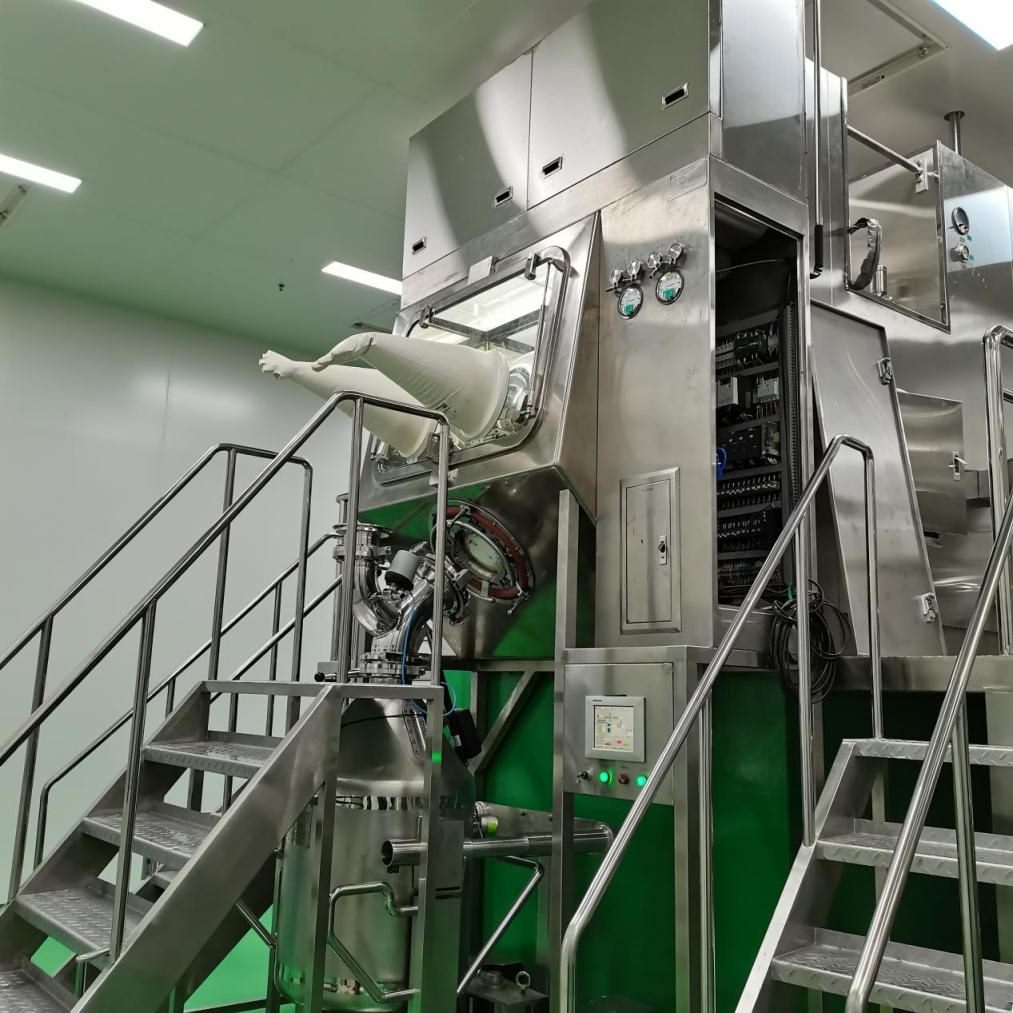 Dispensing & Containment Isolator (OEB5)Negative-pressure barrier for weighing, charging and sampling HPAPI.Isolators & Barrier
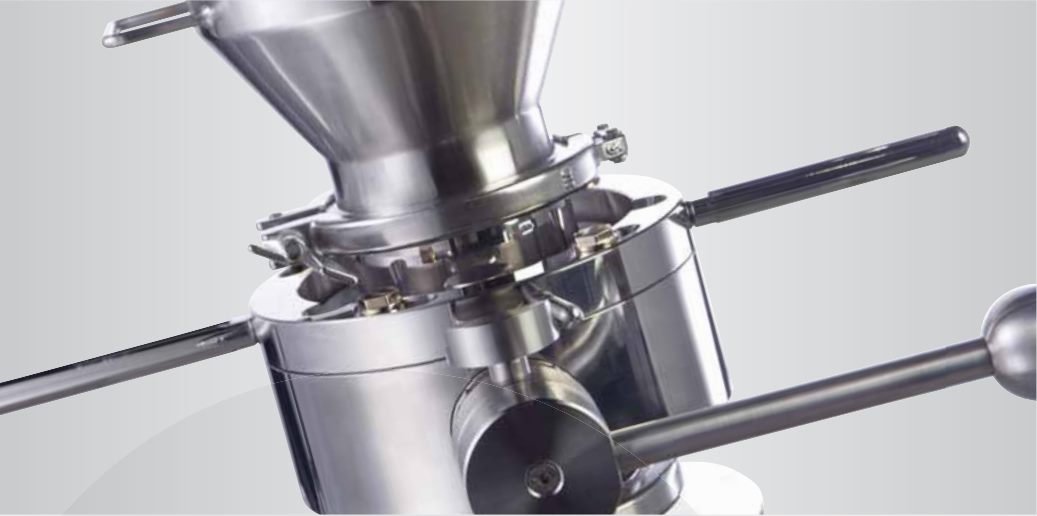 Alpha-Beta Split Butterfly ValveSplit butterfly valve for contained, dust-free transfer of potent powders.Transfer & Containment
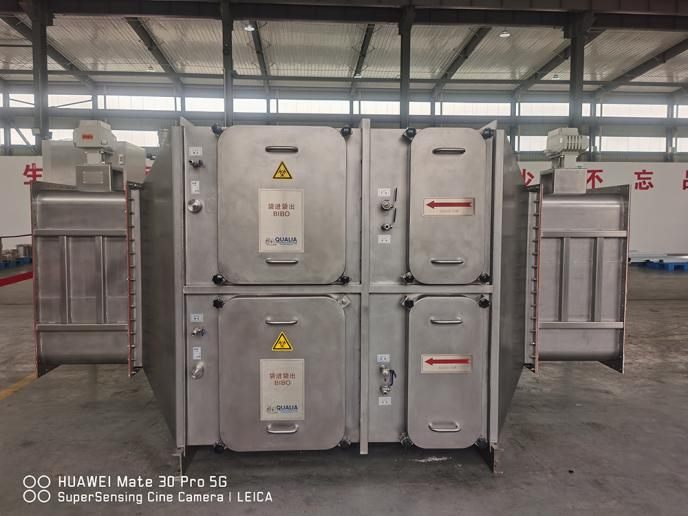 BIBO Filter HousingBag-in/bag-out HEPA housing for safe filter change in P3/P4 labs.Air Handling
Need a VHP generator with short, reliable aeration?
Tell us the enclosure volume, materials and your residual limit. Our engineers will recommend the right aeration setup.