








Why Spores Are the Benchmark: G. stearothermophilus and D-Values in VHP
Every VHP cycle in a pharmaceutical plant is judged by a small steel disc carrying about a million bacterial spores. If those spores do not grow after the cycle, the cycle passes. This guide looks at the biological indicator itself: why one organism, Geobacillus stearothermophilus, became the benchmark, what the numbers on a biological indicator certificate mean, how D-values and spore log reductions are calculated, and what to do when an indicator grows when it should not.
What a VHP biological indicator is
A biological indicator (BI) for VHP is a carrier, usually a small stainless steel disc, inoculated with a known population of bacterial spores, typically 106 Geobacillus stearothermophilus, and packed in a pouch that lets hydrogen peroxide vapor in but keeps other microorganisms out. After exposure, the carrier is transferred to growth medium and incubated. No growth means the spores on that carrier were inactivated.
For where indicators are placed and how the half-cycle method works, see how a VHP cycle is validated. This article is about the indicator itself.
Why spores, and why this organism
Bacterial spores are among the organisms most resistant to hydrogen peroxide. Their coat, dry core and protected DNA slow the oxidation that kills other cells quickly. For the chemistry behind this, see how hydrogen peroxide kills microorganisms.
G. stearothermophilus is used for several practical reasons:
- High resistance to hydrogen peroxide vapor compared with other spore formers that have been tested, so a cycle that kills it has margin for less resistant organisms.
- It grows at 55–60 °C. Most environmental contaminants grow at 30–35 °C, so a false positive from a stray contaminant is less likely.
- It is not a human pathogen, so indicators can be handled in normal laboratories.
- It is well characterized and available as standardized commercial indicators with documented resistance.
How a VHP indicator is built
| Part | Common choice | Why it matters |
|---|---|---|
| Carrier | Stainless steel disc or coupon | Represents hard surfaces and does not absorb hydrogen peroxide. Paper and fiber carriers absorb peroxide and can behave differently. |
| Spore population | Usually 106 per carrier | Sets the maximum log reduction a single indicator can show. |
| Primary pouch | Spunbonded polyolefin (for example Tyvek) on one side | Lets vapor through while protecting the carrier from contamination before and after exposure. |
| Recovery medium | Growth medium, often with a pH color indicator | Shows growth by turbidity or color change after incubation. |
Reading a BI certificate
Each lot of indicators comes with a certificate. Check these items before use:
| Item | What to check |
|---|---|
| Organism and strain | G. stearothermophilus with a culture collection number. |
| Lot number and expiry | Matches the indicators in hand; not expired on the day of use. |
| Population | Stated count per carrier, for example 2.1 × 10⁶. ISO 11138-1 expects the actual count to fall within −50% to +300% of the stated value. |
| D-value | The value and the exact test conditions: hydrogen peroxide concentration, temperature and method. |
| Test method | Survivor curve, fraction negative, or both. |
| Incubation | Temperature, medium and time, for example 55–60 °C for up to 7 days. |
| Storage | Temperature and humidity limits. Indicators stored outside them may lose or gain resistance. |
D-value: the speed of the kill
The D-value is the exposure time needed, under stated conditions, to reduce a spore population by 90%, or one log. If an indicator has a D-value of 2 minutes, a 6-log reduction needs about 12 minutes at the same conditions.
Unlike steam sterilization, VHP has no single set of standard resistance test conditions used by every manufacturer. A D-value is only meaningful together with the concentration and temperature at which it was measured. Two certificates with different conditions cannot be compared directly. When you change indicator supplier or lot, check that the stated resistance is still suitable for your cycle.
Spore log reduction (SLR)
The spore log reduction compares the starting population with the survivors:
SLR = log10(N0) − log10(Nf)
N0 is the population on the carrier before exposure and Nf the number of survivors. When no spores survive, the result can only be reported as greater than or equal to log10(N0). With 2.1 × 10⁶ spores and no growth, the indicator shows an SLR of at least 6.3. This is why a population of 106 is used to demonstrate a 6-log reduction.
Calculating a D-value from fraction-negative results
When some indicators in a group grow and some do not, the D-value can be estimated with the Stumbo-Murphy-Cochran method:
D = U / (log10N0 − log10(ln(n/r)))
U is the exposure time, n the number of indicators exposed and r the number that showed no growth. A worked example:
| Input | Value |
|---|---|
| Population N0 | 1.5 × 10⁶ (log10 = 6.18) |
| Exposure time U | 10 minutes |
| Indicators exposed n | 10 |
| No growth r | 4 |
| ln(n/r) | ln(2.5) = 0.916; log10 = −0.04 |
| D-value | 10 / (6.18 + 0.04) ≈ 1.6 minutes |
Such calculations are used in resistance testing and cycle development. In routine validation, the usual question is simpler: did every indicator at every location show no growth?
When an indicator grows
A positive indicator in a validation run must be investigated before it is accepted or rejected. Typical steps:
- Identify the organism. If it is not G. stearothermophilus, the growth came from contamination during handling, and the transfer technique should be reviewed.
- Check the location. A cold spot, a shadowed corner or an absorbent surface nearby can reduce exposure. Repeated positives at the same place point to a real distribution problem.
- Check the indicator. Damaged pouches, clumped spores or a lot with unusually high resistance can cause isolated survivors, sometimes called rogues.
- Check the controls. An unexposed indicator from the same lot must grow, and uninoculated medium must stay clear.
A positive should not simply be repeated until it passes. The investigation and its conclusion are part of the validation record.
Handling indicators correctly
- Store indicators as stated on the certificate and use them before expiry.
- Record each indicator’s location with a map or numbered positions.
- Transfer exposed carriers to medium aseptically, ideally under a laminar flow cabinet.
- Incubate for the full time stated by the manufacturer before recording a negative result.
- Run a positive control from the same lot with every batch.
Chemical and enzyme indicators can give faster information during cycle development, but they do not replace biological indicators. See chemical, enzyme and biological indicators for VHP.
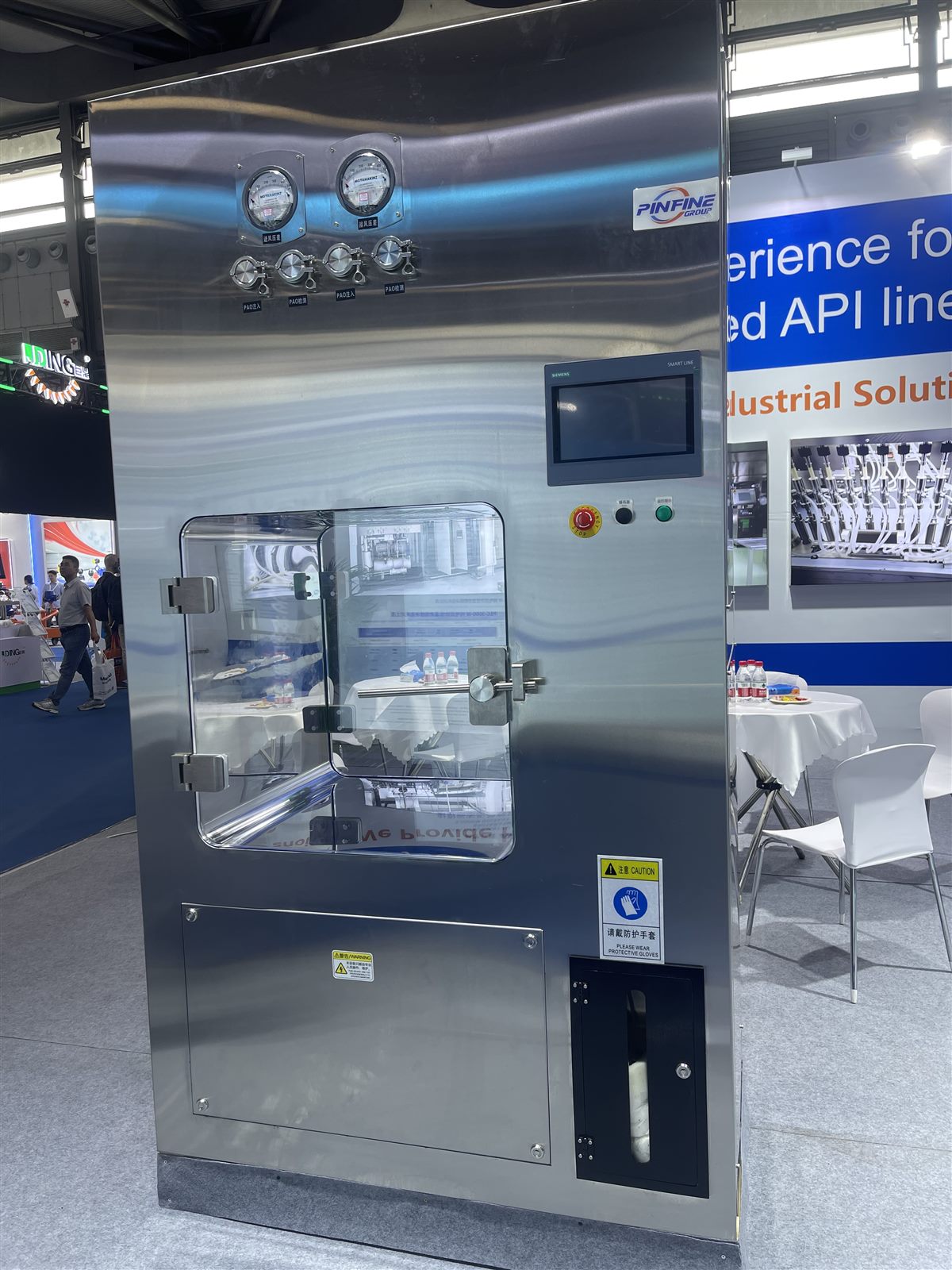
Fenggu VHP equipment
Fenggu VHP equipment, including mobile VHP room sterilizers, HVAC-integrated VHP systems, VHP pass boxes and the VHP BIBO sterilizer, supports cycle development and validation against a target of at least a 6-log reduction of Geobacillus stearothermophilus. Actual efficacy is established by the validation protocol and report for each project. Fenggu provides on-site commissioning and operator training for the equipment it supplies.
All VHP equipment: VHP sterilizers and generators.
FAQ
Why is the population 106?
An indicator can only demonstrate as many logs of reduction as it carries. A population of about one million spores allows a single indicator to show a 6-log reduction.
Can I compare D-values from two suppliers?
Only if they were measured under the same conditions. VHP D-values depend strongly on concentration and temperature, and suppliers do not all use the same test conditions.
Why are stainless steel carriers preferred for VHP?
They represent the hard surfaces being decontaminated and do not absorb hydrogen peroxide. Absorbent carriers can take up peroxide and change the result.
How long should indicators be incubated?
As stated by the indicator manufacturer, commonly at 55–60 °C for up to 7 days. Recording a negative too early can miss slow-growing survivors.
Is one positive indicator a failed cycle?
Not automatically, but it must be investigated. If the organism is G. stearothermophilus and the cause is not a handling error, the cycle or the distribution at that location needs attention.
References
- ISO 11138-1:2017, Sterilization of health care products — Biological indicators — Part 1: General requirements
- ISO 11138-7:2019, Sterilization of health care products — Biological indicators — Part 7: Guidance for the selection, use and interpretation of results
- USP <55> Biological Indicators — Resistance Performance Tests
- USP <1229.5> Biological Indicators for Sterilization
- PDA Technical Report No. 51: Biological Indicators for Gas and Vapor-Phase Decontamination Processes
Related Products
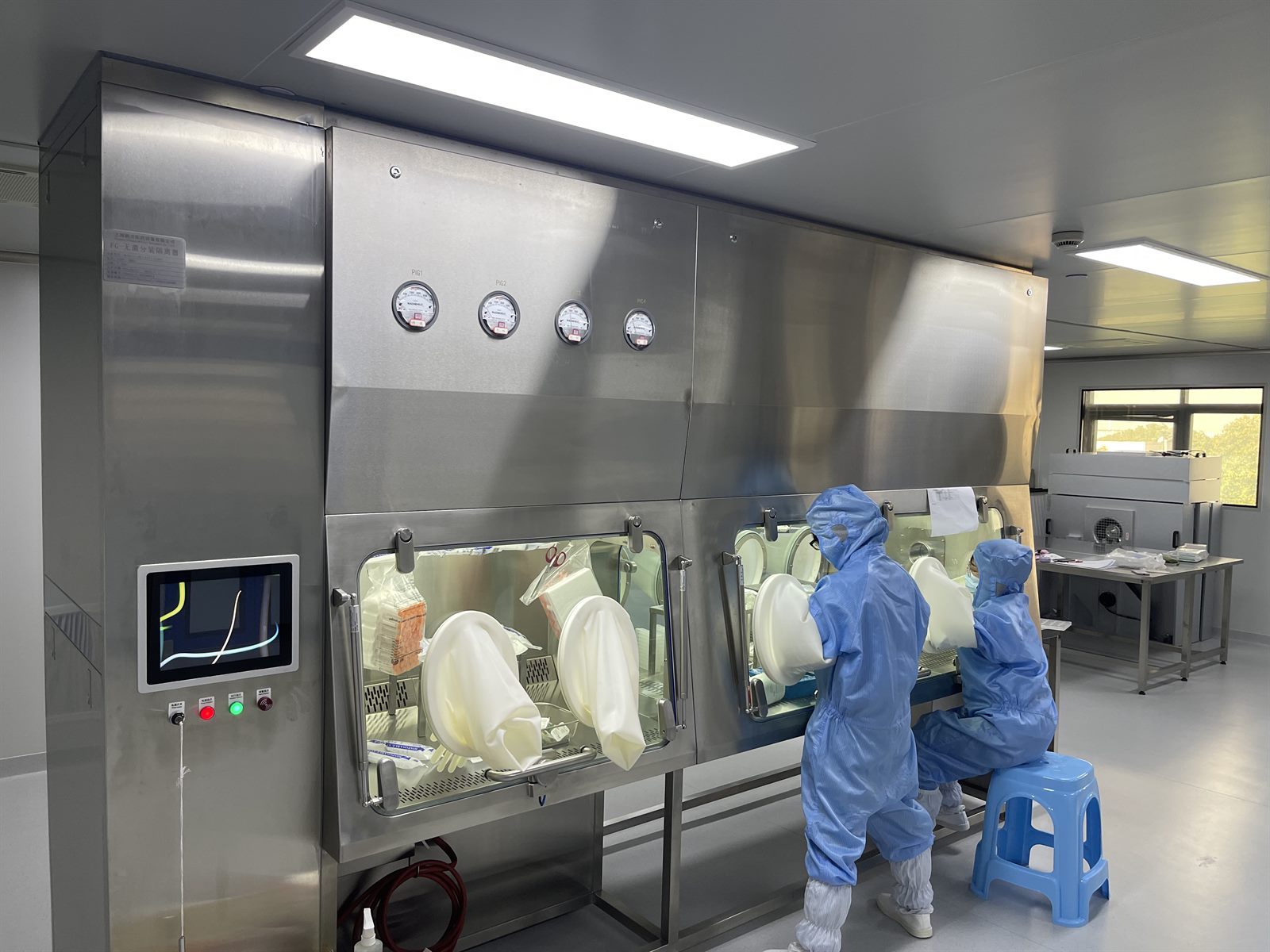 Aseptic Filling IsolatorGrade A (ISO 5) barrier for sterile filling, stoppering and capping.Isolators & Barrier
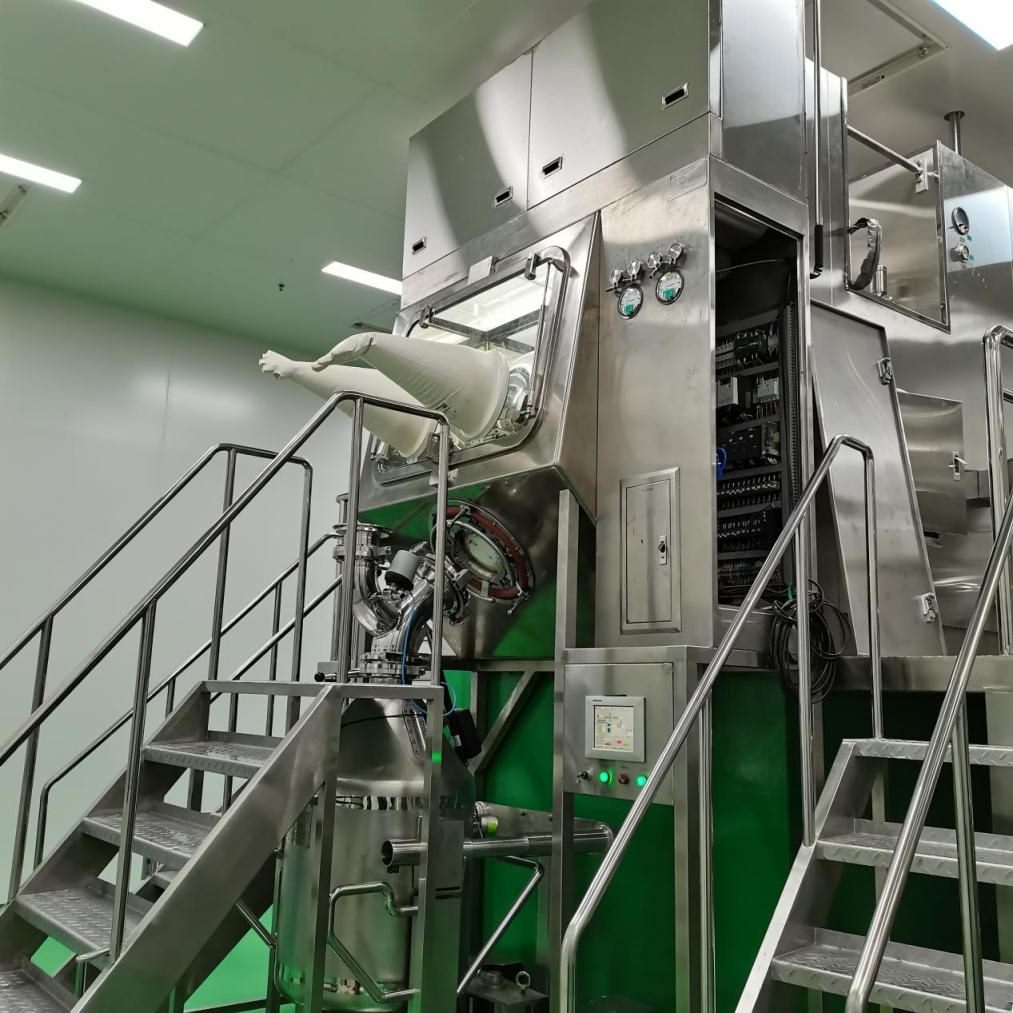 Dispensing & Containment Isolator (OEB5)Negative-pressure barrier for weighing, charging and sampling HPAPI.Isolators & Barrier
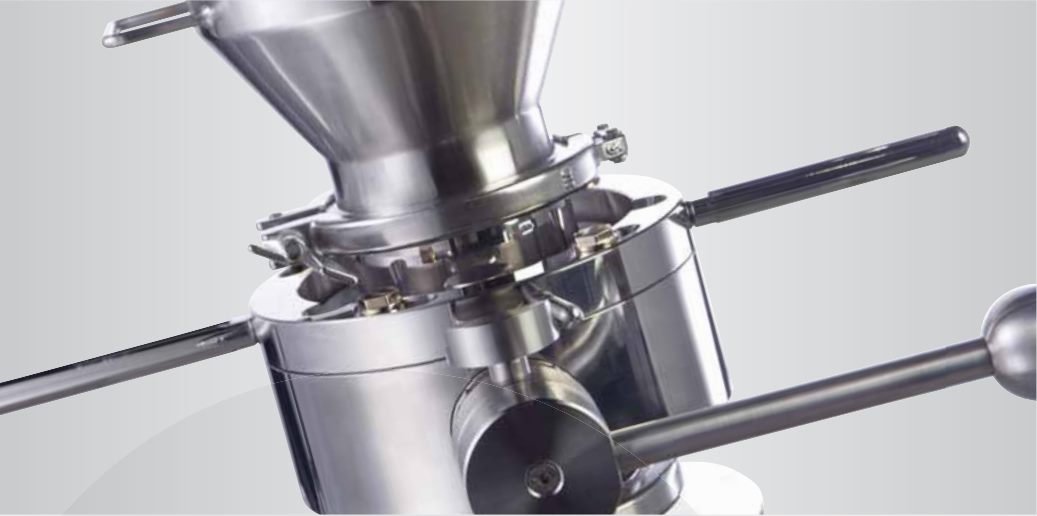 Alpha-Beta Split Butterfly ValveSplit butterfly valve for contained, dust-free transfer of potent powders.Transfer & Containment
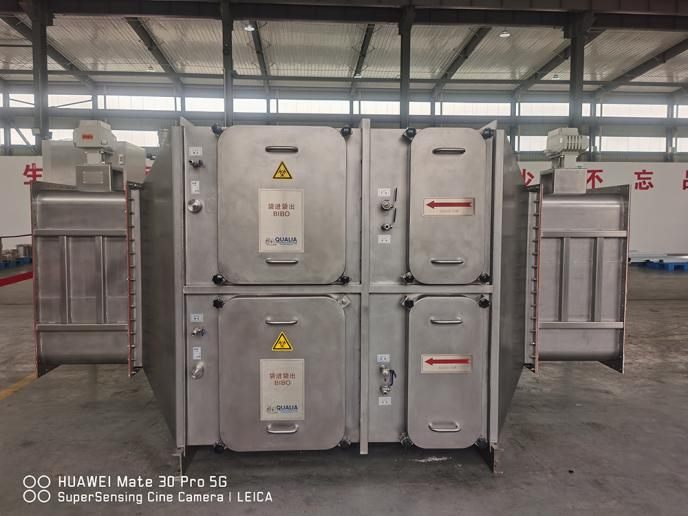 BIBO Filter HousingBag-in/bag-out HEPA housing for safe filter change in P3/P4 labs.Air Handling
Validating a VHP cycle?
Tell us the space or load you need to decontaminate. Our engineers will recommend the right equipment for your validation plan.