








RABS Airflow Designs: Active Overspill, Passive Overspill and Active HEPA Return
Most discussions of restricted access barrier systems (RABS) start with open versus closed: whether doors may be opened during production. There is a second way to classify a RABS that matters just as much for design, HVAC and product safety: where its air comes from and where it goes. This guide explains the three airflow designs, active RABS with overspill, passive RABS with overspill and active RABS with HEPA-filtered return, and what each means for the room, for hazardous products and for daily operation.
What a RABS is
A restricted access barrier system (RABS) encloses an aseptic process line behind rigid walls and supplies it with Grade A (ISO 5) unidirectional airflow. Operators intervene through glove ports, and the barrier is opened only in rare, defined situations.
Unlike an isolator, a RABS is not sealed from the room. Its main protection is airflow: Grade A air moves outwards from the critical zone and keeps room air from entering. That is why a RABS must stand in a Grade B background, while an isolator can stand in Grade C or D. For the full comparison, see isolator vs RABS.
Two ways to classify a RABS
| By operation | By airflow design |
|---|---|
| Open RABS: doors stay closed during operation and may be opened only for rare, predefined interventions. Closed RABS: stays closed during operation; door opening is acceptable only for setup and installation. |
Active with overspill: own fans and HEPA filters; air spills into the room. Passive with overspill: air supplied by ceiling HEPA filters of the room; air spills into the room. Active with HEPA return: own fans and HEPA filters; air returns through HEPA filters instead of spilling. |
The two classifications are independent. An open RABS can be active or passive; the airflow design decides how the barrier interacts with the room.
1. Active RABS with overspill
An active RABS has its own fan and HEPA filter units above the critical zone. They deliver unidirectional airflow down over the process, and the air leaves the enclosure through openings below the critical zone and spills into the surrounding room.
- Independent of the room supply. The airflow inside the barrier is controlled by the RABS itself, which makes it easier to set and verify the air velocity over the process.
- Adds air and heat to the room. The room HVAC must handle the extra air volume and the heat from the fans.
- Not suitable for hazardous products. Anything released inside the barrier is carried out into the room.
2. Passive RABS with overspill
A passive RABS has no fans of its own. HEPA filters in the room ceiling supply air into the top of the enclosure, and the bottom of the enclosure is open so that air flows through the critical zone and spills into the room.
- Simple construction. No fans or filter units on the barrier itself, so fewer parts to maintain.
- Depends on the room HVAC. The airflow over the process is only as good as the ceiling supply. The barrier and the ceiling filters must be designed together, and changes to the room air balance can affect the critical zone.
- Not suitable for hazardous products, for the same reason as the active overspill design.
3. Active RABS with HEPA-filtered return
This design also has its own fans and HEPA supply, but the air does not simply spill out. It is returned through HEPA filters, so air leaving the critical zone is filtered before it reaches the room or the HVAC.
- Protects in both directions. Return filtration helps keep hazardous material inside and microbial contamination out.
- Can be used for hazardous products when a risk assessment supports it.
- Safe filter change is needed. Return filters may hold hazardous residues, so they should be changed with a safe-change method such as bag-in/bag-out to protect operators and maintenance staff. See BIBO filter housings.
- More complex. The pressure balance between supply, return and the room needs careful design and commissioning.
For highly potent compounds, a closed isolator under negative pressure is often the better choice. See positive vs negative pressure isolators.
The three designs compared
| Active, overspill | Passive, overspill | Active, HEPA return | |
|---|---|---|---|
| Air supply | Own fans and HEPA filters | Room ceiling HEPA filters | Own fans and HEPA filters |
| Where the air goes | Spills into the room | Spills into the room | Returned through HEPA filters |
| Dependence on room HVAC | Low for the critical zone | High | Low for the critical zone |
| Hazardous products | Not suitable | Not suitable | Possible, based on risk assessment |
| Filter maintenance | Supply filters | Room ceiling filters | Supply and return filters, safe change |
| Typical use | Aseptic filling of non-hazardous products; retrofits | Lines in rooms with suitable ceiling supply | Products that need both product and operator protection |
Airflow requirements
- Grade A unidirectional airflow over the critical zone, with a guidance air velocity of 0.36–0.54 m/s at the working position under EU GMP Annex 1, unless another value is scientifically justified.
- Grade B background around the RABS.
- Airflow visualization (smoke studies) to show that air moves from the critical zone outwards and does not sweep from the room or from operators over open product, including during glove interventions. See airflow visualisation smoke studies.
- Filter integrity testing of supply and, where present, return HEPA filters.
Operating a RABS: points to control
A formal risk management process should show that the design is effective for the process and that the disinfection procedure works. In daily operation:
- Gloves and sleeves should be sterile when installed. Follow a glove monitoring program with defined disinfection and replacement intervals. See glove integrity testing.
- Door-open interventions should be very rare and follow a written procedure. Record each one in the batch record and disinfect afterwards. Some interventions may require line clearance, which is also recorded.
- Product contact parts, such as the stopper bowl and feed systems, are sterilized before each batch.
- Sterile components and consumables are transferred in without exposing sterile surfaces to lower grades, for example through a rapid transfer port or a decontaminated airlock.
- All non-product-contact surfaces inside the RABS are disinfected with a sporicidal agent before each batch or campaign.
- The disinfection program is validated and its effectiveness is assessed routinely through environmental monitoring.
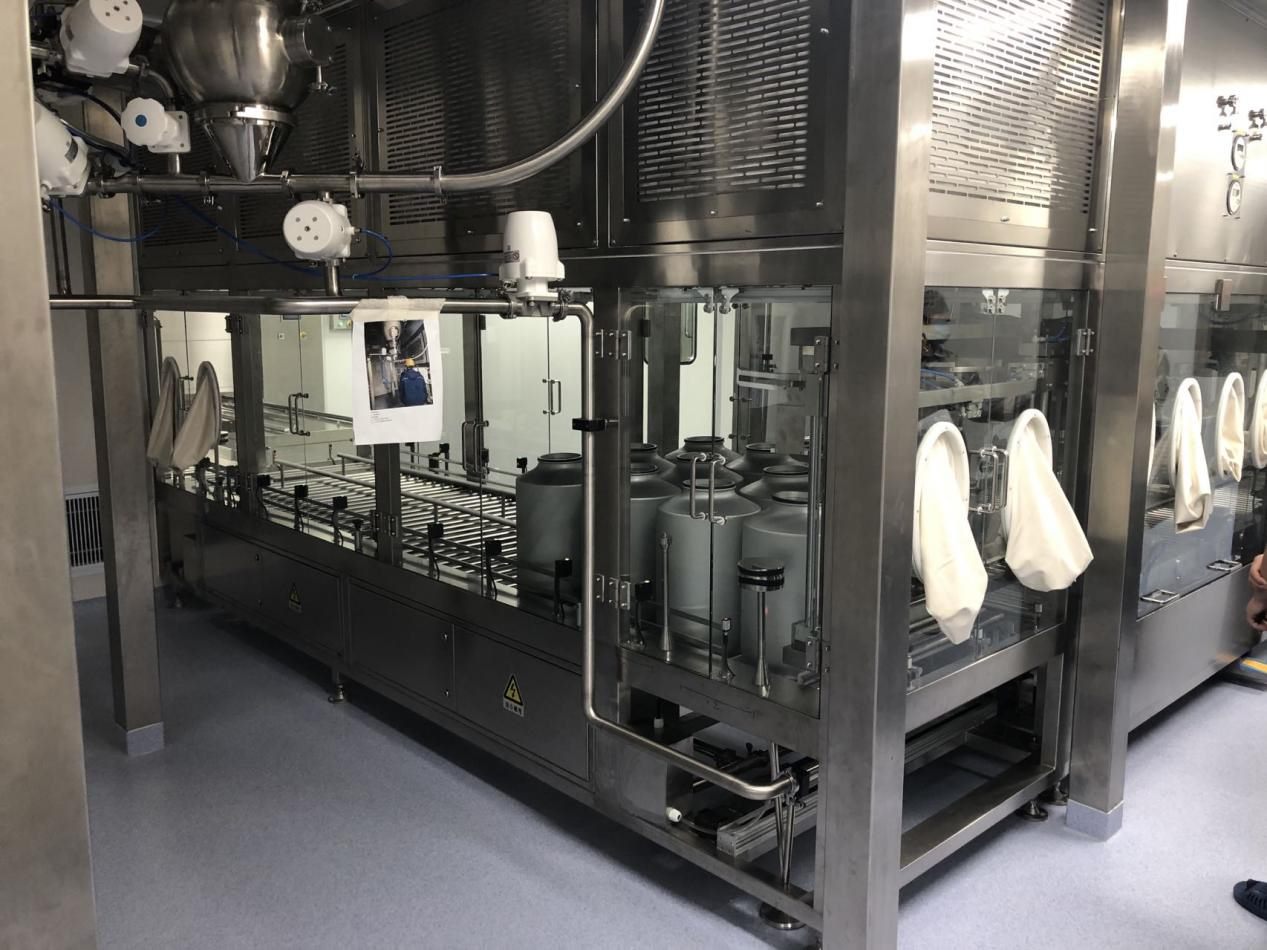
Fenggu open RABS
The Fenggu open RABS (FG-ISO-OR) holds a Grade A / ISO 5 zone over aseptic filling and processing lines under positive pressure, with HEPA supply air and controlled overspill into the surrounding Grade B background. It follows the active overspill design described above.
| Parameter | Value |
|---|---|
| Cleanliness | Grade A / ISO 5, unidirectional laminar flow |
| Chamber pressure | Positive, controlled air overspill |
| Work-face air velocity | 0.36–0.54 m/s |
| Filter efficiency | PAO ≥ 99.9990% @ 0.3 μm |
| Material | SUS304 rigid barrier construction |
| Access | Sealed glove ports for routine intervention |
| Background | Minimum Grade B surrounding cleanroom |
Barrier dimensions and glove-port layout are configured to the filling line. For hazardous products or full separation from the room, see the aseptic filling isolator and the negative pressure isolator.
FAQ
What is the difference between active and passive RABS?
An active RABS has its own fans and HEPA filters. A passive RABS relies on the HEPA filters in the room ceiling to supply its air.
Can a RABS be used for potent or toxic products?
Not with an overspill design, because air from the critical zone goes into the room. An active RABS with HEPA-filtered return can be considered on the basis of a risk assessment; for highly potent compounds an isolator is usually preferred.
What background grade does a RABS need?
Grade B, because the barrier is not sealed from the room and its protection depends on airflow.
Is an open RABS the same as a passive RABS?
No. Open and closed describe whether doors can be opened during operation. Active and passive describe where the air comes from. An open RABS can be either.
Why do return filters need safe change?
They can hold residues of the product or of microorganisms from inside the barrier. A safe-change method protects the person changing them.
References
- EU GMP Annex 1: Manufacture of Sterile Medicinal Products (2022)
- ISO 14644-7:2004, Cleanrooms and associated controlled environments — Part 7: Separative devices
- FDA Guidance for Industry: Sterile Drug Products Produced by Aseptic Processing (2004)
- ISPE Baseline Guide Volume 3: Sterile Product Manufacturing Facilities
Related Products
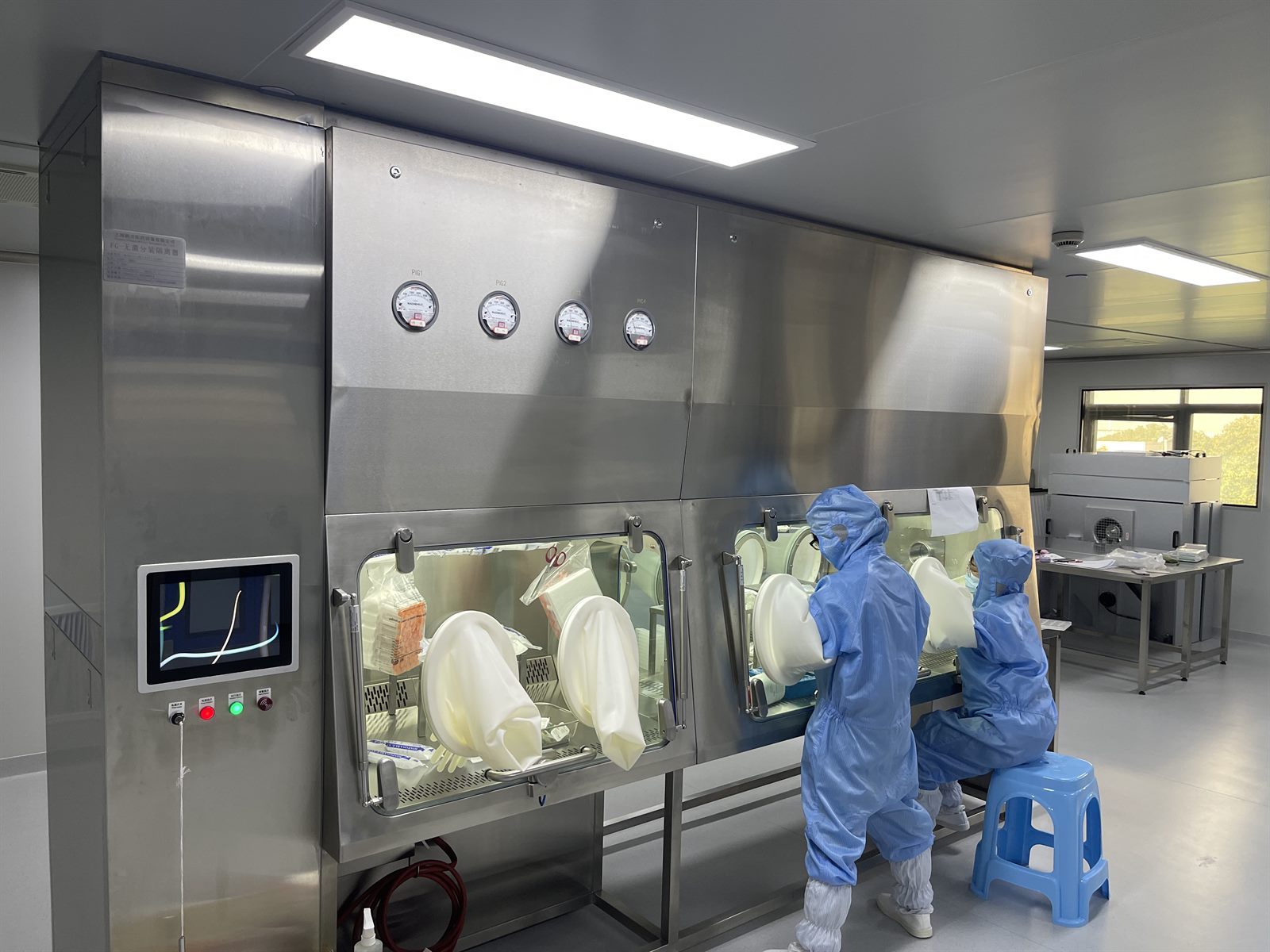 Aseptic Filling IsolatorGrade A (ISO 5) barrier for sterile filling, stoppering and capping.Isolators & Barrier
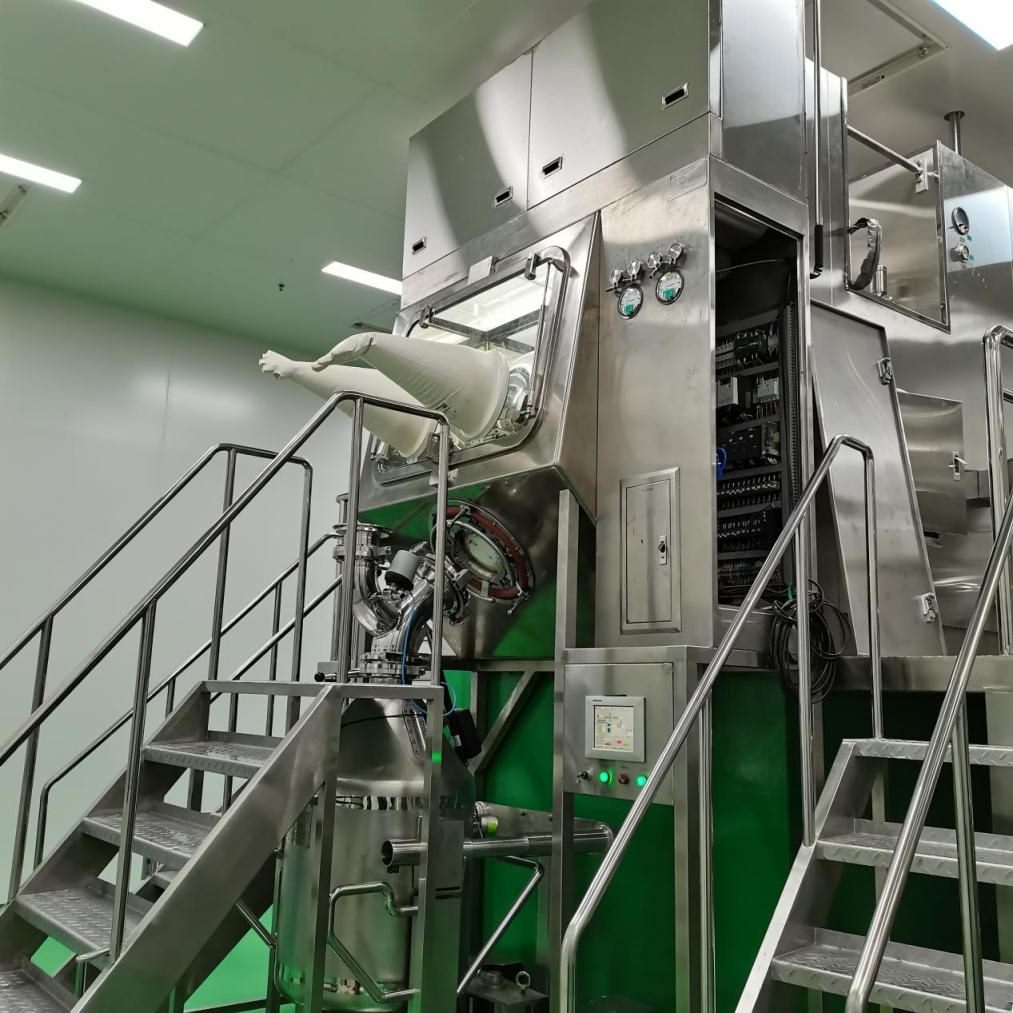 Dispensing & Containment Isolator (OEB5)Negative-pressure barrier for weighing, charging and sampling HPAPI.Isolators & Barrier
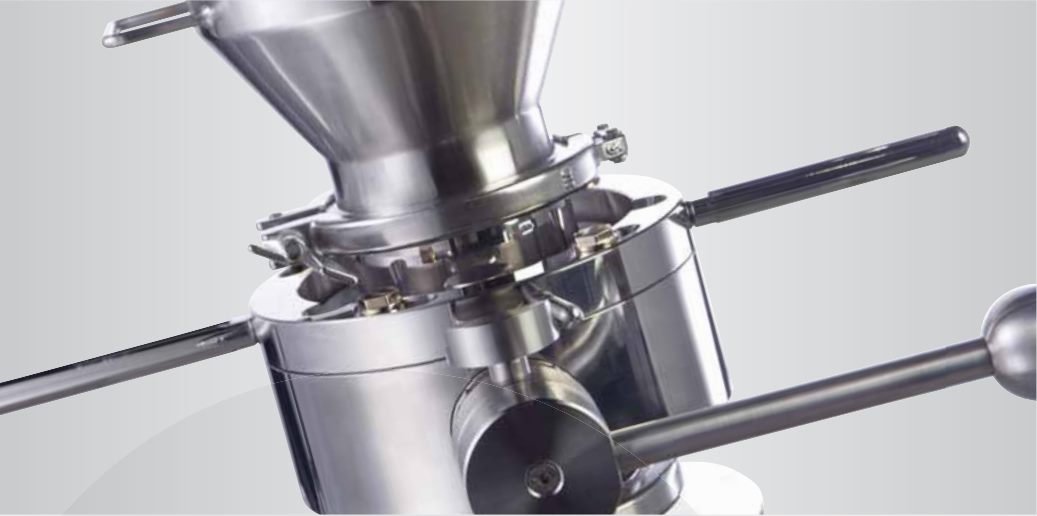 Alpha-Beta Split Butterfly ValveSplit butterfly valve for contained, dust-free transfer of potent powders.Transfer & Containment
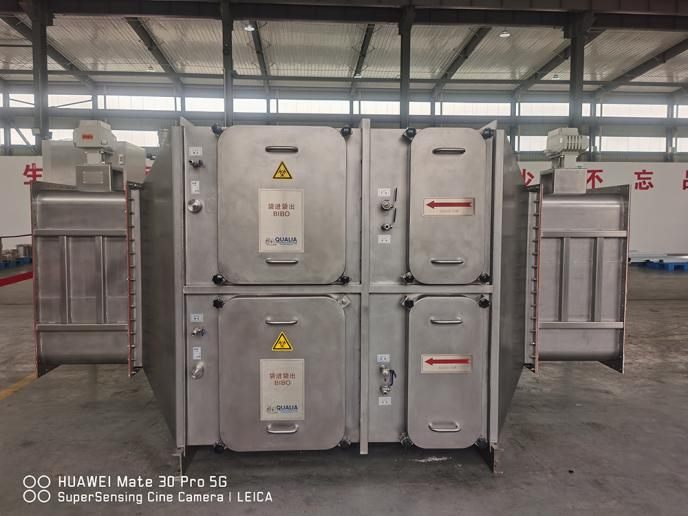 BIBO Filter HousingBag-in/bag-out HEPA housing for safe filter change in P3/P4 labs.Air Handling
Choosing a barrier for your filling line?
Send us the line layout, the product and the background cleanroom grade. Our engineers will recommend a RABS or isolator configuration.