








How Temperature Affects VHP Cycles: Cold Rooms and Warm Surfaces
A VHP cycle that works well in one room can fail in another that looks the same on the drawing. Often the difference is temperature. Temperature decides how much hydrogen peroxide and water vapor the air can hold before it condenses, where condensation forms first, how fast peroxide breaks down on surfaces and how long aeration takes. This guide explains what temperature changes in a VHP cycle, why cold rooms and cold surfaces need special attention, what warm surfaces do, and how to control temperature before and during the cycle.
The short answer
Temperature sets the limit for how much hydrogen peroxide vapor a space can hold before it condenses. Cold air and cold surfaces reach that limit sooner, so condensation forms there first; warm surfaces break down peroxide faster and stay dry. A VHP cycle is therefore developed and validated at a defined temperature range, and the space must be brought into that range before injection.
Why temperature matters: the vapor capacity of air
Air can carry only a limited amount of water vapor, and the limit rises steeply with temperature. Hydrogen peroxide vapor behaves the same way and is even less volatile than water. The table shows the maximum water vapor content of air at saturation:
| Air temperature | Maximum water vapor at saturation |
|---|---|
| 5 °C | about 6.8 g/m³ |
| 10 °C | about 9.4 g/m³ |
| 15 °C | about 12.8 g/m³ |
| 20 °C | about 17.3 g/m³ |
| 25 °C | about 23.0 g/m³ |
| 30 °C | about 30.4 g/m³ |
Air at 10 °C holds little more than half the water vapor it can hold at 20 °C. A VHP generator injects both water and hydrogen peroxide, so a colder space reaches condensation with less peroxide in the air. For how concentration, relative humidity and relative saturation interact, see VHP concentration, humidity and condensation.
Cold surfaces: where condensation starts
What matters is the temperature of each surface, not the average air temperature. Vapor condenses first on the coldest surface in the space, and the first condensate is rich in hydrogen peroxide. Typical cold spots:
- Outer walls and windows, especially in winter.
- Supply air diffusers if cooled air is still flowing or the coil is still cold.
- Chilled equipment: refrigerators, incubators set below room temperature, cooled work surfaces.
- Floors over unheated spaces or slabs on ground.
- Metal items brought in from a colder area just before the cycle.
Local condensation has two effects. It removes peroxide from the air near that surface, and it leaves concentrated liquid that can attack sensitive materials and takes longer to aerate. A sensor in the middle of the room will not show it.
Cold rooms and cold stores
Rooms held at 2–8 °C, such as cold stores and refrigerated sampling rooms, are the most demanding case. Two approaches are used:
| Approach | How it works | Points to check |
|---|---|---|
| Warm the room first | Empty the room, switch off the cooling and bring it to the temperature range the cycle was developed for. | Time to warm up and cool down again; product and materials must be moved out; walls and floor take longer to warm than the air. |
| Cycle developed for the cold room | Lower injection rate and concentration, longer contact time, developed and validated at the actual room temperature. | Condensation margin is small; biological indicator results at cold spots decide whether the cycle is acceptable; aeration is slower. |
Either way, the cycle must be qualified at the temperature it will actually run at. A cycle validated at room temperature cannot simply be used in a cold store.
Warm surfaces
Warm surfaces have the opposite effect. They stay above the condensation point, and hydrogen peroxide breaks down faster on them. Typical warm surfaces are lights, equipment motors, heaters, electrical cabinets and equipment that was running until just before the cycle.
- Less peroxide nearby. Faster decomposition lowers the local concentration, so a warm area can be a weak point for biological indicators.
- Uneven conditions. Warm air rises and sets up convection that affects how vapor is distributed.
- Heat-sensitive items. Some electronics and materials should be switched off and allowed to cool before the cycle anyway.
Switch off heat sources that are not needed during the cycle, and let equipment cool down to room temperature before injection.
Temperature and efficacy
A cooler cycle is not automatically less effective. Near condensation, a thin layer of peroxide forms on surfaces, and some studies report faster kill under these conditions. The problem is control. Close to the condensation point, small temperature differences across the room decide where liquid forms and where it does not. That is why temperature is kept stable and within the validated range, rather than as low as possible or as high as possible. For how D-values depend on test conditions, see G. stearothermophilus and D-values in VHP.
Temperature and aeration
Materials such as plastics, seals, gloves and filters absorb hydrogen peroxide during the cycle and release it afterwards. Warmer surfaces release it faster, so aeration in a cold space usually takes longer. Condensate also has to evaporate before the residual concentration falls to the release limit. For aeration methods, see how catalytic converters break down H2O2 in VHP generators.
Controlling temperature in practice
- Map the space. Log air and surface temperatures before cycle development, including walls, floors, diffusers and equipment. A handheld infrared thermometer finds cold spots quickly.
- Stabilize before injection. Run the HVAC or room conditioning until temperatures are steady, then dehumidify as the cycle requires.
- Remove or switch off heat and cold sources that are not part of the validated setup.
- Place indicators at the extremes. Put biological indicators at the coldest and warmest locations found during mapping, not only in the middle of the room.
- Record temperature during every cycle together with humidity and hydrogen peroxide concentration, and define acceptable limits in the procedure.
- Treat seasonal changes as a risk. A room validated in summer may have colder walls in winter. Check the start conditions before each cycle.
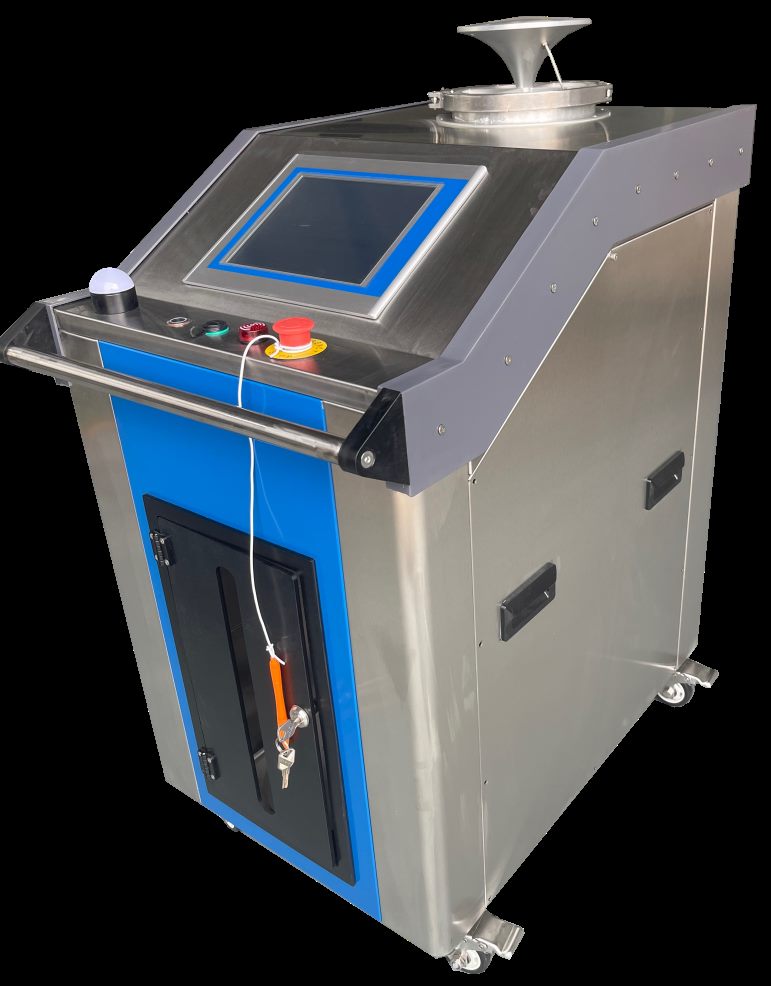
Fenggu VHP equipment
| Equipment | Temperature condition |
|---|---|
| Mobile VHP room sterilizer (FG-VHP-M500) | Room brought to above 25 °C and below 50% RH by the HVAC before injection |
| HVAC-integrated VHP system | Room temperature during the process 25–35 °C; dehumidified to above 25 °C and below 50% RH before injection |
| Recirculating VHP generator (FG-VHP-GL) | Tubing and target chamber conditioned, typically 15–30 °C and ≤30% RH; cycle temperature 25–35 °C |
| Pulsed-vacuum VHP generator (FG-VHP-G) | Cycle temperature 25–35 °C |
| Airlock VHP sterilization | Cycle temperature 25–35 °C |
The HVAC-integrated system and the airlock system monitor temperature, humidity and hydrogen peroxide concentration in real time during the cycle. Spaces outside these conditions, such as cold stores, need a project-specific assessment. Efficacy is designed against a target of at least a 6-log reduction of G. stearothermophilus, subject to validation for each space.
All VHP equipment: VHP sterilizers and generators.
FAQ
Can VHP be used in a cold room at 2–8 °C?
Yes, but the cycle must be developed and validated at that temperature, with a smaller margin to condensation and longer aeration. The alternative is to empty the room and warm it to the normal cycle temperature first.
Why do biological indicators fail near the outer wall?
Cold walls cause local condensation, which takes peroxide out of the air nearby and makes conditions at the wall different from those measured in the room. Check surface temperatures and consider conditioning the room longer before the cycle.
Is a warmer room always better for VHP?
No. Warmer air holds more vapor before condensation, but hot surfaces decompose peroxide faster and can become weak points. A stable temperature within the validated range matters more than a high one.
Does temperature affect aeration time?
Yes. Absorbed peroxide is released faster from warm materials, so aeration in a cold space usually takes longer.
Should I record temperature during routine cycles?
Yes. Temperature, humidity and concentration together show whether each cycle ran within its validated conditions.
References
- USP <1229.11> Vapor Phase Sterilization
- EU GMP Annex 1: Manufacture of Sterile Medicinal Products (2022)
- EN 17272:2020, Chemical disinfectants and antiseptics — Methods of airborne room disinfection by automated process
- PDA Technical Report No. 51: Biological Indicators for Gas and Vapor-Phase Decontamination Processes
Related Products
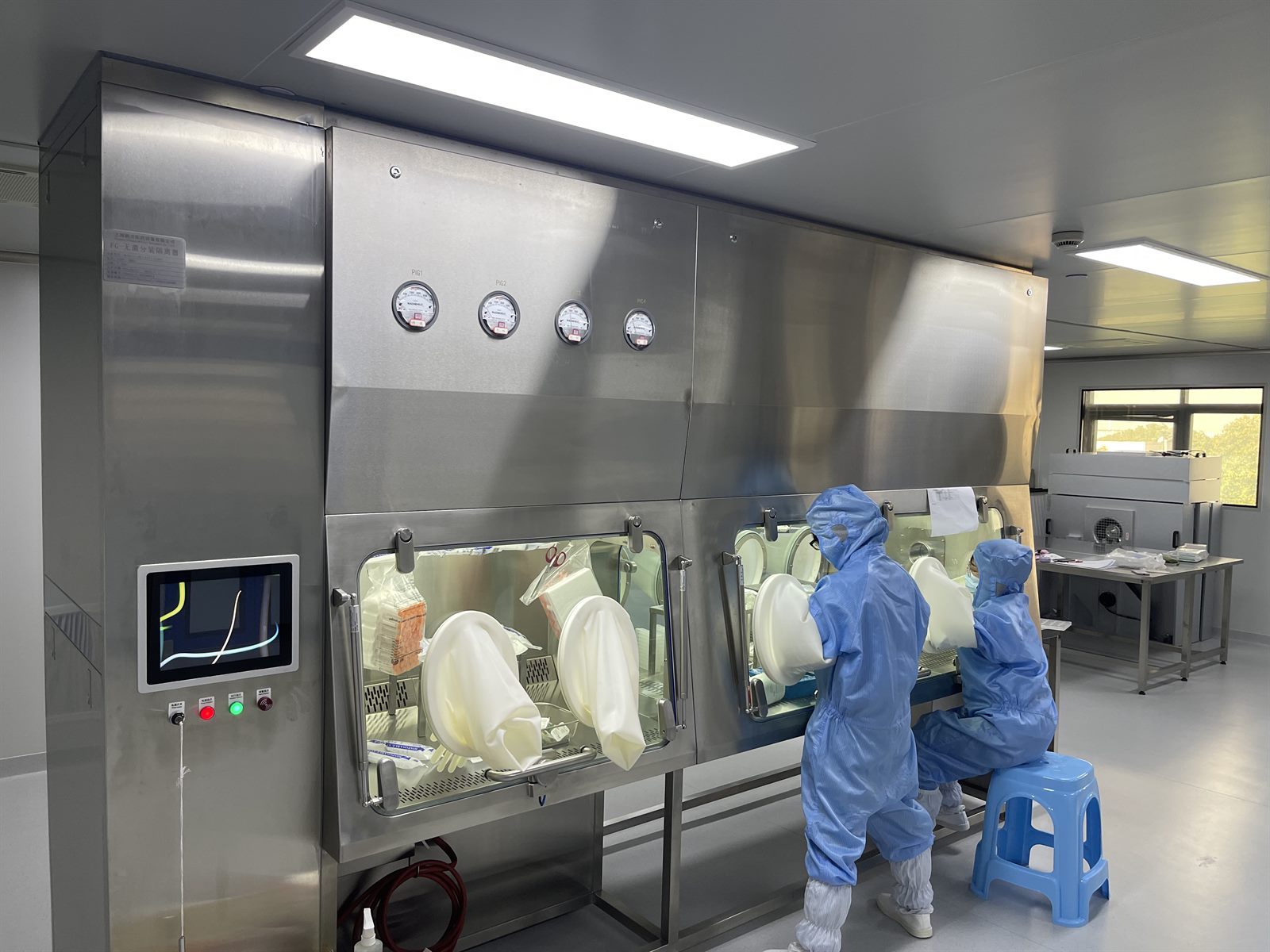 Aseptic Filling IsolatorGrade A (ISO 5) barrier for sterile filling, stoppering and capping.Isolators & Barrier
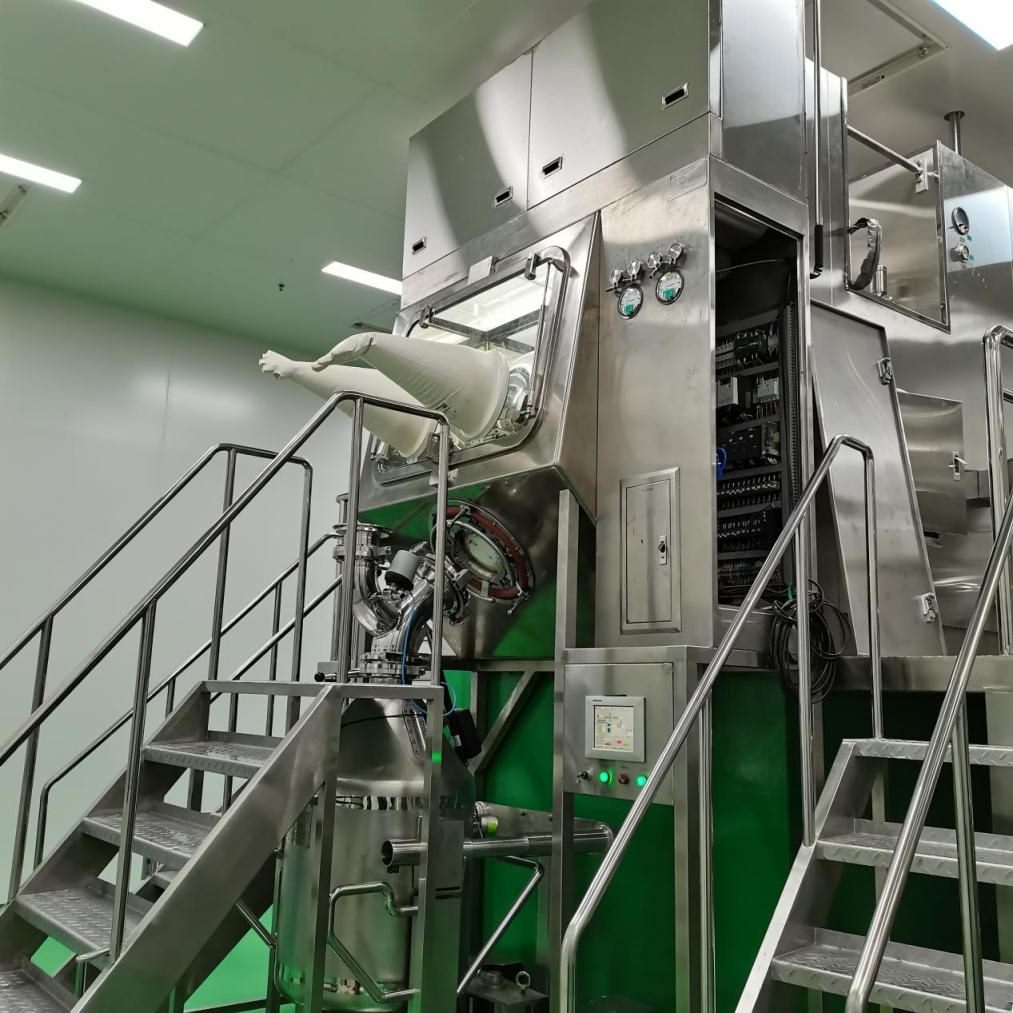 Dispensing & Containment Isolator (OEB5)Negative-pressure barrier for weighing, charging and sampling HPAPI.Isolators & Barrier
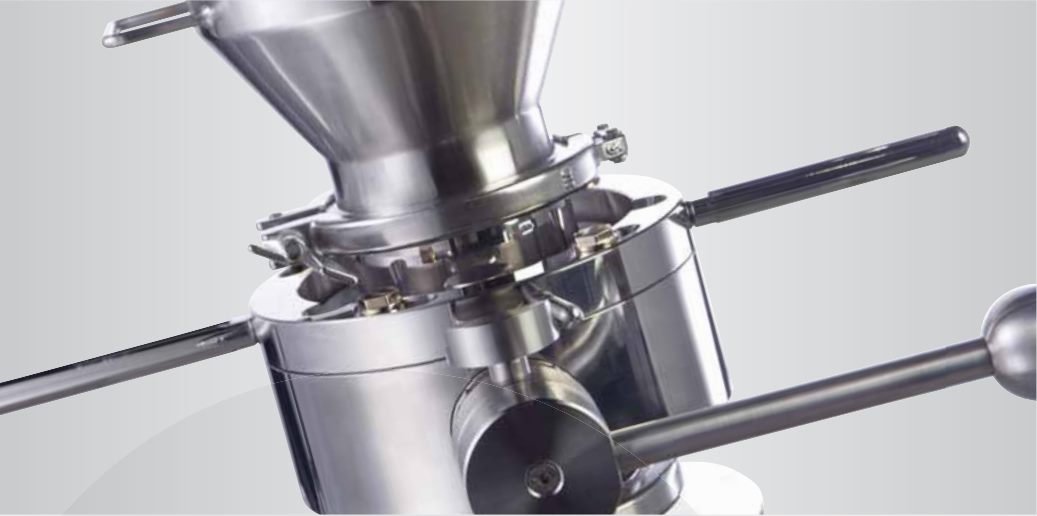 Alpha-Beta Split Butterfly ValveSplit butterfly valve for contained, dust-free transfer of potent powders.Transfer & Containment
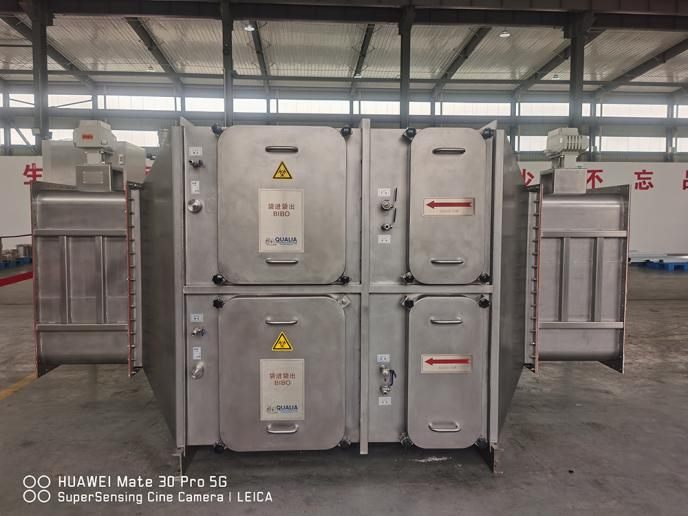 BIBO Filter HousingBag-in/bag-out HEPA housing for safe filter change in P3/P4 labs.Air Handling
Planning VHP for a cold store or a difficult room?
Send us the room volume, temperature range and construction. Our engineers will advise on conditioning and the right equipment.