








Choosing a Dry Fog Hydrogen Peroxide Disinfection Device: Droplet Size, Coverage and Residue
A dry fog hydrogen peroxide device turns a disinfectant solution into very fine droplets and fills a room with them. It is simpler to deploy than a vaporized hydrogen peroxide (VHP) system and does not need a tightly sealed space, which is why it is used for large cleanroom areas, warehouses and complex rooms. But two devices that both claim “dry fog” can behave very differently. This guide explains what to check before buying: droplet size, coverage per unit, humidity, residue, data and validation.
What “dry fog” means
Dry fog is a mist of droplets small enough, typically a few microns and below about 10 µm, that they tend to stay airborne and bounce off surfaces instead of wetting them. Larger droplets settle quickly and leave visible wet patches. The term is a description, not a standard, so each supplier’s claim has to be checked against measured data.
Dry fog is still a liquid aerosol. VHP is different: the hydrogen peroxide is fully vaporized and travels as a vapor. For the full comparison, see vaporized vs aerosolized hydrogen peroxide.
Is a fogger the right tool?
| Situation | Dry fog device | VHP system |
|---|---|---|
| Large or complex room, hard to seal | Often a good fit | Needs sealing and leak control |
| Routine disinfection of cleanroom areas | Good fit | Possible; usually more equipment |
| Isolators, pass boxes, airlocks | Not the usual choice | Standard choice |
| Shadowed geometry, filters, equipment interiors | Limited penetration | Better penetration as a vapor |
| Several rooms at once | Several networked units | One generator per circuit, or HVAC integration |
If the space is an isolator, a sealed chamber or part of an HVAC system, look at VHP equipment instead.
1. Droplet size
Droplet size decides whether the fog stays dry, how far it travels and how evenly it covers the room. Ask for:
- A size range or distribution, not one number. A single “average” hides the large droplets that cause wetting. Values such as Dv50 and Dv90 (the sizes below which 50% and 90% of the liquid volume falls) are more useful.
- How it was measured. Laser diffraction is a common method. Ask at what distance from the nozzle and at what flow rate the measurement was taken.
- How the nozzle makes the fog. Compressed-air (two-fluid) nozzles, ultrasonic and centrifugal designs all exist. Ask how droplet size changes when the flow rate is turned up.
2. Coverage per unit
Coverage is usually stated as a room volume per unit. Check what it rests on:
- Solution flow rate in mL/min and the tank capacity. Together they show how long one unit can run and how much solution reaches the room.
- Room conditions assumed for the figure: ceiling height, furniture, temperature and humidity.
- Networking. For large spaces, can several units run as one cycle from one control point, with one record?
- Distribution. Fog follows air movement. Ask where to place units, whether extra fans are needed and how dead zones are checked.
The real coverage of a room is shown by indicators placed at worst-case locations during cycle development, not by the datasheet.
3. Humidity and condensation
Every fogging cycle adds water to the air. If the room starts humid, the fog can condense, leave wet surfaces and reduce the uniformity of the treatment. Ask for the room humidity the device is designed for, whether it controls or monitors humidity, and what happens if the limit is exceeded. Temperature matters too: cold surfaces near air conditioning outlets condense first. For the physics behind this, see VHP concentration, humidity and condensation.
4. Residue and aeration
Hydrogen peroxide itself breaks down into water and oxygen. Residue questions are about the rest of the solution and about how long the room takes to become safe:
- Solution formula. Many fogging solutions are not pure hydrogen peroxide. They may contain stabilizers, peracetic acid or silver. Ask for the composition and the safety data sheet, and whether a wipe-down is needed after the cycle.
- Dedicated or open solution. If the device only works with the supplier’s own solution, include its price and availability in your running cost.
- Re-entry. The room can be re-entered only when the hydrogen peroxide level is confirmed below the occupational exposure limit. In the US, the OSHA limit is 1 ppm as an 8-hour time-weighted average. Ask how the concentration is measured before re-entry and how long aeration normally takes with your ventilation.
5. Material compatibility
Ask which materials have been tested: cleanroom wall panels, stainless steel, plastics, sealants and electronics. Compatibility claims normally assume controlled, non-condensing conditions. If sensitive instruments stay in the room, ask whether they need to be covered or removed.
6. Controls and data
For GMP areas, the cycle record matters as much as the fog. Check:
- Stored cycle recipes, so that every run uses the same parameters.
- Recording of solution consumption, run time and alarms.
- User levels, password management and an audit trail.
- Data export, for example by USB, and how records are protected from change.
- Scheduling and remote control, so nobody needs to enter the room during the cycle.
A weighing or metering module that measures how much solution was actually dispensed makes dosing more consistent from cycle to cycle.
7. Validation
A fogging cycle is validated in your room, with your layout and your solution. A typical approach places biological indicators, such as 106 Geobacillus stearothermophilus spores, and chemical indicators at hard-to-reach locations, then repeats the cycle to show consistency. EN 17272 describes how airborne room disinfection processes are tested. Any efficacy figure on a datasheet, such as a 6-log spore reduction, applies to your room only after this validation. See how a VHP cycle is validated.
Buyer’s checklist
| Ask the supplier | Why it matters |
|---|---|
| Droplet size distribution and how it was measured | Shows whether the fog is really dry |
| Room volume per unit, flow rate and tank capacity | Sizes the number of units and the cycle time |
| Can units be networked into one cycle and one record? | Needed for large or multi-room areas |
| Starting humidity and humidity control | Prevents condensation and wet surfaces |
| Solution composition and safety data sheet | Residue, wipe-down and running cost |
| Re-entry procedure and measurement | Operator safety |
| Tested materials | Protects panels and equipment |
| Audit trail, user levels and data export | GMP data integrity |
| Validation support and documents | Shortens qualification |
Fenggu FG-AHP-F300 aHP fogging machine
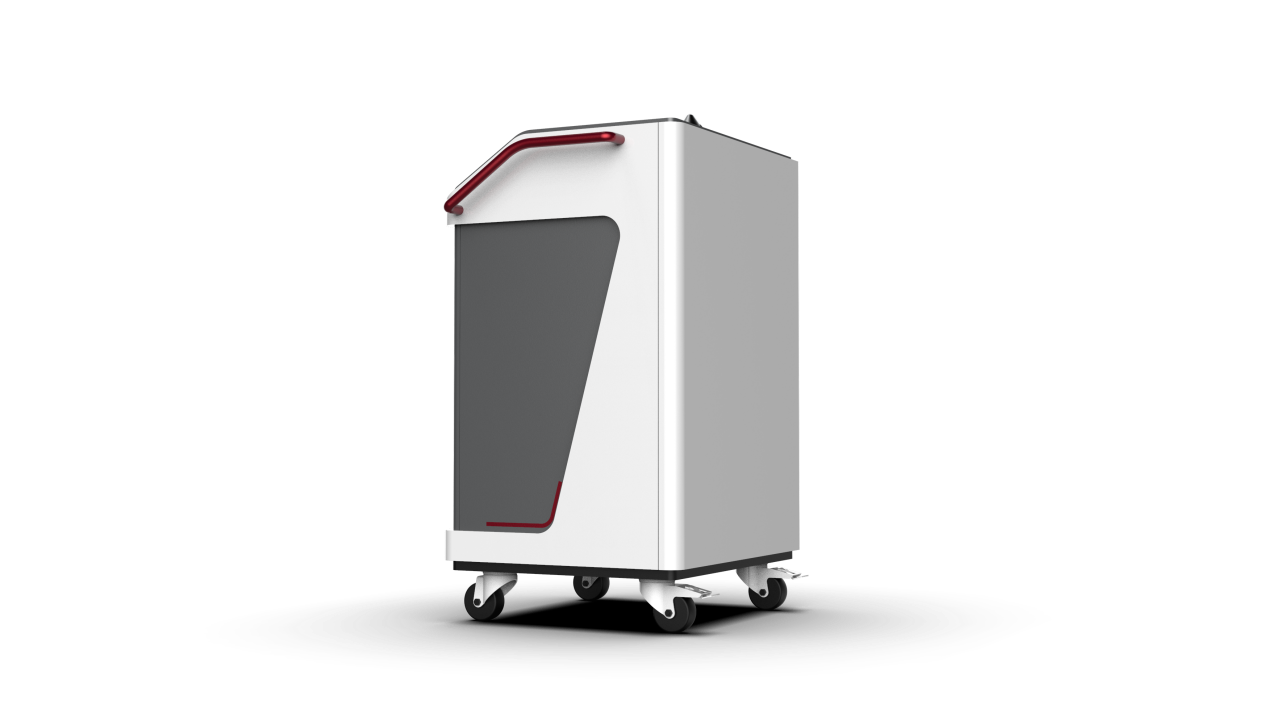
The FG-AHP-F300 uses high-pressure, high-velocity airflow to draw the solution out at the nozzle and shear it into a dry fog. Several units can work together as one coordinated scheme for complex spaces up to 5,000 m³.
| Item | Specification |
|---|---|
| Droplet size | 1–5 µm |
| Treatment volume per unit | ≤300 m³ |
| Solution flow rate | ≤32 mL/min |
| Solution capacity per unit | ≤5 L |
| Dehumidification target | <30% RH |
| Sterilant | Dedicated sporicidal solution |
| Sporicidal efficacy | ≥6-log reduction (subject to validation) |
| Control | Siemens HMI / Siemens PLC; remote computer control |
| Power | 220 V AC / 50 Hz / ≤2 kW |
| Dimensions (W×D×H) | 640×836×1,036 mm, 304 stainless steel, approx. 80 kg |
It stores cycle recipes, calculates total hydrogen peroxide consumption, exports cycle data by USB, offers scheduling, and has three-level password management with an audit trail. An optional weighing module controls the total dose. Details: aHP fogging machine.
FAQ
Is dry fog the same as VHP?
No. Dry fog is a liquid aerosol of fine droplets. VHP is hydrogen peroxide that has been fully vaporized. VHP penetrates better and is the usual choice for sealed enclosures; dry fog is easier to apply in large, open or complex rooms.
What droplet size counts as dry fog?
There is no standard definition. Droplets of a few microns, generally below about 10 µm, are usually described as dry fog because they do not wet surfaces easily. Ask for the measured distribution.
How many units does a room need?
Divide the room volume by the rated volume per unit, then adjust for layout, furniture and air movement. Confirm the placement with indicators during cycle development.
Does dry fog leave residue?
Hydrogen peroxide breaks down into water and oxygen. Other ingredients in the solution may leave a residue, so check the formula and the supplier’s wipe-down advice.
When can people re-enter the room?
Only after the hydrogen peroxide concentration has been measured below the applicable exposure limit, which is 1 ppm (8-hour TWA) under OSHA in the US.
References
- EN 17272:2020, Chemical disinfectants and antiseptics — Methods of airborne room disinfection by automated process — Determination of bactericidal, mycobactericidal, sporicidal, fungicidal, yeasticidal, virucidal and phagocidal activities
- OSHA 29 CFR 1910.1000, Table Z-1: Limits for Air Contaminants (hydrogen peroxide)
- ISO 11138-1:2017, Sterilization of health care products — Biological indicators — Part 1: General requirements
- EU GMP Annex 1: Manufacture of Sterile Medicinal Products (2022)
Related Products
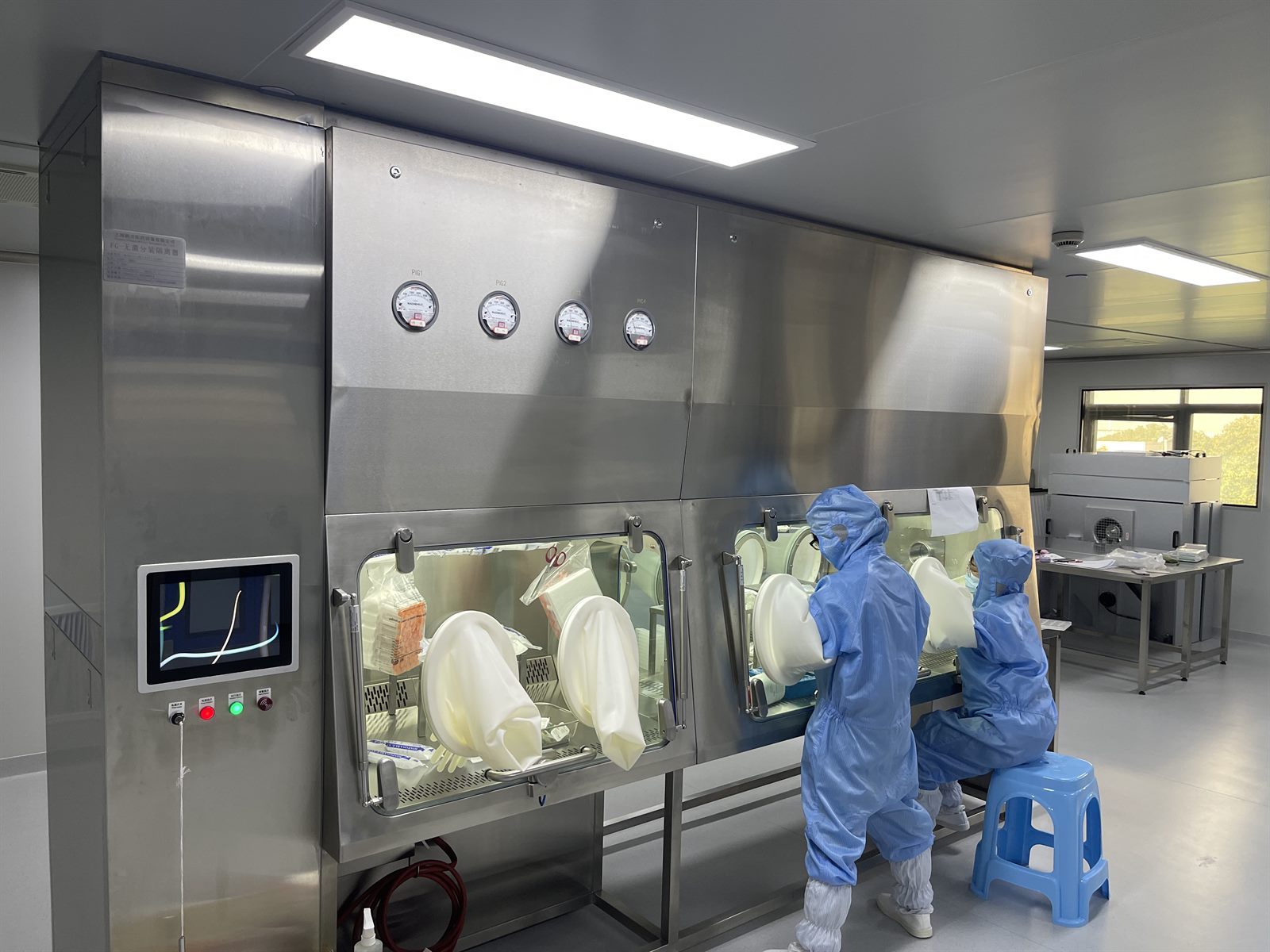 Aseptic Filling IsolatorGrade A (ISO 5) barrier for sterile filling, stoppering and capping.Isolators & Barrier
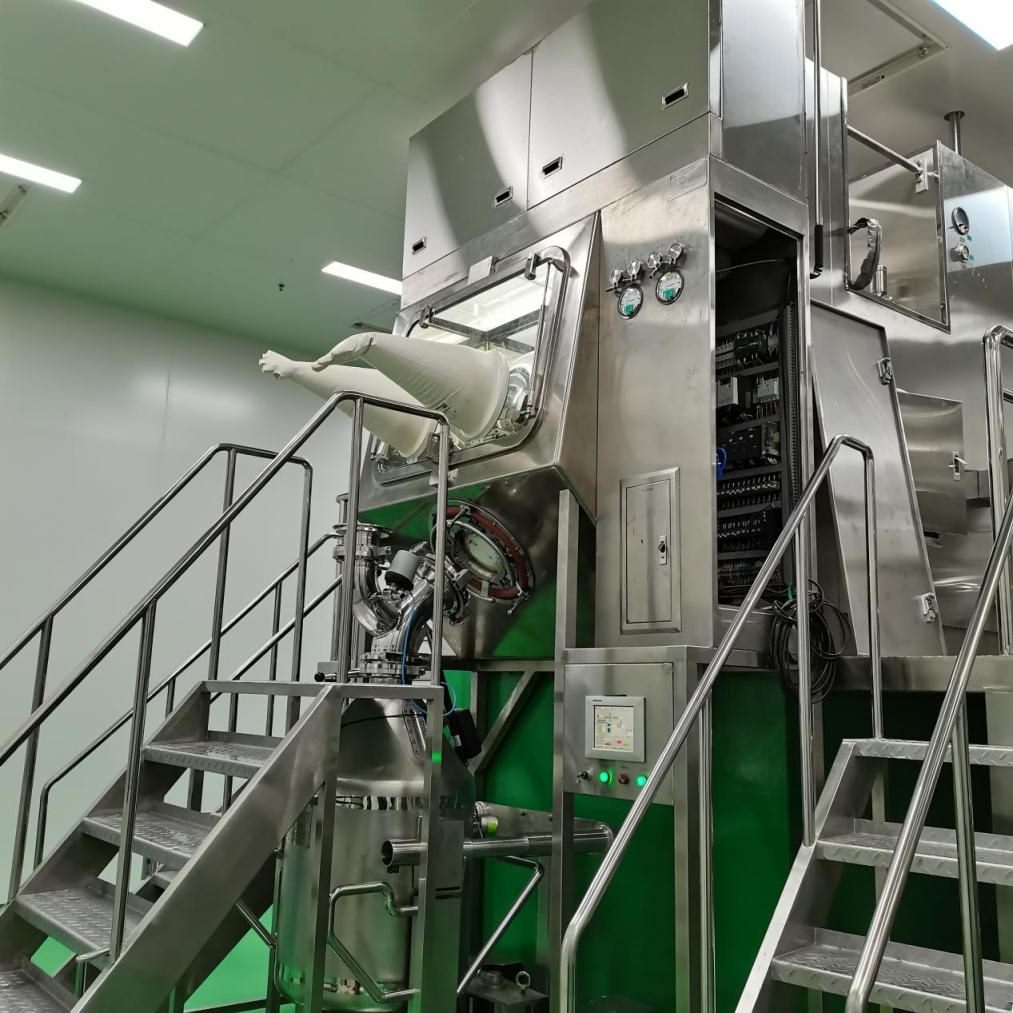 Dispensing & Containment Isolator (OEB5)Negative-pressure barrier for weighing, charging and sampling HPAPI.Isolators & Barrier
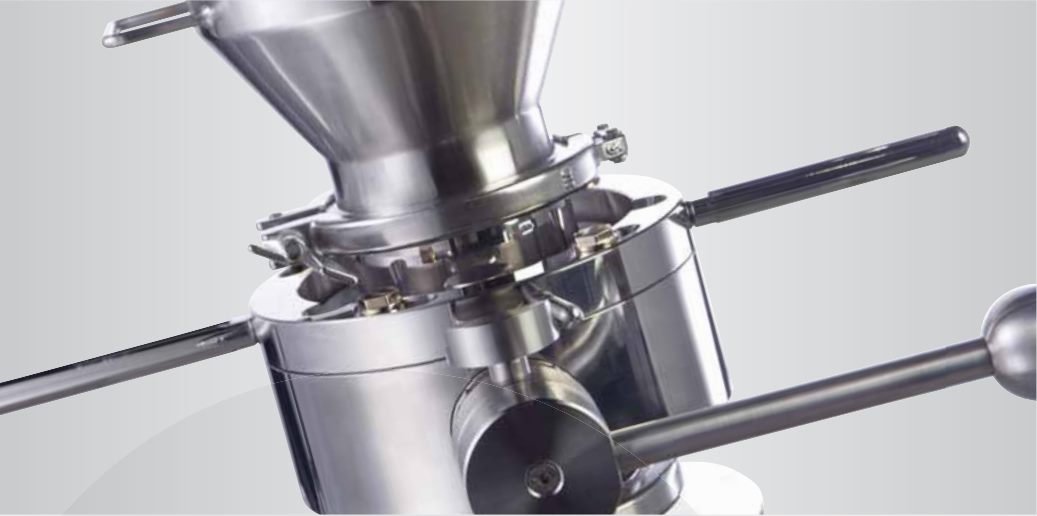 Alpha-Beta Split Butterfly ValveSplit butterfly valve for contained, dust-free transfer of potent powders.Transfer & Containment
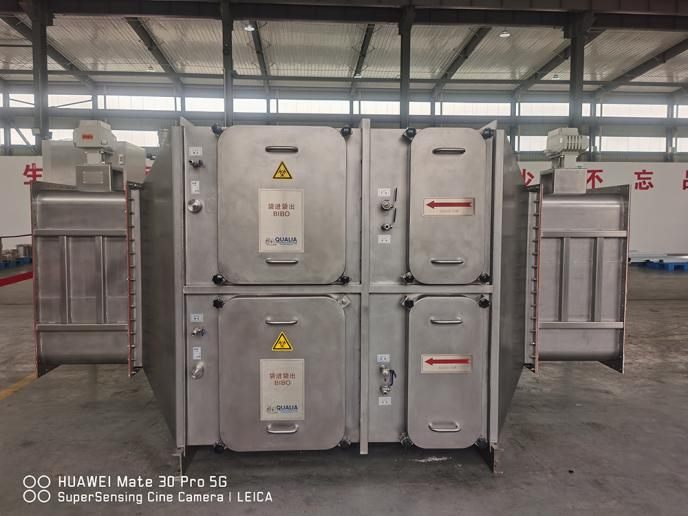 BIBO Filter HousingBag-in/bag-out HEPA housing for safe filter change in P3/P4 labs.Air Handling
Planning room disinfection for a large space?
Send us the room volumes, layout and humidity conditions. Our engineers will suggest the number of units and how to place them.