








Case Study: VHP Sterilization of PET Milk Bottles and Caps on a Filling Line
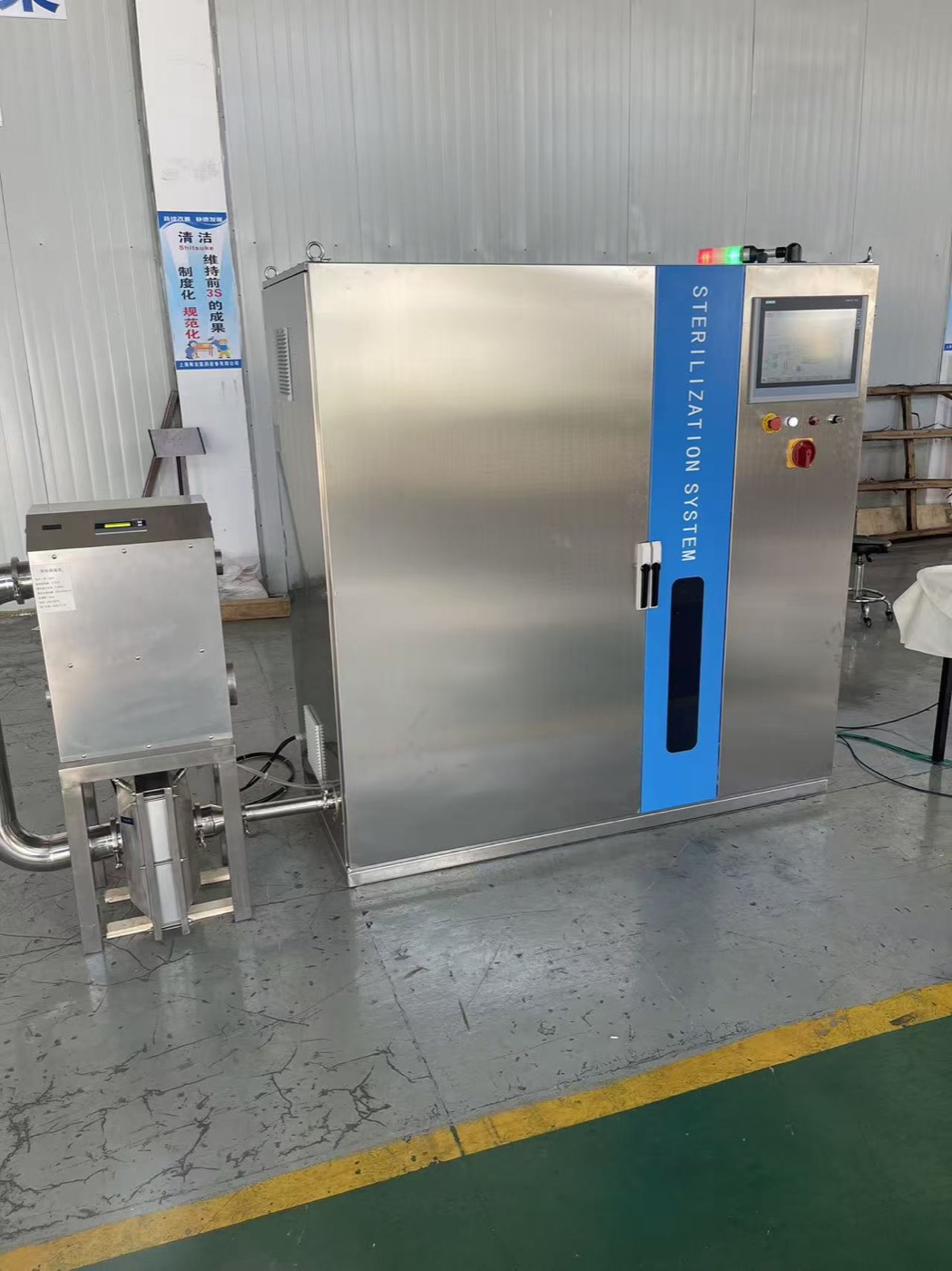
A dairy filling project in Poland needed the inside of PET milk bottles and their caps sterilized immediately before filling. Fenggu supplied a VHP sterilization system that injects hydrogen peroxide vapor directly into each bottle and cap through nozzles that move with the filling machine, and provided technical support for converting the filling machine enclosure to an airtight, negative-pressure design.
Project at a glance
| Application | Sterilization of the inside of PET milk bottles and bottle caps before filling |
|---|---|
| Destination | Poland |
| Process sequence | VHP injection → hydrogen peroxide removed with compressed air → filling with milk → capping |
| Fenggu scope | VHP system with two generators, injection nozzle bars for bottles and caps, rotary dehumidifier, technical support for the filling machine enclosure |
| Filling machine scope | Airtight enclosure modification and the up-and-down movement of the nozzle bars, carried out by the filling machine manufacturer |
The requirement
The customer fills milk into PET bottles. Bottles and caps arrive at the filling machine clean, but not sterile. The goal was to sterilize the inside surfaces of each bottle and cap in line, at the speed of the filling machine, without leaving condensed hydrogen peroxide behind and without exposing operators to the vapor.
This differs from the room and isolator decontamination that VHP is usually known for. Instead of filling a closed volume with vapor and holding it there, the vapor has to be delivered into each container within a few seconds while the line keeps moving.
How the system works
1. Injection into each bottle
Along the conveyor, a section of the filling machine is set aside as the bottle sterilization zone. Above it, Fenggu customized a nozzle bar that follows the path of the bottles. The bar carries 10 to 20 nozzles made of 8 mm stainless steel tube. The bar lowers so that the nozzles reach the bottom of the bottles, injects VHP for 2 to 3 seconds, then rises and waits for the next group of bottles. The up-and-down movement is driven by the filling machine, in the same way as its filling needles.
2. Injection into each cap
Caps are sterilized the same way in a separate zone. A second nozzle bar, with 5 to 20 nozzles, follows the path of the caps and injects VHP for 2 to 3 seconds per cycle.
3. Removing the hydrogen peroxide before filling
After injection, the hydrogen peroxide is removed from the bottles with compressed air. The bottles are then filled with milk and capped.
Two generators for a continuous line
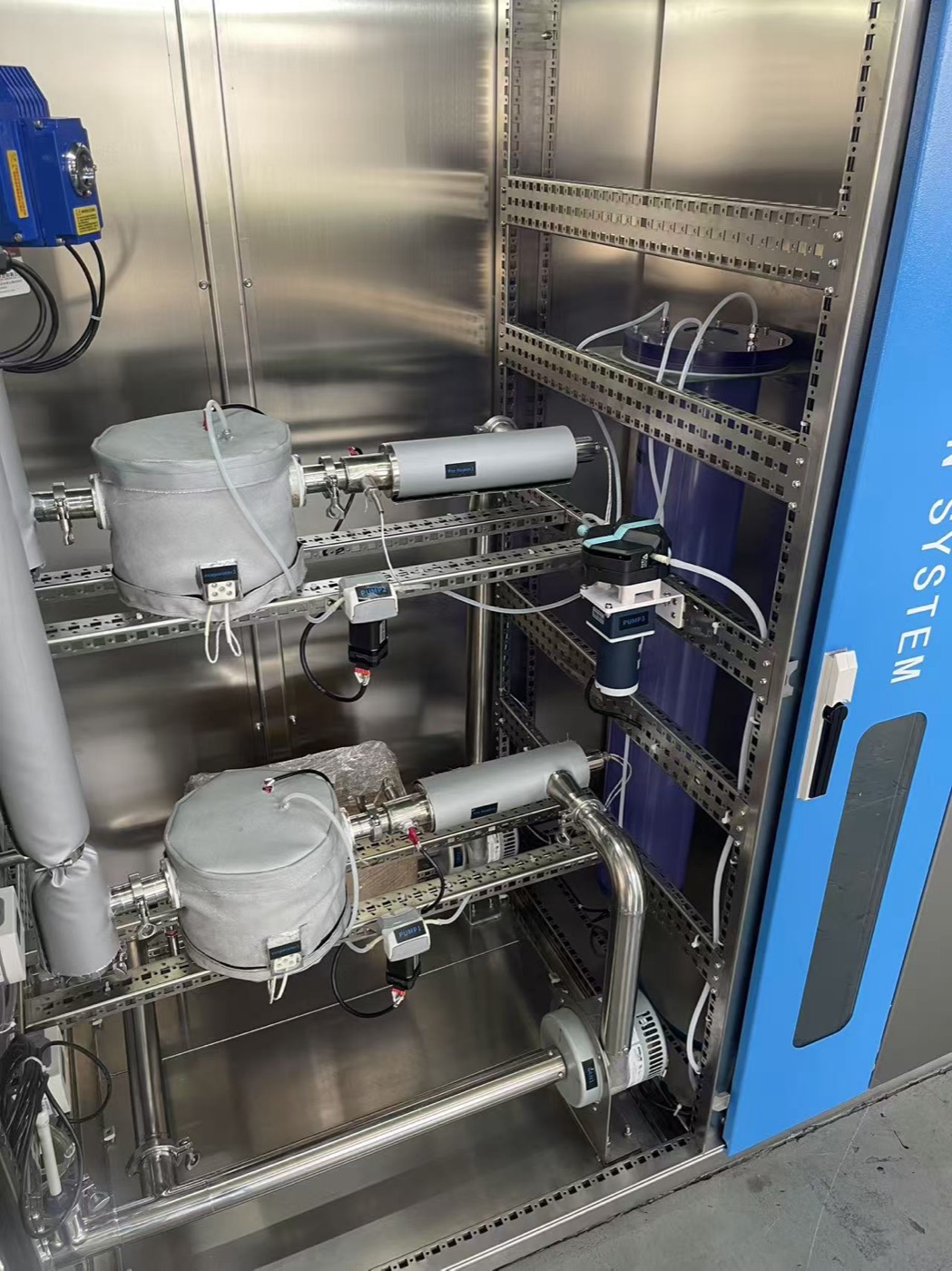
The system uses two VHP generators connected through 50 mm stainless steel pipe. Each generator has its own evaporator and high-pressure blower, and the blower provides the pressure needed to push the vapor to the bottom of each bottle.
The two generators run alternately. In continuous production, the evaporator heaters and high-pressure blowers are the parts most likely to fail when they run for long periods without a break. Alternating spreads the running hours, and if one generator fails, the other keeps the line running. This design comes from experience on earlier Fenggu projects.
Clean, dry air to prevent condensation
Each generator has a HEPA filter inside, so the air that carries the vapor into the bottles and caps is clean and does not recontaminate them.
Condensed hydrogen peroxide inside a container is difficult to remove and is unacceptable in a food package. To prevent it, a rotary dehumidifier supplies the carrier air at a relative humidity below 10%. For why humidity and concentration decide whether vapor condenses, see VHP concentration, humidity and condensation.
Protecting the operators
Hydrogen peroxide vapor must not escape from the filling machine into the operators’ area. Two changes to the filling machine enclosure were recommended:
- Airtight doors. The machine doors use an inflatable sealing ring, similar to an isolator door, so that they close tightly around the glass panels. See inflatable-seal airtight doors.
- Negative pressure. The enclosure is kept at a lower pressure than the operator area, about −10 Pa in the design drawings. This is achieved by setting the inlet fan airflow lower than the exhaust fan airflow. Any vapor is drawn out by the exhaust fan and discharged outdoors instead of leaking into the room.
These changes are made by the filling machine manufacturer. Fenggu provided technical support for the enclosure design, based on its experience building pharmaceutical isolators. For a comparison with pharmaceutical practice, see aseptic filling isolators.
System specifications
| Item | Value |
|---|---|
| External dimensions (W × H × D) | 800 × 800 × 1800 mm (subject to final design) |
| Gross weight | 300 kg |
| Power supply | 400 V, 50 Hz, 3 phases + N + E |
| Power input | ≤ 10 kW |
| Noise level | ≤ 80 dB(A) |
| H2O2 vaporization rate | ≤ 50 ml/min |
| Sterilant | Hydrogen peroxide, 30–35% |
| Carrier air humidity | Below 10% RH, from the rotary dehumidifier |
What to confirm on a bottle sterilization project
In-line container sterilization depends on the bottle, the line and the product as much as on the generator. These points are agreed with the customer and the filling machine manufacturer:
- Bottle and cap geometry. Neck diameter, height and cap shape set the nozzle size, nozzle depth and the number of nozzles per bar.
- Line speed. The number of containers per minute and the time each one spends in the sterilization zone set the injection time and the vapor demand.
- Residual hydrogen peroxide. Residues on food-contact packaging are regulated. In the United States, for example, 21 CFR 178.1005 limits residual hydrogen peroxide in packaging for aseptically packaged food to 0.5 ppm. The applicable limit and the test method are agreed with the customer and confirmed during commissioning.
- Sterilization performance. The required microbial reduction is confirmed on the actual line, typically with challenge tests on inoculated containers.
- Integration. Signals between the VHP system and the filling machine, nozzle bar movement, interlocks with the doors, and what happens on a stop or alarm.
For writing these requirements into a specification, see how to write a URS for a VHP system, and for factory and site acceptance, VHP generator FAT and SAT.
FAQ
Can VHP be used on a food or beverage filling line, not only in pharmaceuticals?
Yes. Hydrogen peroxide is widely used to sterilize packaging for aseptic and extended-shelf-life food and drinks. The equipment has to be adapted to in-line injection into each container rather than treating a closed room or chamber.
Does the filling machine need to be replaced?
No. In this project the existing filling machine was modified: an airtight enclosure, negative pressure, and nozzle bars driven by the machine’s own motion. The modification is carried out by the filling machine manufacturer with technical support from Fenggu.
Why two generators instead of one larger one?
For uptime. The generators run alternately, so wear is shared, and the line can keep running on one generator while the other is serviced.
Can the same approach be used for glass bottles, cups or other containers?
The principle is the same, but nozzle design, injection time and residue removal depend on the container. Each application is reviewed with drawings of the container and the line.
Related Products
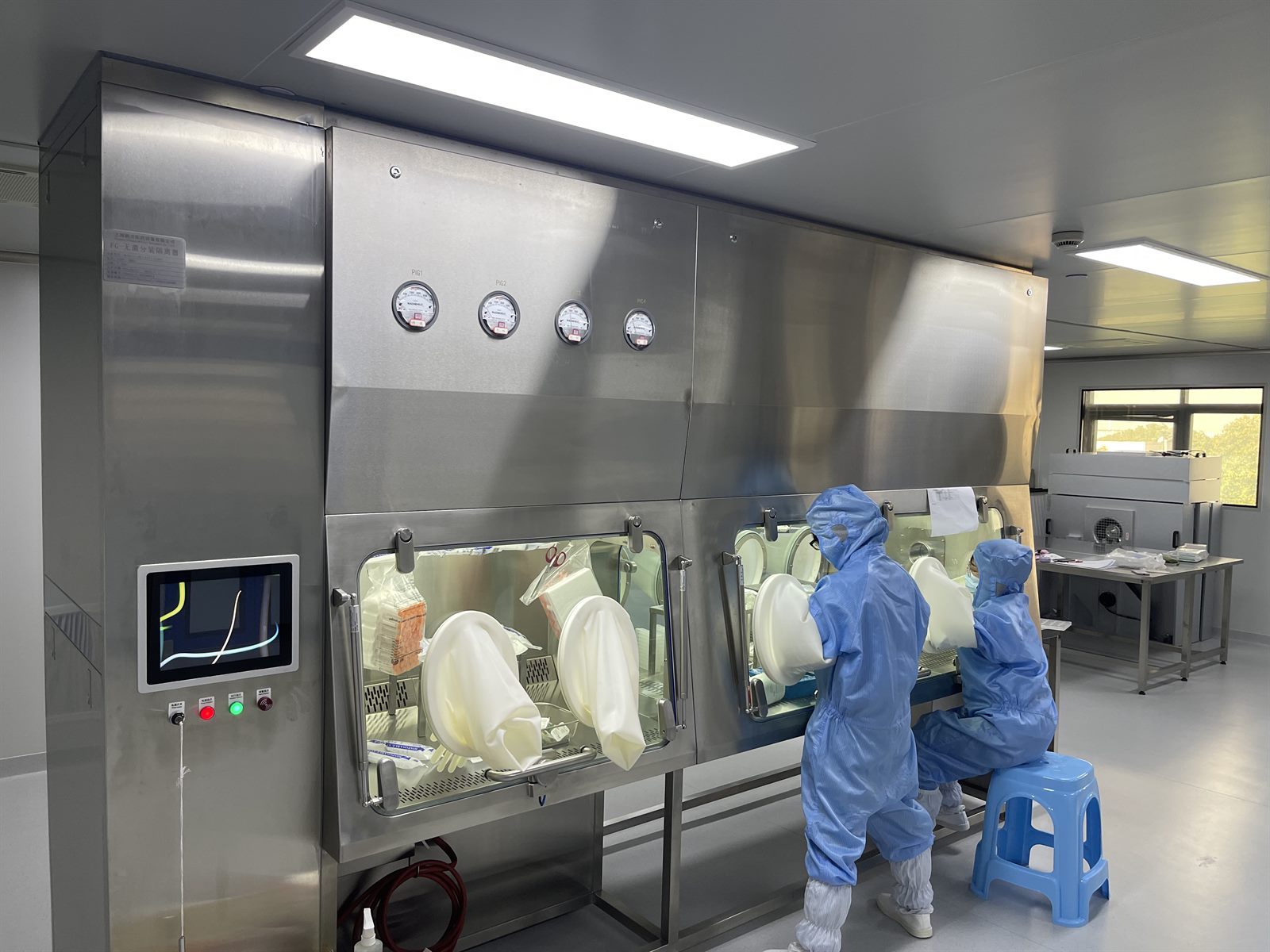 Aseptic Filling IsolatorGrade A (ISO 5) barrier for sterile filling, stoppering and capping.Isolators & Barrier
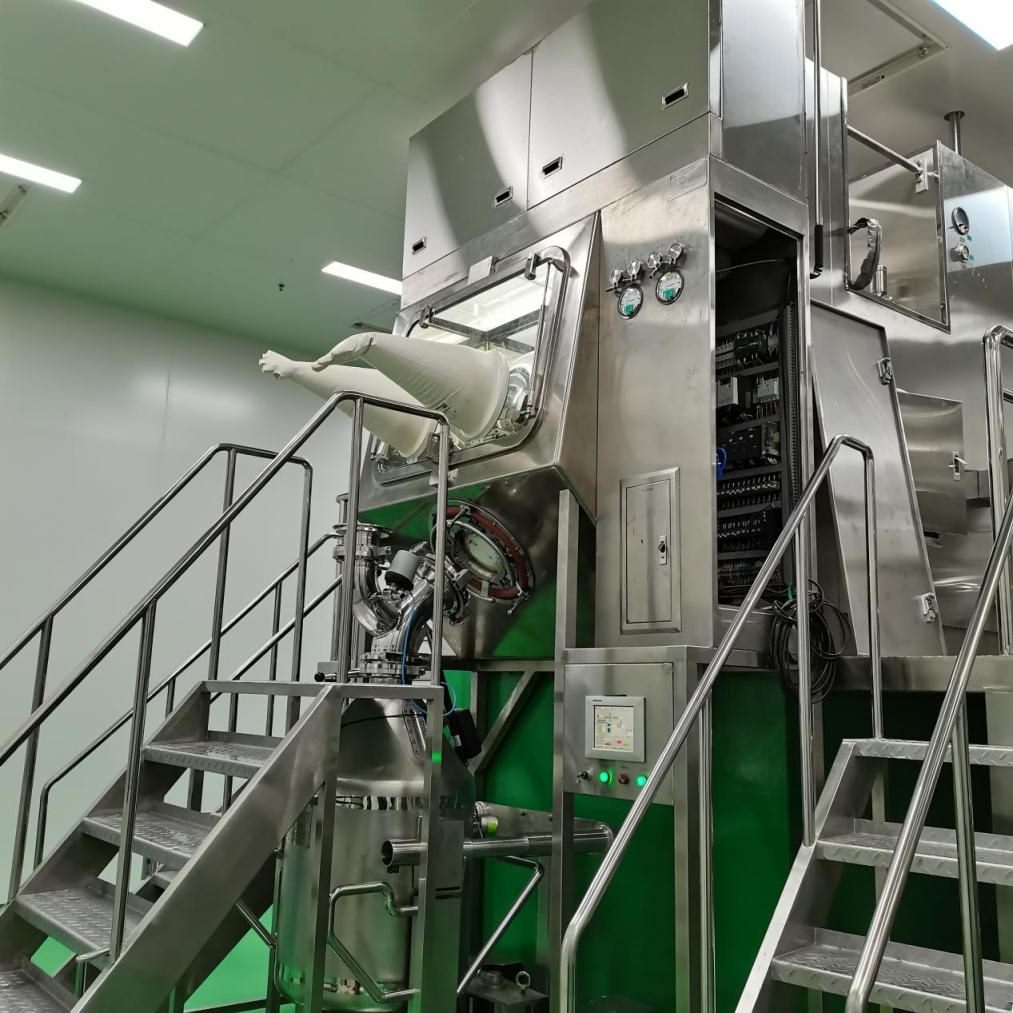 Dispensing & Containment Isolator (OEB5)Negative-pressure barrier for weighing, charging and sampling HPAPI.Isolators & Barrier
 Alpha-Beta Split Butterfly ValveSplit butterfly valve for contained, dust-free transfer of potent powders.Transfer & Containment
 BIBO Filter HousingBag-in/bag-out HEPA housing for safe filter change in P3/P4 labs.Air Handling
Sterilizing bottles or caps on a filling line?
Send the container drawings, line speed and a layout of the filling machine. Fenggu engineers will review how VHP injection can be integrated.