








Cleanroom Airlock Design: Cascade, Bubble and Sink Airlocks Explained
An airlock is the small room that makes a cleanroom work. It decides which way air moves when a door opens, and therefore whether contamination flows away from the product, away from the people, or both. This guide explains the three classic airlock pressure regimes — cascade, bubble and sink — when each is used, and the design details (interlocks, door direction, pressure differentials, airtight doors) that make them hold up in operation.
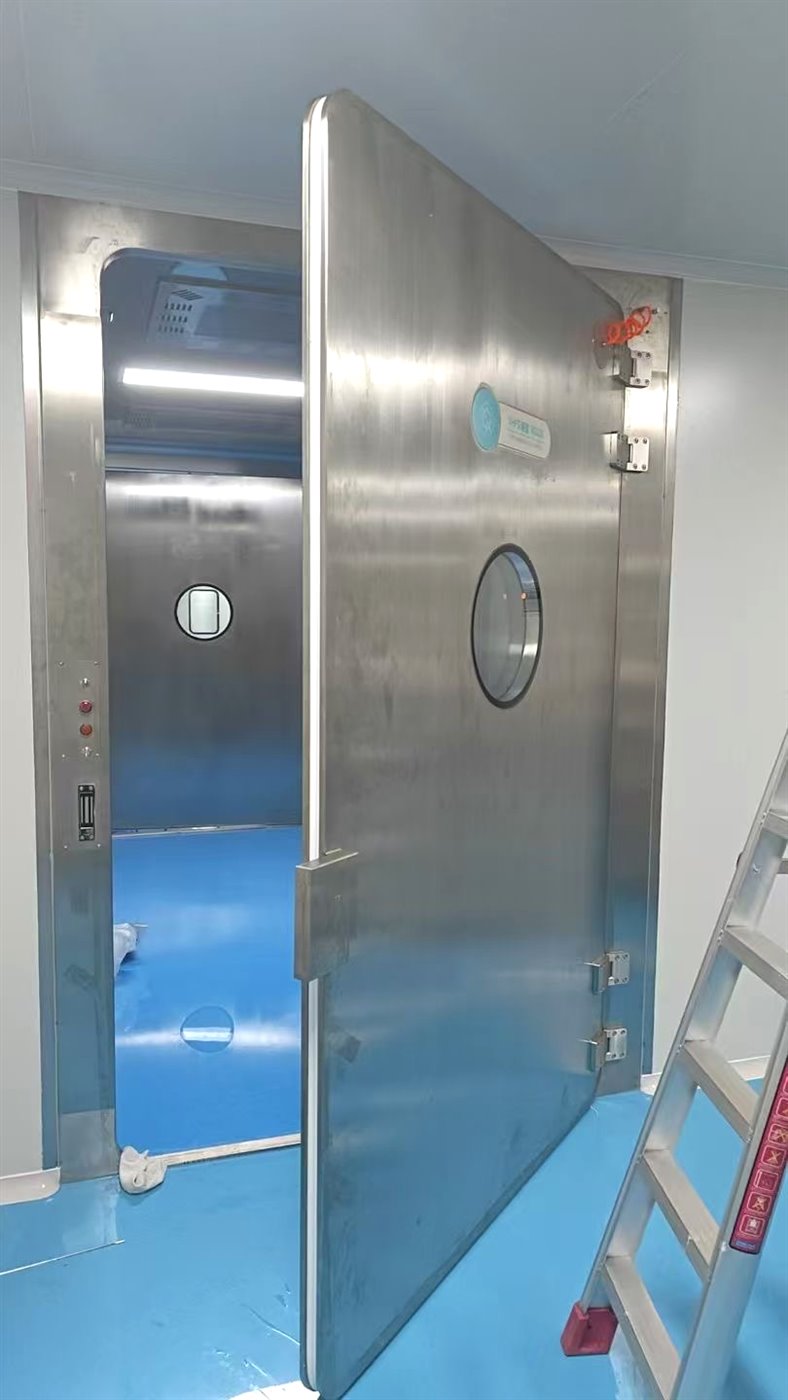
What an Airlock Does
An airlock (also called an air lock, buffer room or transfer airlock) is an enclosed space with two or more interlocked doors between areas of different cleanliness or different containment levels. It does three jobs:
- Maintains the pressure difference between the areas, so that air flows in the intended direction even while a door is open.
- Gives contamination time to clear. Filtered supply air dilutes particles brought in on people or materials before the inner door opens.
- Prevents a direct air path. Interlocks stop both doors opening at the same time.
Airlocks are usually separated into personnel airlocks (PAL) for gowning and material airlocks (MAL) for transfers. EU GMP Annex 1 (2022) expects airlocks between cleanroom grades, separate airlocks for personnel and materials where possible, and interlocks or visual/audible warning systems that prevent more than one door opening at once.
The Three Pressure Regimes
Illustrative relative pressures. Arrows show the direction of air movement through the doors.
Cascade airlock
The airlock pressure sits between the two rooms it connects: the clean room is highest, the airlock intermediate, the corridor lowest. Air always flows from cleaner to less clean.
This is the default for sterile manufacturing where the product needs protection and the materials handled are not hazardous: for example Grade B to Grade C, or Grade C to Grade D gowning and material airlocks. It is simple to balance and to explain to operators.
Bubble airlock
The airlock is at a higher pressure than both rooms. Air flows out of the airlock into each side, so neither room can push air into the other.
Bubble airlocks are used where the process room must be kept at a lower pressure than the corridor for containment — for example handling potent compounds or live biological material in a clean area — while still preventing corridor air from entering the process room. The airlock itself is a positive “bubble” of clean air separating the two.
Sink airlock
The airlock is at a lower pressure than both rooms. Air flows into the airlock from each side and is exhausted from the airlock, not recirculated.
Sink airlocks are used for containment when both adjacent areas are kept at positive pressure for product protection — for example viral vector, vaccine or other biological production where the process room must stay clean and nothing from it may reach the corridor. Any contamination that reaches the airlock is captured by its exhaust.
Comparison
| Regime | Airlock pressure | Protects | Typical application |
|---|---|---|---|
| Cascade | Between the two rooms | The cleaner room (product) | Sterile manufacturing between grades, non-hazardous materials |
| Bubble | Higher than both | Both sides from each other | Clean process rooms held at lower pressure for containment |
| Sink | Lower than both | The corridor and other areas (containment) | Biological or potent processes in positive-pressure clean rooms |
In practice a facility usually combines them: cascade airlocks along the main gowning route, with bubble or sink airlocks at the boundary of containment suites.
Pressure Differentials
EU GMP Annex 1 gives 10 Pa as guidance for the pressure differential between adjacent rooms of different grades, and China GMP requires at least 10 Pa between clean areas of different grades and between clean and non-clean areas. Design values of 10–15 Pa per step are common. Too small, and the cascade is lost every time a door opens; too large, and doors become hard to open, whistle at the gaps, or are forced open.
Monitor the differential continuously at each critical door, with alarms that have a short delay so that normal door openings do not trigger them but a lost cascade does.
Design Details That Make an Airlock Work
| Detail | Good practice |
|---|---|
| Door interlocks | Only one door can open at a time; with a clear status light at each door and an emergency override that is alarmed and logged. |
| Door swing | Doors normally open towards the higher-pressure side, so the pressure difference holds them shut. |
| Door tightness | Gaps around ordinary doors are the main leak path. Containment airlocks and rooms that are decontaminated with VHP or formaldehyde need airtight doors with inflatable or mechanical-compression seals. |
| Recovery (clean-up) time | Enough HEPA-filtered air changes for particle counts to recover within the defined time after an entry; the final stage of an airlock should reach the grade of the room it leads into. |
| Size | Large enough for the person, trolley or pallet without propping a door open, and no larger, so clean-up stays fast. |
| Surfaces | Smooth, cleanable and compatible with the disinfectants and any VHP decontamination used. |
Small Materials: Pass Boxes Instead of Airlocks
For items small enough to carry by hand, a pass box does the job of a material airlock in a fraction of the space. A static or dynamic pass box transfers items with interlocked doors; a VHP pass box also biodecontaminates the outer surfaces before the inner door opens. For loads too large for a pass box — pallets, equipment, environmental-monitoring kits — an airlock with integrated VHP provides the same surface decontamination at room scale.
Personnel Airlocks in Containment
Personnel leaving a containment area may need decontamination as well as degowning. Containment suites often add a mist or decontamination shower to the exit airlock; see personnel decontamination showers. For BSL-3 and similar facilities, see biosafety airtight doors.
FAQ
What is the difference between a cascade, bubble and sink airlock?
The airlock pressure. A cascade airlock is between the two rooms, so air flows from clean to less clean. A bubble airlock is higher than both rooms and pushes air out to each side. A sink airlock is lower than both rooms and draws air in from each side to its exhaust.
Which airlock type is used for sterile manufacturing?
Cascade airlocks are the most common between cleanroom grades when materials are not hazardous. Bubble and sink airlocks are used where containment of the process is also required.
What pressure difference should an airlock maintain?
EU GMP Annex 1 gives 10 Pa as guidance between adjacent rooms of different grades, and China GMP requires at least 10 Pa. Design values of 10–15 Pa per step are common.
Which way should airlock doors open?
Normally towards the higher-pressure side, so the pressure difference keeps the door closed against its seal.
Related Products
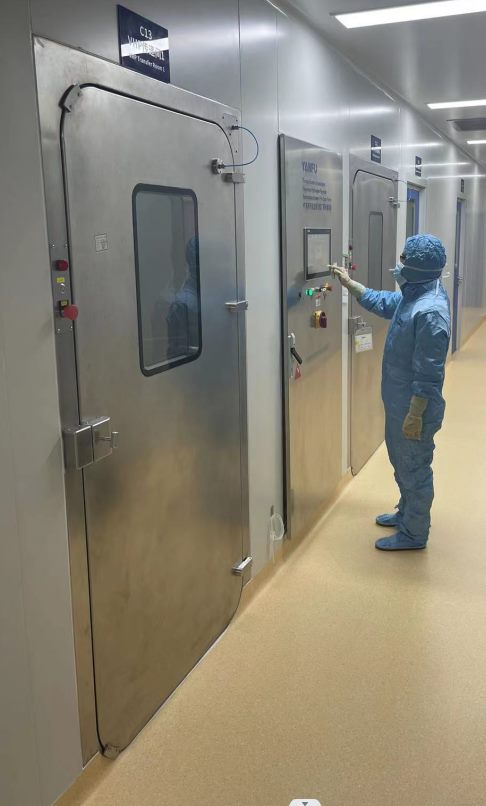 Airlock VHP SterilizationIntegrates VHP into a buffer/airlock to decon material entering Grade A/B.VHP Sterilization
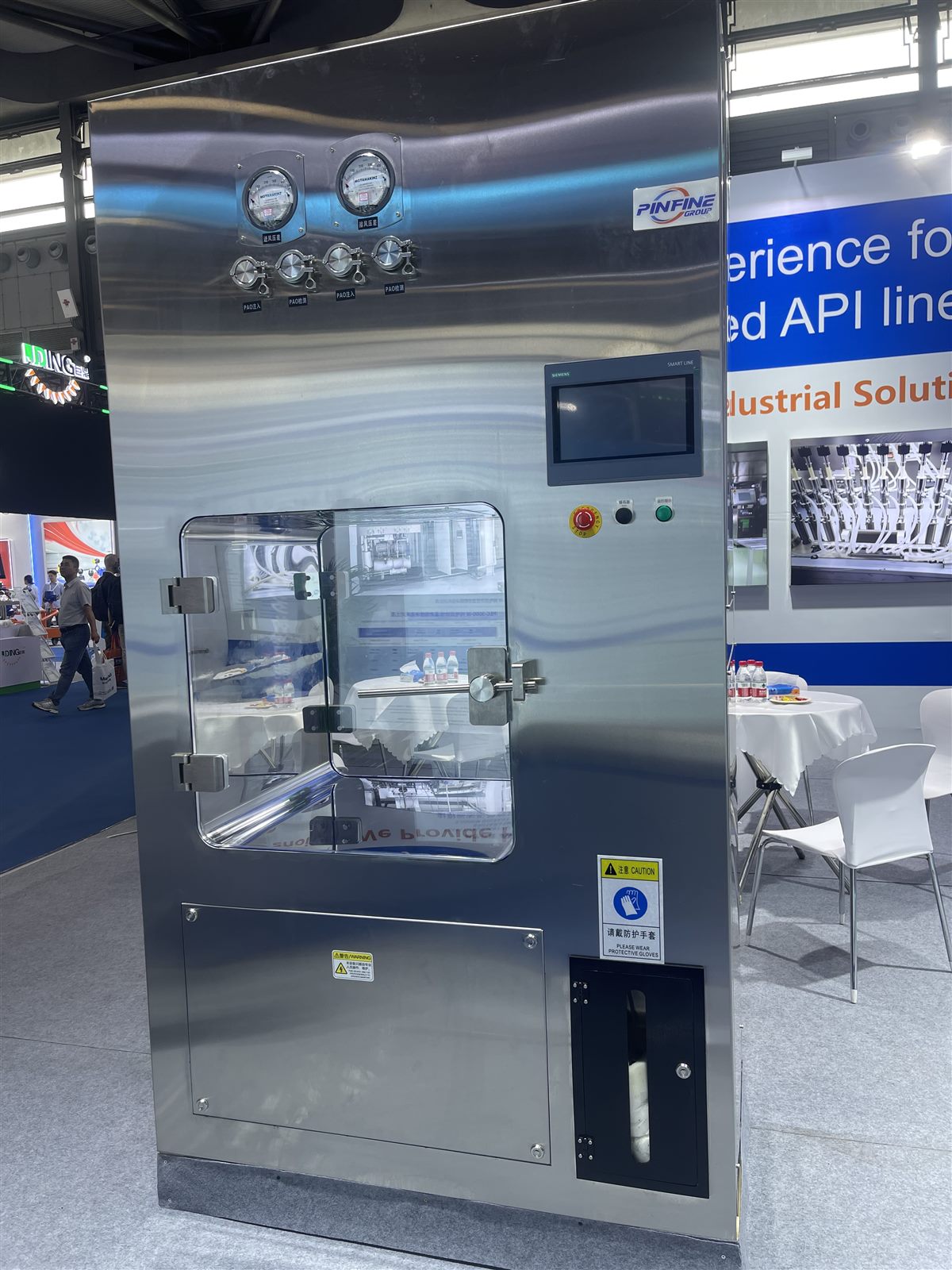 VHP Pass BoxWall-mounted transfer chamber with an integrated VHP cycle.Transfer & Containment
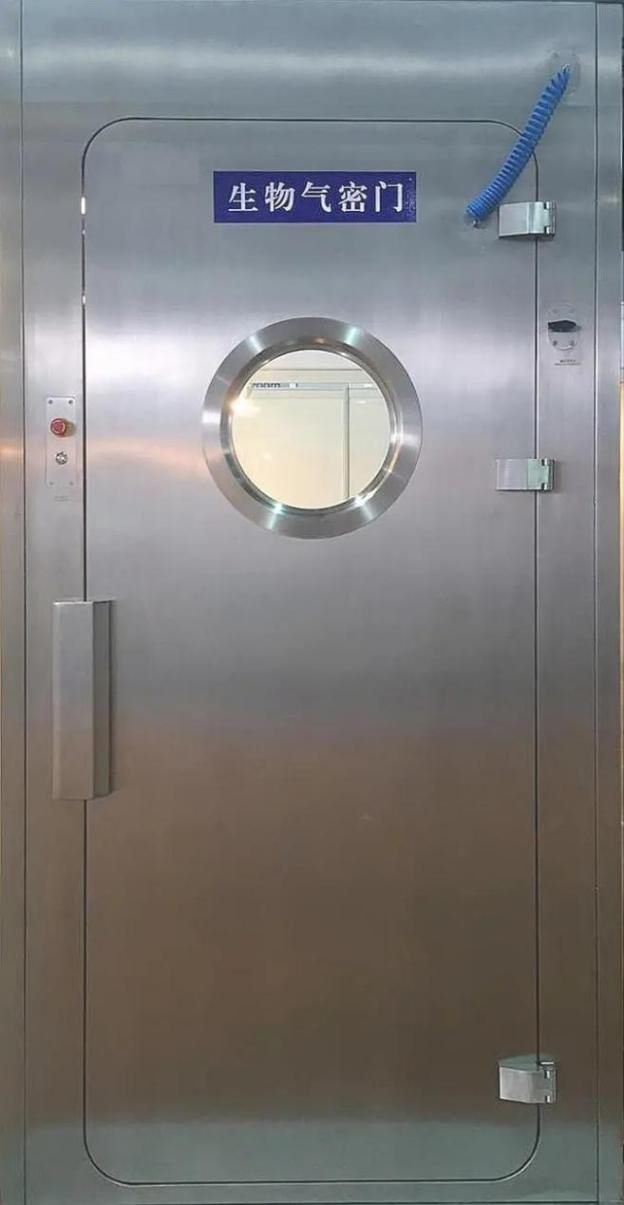 Inflatable-Seal Airtight DoorInflatable-gasket gastight door for BSL-3/4 fumigation rooms.Transfer & Containment
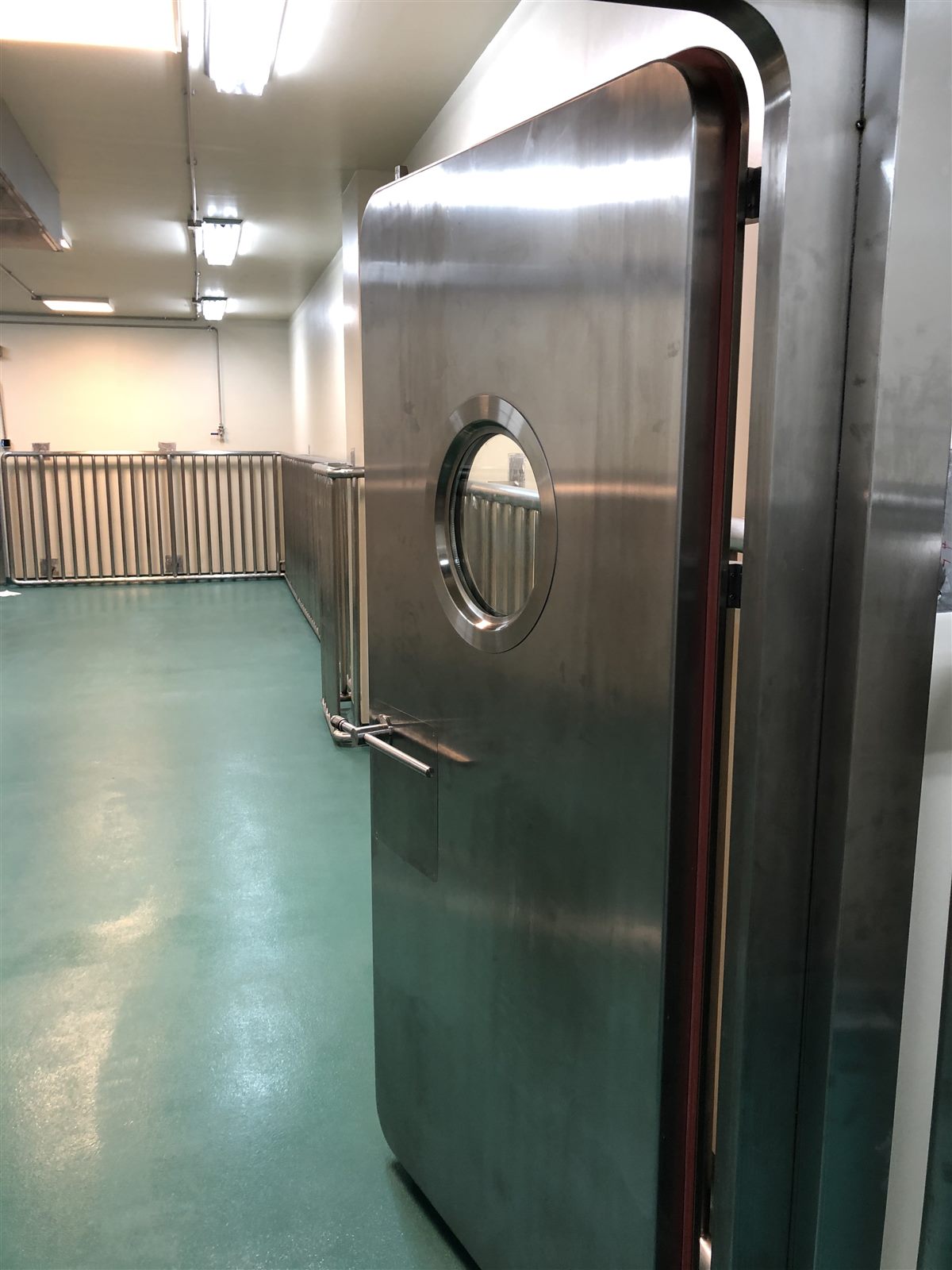 Mechanical-Compression Airtight DoorMechanically clamped gastight door for BSL-2 to BSL-4.Transfer & Containment
Planning Airlocks or Transfer Points?
Send us your room layout, grades and the materials or loads to be transferred. Fenggu engineers will recommend airtight doors, pass boxes or a VHP airlock to suit each transfer point.