








VHP Distribution in Large Rooms: Fans, Injection Points and Dead Zones
In a small enclosure, hydrogen peroxide vapor spreads evenly with little help. In a large cleanroom, a production hall or a suite of connected rooms, it does not. Vapor follows air movement, decomposes on surfaces as it travels and is absorbed by materials on the way. Corners, the space under equipment and the far ends of long rooms can stay well below the concentration measured near the generator. This guide explains how to get vapor into every part of a large room: where to inject, how to use fans, where dead zones form and how to prove distribution.
Why large rooms are harder
Even distribution means that every surface in the room reaches the concentration and contact time the cycle needs. In large rooms this does not happen by diffusion alone; it depends on how the vapor is carried by air movement.
- Distance. Diffusion is slow over metres. Without forced air movement, the area near the injection point gets far more vapor than the far end.
- Losses on the way. Hydrogen peroxide decomposes on surfaces and is absorbed by plastics, paint and filters, so concentration falls with distance.
- Obstructions. Equipment, racks and partitions create sheltered zones where air barely moves.
- Temperature differences. Cold surfaces near air outlets or outer walls condense vapor first, taking peroxide out of the air locally.
Where dead zones form
| Location | Why vapor is low | What helps |
|---|---|---|
| Room corners, especially floor level | Air recirculates past them, not into them | Fans aimed to sweep corners |
| Under and behind equipment | Little air movement in narrow gaps | Lift or move items; open covers; extra fan |
| Inside cabinets and drawers | Closed volumes | Open doors and drawers before the cycle |
| Far end of long rooms | Distance from injection; losses on the way | Second injection point or second unit |
| Adjoining rooms and airlocks | Doors and pressure differences limit flow | Open doors; treat as one zone; separate units |
| Supply and return ducts | Not reached by a room unit | HVAC-integrated injection |
| Cold surfaces | Local condensation | Stable room temperature; avoid cold outlets |
Injection points
A mobile generator injects at one point, its outlet. Placement matters:
- Central and open. Place the unit where its outlet faces the largest open part of the room, not a wall or a piece of equipment.
- Clear of sensitive items. The vapor near the outlet is at its highest concentration. Keep sensitive equipment and absorbent materials out of the direct jet.
- More than one point for large or long rooms. Two units, or one unit feeding several outlets, give more even results than one unit working harder.
- Same position every time. Mark the floor. A validated cycle assumes the same layout, and moving the unit changes the distribution.
For how many units a room needs, see sizing a mobile VHP generator for a room.
Using fans
Auxiliary fans are the simplest way to improve distribution in a large room. Use them deliberately:
- Aim fans to create a circulation pattern around the room rather than blowing at one wall. The goal is to keep air moving through every part of the space.
- Point at known dead zones: corners, the space behind large equipment, the far end of the room.
- Use fans that tolerate hydrogen peroxide. Motors, bearings and plastic parts should be compatible. Fans that cannot be decontaminated themselves become a contamination source.
- Fix their positions and settings in the cycle procedure, the same way as the generator.
- Keep fans running during dwell if the cycle was developed that way, so the concentration stays even while the kill happens.
Several rooms, one cycle
A suite of rooms can be treated as one zone if the doors between them are open and air can move freely. Pressure cascades, door closers and transfer grilles all change how vapor moves, so the HVAC is normally switched off or isolated during a mobile cycle. When rooms are connected only through doors and corridors, separate units per room usually give more even results than one large unit. For suites with many rooms and doors, and for treating the ductwork as well, an HVAC-integrated VHP system uses the supply air to carry vapor to every room at once.
| Mobile units with fans | HVAC-integrated system | |
|---|---|---|
| Distribution | Depends on unit and fan positions | Carried by supply air to every room |
| Ducts and HEPA housings | Not reached | Included in the vapor path |
| Many rooms and doors | Several units; more setup | One system, fixed configuration |
| Flexibility | Can move between areas | Fixed to one HVAC system |
Preparing the room
- Clean surfaces first. Soil uses up peroxide and shields organisms.
- Open cabinet doors, drawers and equipment covers; raise items off the floor where possible.
- Remove or cover materials that absorb peroxide heavily, such as paper and cardboard.
- Seal the room boundary: doors, pass-throughs, ducts and gaps around services.
- Bring the room to a stable temperature and dehumidify as the cycle requires.
Proving distribution
Distribution is proved by measurement, not by the concentration reading at one sensor:
- Map the room. Mark worst-case locations on a floor plan: corners, under equipment, far ends, cold spots, inside opened cabinets.
- Chemical indicators first. They change color with exposure and quickly show where vapor is weak. Adjust unit and fan positions, then repeat.
- Several sensors. Hydrogen peroxide sensors at the far end and in sheltered zones, not only near the generator, show how concentration develops over time.
- Biological indicators. Once distribution looks even, place biological indicators at the worst-case locations to show the required log reduction.
- Repeat. Consecutive successful runs show the result is reproducible with the fixed layout.
For indicator selection and the validation method, see how a VHP cycle is validated and G. stearothermophilus and D-values in VHP.
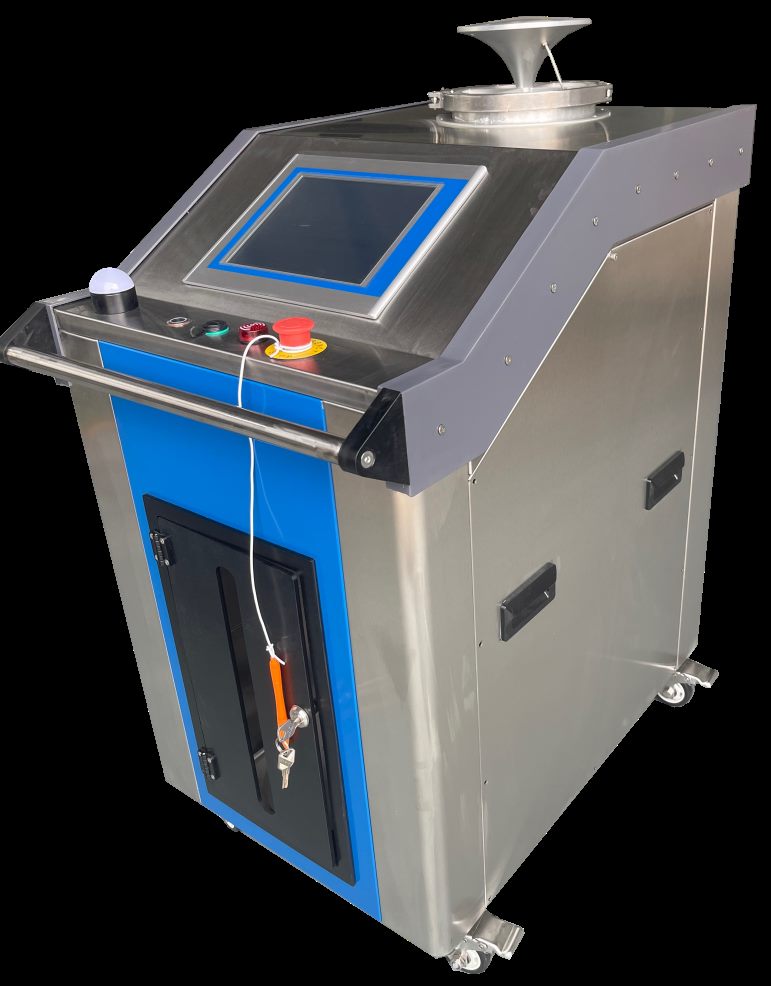
Fenggu VHP equipment
The mobile VHP room sterilizer FG-VHP-M500 flash-vaporizes 35% food-grade hydrogen peroxide and spreads it with its own fan, with an airflow of at least 500 m³/h, an injection rate of 1–40 g/min and a treatment volume of up to 300 m³ per unit. Larger spaces use several units or auxiliary fans. For suites with many rooms and doors, or where the ducts must be treated too, the HVAC-integrated VHP system injects vapor into the air handling system so it reaches the rooms and the ductwork together. Efficacy is designed against a target of at least a 6-log reduction of G. stearothermophilus, subject to validation for each space.
All VHP equipment: VHP sterilizers and generators.
FAQ
Do I need fans with a mobile VHP generator?
In small rooms the generator’s own airflow is often enough. In large or cluttered rooms, auxiliary fans help reach corners and sheltered areas. Indicator mapping shows whether they are needed.
Can one generator treat several rooms?
Only if the rooms form one open volume with free air movement and the volume is within the generator’s rating. Otherwise, use one unit per room or an HVAC-integrated system.
Why is the sensor reading high but indicators fail at the far end?
The sensor shows the concentration where it is placed. Use several sensors and indicators across the room to see the real distribution.
Should the HVAC run during a mobile VHP cycle?
Normally the room HVAC is switched off or isolated so that air does not carry vapor out or dilute it unevenly. Follow the validated procedure.
Can I move equipment in the room after validation?
Significant changes to layout, unit position or fan settings can change distribution. Assess them under change control and repeat indicator checks where needed.
References
- EU GMP Annex 1: Manufacture of Sterile Medicinal Products (2022)
- EN 17272:2020, Chemical disinfectants and antiseptics — Methods of airborne room disinfection by automated process
- ISO 11138-1:2017, Sterilization of health care products — Biological indicators — Part 1: General requirements
- PDA Technical Report No. 51: Biological Indicators for Gas and Vapor-Phase Decontamination Processes
Related Products
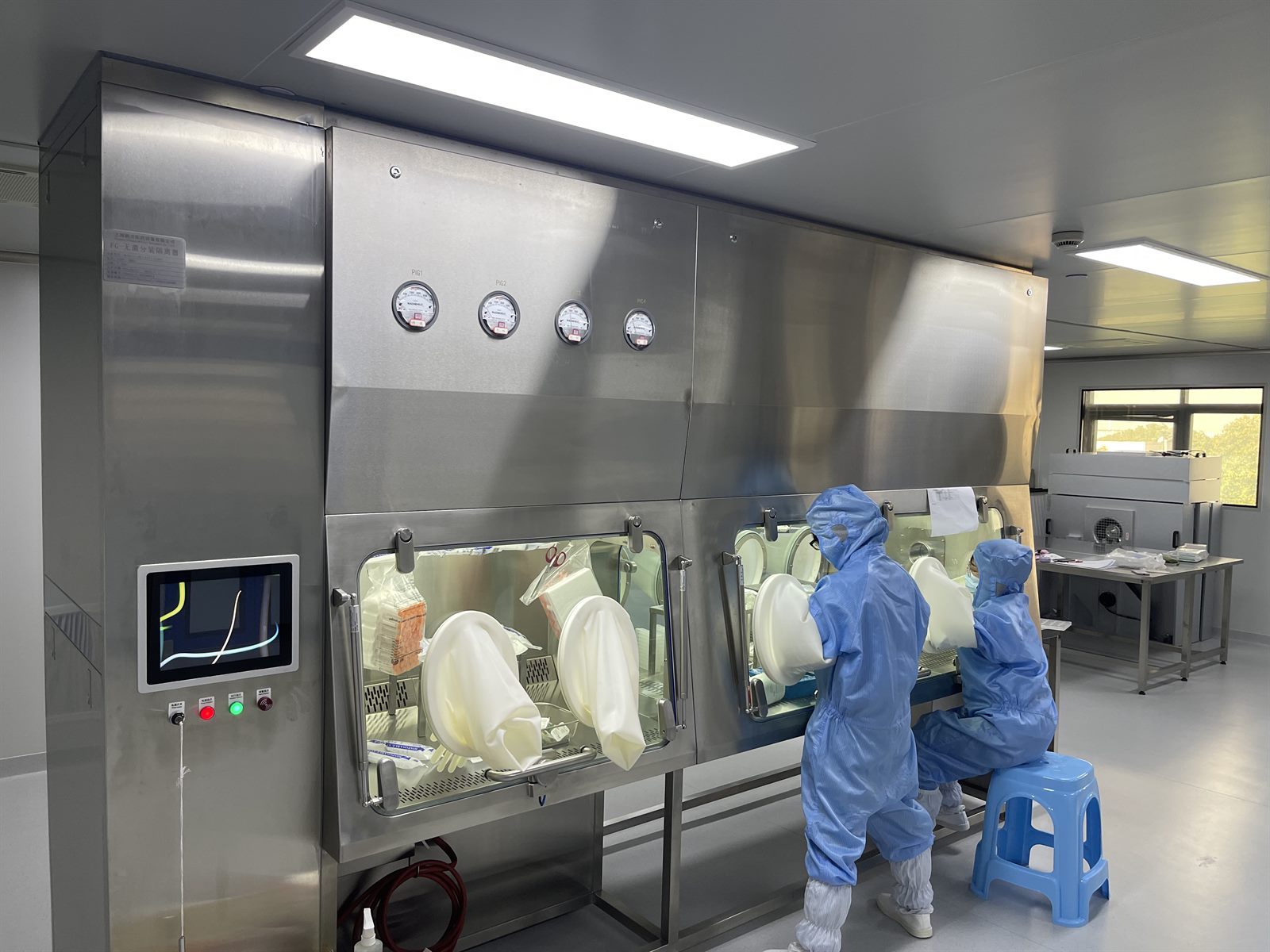 Aseptic Filling IsolatorGrade A (ISO 5) barrier for sterile filling, stoppering and capping.Isolators & Barrier
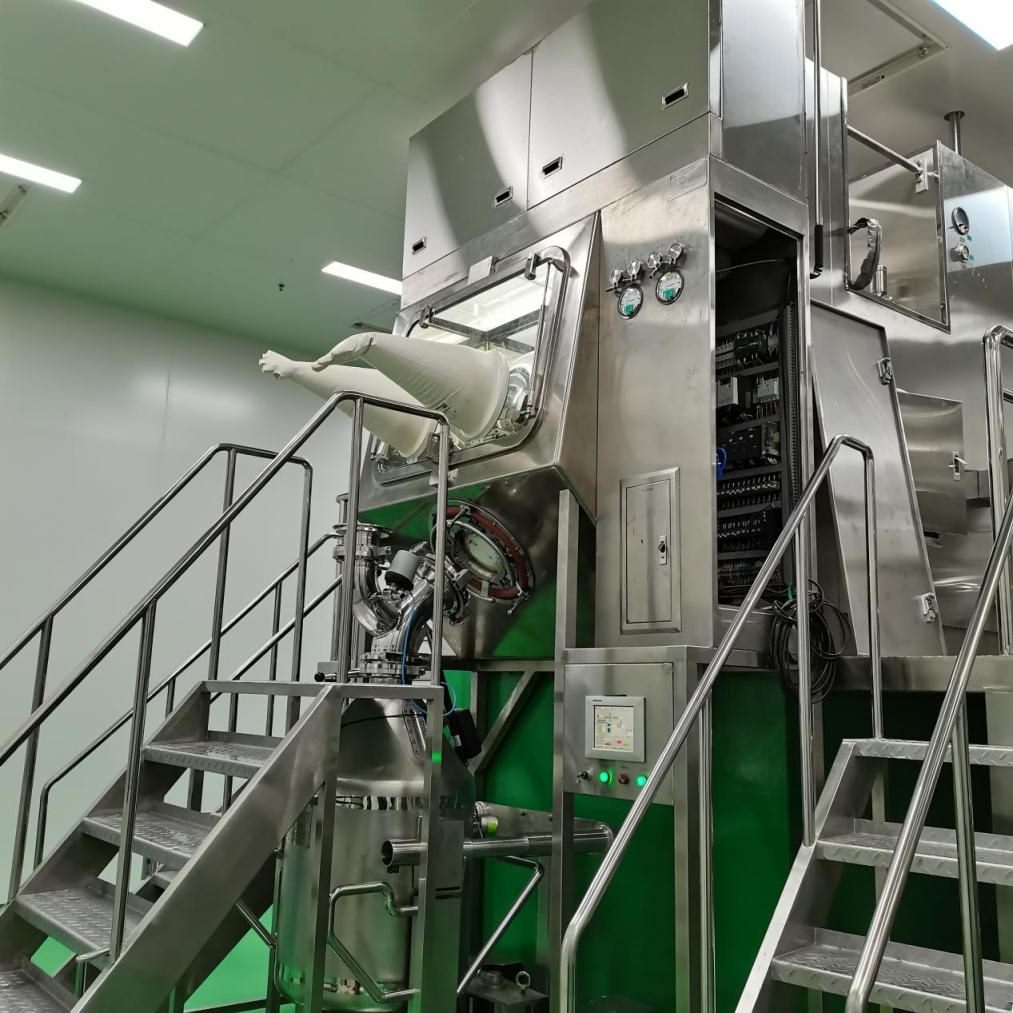 Dispensing & Containment Isolator (OEB5)Negative-pressure barrier for weighing, charging and sampling HPAPI.Isolators & Barrier
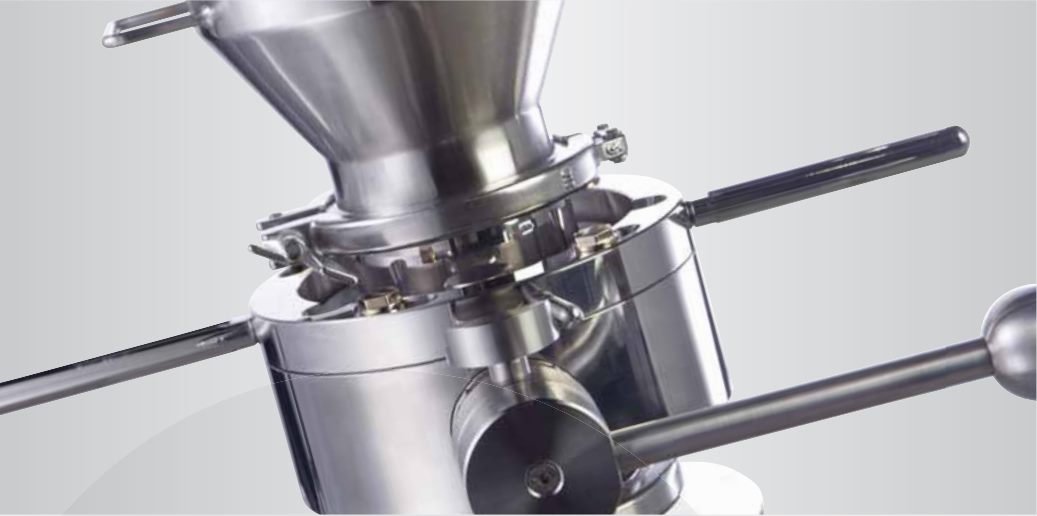 Alpha-Beta Split Butterfly ValveSplit butterfly valve for contained, dust-free transfer of potent powders.Transfer & Containment
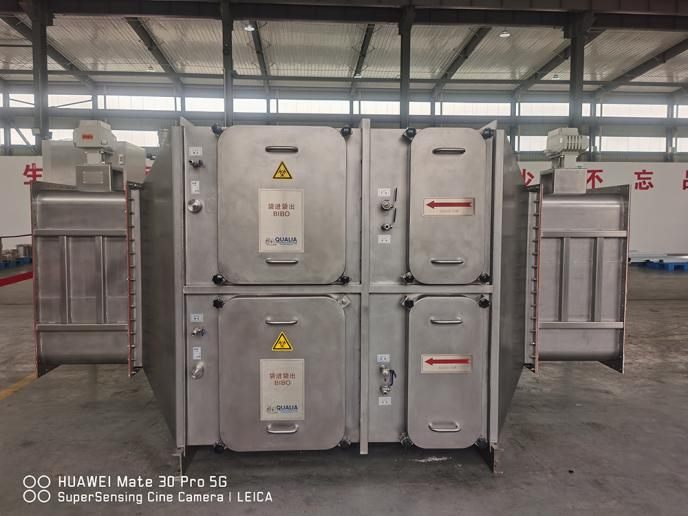 BIBO Filter HousingBag-in/bag-out HEPA housing for safe filter change in P3/P4 labs.Air Handling
Decontaminating a large room or suite?
Send us the floor plan, room volumes and how the rooms connect. Our engineers will suggest unit numbers, positions or an HVAC-integrated layout.