








VHP Cycle Development & Qualification: CD, IQ/OQ/PQ and Rogue BI
A VHP (vaporized hydrogen peroxide) cycle cannot be validated the way a steam autoclave is. Its lethality is non-linear, it has no universal D-value, and you cannot integrate an F0. Instead, a VHP biodecontamination process is qualified through a disciplined lifecycle — cycle development (CD), then IQ / OQ / PQ, proven by biological indicators at worst-case locations. This guide walks the full execution: dry vs wet VHP, the four-phase cycle, the qualification steps, and how to tell a genuine failure from a “rogue BI”.
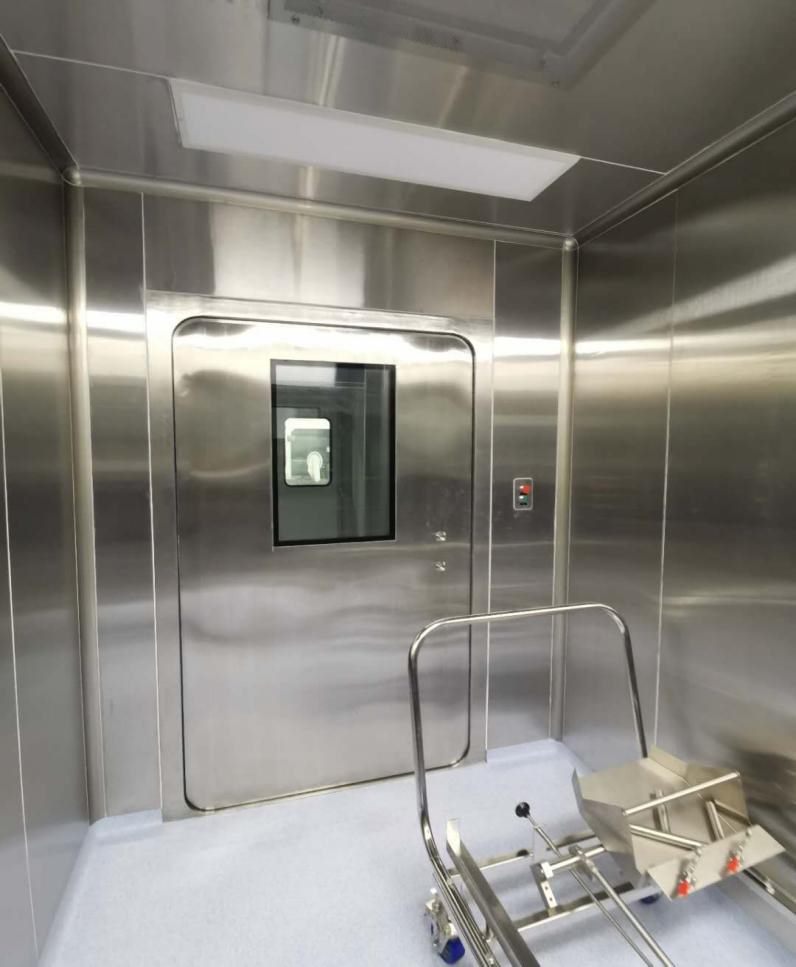
Why VHP is not validated like steam
Steam sterilization has a clean physics model: a known D-value, a Z-value, and an F0 you can integrate from the temperature record. VHP has none of that. Its inactivation kinetics are non-linear — there is a lag phase and a tailing phase — and there is no universal D-value, so you cannot back-calculate lethality from concentration and time. USP <1229.11> и PDA TR51 are explicit: a VHP cycle is released on biological-indicator (BI) challenge, not on a physical lethality integral. Physical parameters (temperature, RH, concentration, saturation) are for routine monitoring and control — not for release. For the acceptance criterion itself — the 6-log spore reduction and how BIs prove it — see How a VHP Cycle Is Validated: Biological Indicators and the 6-Log Standard.
The governing framework: EU GMP Annex 1 (2022) (§4.22 / §8.8, automated isolator biodecontamination and worst-case BI challenge), ISO 22441:2022 (low-temperature VHP process development, validation and routine control), USP <1229.11>, PDA TR51 / TR70, и 21 CFR Part 11 for the electronic records.
Dry vs wet VHP — pick before you develop the cycle
There are two operating philosophies, and the choice drives your whole cycle. The key variable is relative saturation (RS) — the ratio of the H₂O₂/water vapour mix to its condensation point. Cross RS 100% and you get visible condensation, which corrodes equipment and can actually weaken lethality.
| Dry (low-humidity) VHP | Wet (micro-condensation) VHP | |
|---|---|---|
| Humidity | RH 30–50%, RS < 100%, no visible condensation | RH 60–80%, controlled sub-visible micro-condensation film |
| Сильные стороны | Very low corrosion risk; suits electronics, coated panels, seals | Faster spore kill; better penetration of gaps; lower peroxide use |
| Trade-off | Higher H₂O₂ concentration / longer cycle for equal kill | Long-term high-frequency use can blister coatings, lightly oxidise metal |
| Лучше всего для | Grade A isolators, freeze-dryers, sampling lines, precision instrument chambers | Grade B areas, material airlocks, BSL-lab terminal decontamination |
The four-phase cycle (every VHP program has all four)
| Phase | Что происходит | Key control |
|---|---|---|
| 1. Conditioning | Seal the chamber; dehumidify/heat to a stable 20–26 °C and the target RH for dry or wet mode. | Remove standing water first; confirm leak rate; temperature/RH stable ~15 min. |
| 2. Gassing | A metering pump vaporises H₂O₂ at a steady rate to raise chamber concentration. | No large single dose — avoid local flash condensation; multi-point concentration logging. |
| 3. Dwell (sterilization) | The core lethal phase — dose is topped up to hold the target concentration band. | Hold RS below condensation; log T, RH, ppm, saturation every 30 s. Lethality proven by BI, not F0. |
| 4. Aeration | Stop dosing; catalytic breakdown + fresh-air exchange purge the peroxide. | Release limits (mandatory): air ≤1 ppm (8-h TWA); surface ≤0.5 µg/cm². No door open below this. |
The qualification lifecycle: CD → IQ → OQ → PQ
Four principles run through all of it, and auditors check them first: risk-driven (BI placement and load from an FMEA); worst-case first (PQ challenges both maximum and minimum load); triple evidence (physical record + chemical indicator + biological indicator, all three); and reproducibility (three consecutive passing cycles per condition before a program is locked). All data must meet 21 CFR Part 11 — original curves cannot be deleted or altered, with a complete audit trail.
Cycle Development (CD) — the pre-validation groundwork
CD is where the cycle is actually engineered, before formal qualification:
- Material compatibility — run all in-chamber equipment, tooling, gloves and lines through ~10 consecutive VHP cycles; check for corrosion and functional degradation (see the compatibility table below).
- Chamber leak test — pressure-decay method; typical acceptance ≤0.5% of volume per hour over a 1-h hold.
- Airflow smoke mapping — mark dead zones, blind line-ends, glove folds and shadowed loads; these become the worst-case challenge points.
- Concentration mapping — distribute sensors through the chamber, run pre-cycles, and find the lowest-concentration zones.
- Parameter gradient study — vary dose, dwell time and T/RH to find the best no-condensation, maximum-lethality window.
- BI placement list — fix the standard map: worst dead zones, lowest-concentration points, shadowed load interiors, long line lumens, HEPA downstream. This map goes into the validation protocol.
IQ / OQ / PQ
| Stage | Scope | Key checks |
|---|---|---|
| IQ (installation) | Equipment as installed vs specification. | Model / serial / COA; generator, catalytic module, sensor specs; earthing, e-stop, interlocks (high-concentration alarm, door-stop); sensor calibration certs valid ≤12 months; audit-trail & data export verified. |
| OQ (operational) | Empty-chamber runs on the CD parameters. | Four-phase auto-sequencing; upper/lower parameter limits; empty-load concentration uniformity within ±15%; aeration residual ≤1 ppm; all chemical indicators (CI) turn; 3 consecutive stable empty cycles. |
| PQ (performance) | Loaded, worst-case — the heart of validation. | Routine maximum load in real layout (keep the real shadows/gaps); BI = Гелабиостас стеаротермофилус ATCC 7953, 1×10⁶ CFU per carrier, with COA; positive & negative controls each run; 3 independent loaded cycles. |
PQ BI placement rule: one BI at ordinary points; three parallel BIs at each high-risk worst-case point (dead zones, long lines, glove interlayers) — the triplicate is what lets you run the rogue-BI statistics below.
Rogue BI vs true failure — the PQ decision matrix
An isolated positive BI does not automatically fail a cycle. The industry recognises the rogue BI: spores clumping inside one indicator create local high resistance — a defect of the indicator, not the process. The distinction is evidence-based:
| Scenario | Evidence | Verdict & action |
|---|---|---|
| A — true failure | Physical curves out of range and/or CIs largely unturned. | Genuine process failure. Open a deviation, return to CD, re-optimise, re-run PQ. |
| B — rogue BI | All CPPs in range, all CIs fully turned, a single positive among the 3 parallel BIs at one point (2 negative, 1 positive), with spore-clumping visible on microscopy. | Confirm by MPN/SLR (below). If SLR ≥ 6-log, the process is effective — no full re-test; close with a deviation report, clumping photos and BI-lot COA. |
| C — insufficient penetration | ≥2 positives at one point, or positives scattered across multiple points. | A real penetration gap. Optimise load / extend dwell / improve gas distribution, then re-run all PQ cycles. |
The MPN / SLR check (Scenario B). For a single point with several BIs, the most-probable number of survivors is N = ln(n/q), where n = total BIs at the point and q = number negative. The spore-log-reduction is SLR = lg N₀ − lg N.
Worked example — one point, 3 BIs, 2 negative and 1 positive, carrier load N₀ = 1×10⁶:
N = ln(3/2) = 0.405 → SLR = lg(10⁶) − lg(0.405) ≈ 6.40 > 6-log. The point still meets the sterility-assurance requirement (SAL ≤ 10⁻⁶), supporting a rogue-BI conclusion.
Material compatibility (control long-term corrosion)
| Материалы | VHP compatibility & note |
|---|---|
| 316L / 304 stainless steel | Excellent — the reference chamber material. |
| Glass, acrylic windows | Compatible. |
| PVDF fluorocarbon-coated panel | Preferred for cleanroom walls over ordinary coated steel. |
| Ordinary coated steel panel | Long-term high-frequency VHP can blister/chalk the coating → switch to PVDF; keep RS < 100%. |
| Rubber / silicone seals | Absorb H₂O₂ and slow aeration; replace on a schedule. |
| Electronics | Compatible under dry VHP (low RH, no condensation). |
| Cellulose / paper / cotton | Strongly absorb H₂O₂ — avoid inside the load; they extend aeration. |
Requalification
- Routine: one full loaded PQ per year.
- Change-triggered (run 3 PQ cycles): major rebuild of the generator, chamber or exhaust; a large change in load pattern; a major sterilization deviation or repeated BI positives; a change of H₂O₂ or BI brand/type; or a risk assessment that raises the process risk.
- Simplified requalification: no need to repeat full CD/IQ — a loaded PQ plus a concentration-uniformity test is sufficient.
Часто задаваемые вопросы
Can I release a VHP cycle on an F0 value?
No. USP <1229.11> and PDA TR51 prohibit it — VHP kinetics are non-linear with no universal D-value. BI challenge is the release basis; physical parameters are for routine monitoring only.
What is a rogue BI?
A single positive caused by spore clumping inside one indicator (local high resistance), while all physical parameters and CIs are in range and parallel BIs are negative. It is an indicator defect, not a process failure — documented via MPN/SLR, microscopy and a negative re-test.
Dry or wet VHP for an isolator?
Dry VHP — low humidity and no condensation protect the electronics, coatings and seals inside a Grade A isolator. Wet VHP suits large rooms and airlocks where speed and gap penetration matter more.
Сопутствующие товары
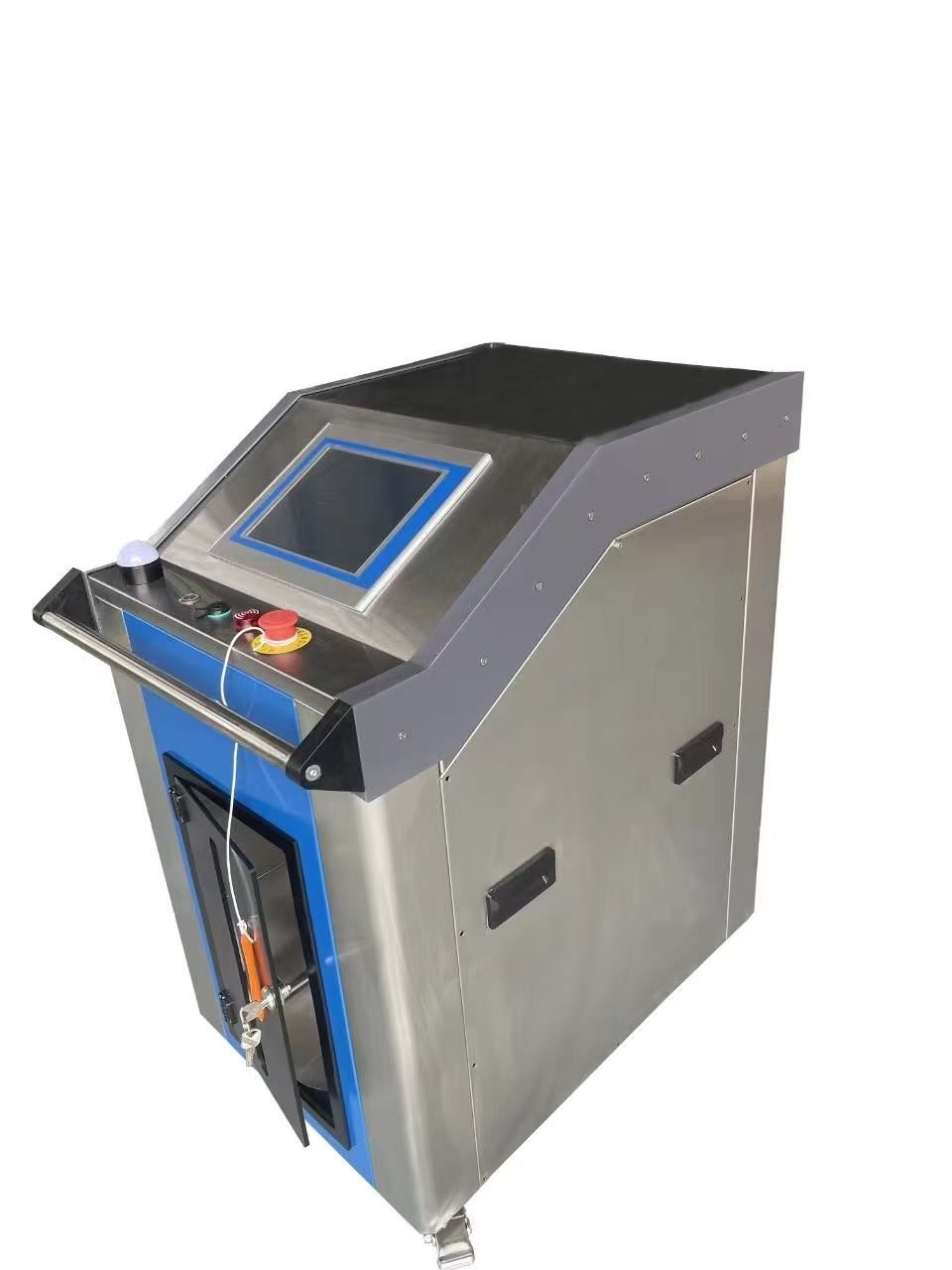 Генератор импульсного вакуумного высокочастотного плазменного стерилизатора (VHP)Циклический импульсный вакуумный поток приводит VHP в труднодоступные места внутри оборудования.Стерилизация VHP
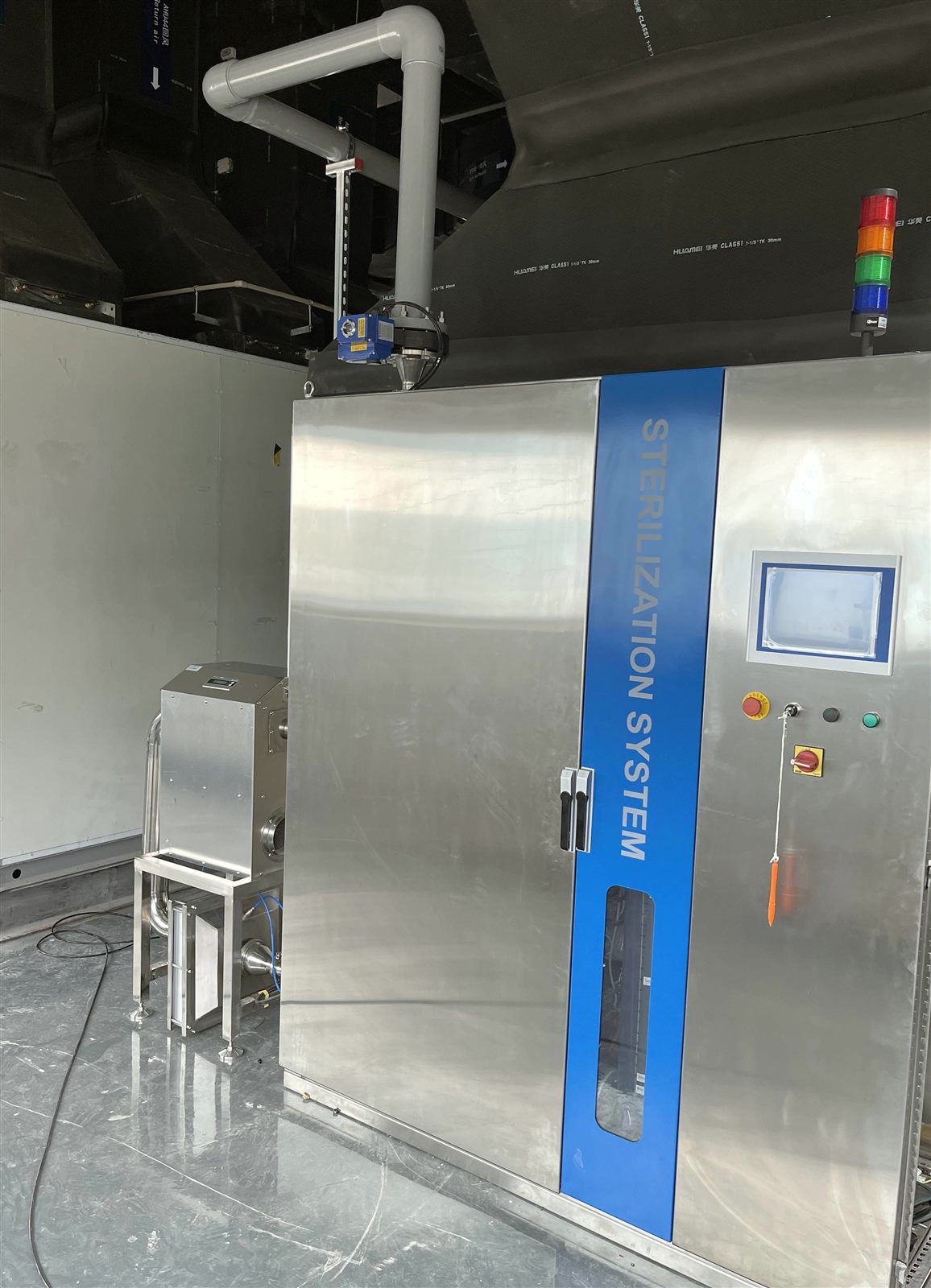 Система VHP с интегрированным оборудованием для отопления, вентиляции и кондиционирования воздухаКомпания VHP совместно с существующими поставщиками систем кондиционирования воздуха проведет очистку комнат и воздуховодов.Стерилизация VHP
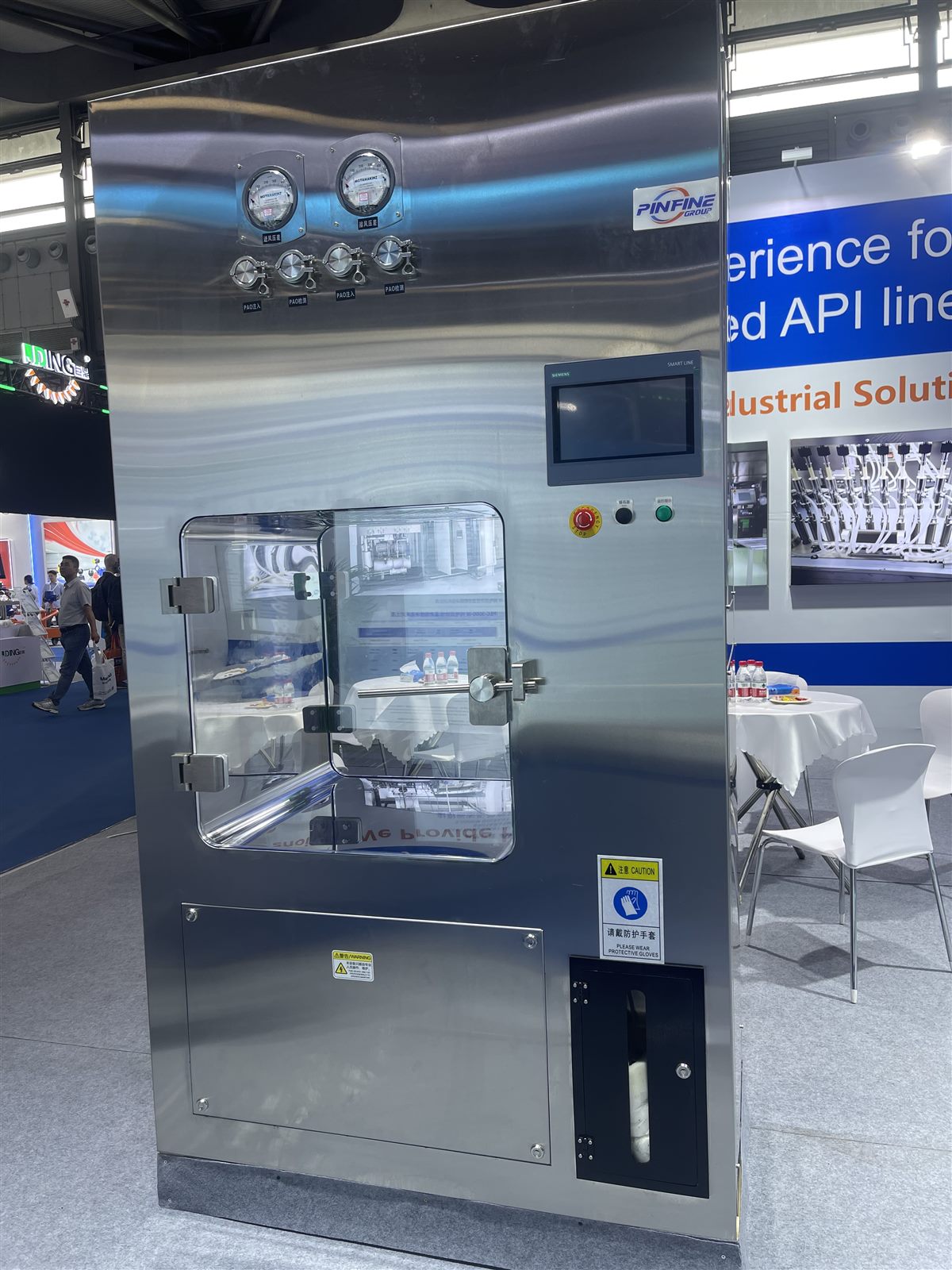 Передаточный бокс VHPСтенная переносная камера с интегрированным циклом VHP.Перемещение и локализация
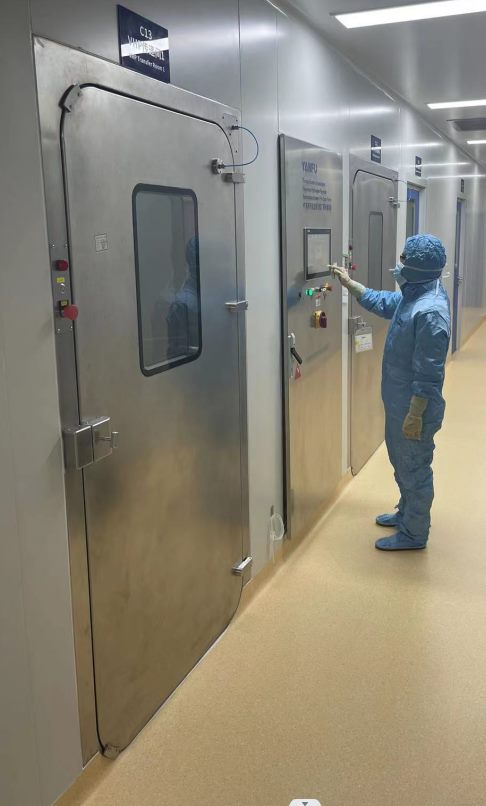 Стерилизация в воздушном шлюзе VHPИнтегрирует VHP в буферный клапан/затвор для обезвреживания материала, поступающего в клапан класса A/B.Стерилизация VHP
Specifying a validatable VHP system?
Our VHP generators, pass boxes and isolators log every CPP to a 21 CFR Part 11 record and ship with cycle-development support — so your CD, IQ/OQ/PQ and BI challenge pass the first time.