








Biosafety Isolation Dampers: How Bubble-Tight Dampers Seal BSL-3 Ductwork
A high-containment room is only as tight as the ducts connected to it. When a BSL-3 laboratory is decontaminated with hydrogen peroxide vapour, when a HEPA filter is changed, or when an exhaust fan stops, the supply and exhaust ducts must be closed off with a damper that does not leak. This guide explains what a biosafety isolation damper is, how it differs from an ordinary HVAC damper, where it goes in the system, and how its leak tightness is specified and tested.
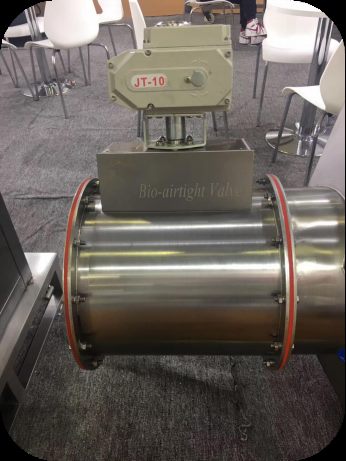
What Is a Biosafety Isolation Damper?
A biosafety isolation damper is a gas-tight shut-off valve for air ducts. It is also called a bubble-tight damper, gas-tight damper, bio-airtight valve or biosafety airtight valve. The name “bubble-tight” comes from the test: with pressure applied across the closed blade, a soap solution brushed over the seal should show no bubbles.
An ordinary volume-control or fire damper only reduces airflow; some air always passes the blade edges and leaks out through the shaft and casing seams. An isolation damper is built so that, when closed, it holds a pressure difference of thousands of pascals with only a very small, specified leak.
Why Containment Facilities Need Them
- Gaseous decontamination. To decontaminate a BSL-3 room with VHP (or formaldehyde in older practice), the room and the duct sections connected to it must form one sealed volume. Isolation dampers at the boundary keep the decontaminant in and stop it reaching the rest of the building.
- HEPA filter change. Before a bag-in/bag-out (BIBO) filter housing is opened, dampers either side of it isolate the housing so it can be decontaminated in place and changed safely.
- Preventing backflow. If the exhaust fan stops, a closed damper stops contaminated air flowing back through the duct into other areas or to the outside without filtration.
- Room tightness testing. Pressure decay tests on a containment room need the duct openings closed by dampers that do not leak, or the test measures the dampers instead of the room.
- Maintenance. Sections of ductwork, fans and filter banks can be isolated for service while the rest of the system stays in operation.
National biosafety laboratory standards — for example China’s GB 19489 and GB 50346 — require airtight isolation of BSL-3 supply and exhaust ducts so the laboratory can be decontaminated as a sealed space, and international guidance on high-containment laboratories expects the same capability.
Where Isolation Dampers Go
The usual arrangement places a damper on the supply duct and another on the exhaust duct at the containment boundary, so that the room, the exhaust HEPA housing and the duct between them can be sealed together. Larger facilities add dampers on each side of every BIBO housing so that individual filter banks can be isolated, and on parallel exhaust fans so that a standby fan can take over without backflow through the stopped one.
Keep the damper as close to the room boundary as practical: every metre of duct inside the sealed boundary is volume that has to be decontaminated and aerated.
Isolation Damper vs Ordinary HVAC Damper
| Feature | Standard HVAC damper | Biosafety isolation damper |
|---|---|---|
| Purpose | Control or balance airflow | Shut off airflow gas-tight |
| Seat leakage | Some flow always passes the blade edges | Bubble-tight: very small specified leak at high pressure |
| Casing and shaft | Folded or riveted casing, simple bushings | Welded body with minimal seams, sealed shaft penetration |
| Pressure rating | A few hundred pascals | Typically ±2,500 Pa or more |
| Seal material | Often none, or general-purpose rubber | EPDM or silicone selected for VHP and disinfectant resistance |
| Testing | Rarely tested individually | Factory leak test, on-site retest during commissioning and periodically |
Shut-Off vs Regulating Types
Shut-off (isolation) dampers are either fully open or fully closed and are used at containment boundaries and on each side of filter housings. Regulating dampers can be positioned part-open to set airflow during normal operation and still close gas-tight when needed, which saves a separate balancing damper in the same duct. Both are available in round and rectangular bodies to match the ductwork.
How Leak Tightness Is Specified and Tested
There are two leak paths, and a good specification covers both:
- Seat leakage — air passing the closed blade from one side of the duct to the other.
- Casing leakage — air escaping from the duct to the room or plant space through the body, flanges or the shaft penetration.
Leak tightness is usually specified as a leak rate at a test pressure, for example a maximum percentage of the enclosed volume per hour at ±2,500 Pa, together with a hold time. It is verified by a pressure decay test — the damper is closed, the test section is pressurised or evacuated and the pressure loss is recorded over time — and leaks are located with a bubble test on the seal and the shaft. Both positive and negative pressure should be tested, because the seal is loaded differently in each direction. The same principles are used for isolator leak testing.
Specify not only the initial leak rate but also how the damper performs after repeated cycling, because seals wear. A damper that is bubble-tight on delivery but leaks after a year of operation will fail the next room tightness test.
Design Points to Check
| Item | What to check |
|---|---|
| Leak rate | Seat and casing leakage at the specified pressure, positive and negative; factory test record supplied. |
| Endurance | Number of open/close cycles after which the damper is still tight. |
| Seal material | Compatible with VHP and the disinfectants used; EPDM and silicone are common choices. |
| Construction | Stainless steel welded body, minimal seams, smooth cleanable interior. |
| Actuation | Electric or manual; manual override for power failure. |
| Fail position | Open or closed on loss of power, chosen to suit the facility’s control philosophy and fan-failure scenarios. |
| Position feedback | Open/closed limit switches wired to the building management system and to the interlocks of the decontamination sequence. |
| Size | Matched to the duct, including large round or rectangular sizes for main exhaust ducts. |
| Hazardous areas | Explosion-proof actuator where the duct or plant room is a classified area. |
| Test access | Test ports and access to both sides of the damper for retesting. |
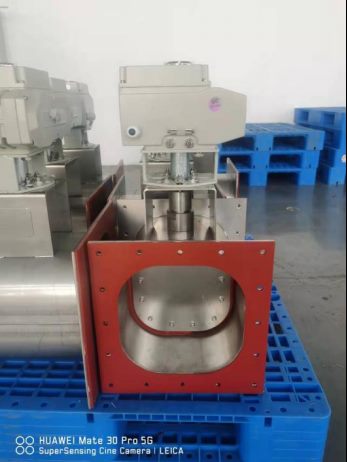
Fenggu Biosafety Isolation Damper
The Fenggu Biosafety Isolation Damper (FG-LOCK-BCV) is built for containment boundaries, room decontamination ducts and BIBO filter change-out:
| Leak rate | ≤ 0.25% vol/h at ±2,500 Pa (initial) |
|---|---|
| Endurance | ≥ 5,000 open/close cycles, then no leak for ≥ 60 min at ±2,500 Pa |
| Types | Shut-off or regulating; round or rectangular |
| Sizes | Customised, up to Ø1,200 mm round or 2,500 × 1,200 mm rectangular |
| Seal | High-density EPDM |
| Body | Integral welded structure with minimal seams |
| Actuation | Electric or manual; explosion-proof option |
For the decontamination itself, isolation dampers work together with an HVAC-integrated VHP system for whole suites, or a VHP BIBO sterilizer for individual filter housings. At doorways the same sealed boundary is completed by biosafety airtight doors and a biosafety airtight pass box.
FAQ
What is a bubble-tight damper?
A damper that, when closed, holds a pressure difference with no visible leakage in a soap-bubble test. In biosafety and nuclear applications the term is used for gas-tight isolation dampers with a specified, very low leak rate.
Where are biosafety isolation dampers installed?
On the supply and exhaust ducts at the boundary of a containment room, on each side of BIBO HEPA filter housings, and on parallel exhaust fans to prevent backflow.
Why are isolation dampers needed for VHP decontamination?
They seal the room and its connected ductwork into one closed volume, so that hydrogen peroxide vapour reaches the duct surfaces and filters inside the boundary and does not escape into the rest of the building.
How is an isolation damper leak tested?
With the damper closed, the test section is pressurised or evacuated and the pressure decay is measured over a set time; leaks are located with a bubble test on the seal and shaft. Testing is done at the factory and repeated during commissioning and periodically in service.
Which seal material is suitable for VHP?
EPDM and silicone are widely used because they resist oxidation by hydrogen peroxide. Natural rubber and some other elastomers degrade and should be avoided.
Related Products
Biosafety Isolation DamperAirtight damper isolating HVAC ducts during decon and BIBO change.Transfer & Containment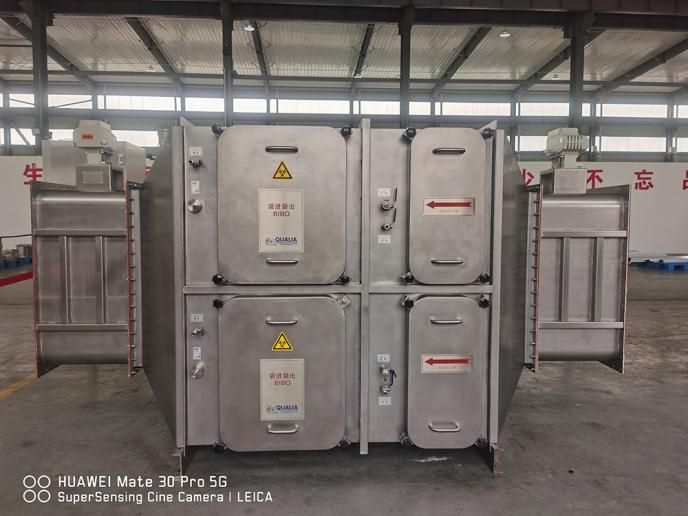 BIBO Filter HousingBag-in/bag-out HEPA housing for safe filter change in P3/P4 labs.Air Handling
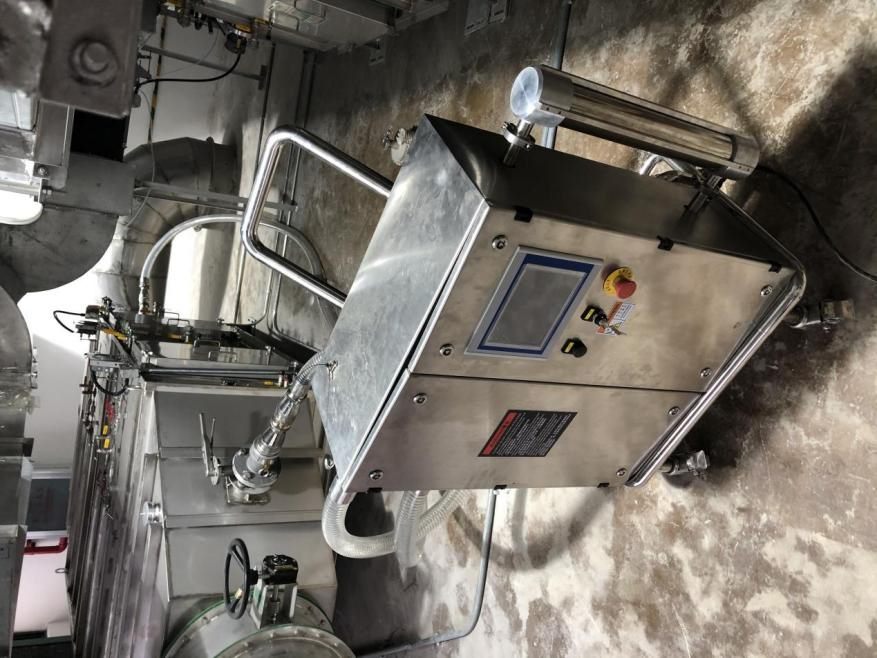 VHP BIBO SterilizerDedicated unit for decontaminating BIBO filter housings.VHP Sterilization
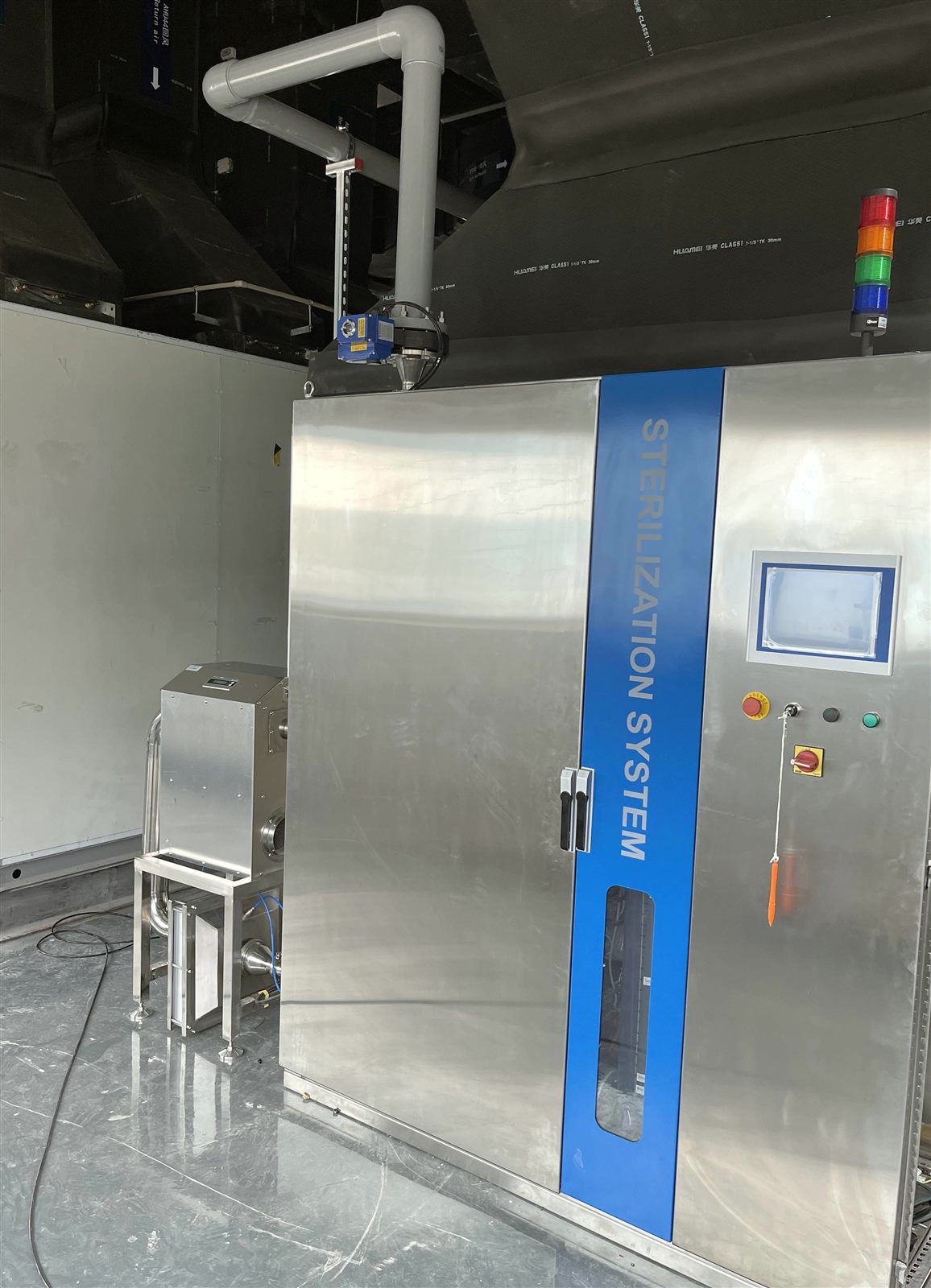 HVAC-Integrated VHP SystemCouples VHP to existing air handling to decontaminate suites and ductwork.VHP Sterilization
Sealing a Containment Room?
Send us your duct sizes, test pressure and actuation requirements. Fenggu engineers will configure isolation dampers to match your decontamination and filter change sequence.