








HEPA H13 vs H14: What’s the Difference for Cleanrooms?
HEPA filters are the last line of defence protecting a cleanroom, isolator or laminar-flow zone from airborne particles and microorganisms. Two grades dominate pharmaceutical use — H13 and H14 — and the difference between them, though it looks small on paper, decides where each filter belongs. This guide explains the grades, the efficiency figures behind them, and which one your equipment should use.
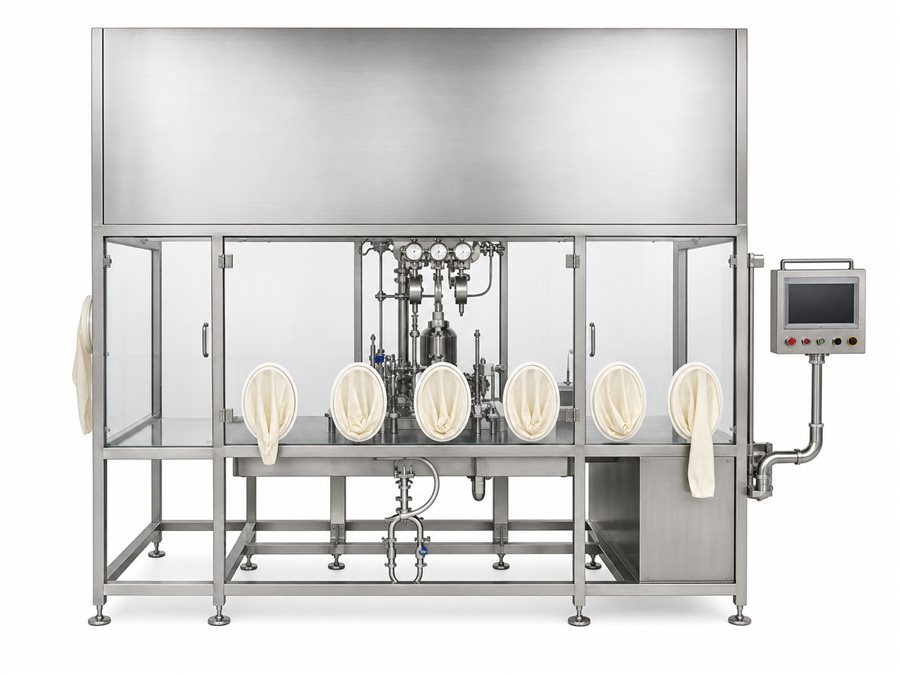
What is a HEPA filter?
HEPA stands for High-Efficiency Particulate Air filter. In Europe, HEPA grades are defined by the EN 1822 / ISO 29463 standard and are rated at the Most Penetrating Particle Size (MPPS) — the particle size (roughly 0.1–0.3 µm) that a filter captures least efficiently. Rating at the MPPS is a stricter, more honest test than the older US convention of quoting efficiency at 0.3 µm only.
H13 vs H14 efficiency
| Grade | Integral efficiency (at MPPS) | Penetration |
|---|---|---|
| H13 | ≥ 99.95% | 1 in 2,000 particles passes |
| H14 | ≥ 99.995% | 1 in 20,000 particles passes |
The jump from 99.95% to 99.995% means an H14 filter lets through roughly ten times fewer particles than an H13. That order-of-magnitude gain is why H14 is the standard for the most critical zones, even though both are “HEPA”.
Where each grade is used
- H14 — Grade A / ISO 5 critical zones: isolators, RABS, laminar-flow hoods and filling-line units, and pass-box air. See the laminar flow hood and filling-line laminar unit.
- H13 — general cleanroom supply and less-critical terminals, and as a stage in containment exhaust. Fenggu uses H13 / H14 in its bag-in/bag-out filter housing and in-situ decontamination exhaust unit.
What about ULPA?
Above HEPA sits ULPA (Ultra-Low Penetration Air, grades U15–U17), reaching 99.9995% and beyond. ULPA is used in semiconductor and specialised applications; for pharmaceutical Grade A work, a correctly installed and leak-tested H14 is normally the right choice — a higher grade adds resistance and cost without a practical benefit.
Grade is only half the story
A filter’s rating only holds if the filter and its housing are installed and leak-tested in place — typically a PAO/DOP aerosol scan. This is why containment applications use safe-change housings that can be tested and changed without exposing the used filter, and why exhaust terminals are designed to be decontaminated and leak-scanned in situ. The filter grade sets the ceiling; installation integrity determines whether you actually reach it.
Choosing HEPA for your equipment
As a rule: specify H14 for any Grade A / ISO 5 supply protecting product or sterility, and H13 where a lower-criticality supply or an exhaust stage is acceptable. If containment (operator protection) is involved, the housing matters as much as the grade — see how BIBO and in-situ exhaust systems handle this in our air-handling range.
Related Products
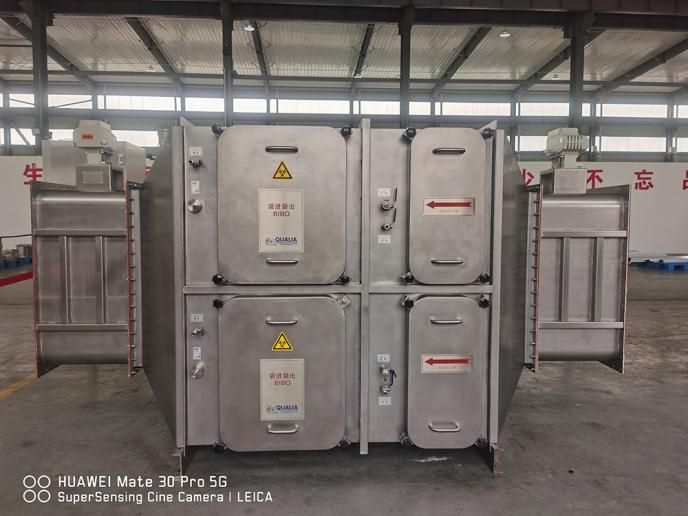 BIBO Filter HousingBag-in/bag-out HEPA housing for safe filter change in P3/P4 labs.Air Handling
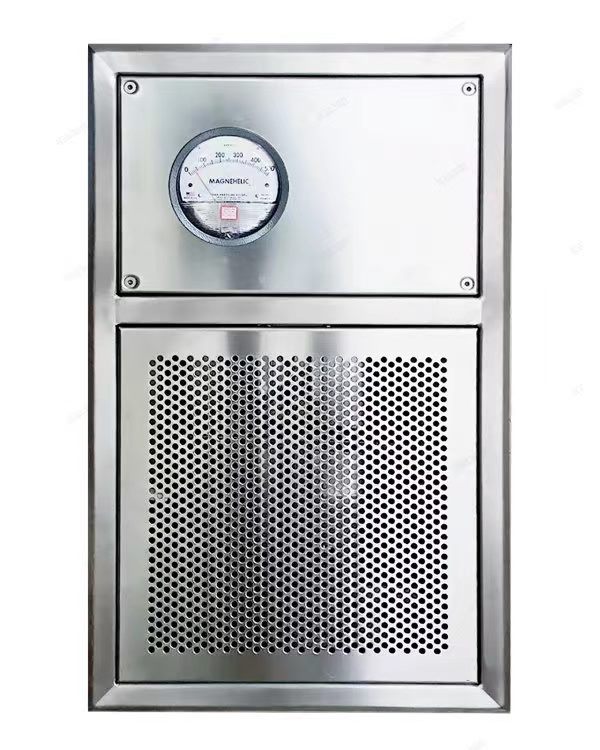 Safe-Change Exhaust UnitHEPA exhaust terminal decontaminated and leak-scanned in place.Air Handling
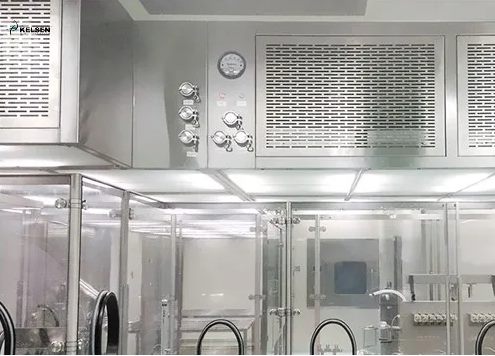 Laminar Flow HoodGrade A laminar airflow over open processing and inspection.Air Handling
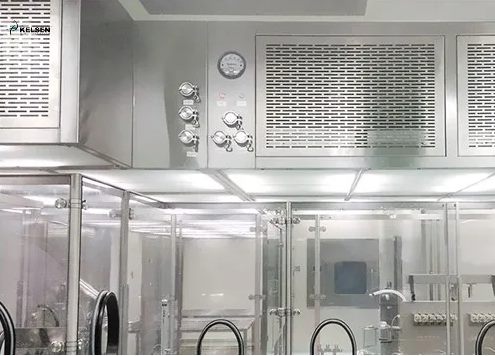 Filling Line Laminar Flow UnitGrade A laminar canopy over the filling zone.Air Handling
Specifying HEPA filtration for a cleanroom or isolator?
Tell us the zone grade and whether operator protection is required, and our engineers will recommend the right HEPA grade and housing.