








Pulsed-Vacuum vs Recirculating VHP Generators: Matching the Cycle to the Equipment
When the target is the inside of a piece of equipment rather than a room, VHP generators come in two main designs: pulsed-vacuum generators, which drive vapor in by repeatedly evacuating and repressurising the chamber, and recirculating generators, which push vapor around a closed loop at close to atmospheric pressure. This guide compares pulsed-vacuum vs recirculating VHP generators and shows how to choose between them for lyophilizers, fermenters, biosafety cabinets and other equipment.
For rooms and HVAC systems, the comparison is different; see portable vs integrated VHP generators. For how to read the numbers on any VHP datasheet, see VHP generator specifications explained.
Why equipment interiors need a different approach
A room is a large, open volume. Vapor released by a fan spreads through it fairly easily. Equipment interiors are different: small volumes with shelves, pipework, valves, condensers and narrow gaps. Vapor that simply flows past an opening may never reach a surface at the end of a narrow passage. Many of these items also have no steam-in-place (SIP) capability, so VHP is the practical way to bio-decontaminate them.
Both generator designs solve this problem, in different ways. The right choice depends mainly on whether the equipment can hold vacuum, and on how complex its internal paths are.
How a pulsed-vacuum VHP generator works
A pulsed-vacuum generator combines vaporized hydrogen peroxide with cyclic pressure changes. The cycle has four stages:
- Pre-treatment and pulsing. A vacuum pump evacuates the chamber. Sterile-filtered vapor is then injected and the pressure rises slightly. This “breathing” cycle of evacuation and repressurisation is repeated, and each pressure difference drives vapor deeper into the interior, the pipework and dead spaces.
- Injection and vaporization. Under vacuum the boiling point of the liquid drops sharply, so the hydrogen peroxide solution flash-vaporizes at room temperature or with slight heating.
- Diffusion and bio-decontamination. Driven by vacuum and pressure pulsing, the vapor diffuses through the chamber and contacts the internal surfaces.
- Aeration and drying. The chamber is evacuated again to remove residual vapor, then sterile air is admitted and the evacuate–repressurise sequence is repeated until no VHP remains.
The key advantage is penetration. A pressure difference pulls vapor into places that flowing gas tends to bypass. The key requirement is that the equipment must be able to withstand and hold vacuum.
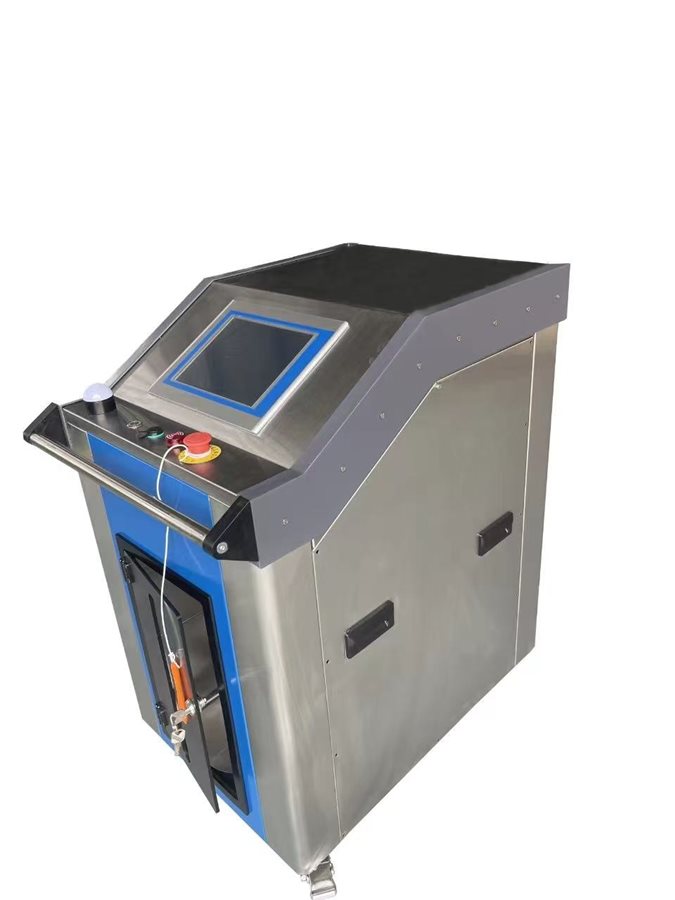
How a recirculating VHP generator works
A recirculating generator connects to the equipment’s supply and return ports with tubing and forms a closed loop. The cycle has three stages:
- Preparation. The tubing is connected and the loop is leak-checked. The tubing and the target chamber are brought to dry, controlled conditions so the vapor does not condense early.
- Bio-decontamination. The generator flash-vaporizes the hydrogen peroxide solution and injects the vapor into the loop. A fan draws the gas back from the equipment, so it circulates continuously. Injection continues until the concentration in the chamber reaches and holds the set point.
- Aeration. Injection stops, and the vapor is recirculated through the generator’s built-in catalytic converter, which breaks it down into water and oxygen. Circulation continues until the concentration falls to the target level, typically below 1 ppm.
Because the loop runs at close to atmospheric pressure, the equipment does not need to be vacuum-rated. What it needs is a suitable inlet and outlet, and an internal volume where flowing gas can reach the surfaces.
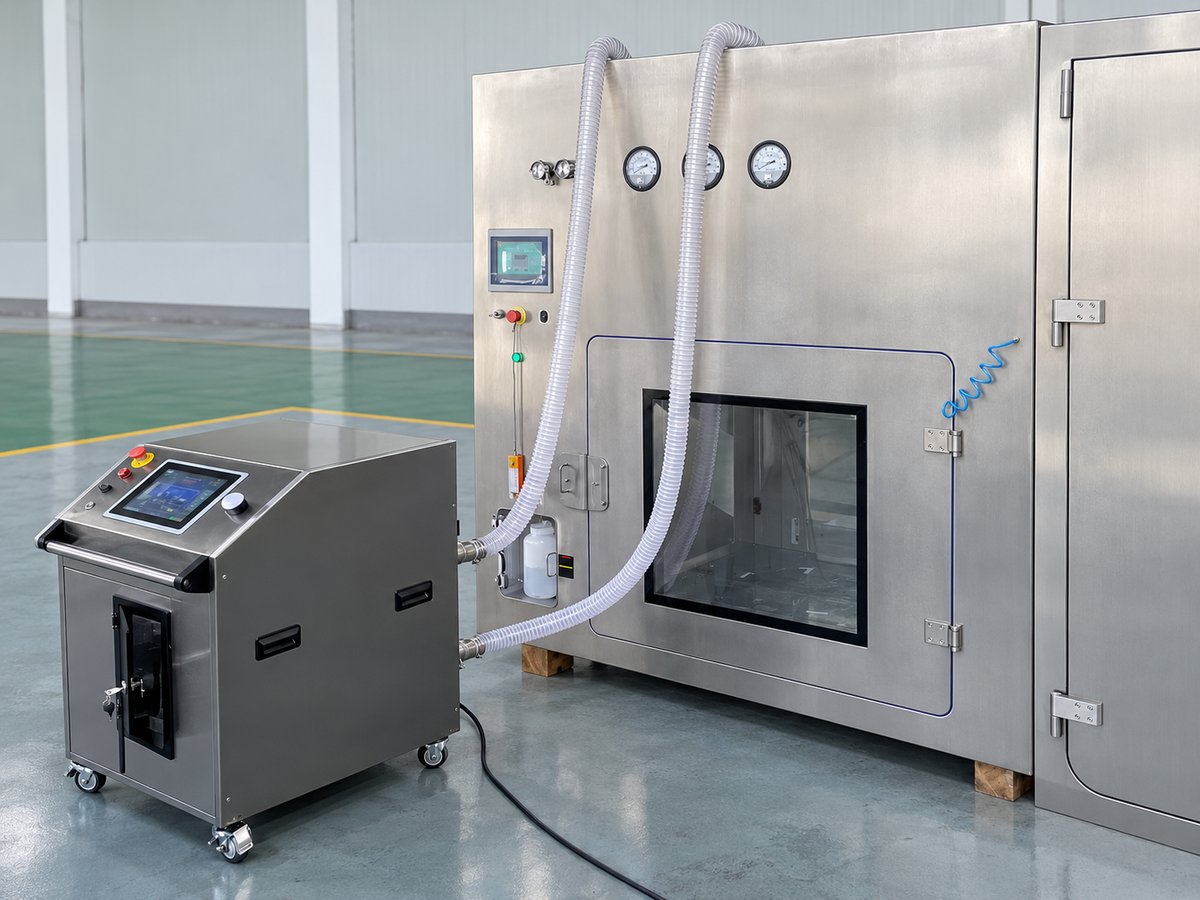
Schematic: two ways to move vapor
Side-by-side comparison
The table compares the two designs, with values from Fenggu’s current specifications for its pulsed-vacuum VHP generator (FG-VHP-G) and recirculating VHP generator (FG-VHP-GL). Cycle performance for a specific piece of equipment is confirmed by cycle development and validation.
| Item | Pulsed-vacuum (FG-VHP-G) | Recirculating (FG-VHP-GL) |
|---|---|---|
| How vapor reaches surfaces | Pressure difference from repeated evacuation and injection | Continuous flow around a closed loop |
| Equipment requirement | Must withstand and hold vacuum | Supply and return connections; no vacuum rating needed |
| Typical targets | Lyophilizers, fermenters, structurally complex equipment without SIP | Biosafety cabinets, lyophilizers, centrifuges, fermenters, tunnel ovens |
| VHP concentration | 150–200 ppm | 300–700 ppm |
| Cycle temperature | 25–35 °C | 25–35 °C |
| Humidity | 50–60% (cycle) | <50% (space) |
| Full cycle time | <120 min | <180 min |
| Aeration time | ≤2.5 h | ≤2.5 h |
| Aeration method | Evacuation and sterile-air pulses | Recirculation through a built-in catalytic converter |
| Residual VHP after aeration | ≤1 ppm | ≤1 ppm |
| Exterior / piping material | SUS304 / SUS316L | SUS316L / SUS316L |
| Noise | ≤50 dB(A) | ≤75 dB(A) |
| Dimensions (L×W×H) | 600×600×1,000 mm | 600×600×1,100 mm |
| Power supply | 220 V AC / 50 Hz | 220 V AC / 50 Hz, 3.5 kW |
| Sterilant | 35% hydrogen peroxide solution | 35% hydrogen peroxide solution |
Both are designed for a sporicidal target of ≥6-log reduction, subject to validation, and both are mobile units that are wheeled to the equipment and connected for the cycle.
How to choose
Choose pulsed vacuum when
- The equipment is built to hold vacuum, such as a lyophilizer chamber or a fermenter vessel.
- The interior has long, narrow or blind paths: pipework, valves, condenser coils, dead legs.
- The equipment has no SIP capability and you need deep penetration into complex internals.
- Low noise matters, for example when the cycle runs in an occupied production area.
Choose recirculation when
- The equipment cannot be evacuated, such as a biosafety cabinet or other equipment designed to run at or near atmospheric pressure.
- The equipment has, or can be given, supply and return connection points.
- The internal volume is fairly open, so flowing gas reaches the surfaces.
- You want aeration by catalytic breakdown in the loop rather than by venting.
When both could work
A lyophilizer appears on both lists. If the dryer and its condenser can be evacuated and the main concern is reaching the condenser and pipework, a pulsed cycle is the stronger option. If the connection is made through ports and the main concern is shelves and the chamber, recirculation can be simpler to integrate. In practice, the choice is made with the equipment manufacturer’s data and confirmed in cycle development. For lyophilizers specifically, read freeze dryer VHP sterilization first, because condensation control on cold shelves is the main difficulty for either design.
Common mistakes
- Choosing by concentration. A higher ppm figure on the datasheet does not mean a better cycle. Each design works in the range that suits its principle and enclosure.
- Assuming a vessel can take vacuum. Some equipment looks robust but is not rated for vacuum, or has seals, windows or sensors that are not. Confirm with the equipment manufacturer before planning a pulsed cycle.
- Ignoring cold surfaces. Shelves, condensers and jackets that are colder than the vapor cause condensation, uneven exposure and corrosion. Bring them to temperature before injection.
- Skipping the connection design. For recirculation, the position of supply and return ports decides where the vapor goes. A short circuit between inlet and outlet leaves the far side of the chamber untreated.
- Validating only the easy points. Biological indicators belong in the hardest places: the end of pipework, behind baffles, inside valves and under shelves, not only in the open chamber.
Questions to settle before you buy
- Is the equipment vacuum-rated? Ask its manufacturer for the allowed pressure range.
- Where will the generator connect, and what fittings and tubing materials are needed?
- Which locations inside the equipment are hardest to reach? Those are your biological indicator positions.
- How will the equipment be brought to the required temperature and humidity before injection?
- Which materials inside the equipment are exposed to hydrogen peroxide? See VHP material compatibility.
- How will cycle development and qualification be done? See VHP cycle development and qualification.
Choosing a supplier as well as a design? See how to evaluate a VHP sterilization system supplier. For biosafety cabinets in particular, see biosafety cabinet VHP decontamination.
All VHP equipment: VHP sterilizers and generators.
FAQ
What is the main difference between a pulsed-vacuum and a recirculating VHP generator?
A pulsed-vacuum generator moves vapor by repeatedly evacuating the chamber and injecting vapor, so pressure differences pull it into narrow spaces. A recirculating generator moves vapor by continuous flow around a closed loop at close to atmospheric pressure.
Can a pulsed-vacuum generator be used on a biosafety cabinet?
Normally not. A biosafety cabinet is not built to hold vacuum. Cabinets are usually treated with a recirculating loop or a dedicated VHP module.
Which design penetrates better?
Pressure pulsing generally penetrates narrow and blind passages better than flow alone. Whether either design reaches every surface in your equipment is confirmed with biological indicators at the hardest-to-reach locations.
Why do the concentration ranges differ so much?
They reflect different operating principles and enclosures. Concentration is not a measure of which design is better; what matters is reaching and holding the validated conditions without condensation.
Do these generators need a separate aeration system?
The recirculating generator breaks residual vapor down in its built-in catalytic converter. The pulsed-vacuum generator removes it by evacuation and sterile-air pulses. In both cases the release level is confirmed by measurement.
References
- EU GMP Annex 1: Manufacture of Sterile Medicinal Products (2022)
- ISO 14937:2009, Sterilization of health care products — General requirements for characterization of a sterilizing agent
- ISO 11138-1:2017, Sterilization of health care products — Biological indicators — Part 1: General requirements
- USP <1229.11> Vapor Phase Sterilization
Related Products
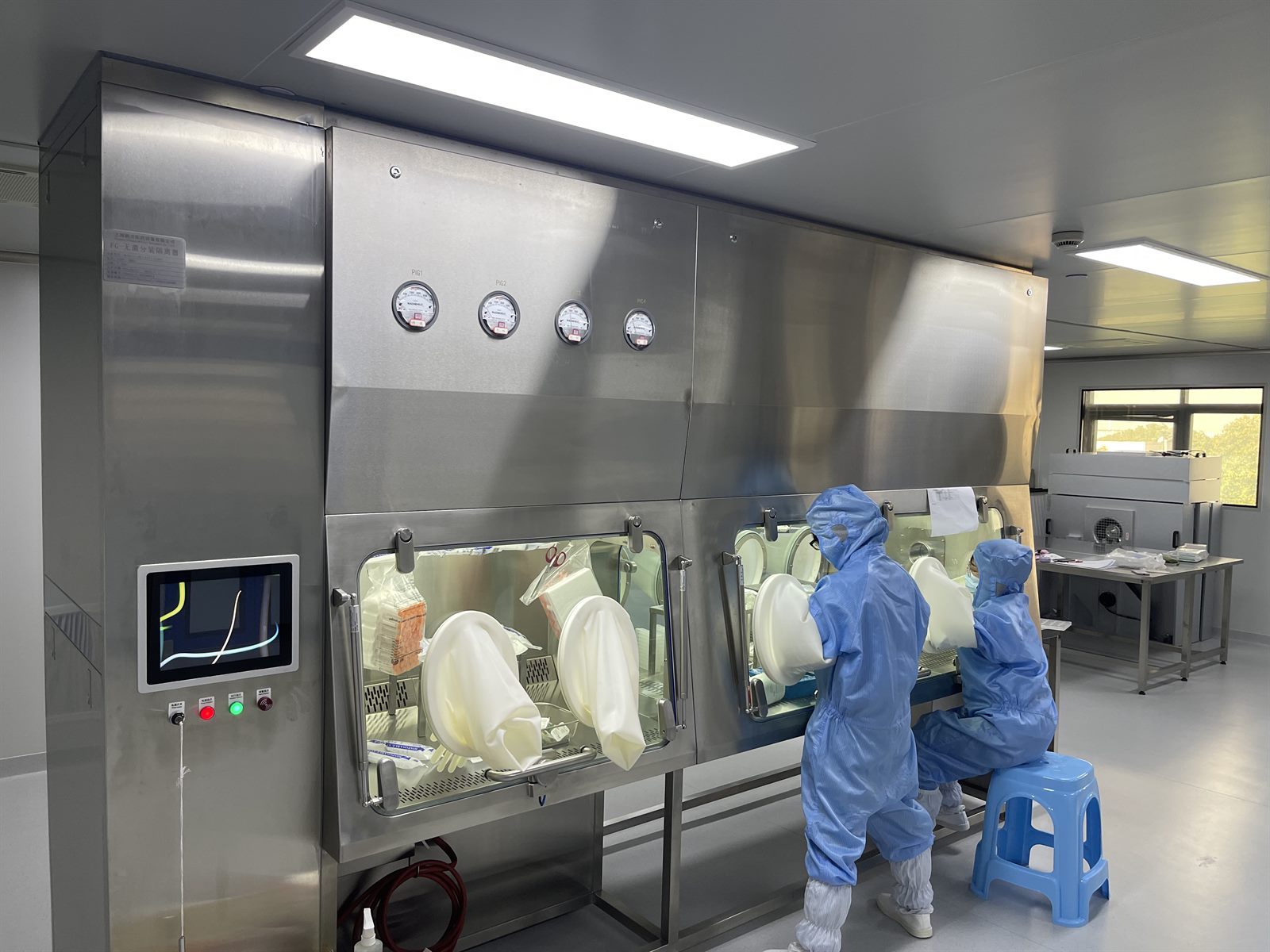 Aseptic Filling IsolatorGrade A (ISO 5) barrier for sterile filling, stoppering and capping.Isolators & Barrier
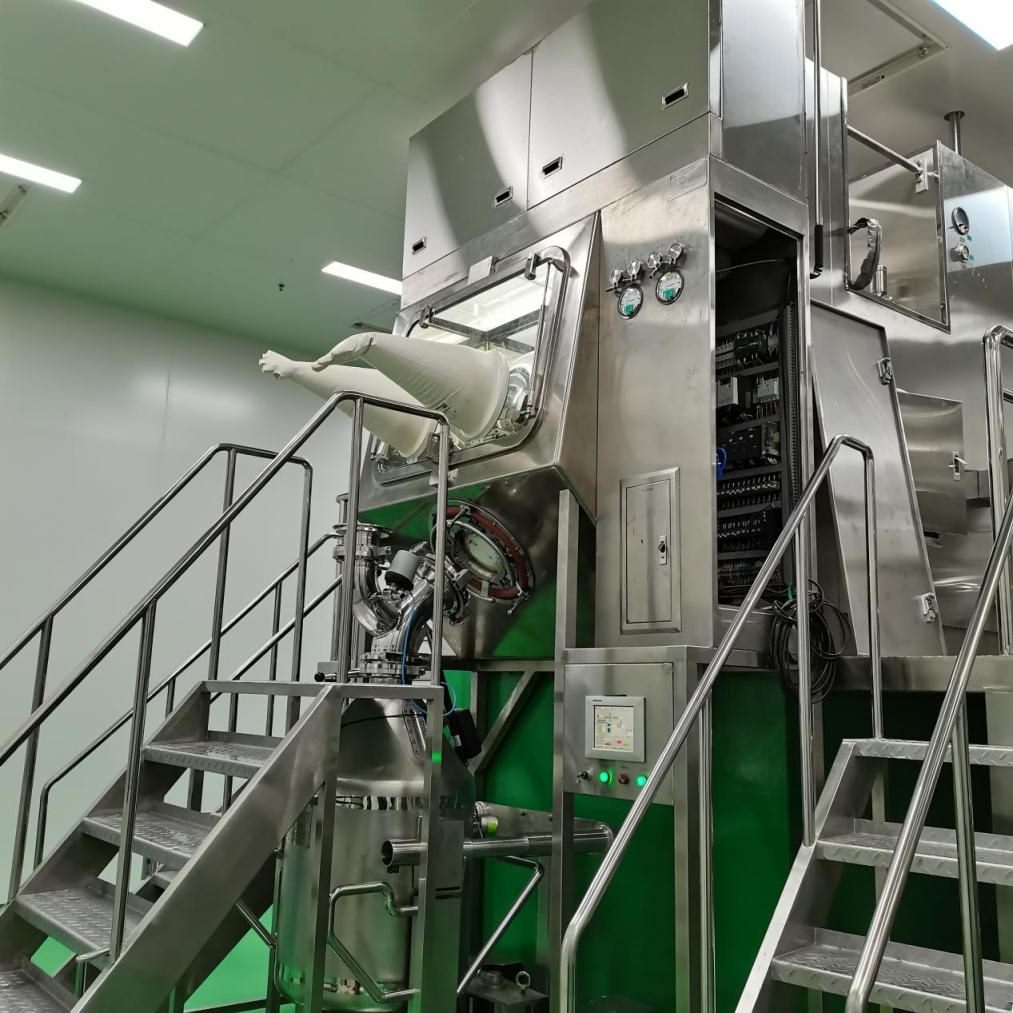 Dispensing & Containment Isolator (OEB5)Negative-pressure barrier for weighing, charging and sampling HPAPI.Isolators & Barrier
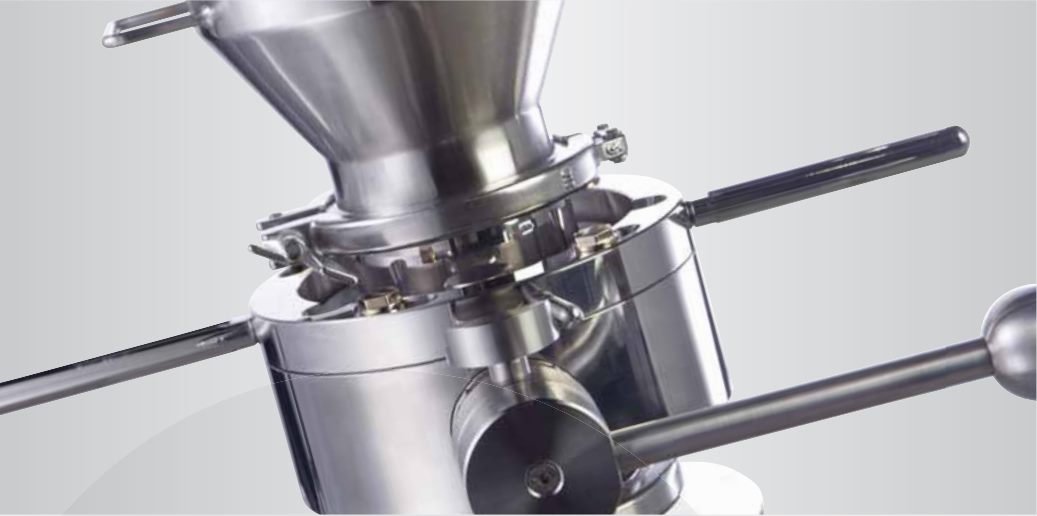 Alpha-Beta Split Butterfly ValveSplit butterfly valve for contained, dust-free transfer of potent powders.Transfer & Containment
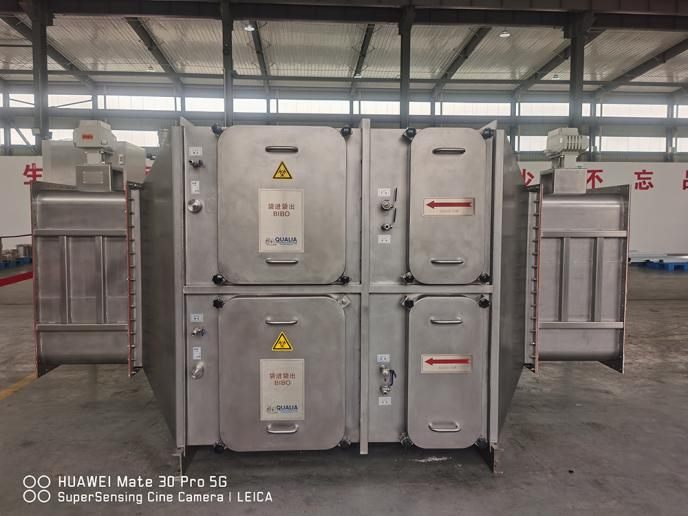 BIBO Filter HousingBag-in/bag-out HEPA housing for safe filter change in P3/P4 labs.Air Handling
Not Sure Which Design Fits Your Equipment?
Send the equipment type, internal volume, pressure rating and connection points. Our engineers will recommend a pulsed-vacuum or recirculating configuration.