








Isolator Leak Testing: The Pressure Decay Method and ISO 10648-2 Leak-Tightness Classes
An isolator is only as good as its enclosure. Whether it protects a sterile product (positive pressure) or protects operators from a potent compound (negative pressure), the barrier has to be demonstrably tight. This guide explains how isolator leak tightness is defined, how the pressure decay test works, how to read the ISO 10648-2 leak-tightness classes, and why temperature is the variable that decides whether a leak test means anything.
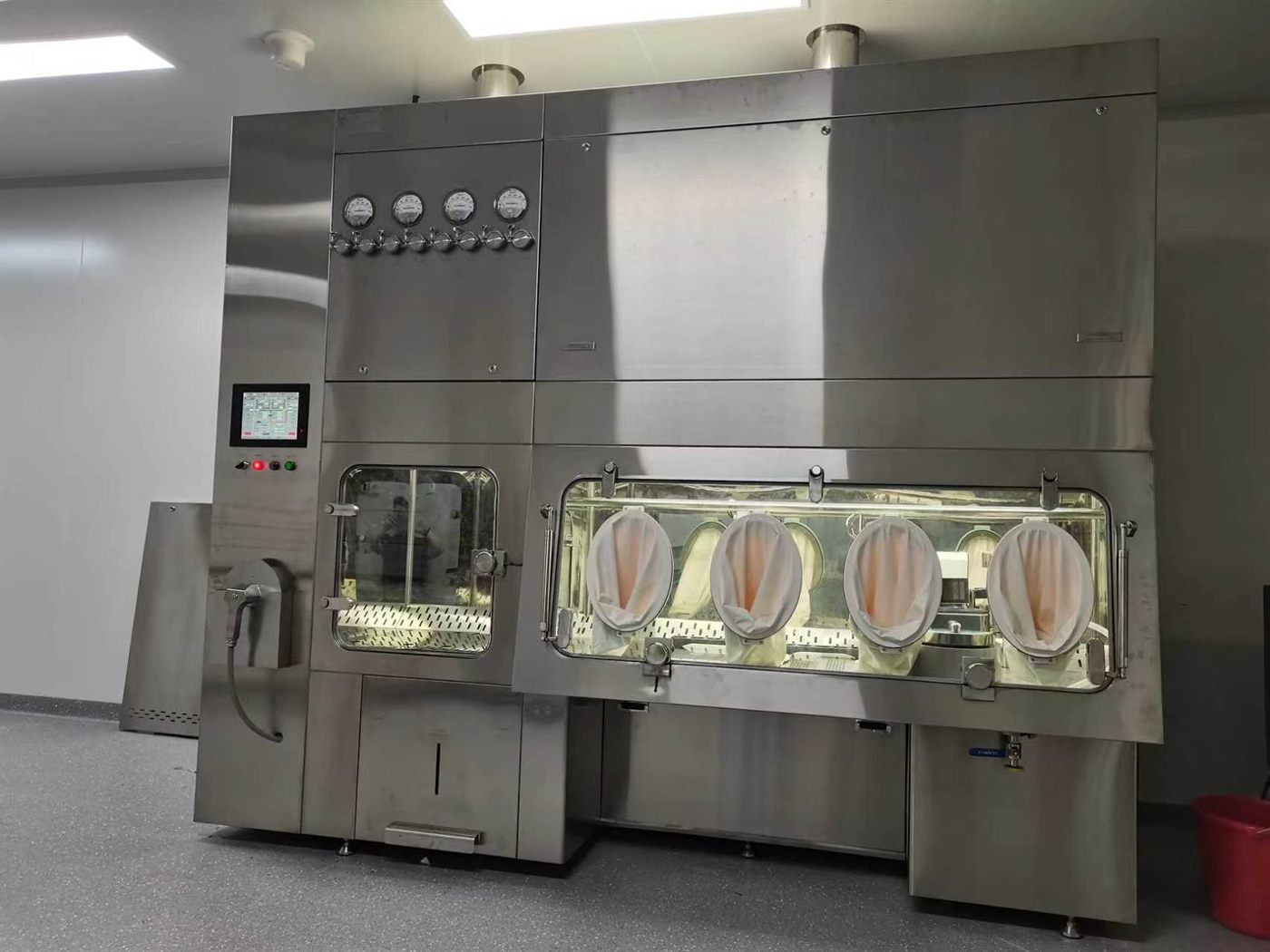
Why Leak Tightness Matters
An isolator (also called a barrier isolator, containment glovebox or closed isolator) separates the process from the room by a physical wall and a pressure difference. If the enclosure leaks:
- Aseptic isolators rely on positive pressure to keep room air out. A large leak lets the pressure difference collapse during a door opening or a rapid glove movement, and room air can be drawn in.
- Containment isolators run at negative pressure so that any leak flows inward. An excessive leak overloads the exhaust, weakens the negative pressure and increases the chance of potent powder escaping during an upset.
- VHP biodecontamination of the chamber runs at a few hundred ppm of hydrogen peroxide. A leaking isolator exposes operators in the room and makes the decontamination cycle harder to reproduce.
EU GMP Annex 1 (2022) expects the integrity of isolators and their glove systems to be verified with appropriate methods at defined frequencies. In practice that means a chamber leak test plus a separate glove integrity programme.
Hourly Leak Rate and the ISO 10648-2 Classes
ISO 10648-2 (Containment enclosures — Part 2: Classification according to leak tightness and associated checking methods) expresses leak tightness as the hourly leak rate, Rf: the volume of gas leaking per hour divided by the volume of the enclosure. Because it is a ratio, it can be compared between a small sterility test isolator and a large filling line.
| ISO 10648-2 class | Hourly leak rate Rf (h-1) | Equivalent (% of volume per hour) |
|---|---|---|
| Class 1 | ≤ 5 × 10⁻⁴ | ≤ 0.05 %/h |
| Class 2 | ≤ 2.5 × 10⁻³ | ≤ 0.25 %/h |
| Class 3 | ≤ 1 × 10⁻² | ≤ 1 %/h |
| Class 4 | ≤ 1 × 10⁻¹ | ≤ 10 %/h |
The standard originated in the nuclear industry, where the tightest classes are common. Pharmaceutical aseptic and containment isolators are typically specified at Class 2 or better, but the required class should come from your risk assessment and user requirement specification (URS). Write the test pressure and method into the URS alongside it: a leak rate quoted without them cannot be compared.
Test Methods
| Method | How it works | Typical use |
|---|---|---|
| Pressure change (pressure decay) | Bring the sealed enclosure to a test pressure, isolate it, and record how the pressure changes over a set time. | The most common routine test for pharmaceutical isolators; easy to automate in the isolator PLC. |
| Constant pressure | Hold the enclosure at the test pressure and measure the gas flow needed to keep it there. | Larger or less rigid enclosures where pressure decay is slow to stabilise. |
| Oxygen method | Measure the rise in oxygen concentration in an enclosure filled with inert gas. | Inert-atmosphere gloveboxes. |
| Leak location (soap solution, tracer gas, ultrasonic) | Find where a leak is, rather than how large it is. | Troubleshooting after a failed test, and at FAT. |
How a Pressure Decay Test Works
A pressure decay leak test has three phases:
- Pressurise. With the isolator sealed — doors closed, transfer ports capped, gloves fitted or blanked off, inlet and exhaust valves closed — the chamber is brought to the test pressure. The test pressure is normally well above the operating pressure and is defined in the specification (for example a few hundred pascals, positive or negative).
- Stabilise. Compressing or expanding the air changes its temperature, and the flexible parts of the enclosure (gloves, sleeves, seals) relax. The pressure drifts even with no leak, so measurement only starts once this settles.
- Measure. The enclosure is isolated and the pressure change is recorded over the test time, together with chamber temperature and barometric pressure.
Calculating the hourly leak rate
For a rigid enclosure at constant temperature, the hourly leak rate follows from the pressure change relative to the absolute pressure in the chamber:
Rf ≈ (Δp / pabs) ÷ t (t in hours)
In the example above, the pressure changes by 30 Pa in 0.5 h, with an absolute chamber pressure of about 100,800 Pa (atmosphere minus 500 Pa):
Rf ≈ (30 / 100,800) ÷ 0.5 ≈ 6 × 10⁻⁴ h-1
That is just outside Class 1 (5 × 10⁻⁴) and comfortably within Class 2 (2.5 × 10⁻³). Turned around: over a 30-minute test, a Class 2 isolator may lose up to roughly 125 Pa, a Class 1 isolator only about 25 Pa.
Temperature: the Variable That Decides the Result
Because the calculation is based on absolute pressure, small temperature changes have a large effect. For trapped air, pressure is proportional to absolute temperature:
Δp ≈ pabs × ΔT / T → 101,000 Pa × 0.1 K / 293 K ≈ 35 Pa
A change of just 0.1 °C in the chamber air shifts the pressure by about 35 Pa — more than the entire Class 1 allowance over 30 minutes. A cooling chamber can make a leaking isolator look tight under positive pressure, or a tight one look leaky under negative pressure. Reliable pressure decay testing therefore needs:
- Stable room and chamber temperature: no HVAC transients, lighting or process heat changing during the test, and no hands in the gloves.
- A defined stabilisation time before the measurement window.
- Chamber temperature (and barometric pressure, for long tests) recorded with the result, and the leak rate corrected for them.
- Pressure transducers with resolution and calibration suited to differences of a few pascals.
Practical Procedure and Acceptance
| Item | Good practice |
|---|---|
| Configuration | Test in a defined state: gloves fitted (or ports blanked, if gloves are tested separately), doors and RTP alpha ports closed, valves closed. Record which. |
| Test pressure | As specified in the URS and qualification protocol; normally the same sign as operation (positive or negative) unless justified. |
| Times | Fixed stabilisation and measurement times; a longer measurement window improves resolution. |
| Acceptance | Maximum hourly leak rate (or pressure change) derived from the specified class, with a margin to the class limit. |
| Frequency | At FAT and SAT/OQ; routinely at a defined frequency; after any intervention that affects the envelope (glove change, gasket replacement, window removal); and commonly before VHP biodecontamination. |
| Trending | Trend results over time. A slowly increasing leak rate points to an ageing seal before it fails. |
Gloves Are Tested Separately
Gloves and sleeves are the most vulnerable and most frequently changed part of the envelope. A chamber leak test can miss a pinhole in a glove, because the leak it causes is small relative to the whole chamber. Glove integrity is therefore covered by its own programme: visual inspection before use, and a physical test of each glove port with a dedicated glove tester (pressure decay on the individual glove), at a frequency set by risk and use.
What Fenggu Isolators Include
Fenggu aseptic filling isolators are equipped for automatic chamber leak testing by pressure decay and glove integrity testing for the installed glove assemblies. Negative-pressure containment isolators are built for containment integrity to ISO 10648-2. The required class, test pressure and test method are confirmed in the URS and verified at FAT and on site. For selection guidance see How to Choose a Pharmaceutical Isolator and Positive vs Negative Pressure Isolators.
FAQ
What is a good leak rate for a pharmaceutical isolator?
Most pharmaceutical aseptic and containment isolators are specified at ISO 10648-2 Class 2 (hourly leak rate ≤ 2.5 × 10⁻³ h-1, or 0.25 % of volume per hour) or better. The right class follows from the risk assessment, and must be stated together with the test pressure and method.
Why does my isolator pass the leak test in the morning and fail in the afternoon?
Almost always temperature. A 0.1 °C change in chamber air temperature moves the pressure by about 35 Pa. Stabilise the temperature, keep hands out of the gloves, and correct the result for measured temperature.
Should the leak test be done before every VHP cycle?
Many sites run a pressure decay test before each VHP biodecontamination, because a leak during the cycle exposes people in the room to hydrogen peroxide. Set the frequency in your procedures based on risk.
Does the chamber leak test cover the gloves?
Only partly. A pinhole in a glove may be too small to show up in a whole-chamber test. Gloves need their own integrity programme with visual checks and a glove tester.
Related Products
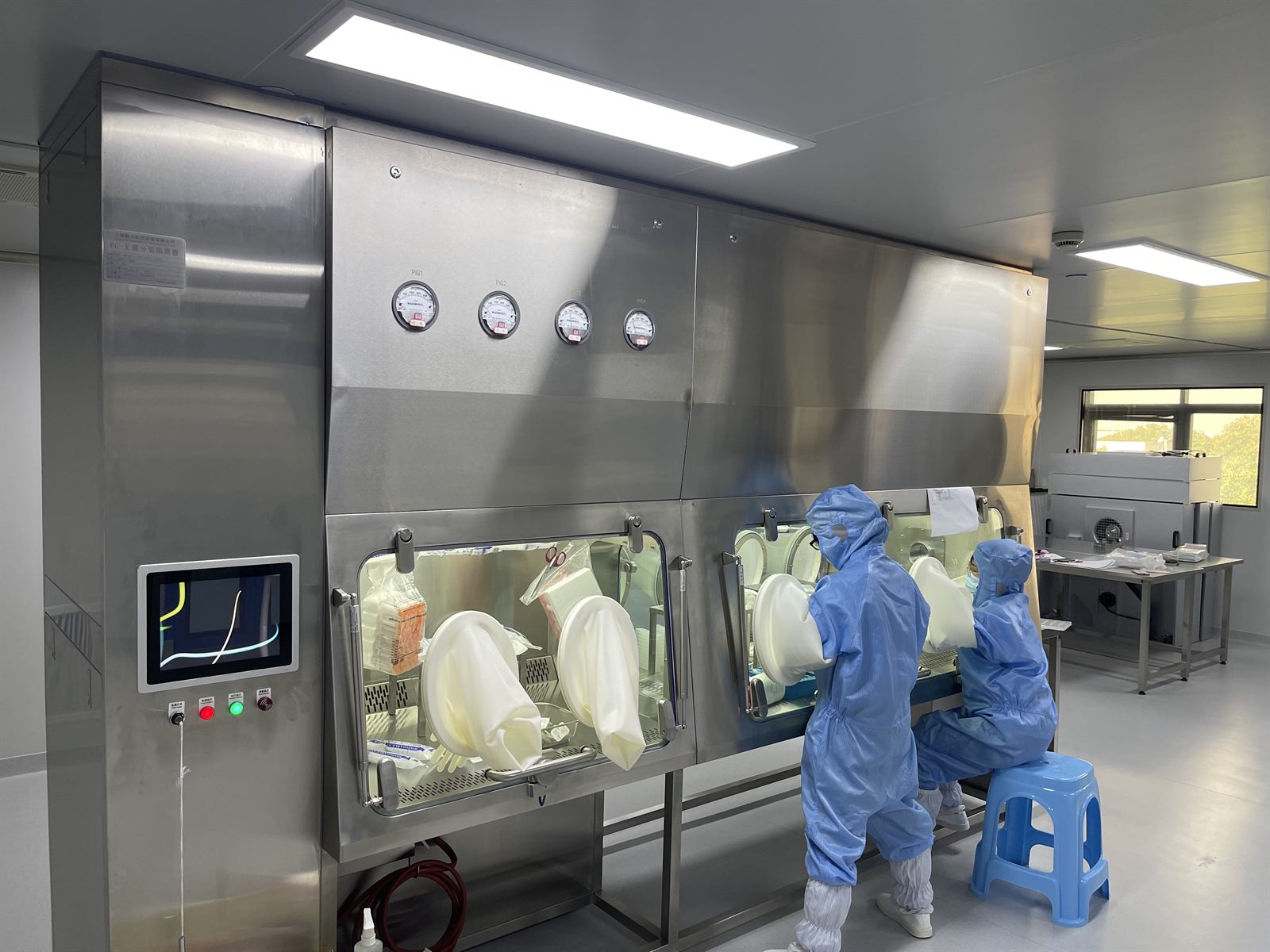 Aseptic Filling IsolatorGrade A (ISO 5) barrier for sterile filling, stoppering and capping.Isolators & Barrier
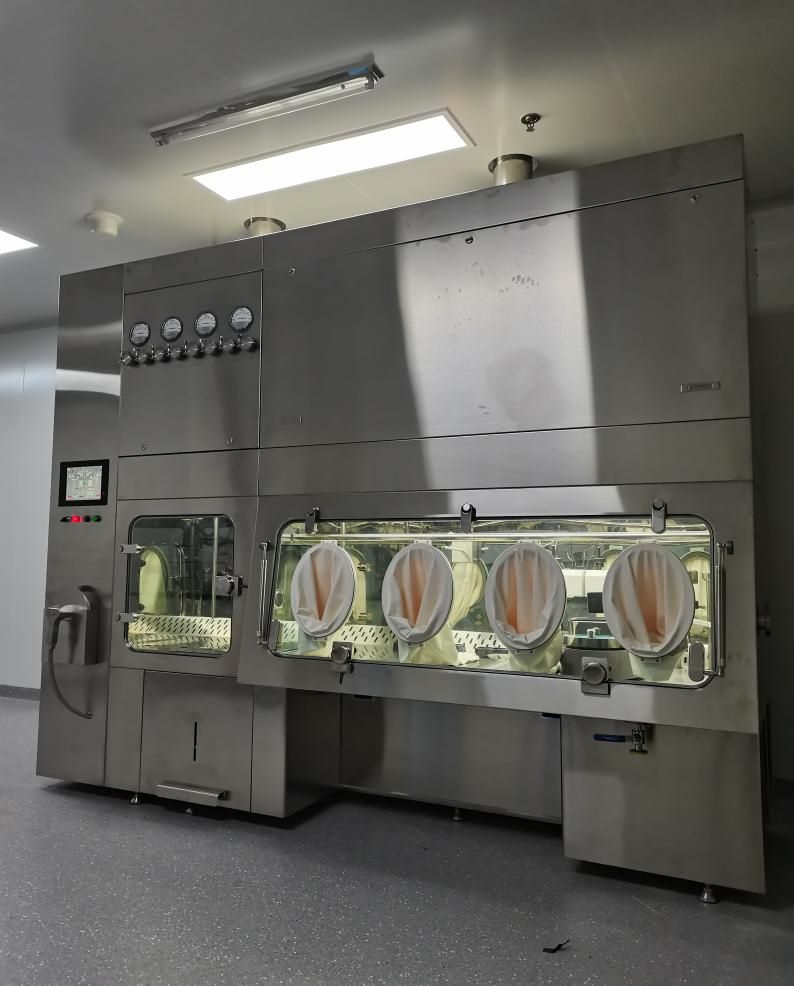 Sterility Test IsolatorGrade A barrier for pharmacopoeia sterility testing.Isolators & Barrier
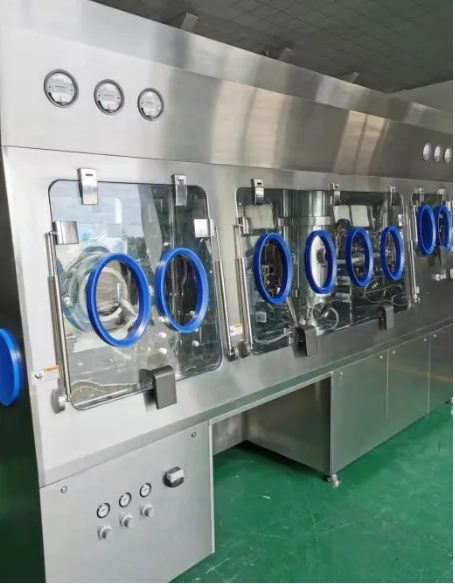 Negative Pressure IsolatorOEB5 containment at controlled negative pressure.Isolators & Barrier
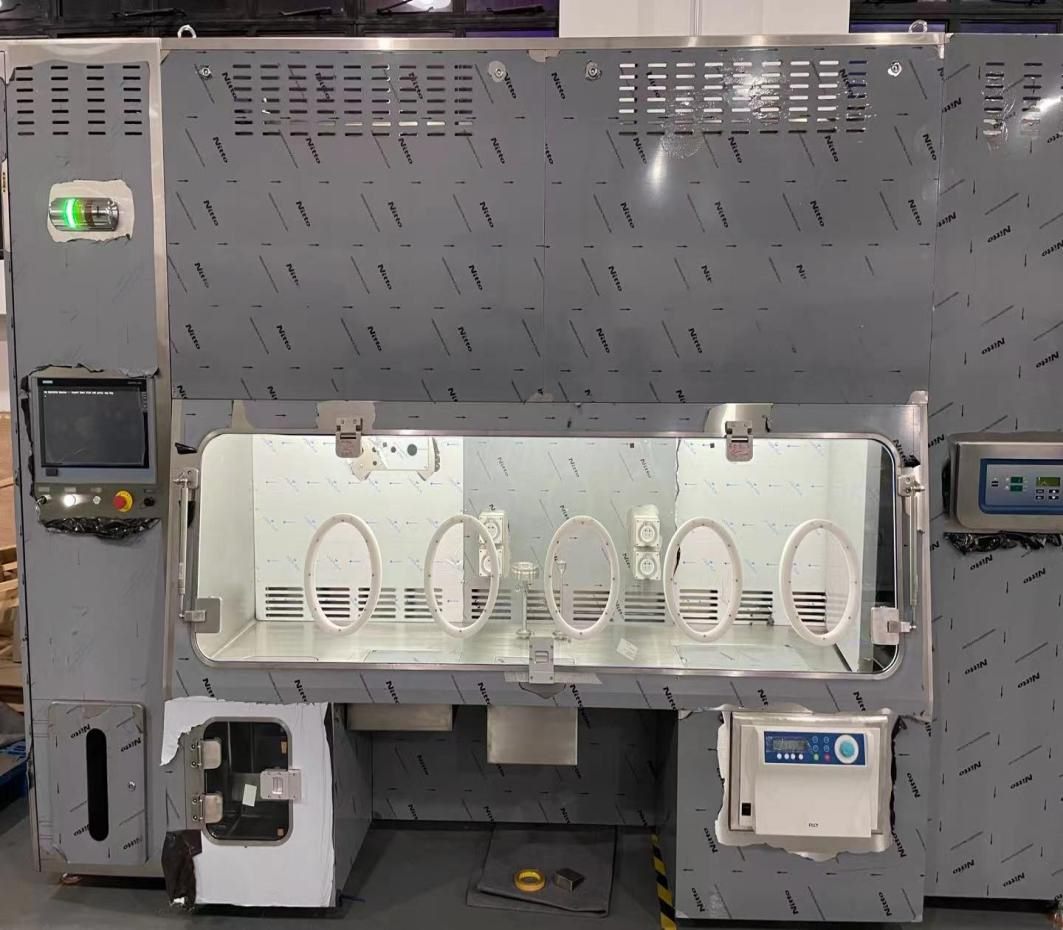 Cell Processing IsolatorClosed Grade A environment for cell-therapy processing.Isolators & Barrier
Specifying an Isolator?
Tell us the process, the required ISO 10648-2 class and test pressure, and how you plan to decontaminate the chamber. Fenggu engineers will propose the configuration and the leak-test regime.