








OEB4 / OEB5 High-Potency Containment Isolators: Negative-Pressure Isolator Selection & Applications
When you handle highly potent, highly toxic APIs (HPAPI), a trace of escaping dust can harm the operator. A high-potency containment isolator — a negative-pressure isolator — uses a sealed barrier plus controlled negative pressure to keep potent powder locked inside, delivering OEB4 or even OEB5 operator protection. This guide explains what a high-potency containment isolator is, how to choose between OEB4 and OEB5, how weighing/sampling, charging, milling and reactor applications are configured, and what to look for in a containment isolator manufacturer.
What is a high-potency containment isolator
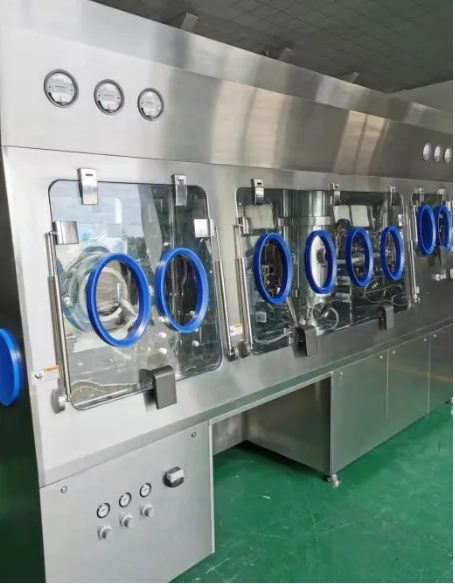
A high-potency containment isolator is a negative-pressure sealed barrier designed to handle highly potent, toxic powders. Its goal is the opposite of an aseptic isolator: an aseptic isolator is usually positive pressure to keep the outside out and protect the product; a high-potency containment isolator is negative pressure to keep dangerous dust in and protect the operator. The chamber holds a stable negative-pressure cascade so air flows inward at any gap and powder cannot escape; operators work through glove ports and never touch the material directly. For the positive-vs-negative trade-off see Positive vs Negative Pressure Isolator.
How “potent” is defined is set by the OEB (Occupational Exposure Band), which maps to the OEL (Occupational Exposure Limit). For the banding logic see OEB and OEL Explained; for what counts as an HPAPI see What Is an HPAPI.
OEB4 isolator vs OEB5 isolator: how to choose
Choosing an OEB4 isolator or an OEB5 isolator depends on the material’s exposure limit and the operator exposure level (OEL) you must reach. The higher the band, the stricter the containment integrity, transfer method and validation:
| Band | Typical OEL range | Protection emphasis |
|---|---|---|
| OEB4 containment isolator | ~1–10 µg/m³ | Sealed negative pressure + glove-port work; contained transfer for charge/discharge; routine potent work. |
| OEB5 containment isolator | < 1 µg/m³ | Tighter containment integrity, fully contained SBV/RTP transfer, gas decontamination; for the most potent / toxic material. |
Selection is not just the isolator — the whole material path must stay contained: charge, sampling, discharge and filter change must none of them break containment. Split butterfly valves play a key role — see Split Butterfly Valves Explained.
Configured by application: weighing, charging, milling, reactor
Even as one family of potent compound isolator, the configuration differs a lot by step. Below are the high-frequency applications, each with its own contained solution:
Weighing & sampling isolator
A weighing & sampling isolator / negative-pressure weighing isolator is used to weigh, sample and dispense potent raw material — the most frequent exposure. The chamber integrates a balance, a down-flow negative-pressure design controls dust, and RTP or continuous liner give contained charge/discharge. For the full approach see Contained Weighing & Dispensing of Potent APIs; for an open station use a Weighing & Dispensing Booth.
Charging isolator
Charging potent powder into a reaction system must be both contained and explosion-safe; a charging isolator completes the charge inside a sealed chamber with anti-static and inerting measures.
Milling isolator
Milling and micronization generate large volumes of fine potent powder — the hardest containment case. A milling isolator encloses the mill in a negative-pressure chamber with BIBO safe filter change to stop fines escaping; see Containment for Milling & Micronization.
Reactor charging isolator
A reactor charging isolator contains the reactor charge port so potent material enters the reaction system fully contained; see Contained Reactor Charging. For screening see Sieving & Screening Containment.
Core configuration at a glance
| Element | Detail |
|---|---|
| Pressure | Controlled negative pressure (commonly −40 to −60 Pa); air flows inward at gaps, powder does not escape. |
| Contained transfer | SBV / RTP / continuous liner for fully contained, dust-free transfer; critical at OEB5. |
| Safe filter change | Exhaust fitted with a BIBO bag-in/bag-out filter housing so no contaminated filter is touched. |
| Clean / decon | WIP wash-in-place or VHP gas decontamination for batch changeover and maintenance. |
| Construction | 316L stainless, radiused crevice-free interior, ergonomic glove-port layout. |
| Also called | High-potency containment isolator, negative-pressure isolator, OEB4/OEB5 isolator, HPAPI isolator, potent compound isolator. |
Where an integral primary-containment build is needed, see Rigid Isolators for Primary Containment.
What to look for in a containment isolator manufacturer
Choosing an OEB5 containment isolator manufacturer / negative-pressure isolator supplier is not just “can they build a box.” The key is whether it can be configured to your material’s OEB band and step, whether it offers a fully contained transfer solution, and whether it can verify the achieved operator exposure with surface sampling (SMEPAC). A sound HPAPI isolator, whether for lab or production, is designed back from your material risk and process flow and provides validatable evidence of protection — not a standard box handed over.
FAQ
Does a high-potency isolator have to be negative pressure?
To protect the operator, yes. Negative pressure keeps air flowing inward, so even a small leak draws powder in rather than out. This is the opposite of a positive-pressure aseptic isolator, which protects the product.
What’s the difference between an OEB4 and OEB5 isolator?
Mainly containment integrity, how contained the transfer is, and validation rigor. OEB5 targets material below 1 µg/m³, typically requiring fully contained SBV/RTP, gas decontamination, and SMEPAC verification.
Can one isolator do milling, weighing and charging?
The principle is shared, but chamber layout, integrated equipment and transfer interfaces differ a lot by step, so units are usually configured per step rather than one-size-fits-all.
Related Products
Negative Pressure IsolatorOEB5 containment at controlled negative pressure.Isolators & Barrier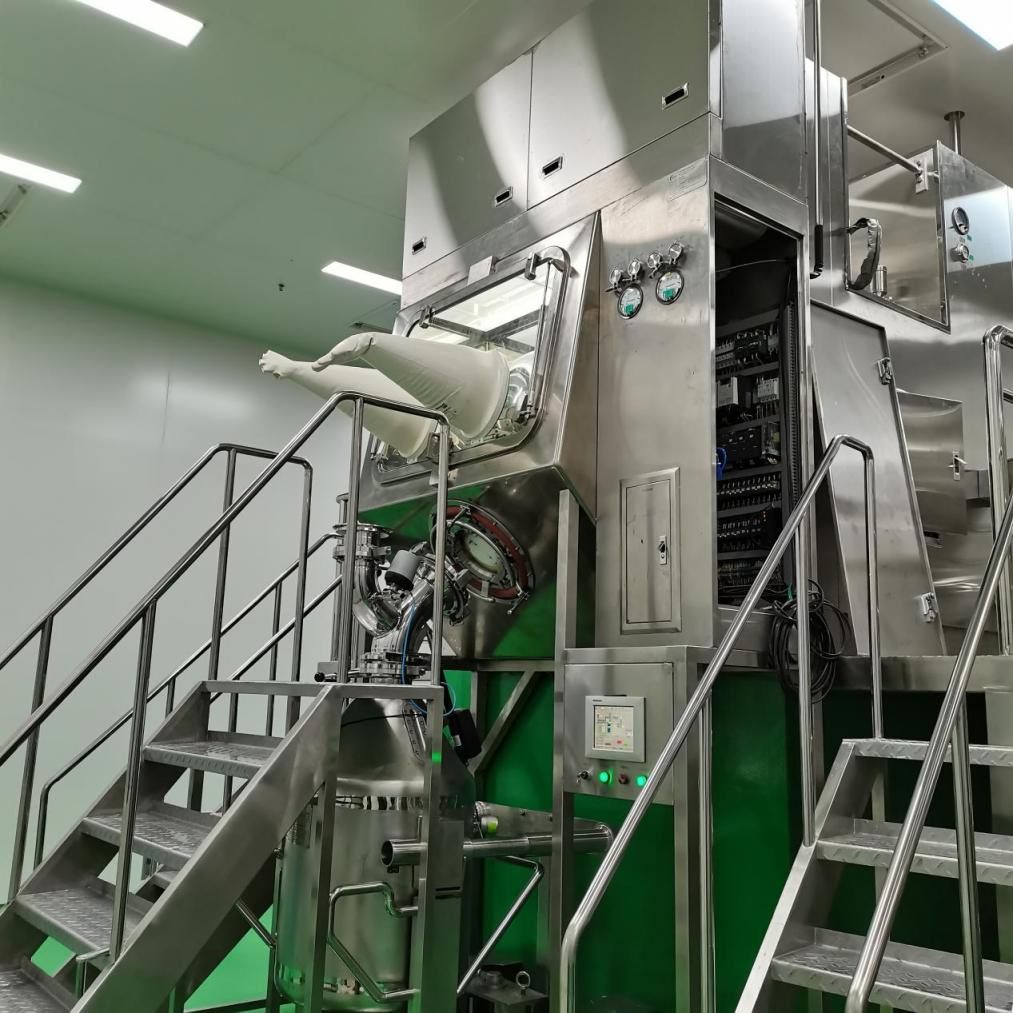 Dispensing & Containment Isolator (OEB5)Negative-pressure barrier for weighing, charging and sampling HPAPI.Isolators & Barrier
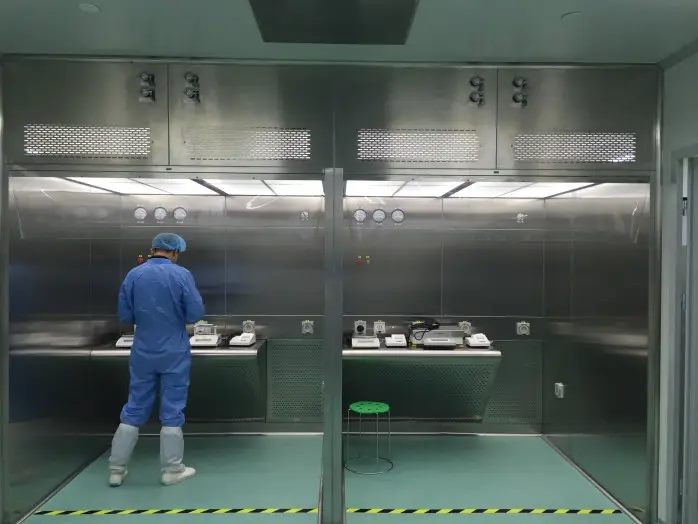 Weighing & Dispensing BoothNegative-pressure downflow booth for dust-controlled weighing.Air Handling
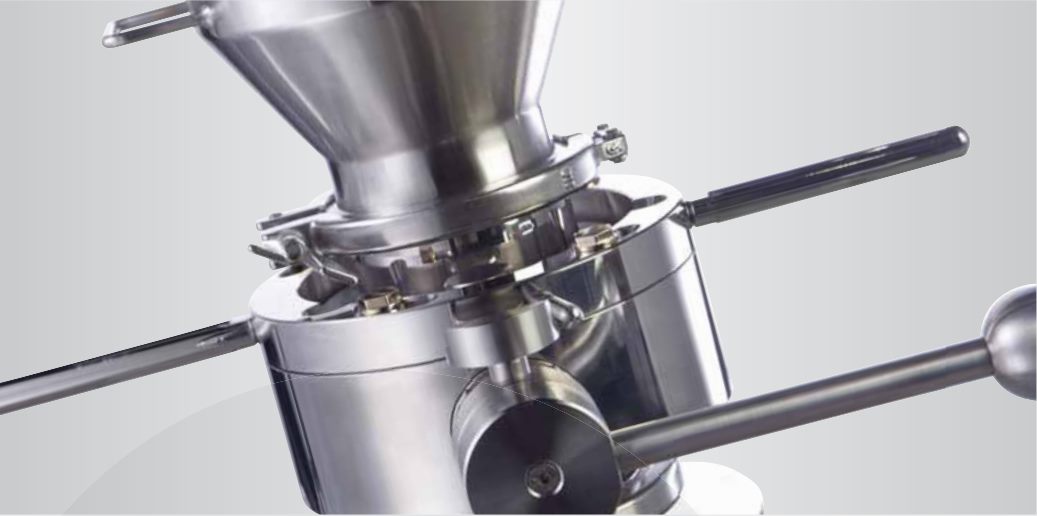 Alpha-Beta Split Butterfly ValveSplit butterfly valve for contained, dust-free transfer of potent powders.Transfer & Containment
Handling highly potent, toxic APIs?
Tell us the material’s OEB band, the step (weighing / charging / milling / reactor) and the target exposure level, and our engineers will configure a negative-pressure high-potency containment isolator — pressure, contained transfer, safe filter change and validation designed as one.