








Airtight (Gastight) Doors for VHP Sterilization & Ozone Decontamination Rooms
When a whole room is decontaminated with a gas — VHP (vaporized hydrogen peroxide) or ozone (O₃) — the cycle only works if the room actually holds the gas. That job falls to the airtight (gastight) door. A leaky door bleeds off concentration, fails the contact time, and lets the gas escape to where operators are. This guide explains why a VHP sterilization room or an ozone disinfection room needs a true gastight door, how the inflatable seal works, and how the door is built.
Why a gas-decontamination room needs a true gastight door
Room-scale gas decontamination is a concentration-and-time process: the space has to reach and hold a target gas concentration for a defined dwell so the sporicidal effect is achieved everywhere. An ordinary cleanroom door — even a good one — is not gastight; it leaks continuously. In a gas cycle that leak has three consequences:
- The cycle fails. Gas escaping through the door gap means the room never holds concentration, so the ≥6-log kill is not achieved.
- Operators are exposed. VHP and ozone are hazardous; gas leaking to the corridor is a safety problem.
- Aeration drags on. An uncontrolled boundary makes the room hard to bring back to a safe residual.
A gastight door solves all three by sealing the room’s largest opening to a leak rate low enough to validate.
The inflatable seal: gastight only when it matters
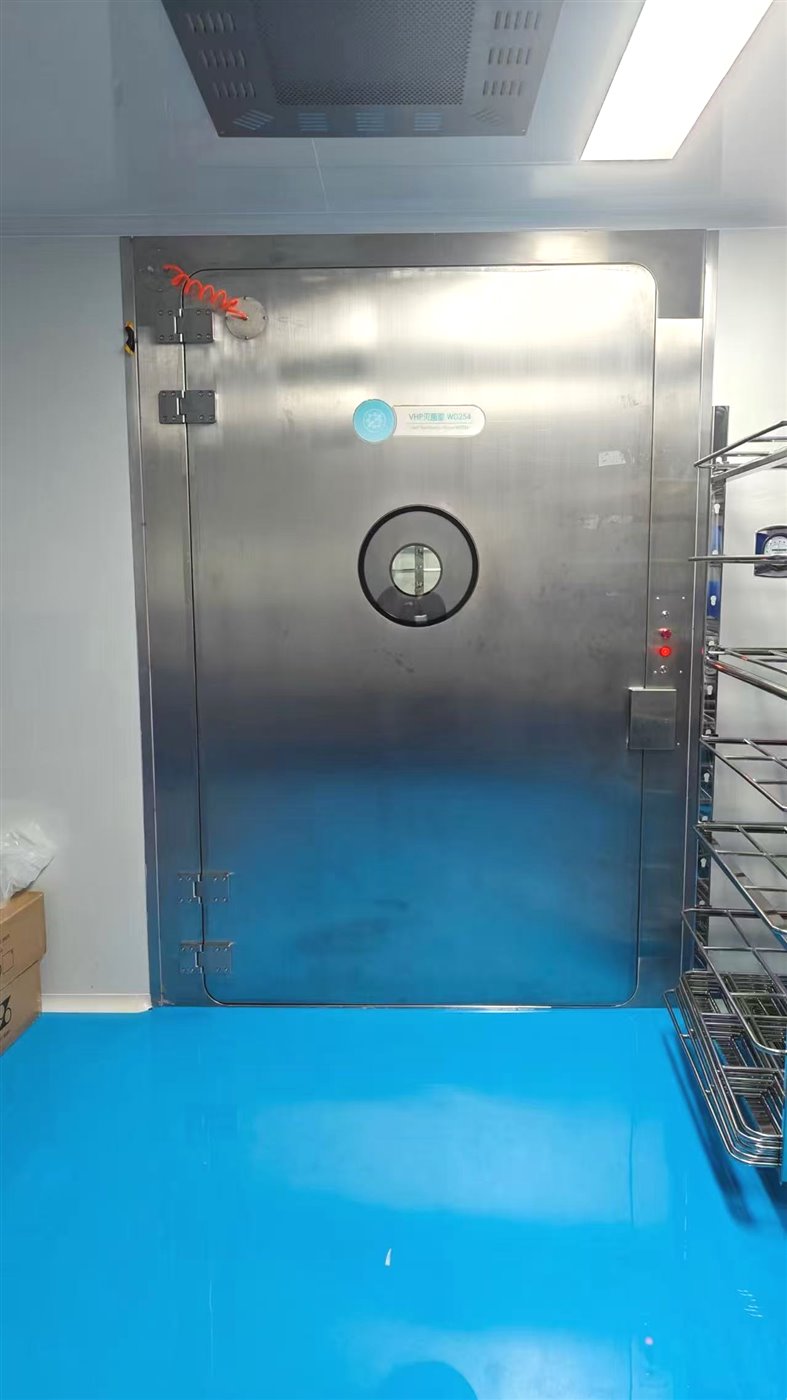
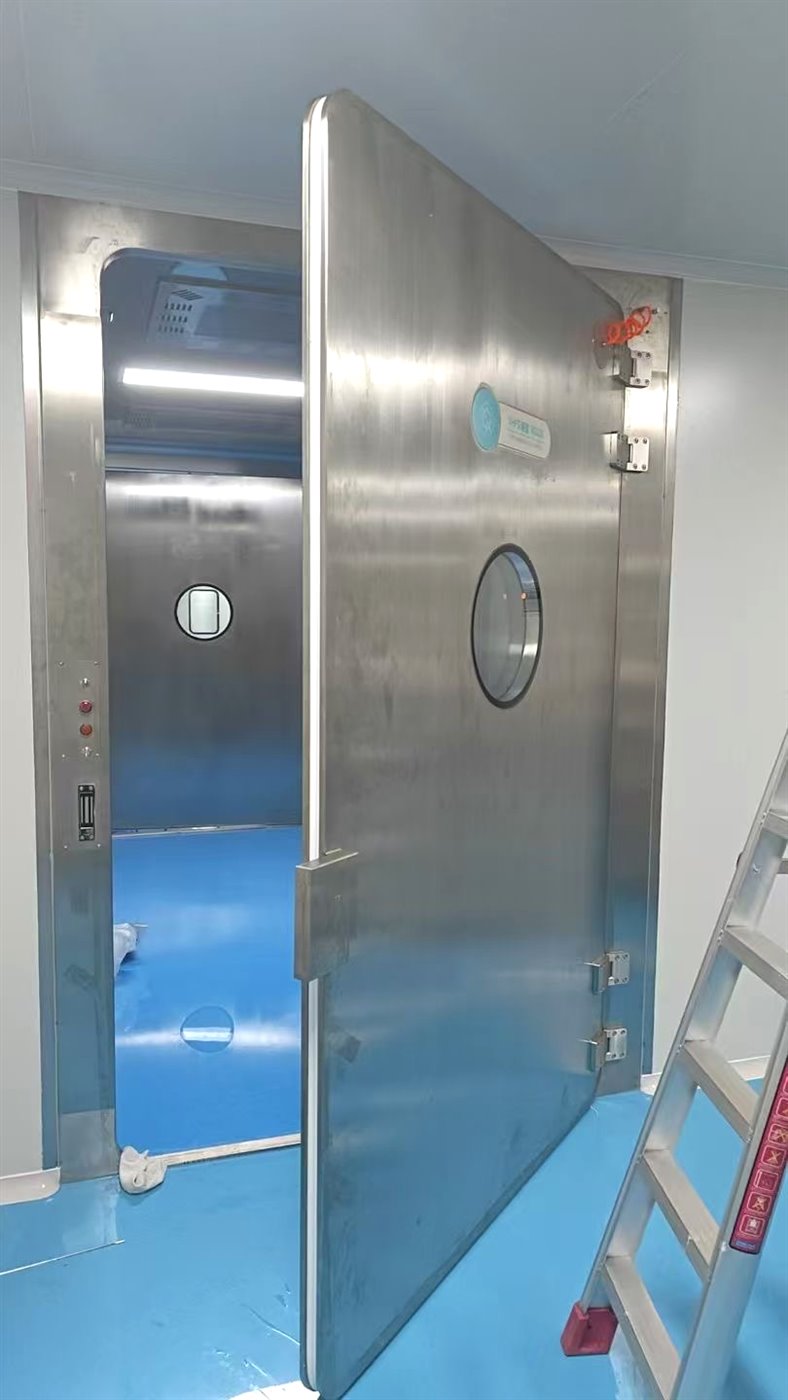
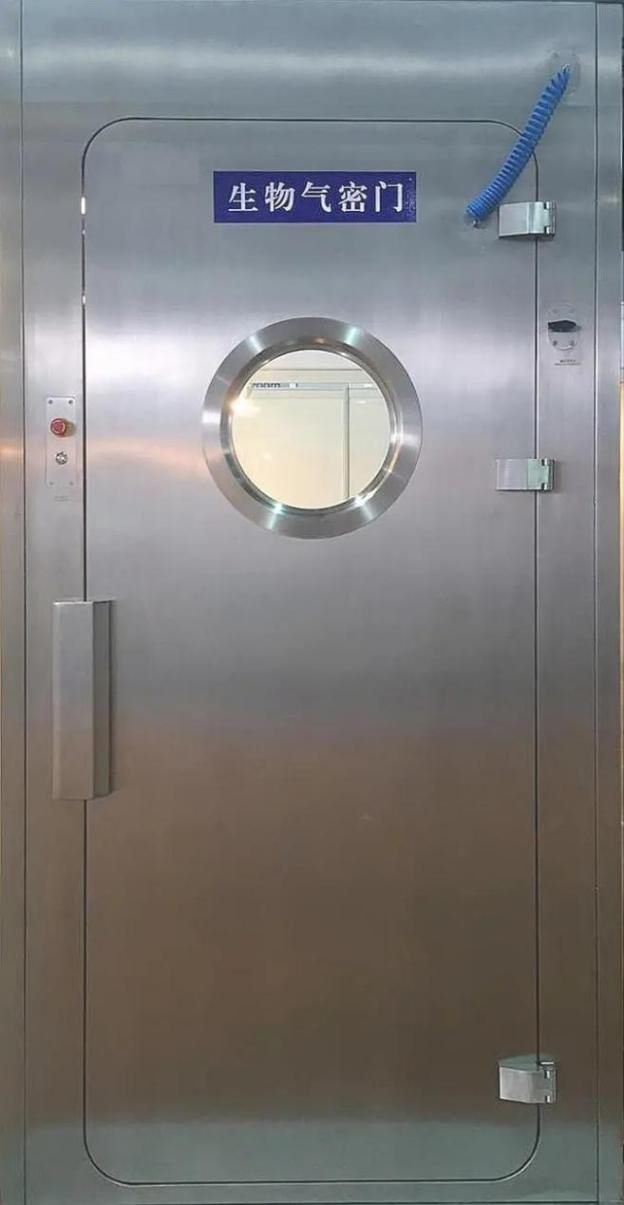
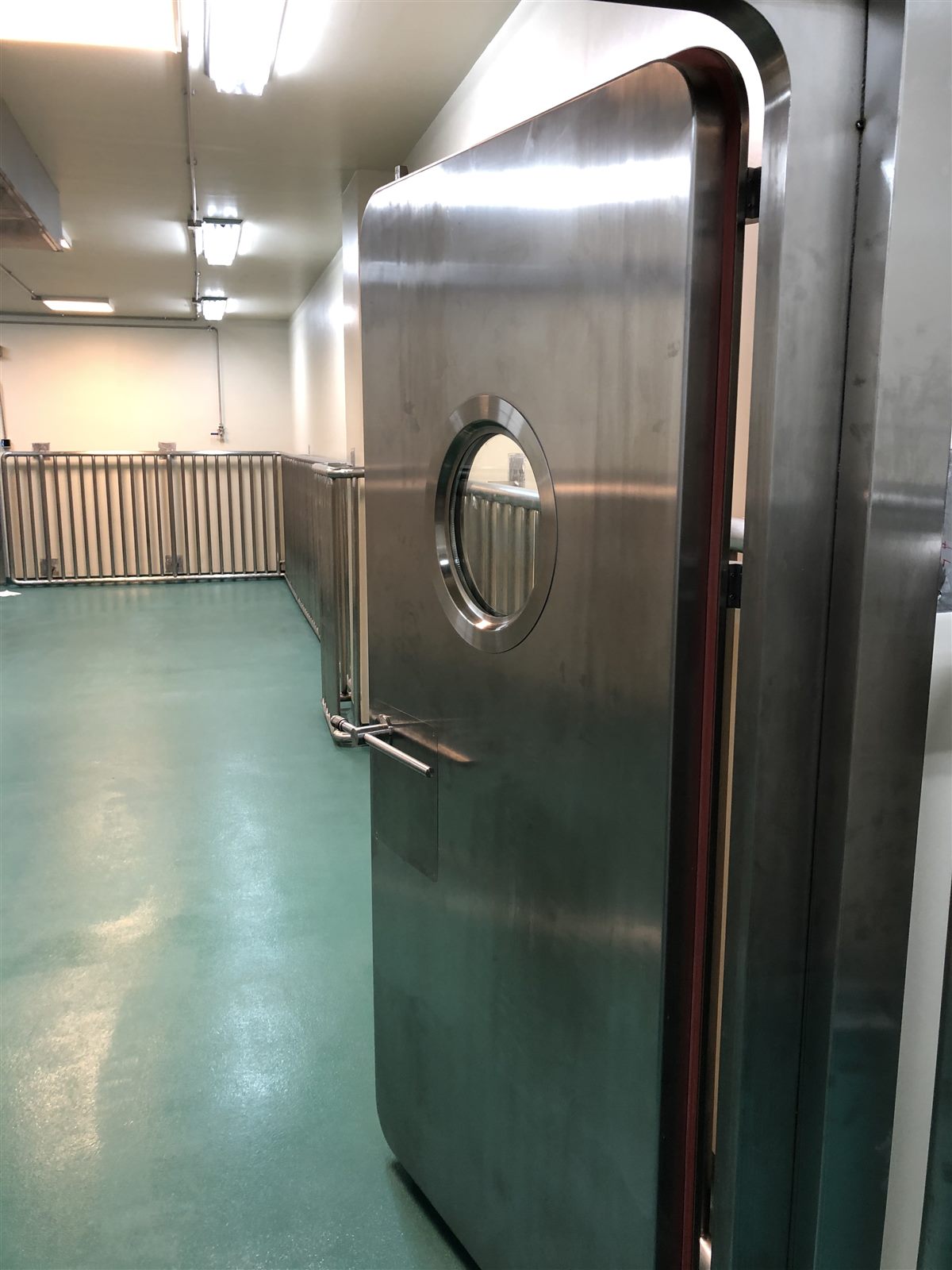
The doors in these photos use an inflatable-gasket seal — the red coiled air line at the hinge feeds a hollow silicone gasket around the door frame. During the gas cycle the gasket is inflated, pressing tight against the frame to give a gastight boundary; when the cycle ends it deflates so the door opens and closes with no wear on the seal. This is the seal of choice for rooms that are gassed regularly, because it delivers a genuine gastight closure without abrading the gasket on every use. For the full comparison with the mechanical-compression alternative, see Airtight Doors: Inflatable-Seal vs Mechanical-Compression.
VHP sterilization room doors
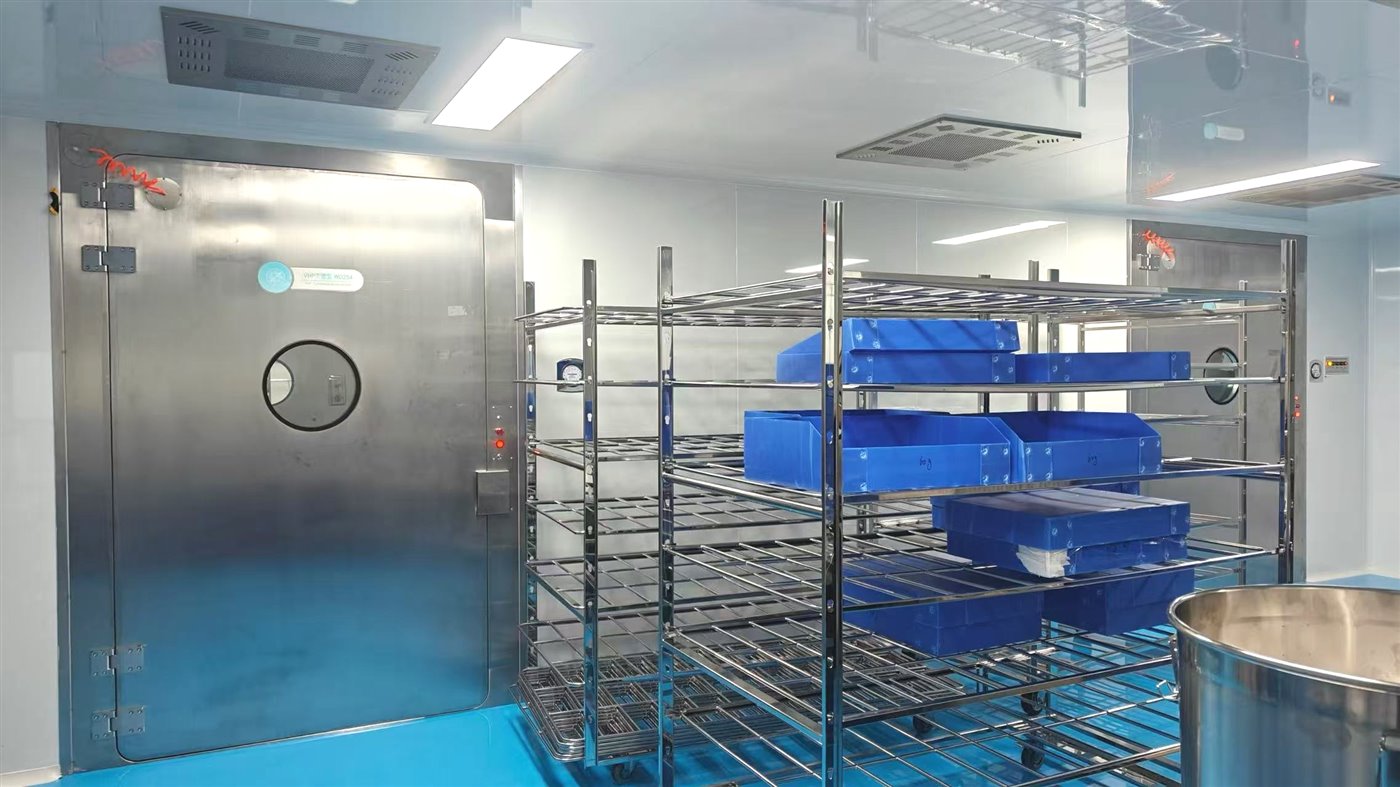
In a VHP sterilization room, the gastight door lets the space be charged with vaporised hydrogen peroxide, held at concentration through the dwell, and aerated back to ≤1 ppm — all against a sealed boundary. The door typically carries a viewing window, an interlock, and a status light, and it works in concert with the room’s VHP generator and HVAC. For how the gas itself is produced and distributed, see How a VHP Generator Works and What Is VHP Decontamination.
Ozone (O₃) disinfection room doors
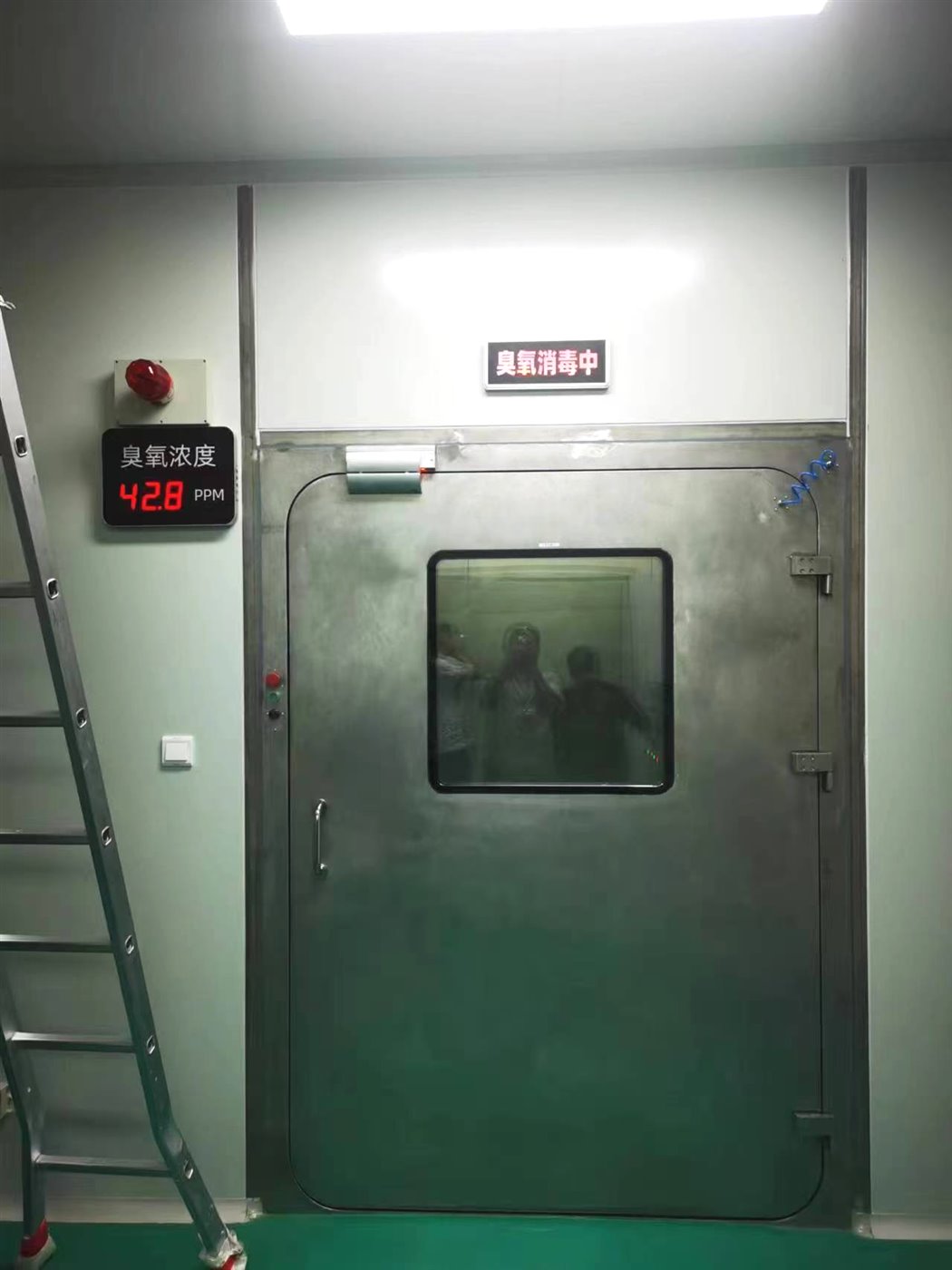
An ozone disinfection room works the same way with a different gas: ozone is generated to a target ppm, held for the dwell, then catalytically destroyed before entry. Because ozone is a strong oxidiser and a respiratory hazard, the room is fitted with an O₃ concentration display and alarm and a gastight door that holds the ozone in until the concentration is safe. The door build is the same gastight, 316L stainless design.
How the door is built
| Feature | Detail |
|---|---|
| Material | 316L / 304 stainless steel, smooth crevice-free surfaces, corrosion-resistant to VHP and ozone. |
| Seal | Inflatable silicone gasket (gastight when inflated); mechanical-compression is the alternative for less-frequent cycles. |
| Viewing window | Flush, gasketed round or square window; laminated/tempered glass. |
| Interlock | Electromechanical interlock (single or airlock pair) so the gas boundary is never breached mid-cycle. |
| Safety | Status light, gas-concentration display and alarm, emergency release. |
| Names it goes by | Airtight door, gastight door, inflatable-seal gastight door, biosafety airtight door, airlock VHP sterilization door. |
FAQ
Is an airtight cleanroom door the same as a gastight door?
No. Many “airtight” cleanroom doors only limit air leakage; a true gastight door with an inflatable seal is built to hold a hazardous gas at concentration for a validatable cycle.
Inflatable seal or mechanical compression?
Inflatable seals suit rooms gassed frequently (no wear on the gasket per cycle); mechanical compression suits lower-frequency use. See the full comparison.
Can one door serve both VHP and ozone rooms?
Yes — the gastight, 316L stainless build resists both; only the room’s generator and monitoring differ.
Related Products
 Inflatable-Seal Airtight DoorInflatable-gasket gastight door for BSL-3/4 fumigation rooms.Transfer & Containment
 Mechanical-Compression Airtight DoorMechanically clamped gastight door for BSL-2 to BSL-4.Transfer & Containment
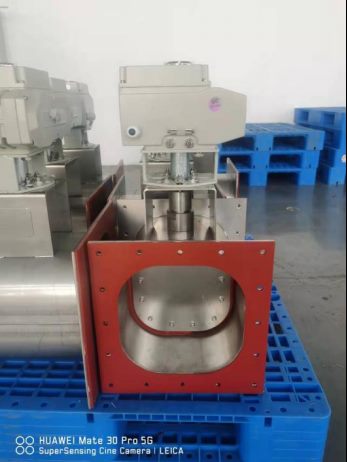 Biosafety Isolation DamperAirtight damper isolating HVAC ducts during decon and BIBO change.Transfer & Containment
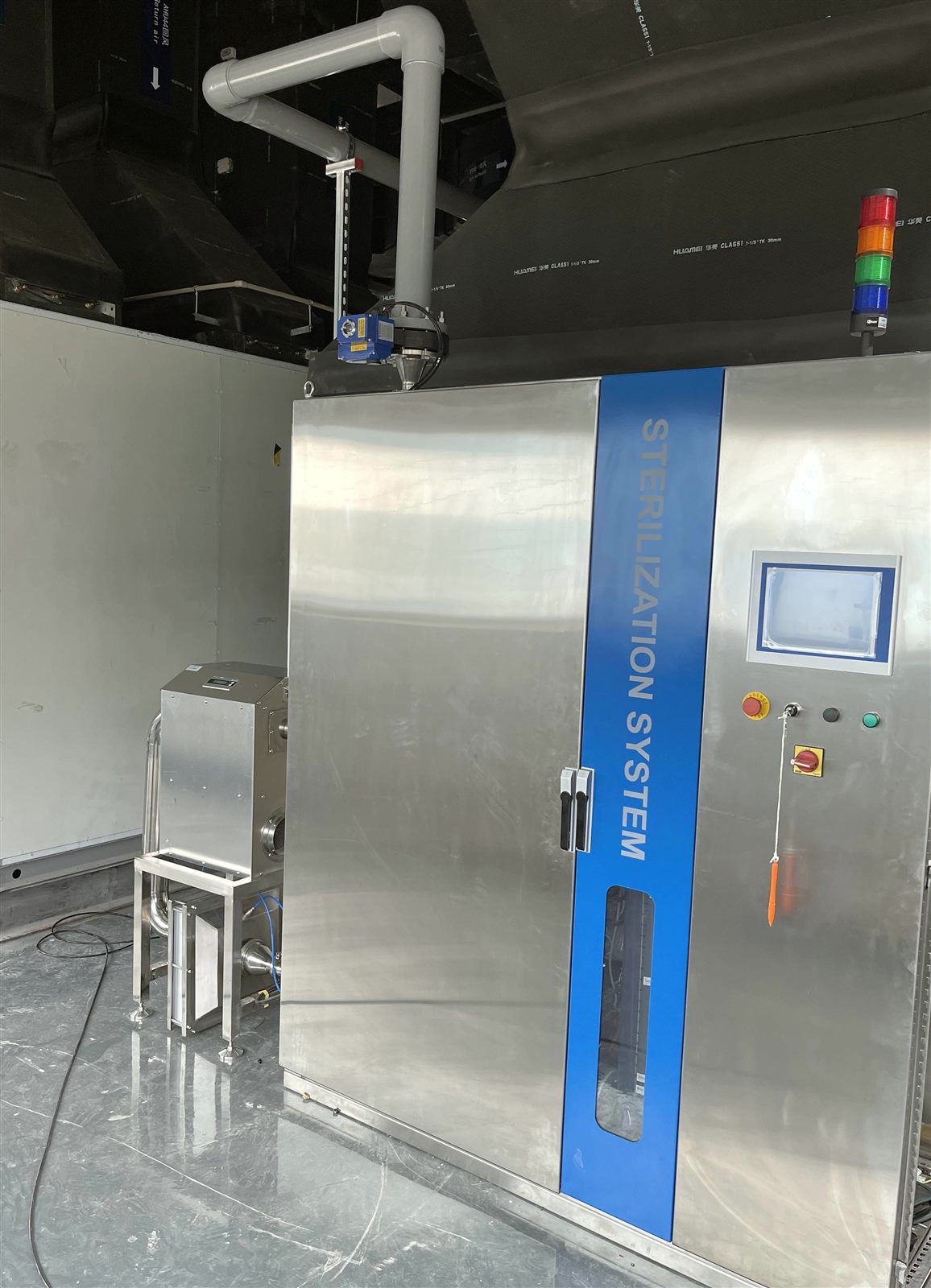 HVAC-Integrated VHP SystemCouples VHP to existing air handling to decontaminate suites and ductwork.VHP Sterilization
Sealing a VHP or ozone decontamination room?
Tell us the room, gas and cycle frequency, and our engineers will specify the gastight door — inflatable or mechanical seal, single or airlock, with interlock, window and gas-alarm integration.