








Explosion-Proof Charging Isolators: Safe Charging of Combustible Potent Powders
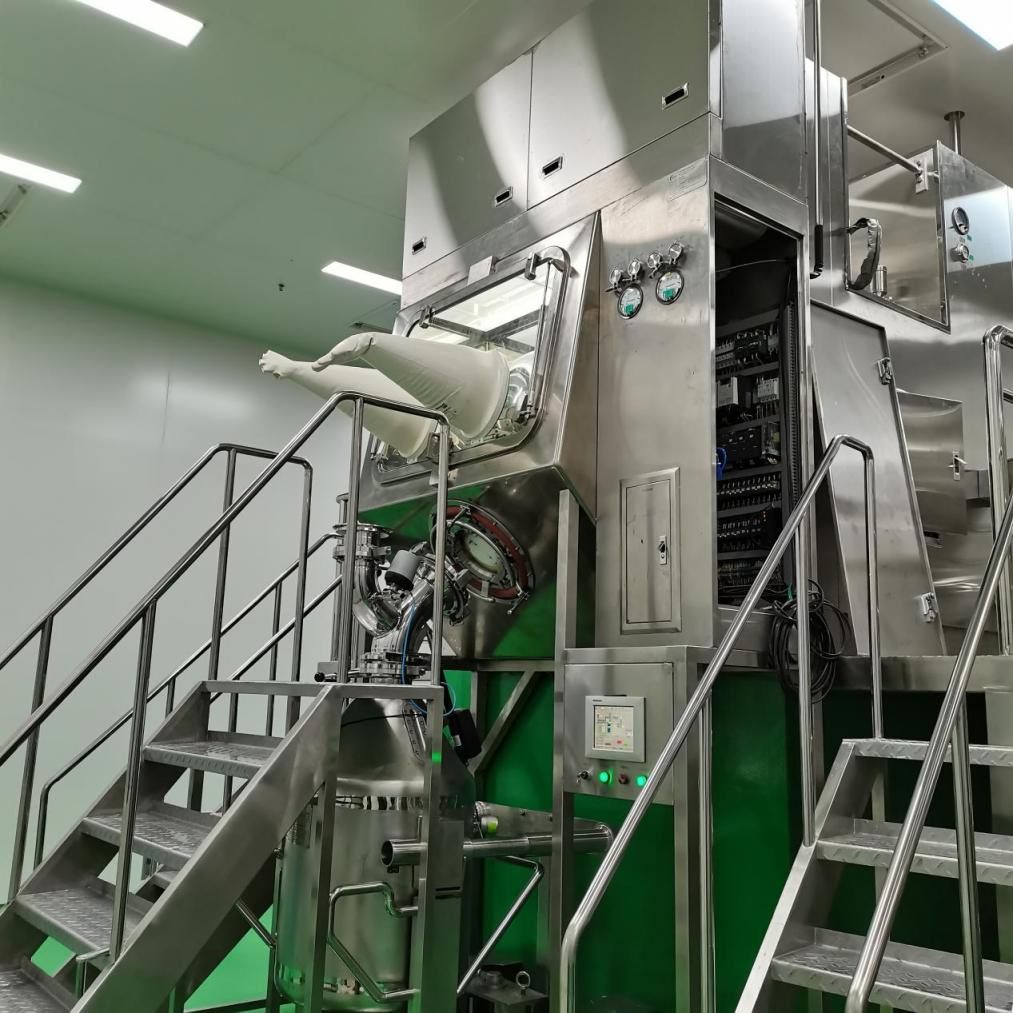
Charging a reactor, granulator or mixer with potent powder carries two stacked risks: the toxicity of the material itself, and the deflagration risk from airborne dust. An isolator built only for containment — with no explosion-protection design — still carries a hazard when the powder is combustible. An explosion-proof charging isolator solves both at once: negative-pressure containment keeps the powder from escaping, while explosion-protection structures and measures keep the dust deflagration risk under control. This guide explains the mechanics of dust explosions, the explosion-protection elements a charging isolator needs, and how it differs from a standard contained-charging setup.
Why charging needs dedicated explosion protection
Fine powder suspended in air at a certain concentration can deflagrate on contact with an ignition source — a static spark, mechanical friction, or a hot surface. Charging is one of the highest-risk moments for this: dust concentration spikes the instant powder is poured from packaging into the charge port, and the act itself — pouring, tapping the bag — readily generates static. If an isolator is designed only to “keep the powder in” without explosion protection, a combustible highly-potent powder (many HPAPIs and organic intermediates qualify) can turn that same sealed enclosure into a space where the risk is concentrated, not removed. So an explosion-proof charging isolator has to design containment and explosion safety as one system, not as two separate concerns.
Explosion-protection elements a charging isolator needs
| Element | Detail |
|---|---|
| Anti-static grounding | Chamber, charge port and drums equipotentially bonded and earthed, removing static build-up — the most common ignition source. |
| Inerting | Nitrogen or another inert gas displaces oxygen inside the chamber, pushing oxygen concentration below the limiting oxygen concentration — removing the oxidizer, not just the spark. |
| Venting / suppression | Explosion vent panels, vent ducts or a suppression system so a deflagration, if it happens, releases pressure fast and stays contained. |
| Explosion-proof electricals | Lighting, sensors and motors inside and around the chamber rated to the relevant explosion zone so the electricals themselves aren’t an ignition source. |
| Negative-pressure containment | Controlled negative pressure keeps potent powder from escaping — the same containment logic as an OEB4/OEB5 high-potency containment isolator. |
| Also called | Explosion-proof charging isolator, ATEX-rated isolator, dust explosion-proof isolator, combustible powder charging system. |
Charging method: sealed docking vs open handling
Explosion protection is the safety floor — charging still has to be contained. Common methods: dock a drum to the isolator through a split butterfly valve (SBV) for sealed charging; use a continuous liner for exposure-free transfer; or feed small batches through a rapid transfer port (RTP). These contained-transfer methods also cut dust generation, indirectly lowering deflagration risk. For the full reactor-charging picture see Contained Reactor Charging.
How it differs from a standard contained-charging isolator
A standard negative-pressure isolator solves “keep the powder in, protect the operator.” An explosion-proof charging isolator adds a second layer: “prevent the dust itself from deflagrating.” Whether you need explosion protection comes down to the material’s Minimum Ignition Energy (MIE) and dust explosion characteristics (Kst value) — if the material is a combustible powder, explosion protection isn’t optional, it’s a safety baseline.
FAQ
Does every highly potent powder need an explosion-proof charging isolator?
No — only when the material itself is dust-explosible (combustible). Pure toxicity protection can use a standard negative-pressure isolator, but a dust explosion assessment should be done first to confirm which applies.
Is inerting alone, or grounding alone, enough?
No. They address two different variables — the oxidizer and the ignition source — and standard practice is to have both; missing either leaves a gap.
Can an explosion-proof charging isolator also meet aseptic requirements?
Yes, but the explosion-protection structure (vent devices, explosion-proof electricals) and the aseptic barrier’s integrity must be designed together — tell your supplier both requirements at the outset.
Related Products
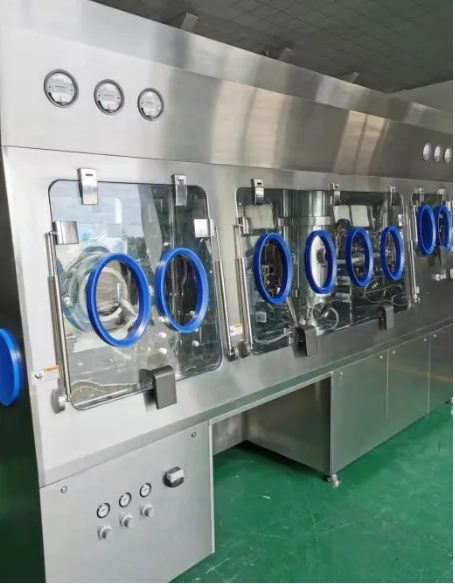 Negative Pressure IsolatorOEB5 containment at controlled negative pressure.Isolators & BarrierDispensing & Containment Isolator (OEB5)Negative-pressure barrier for weighing, charging and sampling HPAPI.Isolators & Barrier
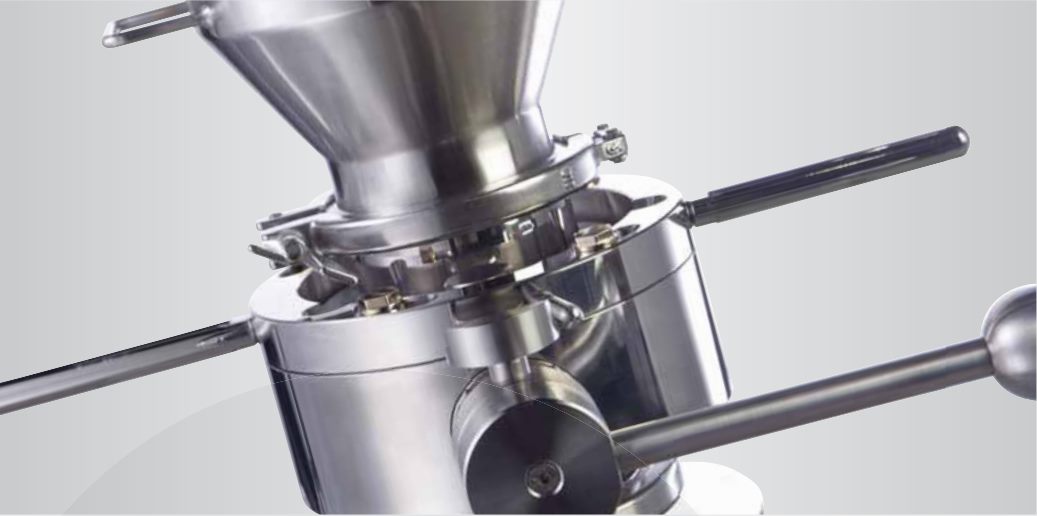 Alpha-Beta Split Butterfly ValveSplit butterfly valve for contained, dust-free transfer of potent powders.Transfer & Containment
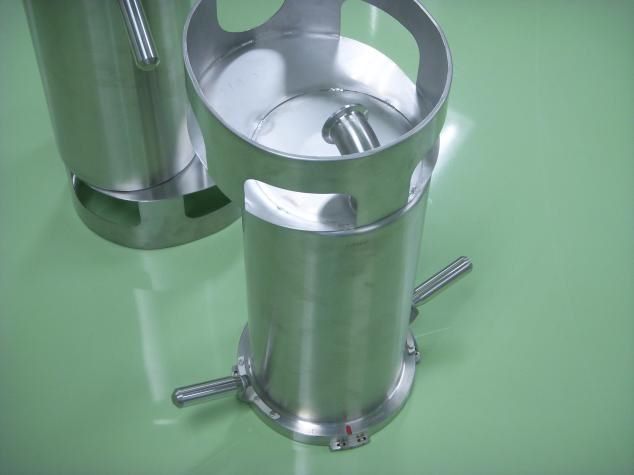 RTP — Rapid Transfer PortRapid transfer port for sterile, contained transfer into isolators.Transfer & Containment
Need contained, explosion-safe charging for combustible potent powders?
Tell us your powder’s explosion characteristics (MIE/Kst), charging method and OEB band, and Fenggu will configure an explosion-proof charging isolator — negative-pressure containment, anti-static grounding, inerting and venting designed as one.