








BIBO Filter Housing: Bag-In/Bag-Out HEPA Safe-Change Explained
A BIBO filter housing — bag-in/bag-out housing, or safe-change HEPA housing — lets a technician replace a contaminated HEPA filter without ever touching it or breathing near it. Where the exhaust carries potent drug dust, live organisms or other hazards, an ordinary filter box is a health risk at every change. This guide explains what a BIBO housing is, how the bag-out procedure actually works, how the filter is integrity-tested in place, and when your facility needs one.
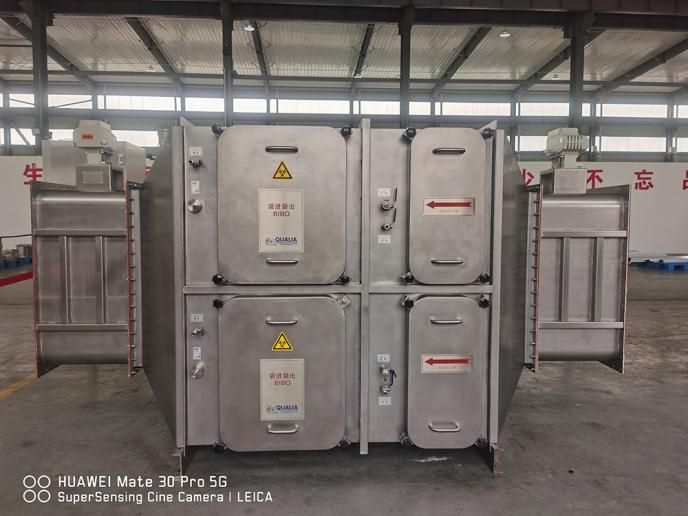
What is a BIBO filter housing?
A bag-in/bag-out (BIBO) housing is a sealed HEPA (or carbon) filter enclosure with a bagging ring around the filter access door. Instead of opening the housing to air, the technician works through a PVC containment bag clamped to that ring — pulling the spent filter into the bag and inserting the new one through a fresh bag, so the hazardous filter is never exposed. It is also called a safe-change filter housing or containment filter housing. The point is simple: the most dangerous moment in the life of a containment filter is the change, and BIBO removes the exposure from that moment.
How the bag-in/bag-out change works
The safe-change technique relies on the double-bag / double-cinch principle — the used filter is always sealed inside a bag before the bag is cut, and a sealed bag stub always remains on the ring for the next change:
How a BIBO housing is built
- Construction — welded SS304 or 316L stainless steel, smooth crevice-free interior, suitable for a contained, cleanable exhaust or supply run.
- Bagging ring — a smooth continuous ring on the access door(s) that grips the PVC change-bag; single- or multi-filter housings, with a door per filter.
- Filter seal — gasket-clamp or gel-seal, chosen for the containment class, holding the HEPA leak-tight to its frame.
- Test section — an upstream aerosol injection port and a downstream scan / sample port so the filter can be integrity-tested (DOP/PAO) in place, without breaking containment.
- Isolation option — a bubble-tight isolation damper upstream/downstream to seal the housing for VHP decontamination before a change in the highest-hazard applications.
HEPA integrity testing — why the housing matters
A HEPA filter is only as good as its installed seal. Per EN 1822, an H13 filter is ≥99.95% efficient and an H14 ≥99.995% at MPPS — but a pinhole or a bad gasket lets unfiltered, contaminated air bypass. A BIBO housing is designed so the filter can be scan-tested with a photometer (DOP/PAO) from the built-in ports after every change, proving no bypass leakage — and it can do so without exposing the technician. For the HEPA grades themselves, see HEPA H13 vs H14.
When do you need a BIBO housing?
Use a safe-change housing whenever the filter will hold something you cannot safely release at change-out:
| Application | Why BIBO |
|---|---|
| Potent / HPAPI exhaust | The filter cakes with OEB4–5 drug dust; an open change would expose the operator. Pair with a containment isolator. |
| BSL-3 / BSL-4 labs | Live pathogens on the filter; regulations require contained change plus decontamination. |
| Cytotoxic / oncology | Genotoxic residue must never reach the technician or the room. |
| Nuclear / radio-pharma | The original reason BIBO was invented — sealed removal of contaminated media. |
Where the exhaust is a HEPA terminal that also needs in-place decontamination and leak scanning, a safe-change exhaust unit combines the BIBO housing with the fan and controls. The containment level should follow the compound’s OEB band.
FAQ
Is a BIBO housing the same as a normal HEPA box?
No. A standard housing is opened to air for a filter change; a BIBO housing is changed through a sealed bag, so the contaminated filter never contacts the operator or the room.
Do I still decontaminate before a bag-out?
For the highest-hazard applications (BSL-3/4, some HPAPI), yes — isolate the housing with a bubble-tight damper and run a VHP cycle first, then bag-out. For many potent-dust exhausts the bag-out alone is the accepted control.
Can the filter be integrity-tested without opening it?
Yes — that is the purpose of the built-in upstream injection and downstream scan ports (DOP/PAO photometer testing).
Related Products
BIBO Filter HousingBag-in/bag-out HEPA housing for safe filter change in P3/P4 labs.Air Handling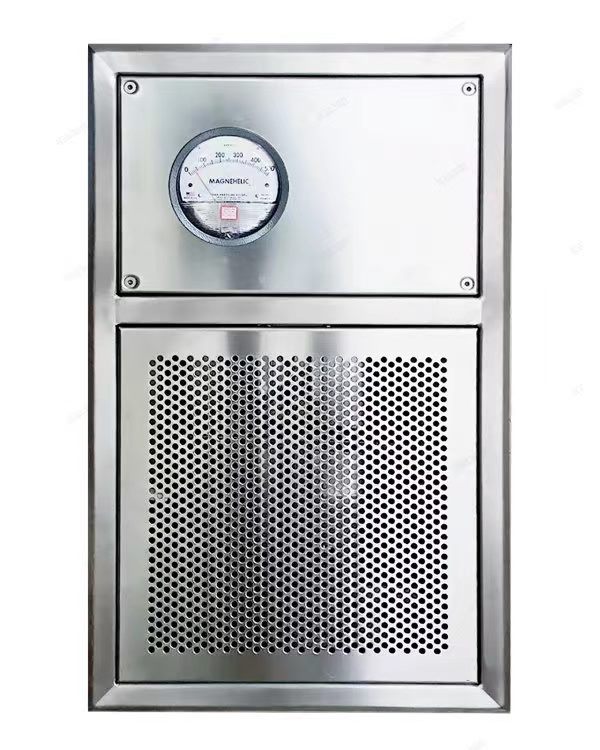 Safe-Change Exhaust UnitHEPA exhaust terminal decontaminated and leak-scanned in place.Air Handling
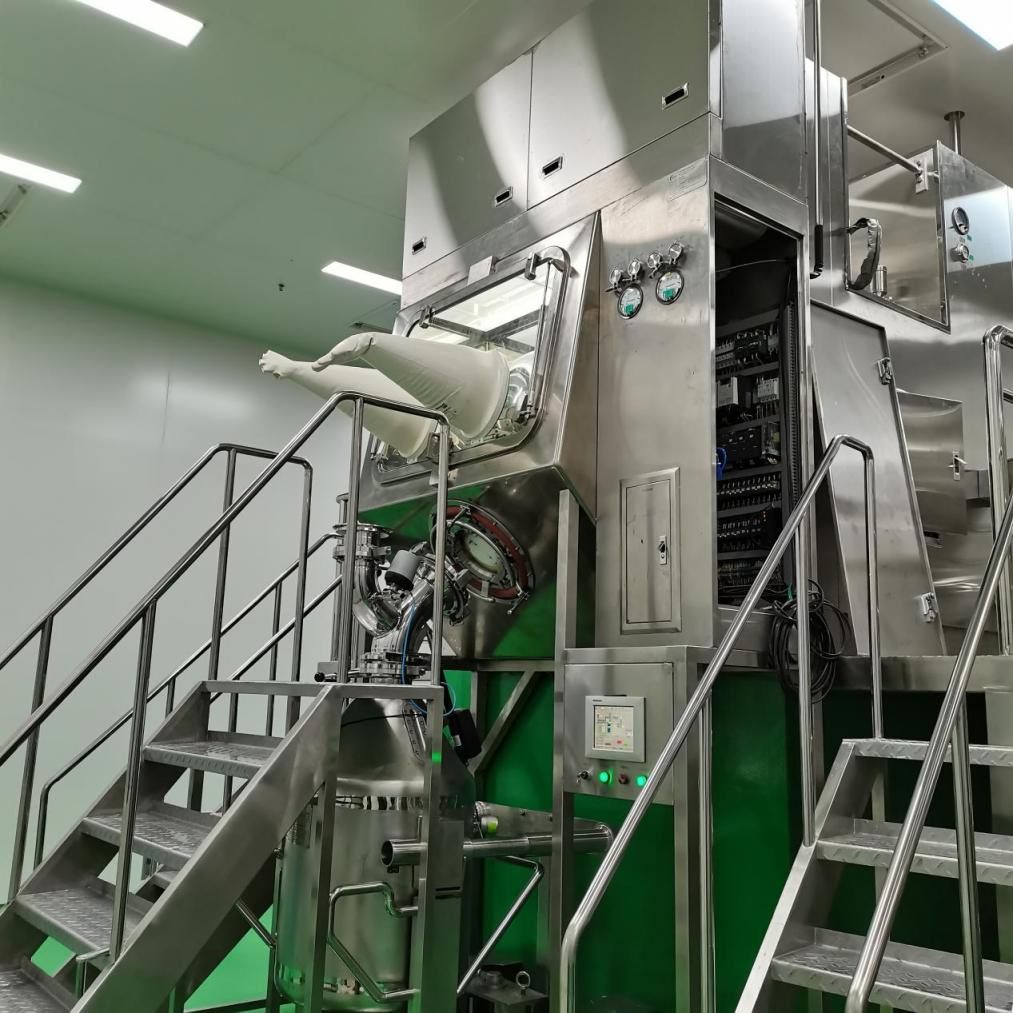 Dispensing & Containment Isolator (OEB5)Negative-pressure barrier for weighing, charging and sampling HPAPI.Isolators & Barrier
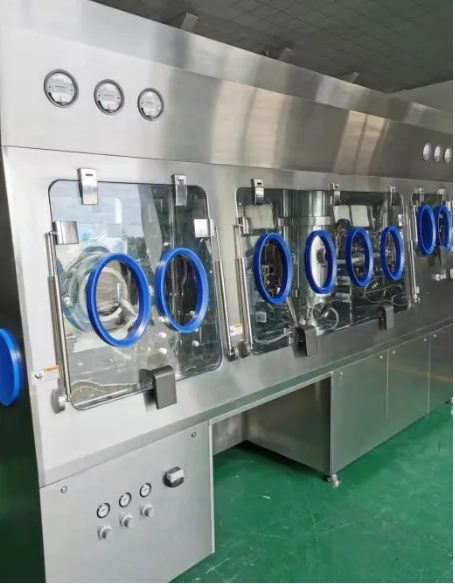 Negative Pressure IsolatorOEB5 containment at controlled negative pressure.Isolators & Barrier
Specifying a safe-change filter housing?
Tell us your airflow, HEPA grade, containment level and whether you need in-place VHP decontamination, and our engineers will size a BIBO housing — single or multi-filter, with test ports and isolation dampers.