








How a VHP Generator Works — and Integrates with Cleanroom HVAC
A VHP generator (vaporized hydrogen peroxide generator, or H₂O₂ vapour generator) turns liquid hydrogen peroxide into a dry, sporicidal vapour that decontaminates a space at low temperature and leaves nothing behind but water and oxygen. This guide explains how the generator actually works inside, why the vapour phase is so much more efficient than liquid, and — the part most articles skip — how a generator is integrated into a cleanroom’s HVAC / air-handling unit (AHU) for whole-area biodecontamination.
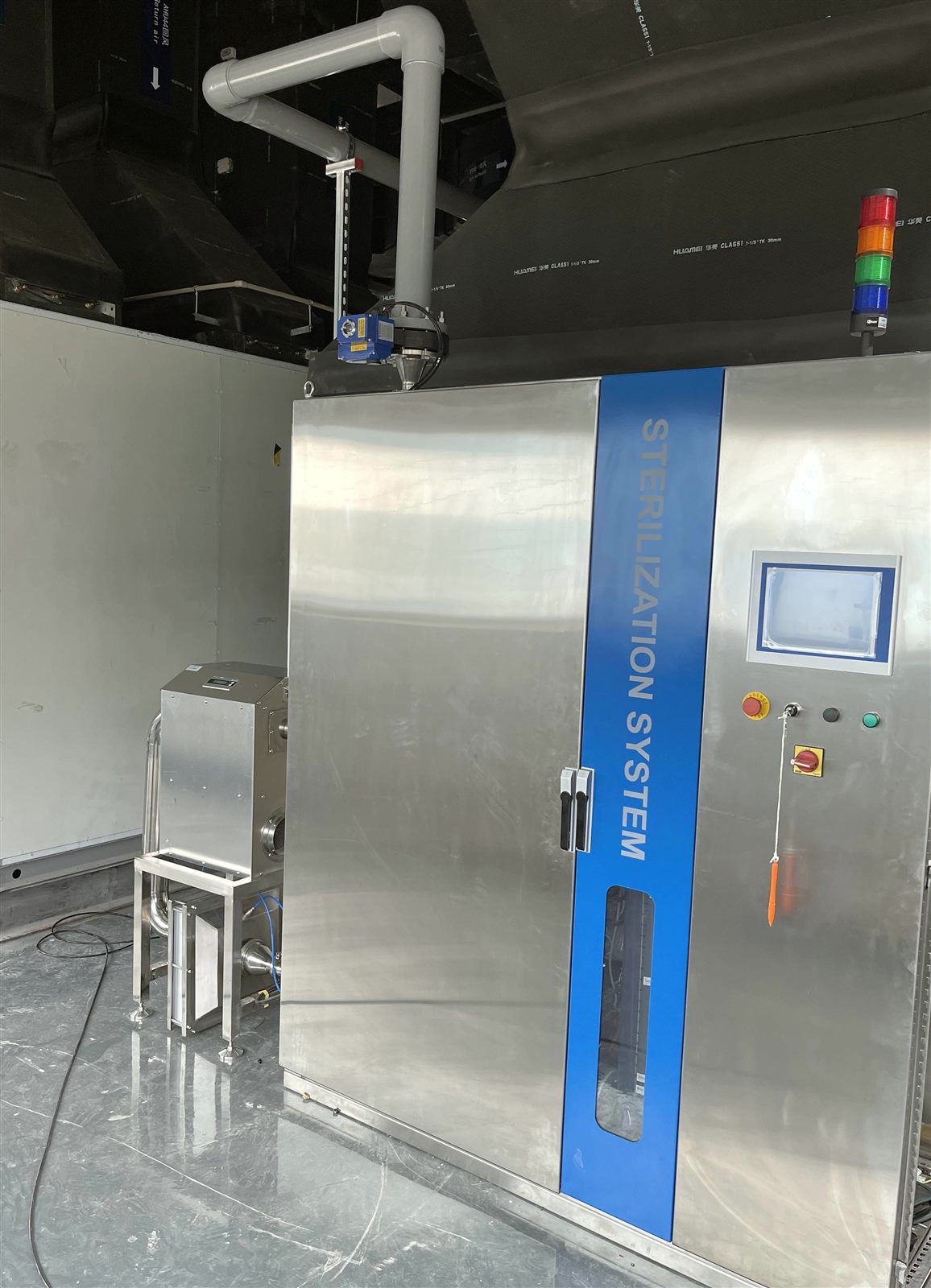
How a VHP generator works
Inside, a VHP generator runs four steps in sequence: metered injection → flash vaporization → filtration → distribution. A metering (peristaltic) pump delivers 35% hydrogen peroxide at a precise, stable rate onto a heated plate, which flash-vaporises it almost instantly into a dry vapour — instant, complete vaporization is what prevents liquid droplets and uneven concentration. The vapour passes a filter to remove any un-vaporised droplets, then a distribution system carries it evenly into the target space, with no dead corners.
The mechanism: H₂O₂ in, water and oxygen out
Vaporised hydrogen peroxide kills through hydroxyl-radical oxidation — the radicals attack the cell membrane, proteins and DNA of bacteria, fungi and spores, including the reference challenge organism Geobacillus stearothermophilus. Because it works at low temperature (roughly 30–40 °C in the space), it is safe for heat-sensitive and precision equipment. And the residue is simply water and oxygen — no toxic by-products, which is why VHP fits modern environmental and safety expectations.
Why vapour beats liquid: dry vs wet generators
The vapour phase is dramatically more efficient than liquid hydrogen peroxide — roughly the same spore kill needs a far lower vapour concentration than a liquid solution. Generators come in two philosophies:
- Dry generators fully vaporise the peroxide, keeping the space below its condensation point (no visible condensate). Best where humidity and material protection matter — isolators, electronics, precision equipment.
- Wet generators allow a controlled micro-condensation film at lower temperature, giving faster kill and lower peroxide use — suited to large rooms and airlocks.
An indicative comparison of D-values (time to a 1-log spore reduction) shows how much less vapour you need:
| Challenge organism | Liquid phase (~370 mg/L) | Vapour phase (~1–2 mg/L) |
|---|---|---|
| G. stearothermophilus | ~1.5 min | ~1–2 min |
| B. subtilis | ~2.0–7.3 min | ~0.5–1 min |
| C. sporogenes | ~0.8 min | ~0.5–1 min |
Indicative literature values — the vapour phase reaches a comparable kill at roughly a couple of mg/L, versus hundreds of mg/L as a liquid. For dry/wet selection and validation, see VHP Cycle Development & Qualification.
Integrating a VHP generator into cleanroom HVAC
An HVAC / air-handling system is itself a microbial risk: cooling coils, condensate pans and drains hold water, and filters accumulate dust and organisms. A VHP generator lets you decontaminate the whole loop — ducts, coils and room — in place, without dismantling anything. There are two integration methods:
| Supply-duct injection | Return-duct injection | |
|---|---|---|
| How it works | Vapour is injected into the supply duct and carried with the airflow across the whole cleanroom. | Vapour is injected into the return duct, decontaminating the returned air before it is sent back. |
| Best for | Whole-area, uniform decontamination of large cleanrooms. | Small rooms or local zones needing frequent decontamination. |
In both cases the cycle runs the same phases as any VHP program — dehumidification → gassing → dwell → aeration — and can be run while the biopharmaceutical cleanroom’s temperature, humidity, pressure cascade and ISO class are held by the HVAC. For the room requirements themselves, see EU GMP Annex 1 and ISO 14644 Classification. To choose between a portable unit and a permanently integrated one, see How to Choose a VHP Generator: Portable vs Integrated.
Selection, installation & safety
- Output vs volume — the generator’s vapour output must match the room/loop volume and the required cycle frequency.
- Placement — install close to the target zone, in the supply or return duct, with even distribution and no dead corners; keep it accessible for service.
- Corrosion-resistant build — stainless steel or peroxide-rated materials, because hydrogen peroxide is corrosive; seals and sensors are wear items.
- Safety interlocks — leak alarm, high-concentration alarm and automatic shut-off; validated aeration to a safe residual before any door opens (air ≤1 ppm).
- HVAC compatibility — confirm the AHU air volume/pressure suits the generator, and that the control systems can co-ordinate the cycle.
FAQ
Can VHP decontaminate an HVAC system without shutting it down?
Yes — that is a key advantage. A generator tied into the supply or return duct can decontaminate ducts, coils and the room in place, controlling microbial growth that cleaning alone can miss.
Is there any residue?
No toxic residue — H₂O₂ decomposes to water and oxygen. A validated aeration phase purges the space to ≤1 ppm before re-entry.
Dry or wet generator for an isolator?
Dry — no condensation protects the electronics, coatings and seals inside. Wet generators suit large rooms where speed matters more.
Related Products
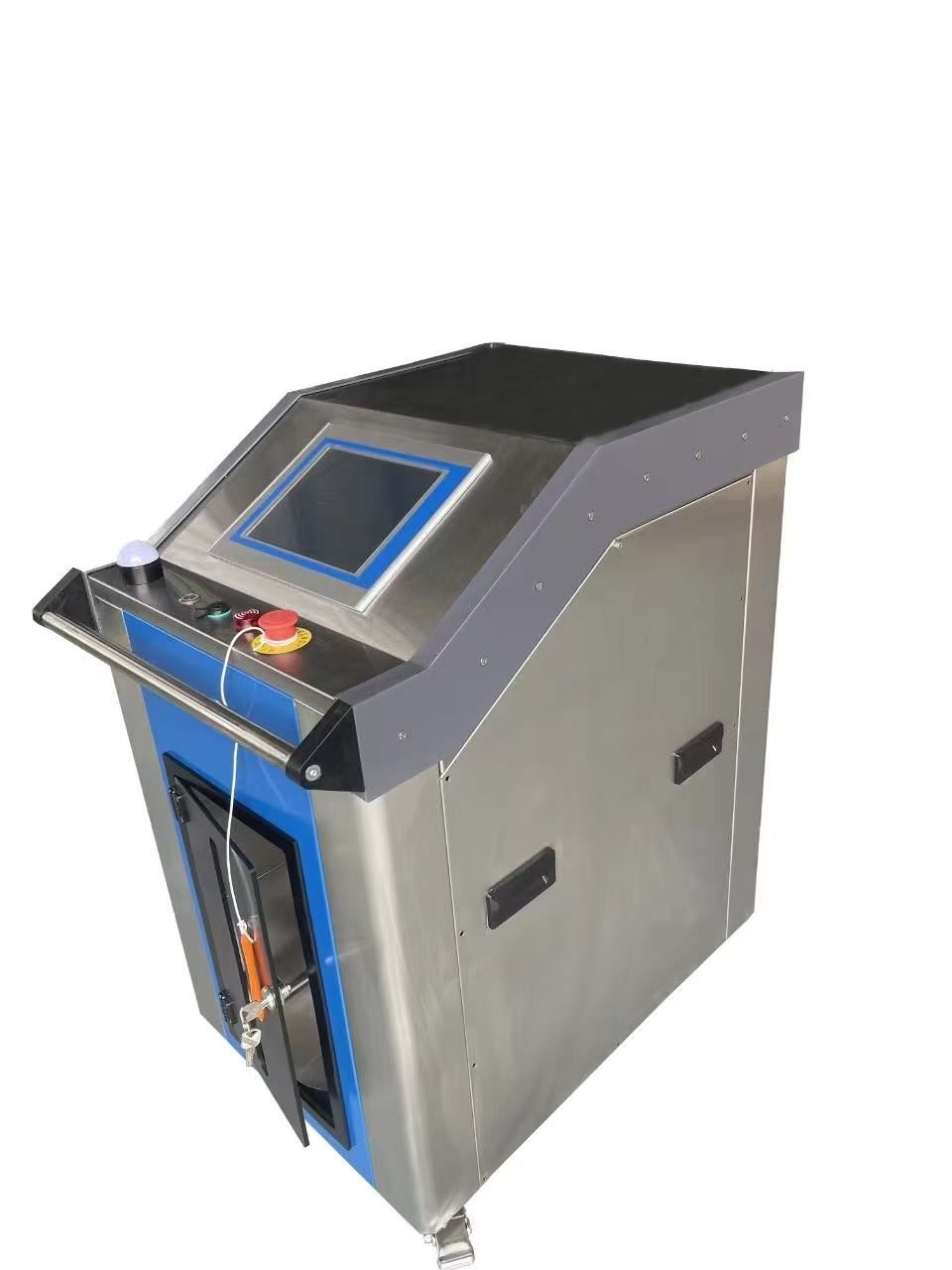 Pulsed-Vacuum VHP GeneratorPulsed-vacuum cycling drives VHP into hard-to-reach equipment interiors.VHP Sterilization
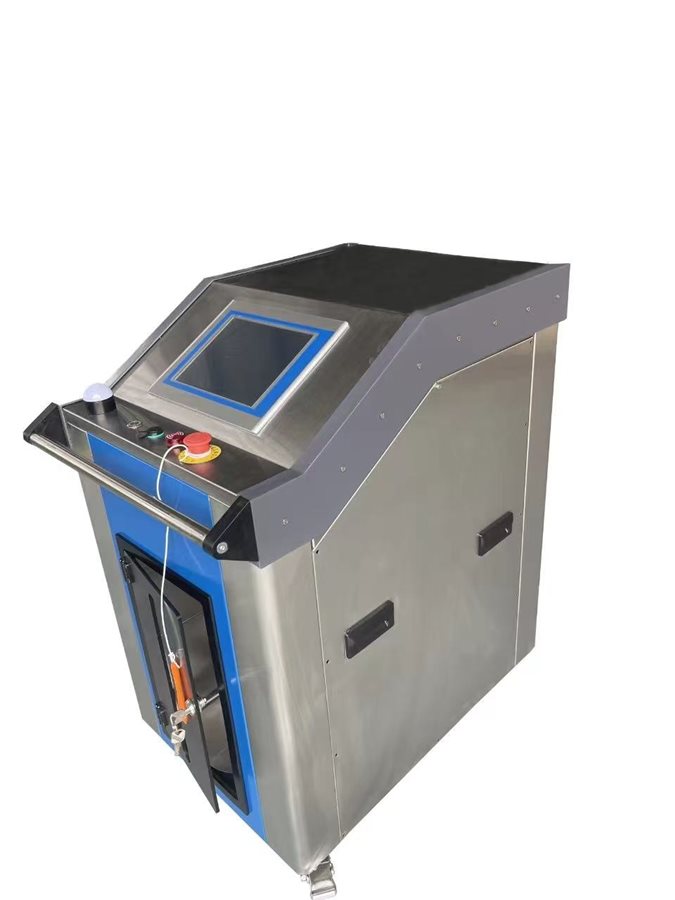 Recirculating VHP GeneratorRecirculating VHP for interior decon of BSCs, lyophilizers and fermenters.VHP SterilizationHVAC-Integrated VHP SystemCouples VHP to existing air handling to decontaminate suites and ductwork.VHP Sterilization
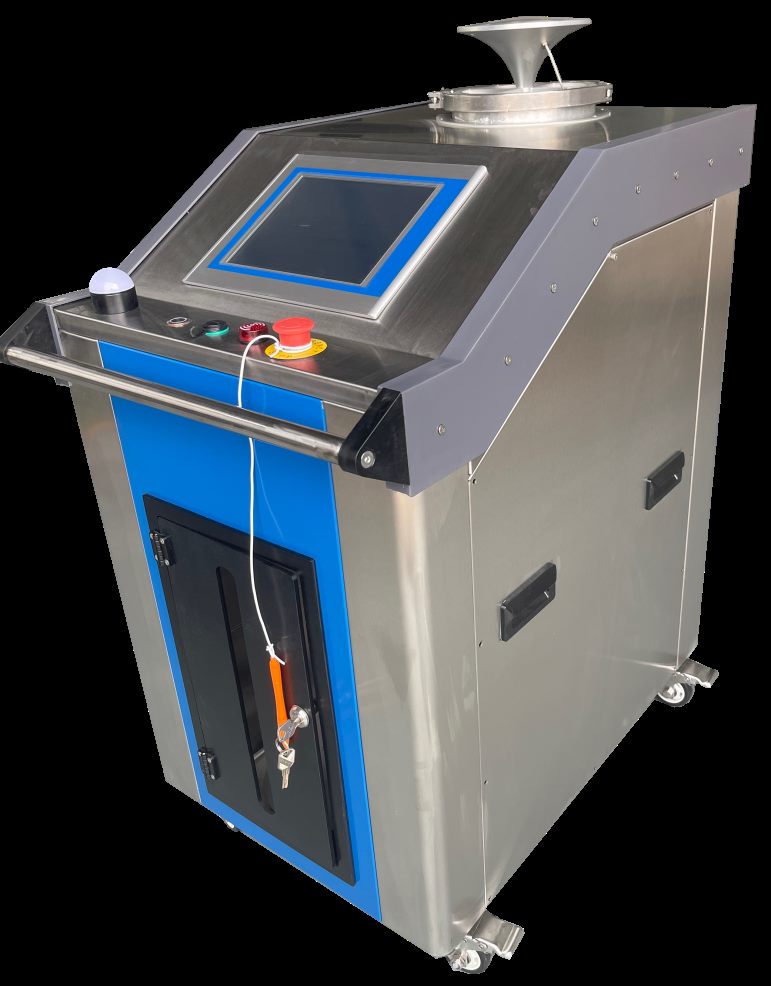 Mobile VHP Room SterilizerWheeled unit bio-decontaminating rooms up to 300 m³.VHP Sterilization
Planning in-place VHP for a cleanroom or AHU?
Tell us your room or loop volume and the HVAC layout, and our engineers will size a VHP generator — portable or HVAC-integrated — with validated cycle and safe aeration.