








Continuous Liner Containment: How the “Sausage” System Works
A continuous liner is one of the simplest and most effective ways to get potent powder out of process equipment — or in and out of a containment enclosure — without exposing the operator. It is essentially a long, tubular flexible film (usually LDPE) that forms a sealed, single-use port. This guide explains how the “sausage” principle works and what to watch out for.
How the continuous liner works
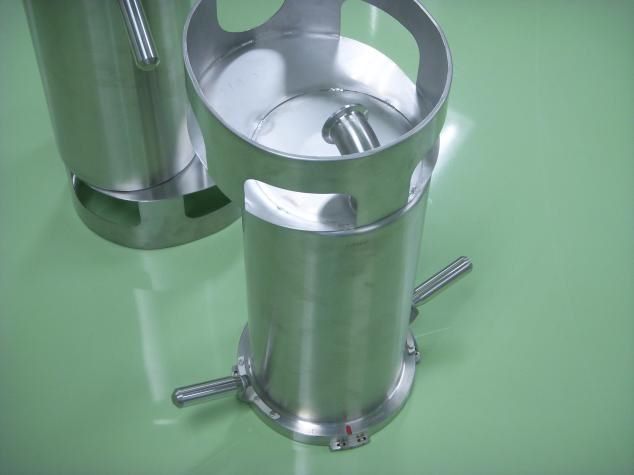
The liner is packed inside a loading container — usually a specially designed stainless-steel or plastic cylinder — and forms a port on the process equipment or the containment enclosure (for example an isolator). Its most common use is unloading product from process equipment, or moving material into and out of a contained environment.
The closed (tail) end of the liner is tied or sealed and placed in the loading container, while the open end is pulled out so the port is free of any contaminant. That end is then sealed, so the liner becomes a closed collection bag held inside the container. Material is transferred into the liner through the interface on the equipment or enclosure. When the transfer is complete, the liner is sealed again — forming a “sausage casing” sealed at both ends. Crucially, the same closure also seals the liner still attached to the port, ready to form the next “sausage”. The sequence can be repeated as long as there is enough liner. A double O-ring technique lets a fresh liner sleeve be fitted over the old one, and the previous “shower cap” is removed by a simple transfer.
“Bag-in” as well as bag-out
Continuous liners are most often used to transfer material out of process equipment or a contained environment — but “bag-in” is also possible. Here, the material or item to be transferred is pushed through the liner from the outside into the isolator (a reverse wrap), and gloves inside the isolator are used to make the double seal. The bagged material can then be opened inside the isolator without ever breaking containment.
Points to consider
- The film can be folded horizontally or vertically — the fold must not let the film stick to itself or tear. In GMP applications the folding can need particular care.
- The crimping or welding closure system is critical to how well the liner performs.
- The material needs a degree of anti-static property to prevent a static spark during charging.
- Operated correctly, the system reaches a high containment performance.
- When gas is present in the process, consider an in-line filter during unloading to vent it.
- Process pressure must be managed so the liner is not over-pressurised.
The closure at the heart of a continuous liner — the double O-ring and the crimp or heat-weld — is shared with several other contained-transfer methods; see Contained Transfer Interfaces. For rigid-container transfers compare the split butterfly valve, and match the containment level to the compound’s OEB band. Where an exhaust HEPA is involved, it should allow safe change via BIBO.
Related Products
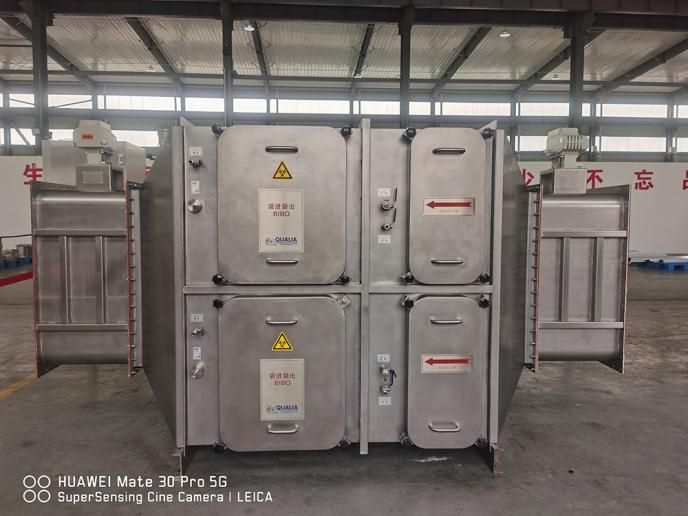
BIBO Filter HousingBag-in/bag-out HEPA housing for safe filter change in P3/P4 labs.Air Handling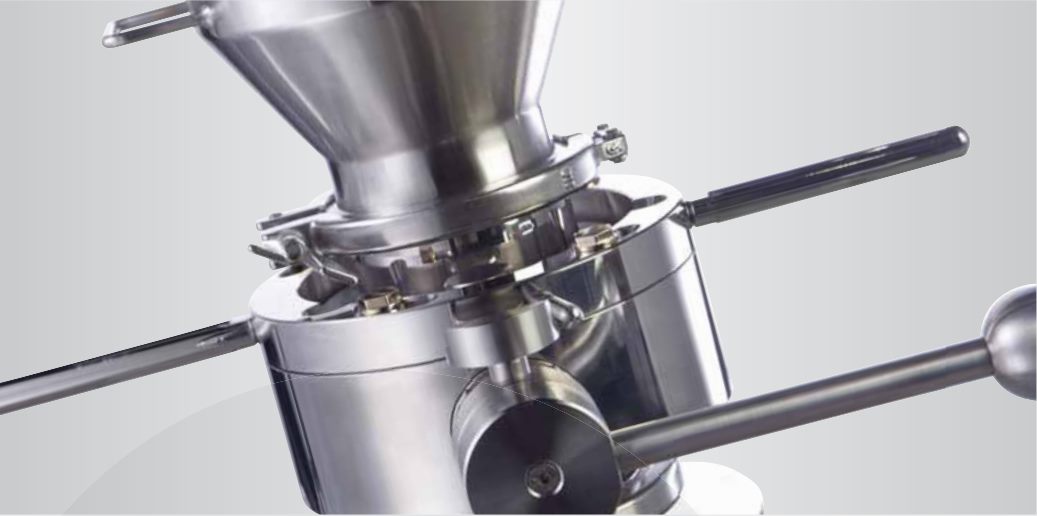 Alpha-Beta Split Butterfly ValveSplit butterfly valve for contained, dust-free transfer of potent powders.Transfer & Containment
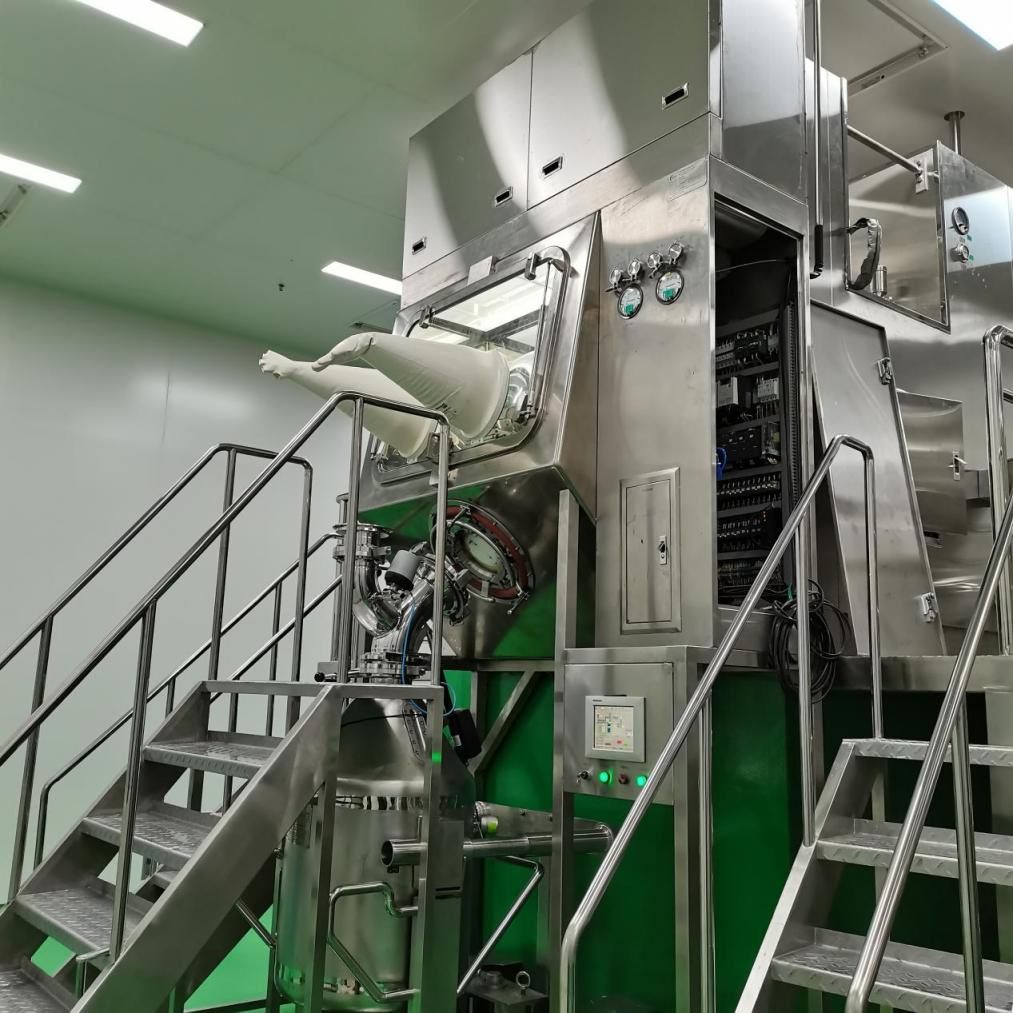 Dispensing & Containment Isolator (OEB5)Negative-pressure barrier for weighing, charging and sampling HPAPI.Isolators & Barrier
 RTP — Rapid Transfer PortRapid transfer port for sterile, contained transfer into isolators.Transfer & Containment
Specifying a contained unloading point?
Tell us your compound, container and throughput, and our engineers will recommend the continuous liner, split valve or isolator interface that keeps the transfer closed.